
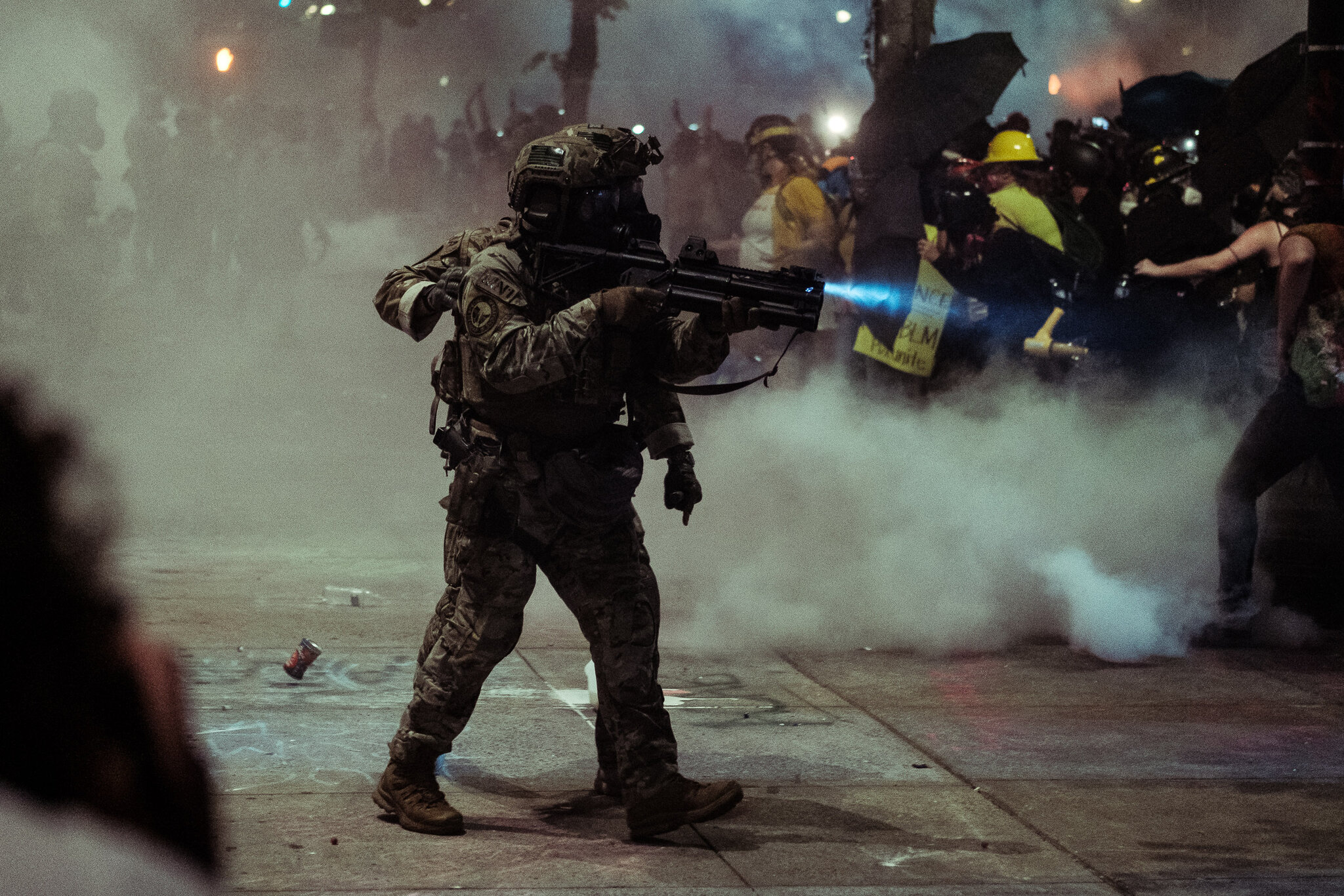
The United States has always wrestled with the balance between state sovereignty and federal authority. Portland, Oregon, has once again become the flashpoint where this struggle unfolds in real time. Protests surrounding immigration enforcement, broader questions of social justice, and the federal government’s decision to deploy troops converge into a test case for the country’s constitutional order.
If you follow civic debates, you know this isn’t just about Portland. It’s about the precedent it sets for other cities, future administrations, and the very way citizens experience democracy on the streets of America. The immediate crisis may appear local, but the implications are national.
The Situation on the Ground
Federal Action
- The federal government announced deployment of 200 Oregon National Guard troops under federal authority to guard Immigration and Customs Enforcement (ICE) facilities and federal property.
- The order came directly from President Trump, who framed it as a necessary step to protect federal sites and deter what he described as “domestic terrorism.”
- The deployment is expected to last at least 60 days.
State Pushback
- Oregon’s state leadership, including the governor and attorney general, filed a lawsuit to block the deployment. Their central claim is that the action exceeds presidential authority and infringes on state sovereignty.
- Local officials, including Portland’s mayor, have condemned the move, calling it both unnecessary and politically motivated.
Public Response
- Protests intensified immediately after the announcement, with hundreds of demonstrators gathering outside ICE facilities in Portland.
- Many participants describe the move as an escalation, fearing it will provoke conflict rather than resolve tensions.
- Social media activity surged, with Portland dominating political discussion online. Much of the content circulating included recycled footage from earlier protest cycles, raising concerns about misinformation and manufactured narratives.
Numbers That Matter
- 200 National Guard troops federalized for deployment.
- 60-day mandate, renewable at the discretion of federal authorities.
- Hundreds of protesters on site in Portland within 24 hours of the announcement.
- Crime data shows declines in violent crime in Portland compared to the same period in prior years, challenging the justification of federal intervention.
- Oregon’s lawsuit notes that some protests involved fewer than 30 participants, suggesting scale may not match rhetoric of “domestic terrorism.”
These figures highlight the gap between perception and reality. As you think about federal interventions, ask yourself: how much of the justification rests on actual threat levels versus political narrative?
The Legal Crossroads
Key Laws in Play
- Insurrection Act: Grants the president authority to deploy military forces domestically in cases of rebellion or where law enforcement fails to uphold order.
- Posse Comitatus Act: Restricts the use of federal military forces in civilian law enforcement, with exceptions carved out by the Insurrection Act.
- State Sovereignty: The Constitution and state constitutions grant governors authority over their own National Guard units, unless federalized under clear conditions.
The Questions at Stake
- Does the current Portland situation qualify as an “insurrection” under the law?
- Are federal troops justified when local authorities report being able to handle demonstrations?
- How will courts interpret the balance of state versus federal power in this context?
This is more than a Portland dispute — it’s a constitutional test case. A court ruling against the federal government could restrain executive authority in future conflicts. A ruling in favor could set precedent for broader federal use of military forces in civilian contexts.
Historical Echoes: Portland 2020
The memory of 2020 looms large. During the George Floyd protests, Portland saw federal agents deployed to protect the federal courthouse downtown. Controversies included:
- Use of unmarked vehicles to detain protesters.
- Tensions with local law enforcement who argued the federal presence worsened violence.
- Court challenges to the scope and legality of federal enforcement in protests.
For many Portland residents, today’s events feel like history repeating. For policymakers, the lesson is clear: the way the government handles Portland shapes public trust far beyond the Pacific Northwest.
Operational Realities of Troop Deployment
Even if legally permitted, the practical scope of troop activity matters.
- Mandate: Guarding ICE facilities and federal property, not patrolling neighborhoods.
- Rules of Engagement: Troops are not typically authorized to arrest civilians. Their role is defensive unless escalation occurs.
- Coordination: Federal troops and local law enforcement need clear communication to avoid confusion and potential clashes.
- Perception: The presence of military uniforms on city streets changes how residents perceive protests, often escalating tensions even before any incident occurs.
The lesson for you: security is not just about physical force. It is about legitimacy. When public trust erodes, no amount of troops can guarantee peace.
The Political Dimension
Why Portland? Why now? To answer, look at the intersection of politics and policy.
- Portland has long been seen as a progressive city, with active protest culture and deep distrust of federal law enforcement.
- Deployments to “blue cities” play into national political narratives of “law and order.”
- For the White House, a visible confrontation reinforces campaign messaging to supporters who view federal action as strength.
- For state and city leaders, resistance to deployment is equally political — a signal to their constituencies that local democracy and autonomy matter.
Ask yourself: when does security policy cross the line into political theater? And what does that mean for the citizens caught in the middle?
Risks of Escalation
When troops are introduced into civilian protest environments, risks rise quickly:
- Violence: Even defensive mandates can turn confrontational in volatile settings.
- Public Trust: Citizens who already distrust federal government may see deployment as occupation.
- Legal Liability: Any incidents involving troops could trigger lawsuits, further complicating the federal-state standoff.
- Misinformation: Viral videos, whether accurate or manipulated, can shape national perception overnight.
For businesses, civic organizations, and policymakers, the risk is not just physical unrest but reputational damage. Once a city is branded as unstable, investment, tourism, and community trust take years to recover.
Lessons for Other Cities
You should view Portland as a case study with lessons for other urban centers:
- Clear Communication: Local and federal agencies must establish transparent roles to avoid confusion.
- Legal Preparedness: Cities and states must anticipate federal interventions and prepare legal strategies.
- Community Engagement: Without engaging residents directly, security measures risk further alienation.
- Crisis Messaging: Control of the narrative is as important as control of the streets.
Broader Implications
The Portland crisis isn’t just about one city or one president. It forces larger questions that matter to you as a citizen or policymaker:
- What is the role of the military in domestic civil life?
- How should constitutional checks balance national security with local sovereignty?
- How do we distinguish between genuine threats and politically manufactured ones?
- What kind of precedent are we setting for the next crisis?
Actionable Insights for Policymakers and Civic Leaders
- Prioritize de-escalation: Military deployments should be last resorts, not first responses.
- Invest in intelligence verification: Avoid reliance on recycled or misleading data that undermines trust.
- Build state-federal negotiation channels: Create structured mechanisms for dialogue before crises reach breaking points.
- Monitor long-term economic impact: Cities branded as unstable suffer in investment and growth. Quantify these costs in advance.
- Engage communities: Provide forums for residents to express concerns and prevent protests from escalating into confrontations.
What It Means for You
If you live in Portland, troop deployment means you may see more military presence near federal sites. For residents of other cities, this episode signals how quickly federal intervention can be justified, even when local leaders object.
As a policymaker, this is your wake-up call to prepare frameworks for handling similar federal moves. As a business leader, this is a reminder that civic stability directly affects economic climate. As a citizen, this is an invitation to think critically about who decides how your streets are policed — your mayor, your governor, or the president.
Closing Thought
Portland’s unrest and the federal troop deployment are not isolated incidents. They are a barometer of where American democracy stands on the balance between federal authority and local self-governance. The decisions made here will ripple outward — through law, politics, and public trust — long after the troops leave the city.
The question for you is simple: when power shifts from the local to the federal level under the banner of security, who is actually being protected?
Image Credit: The New York Times
About The Author


