
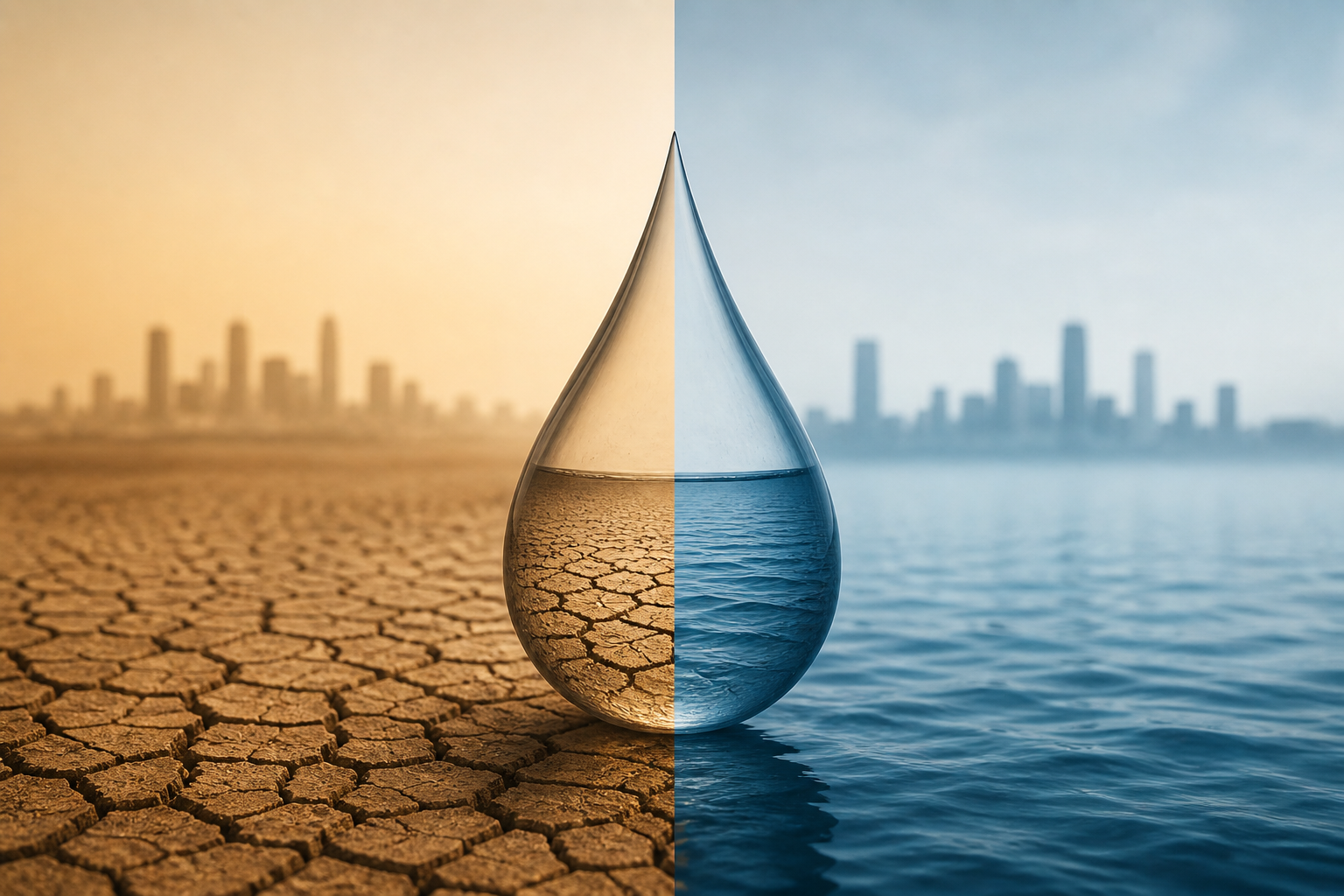
You are not looking at a distant environmental problem. You are looking at a structural economic risk that will reshape migration, food systems, and political stability within your lifetime. By 2030, global demand for freshwater is projected to exceed supply by 40 percent. That gap will not hit evenly. It will concentrate in countries already struggling with population pressure, weak infrastructure, and climate volatility.
The uncomfortable truth is this: water scarcity is no longer about drought. It is about governance, planning, and the ability to adapt under stress. Some nations will manage. Others will fracture under the weight of failing water systems.
Below are ten countries that are most likely to face acute water scarcity in the coming years, backed by data, trends, and on-ground realities. More importantly, you will see what the future looks like for each and why it matters beyond their borders.
1. India: Demand Outpacing Infrastructure
India sits at the center of the global water crisis. It holds 18 percent of the world’s population but only 4 percent of its freshwater resources.
- Nearly 600 million Indians already face high to extreme water stress
- Groundwater depletion accounts for over 60 percent of irrigation needs
- 21 major cities, including Delhi and Bengaluru, have faced or are expected to face “day zero” scenarios
You already see the pattern: erratic monsoons, over-extraction of groundwater, and poor urban planning.
What the future looks like
- Urban water rationing will become routine in major cities
- Agriculture will shift toward less water-intensive crops, but slowly
- Interstate water disputes will intensify, particularly in southern India
If you are living in India, the biggest shift will not be scarcity alone. It will be inequity. Wealthier households will secure private water sources. Lower-income populations will face unpredictable supply.
2. Pakistan: A System on the Edge
Pakistan is one of the most water-stressed countries globally, heavily dependent on the Indus River system.
- Per capita water availability has dropped from 5,000 cubic meters in 1951 to under 1,000 today
- Groundwater depletion in Punjab is accelerating
- Climate variability has created cycles of floods and droughts
You might think floods mean water abundance. In Pakistan’s case, they signal poor storage and management.
What the future looks like
- Severe shortages in urban centers like Karachi
- Agricultural output volatility due to unreliable irrigation
- Increased reliance on expensive water imports or desalination
This is not just an environmental issue. It is a national security concern.
3. Iran: Policy Failure Meets Climate Stress
Iran’s water crisis is largely man-made.
- Over 90 percent of water use goes to agriculture
- Dam construction and river diversion have disrupted ecosystems
- Lake Urmia has shrunk by nearly 90 percent
You are looking at a country where policy decisions accelerated natural scarcity.
What the future looks like
- Mass migration from rural to urban areas
- Rising protests linked to water shortages
- Long-term agricultural decline
Iran offers a clear lesson: mismanagement can collapse water systems faster than climate change alone.
4. Saudi Arabia: Wealth Cannot Fully Offset Scarcity
Saudi Arabia has no permanent rivers and relies heavily on desalination.
- It is the largest producer of desalinated water globally
- Groundwater reserves are being depleted rapidly
- Agriculture consumes a significant portion of water despite harsh conditions
You might assume wealth solves water scarcity. It does not eliminate long-term sustainability risks.
What the future looks like
- Increased dependence on energy-intensive desalination
- Rising costs of water production
- Strategic investments in water-efficient technologies
Saudi Arabia will survive the crisis, but at a growing financial and environmental cost.
5. Egypt: A River Under Pressure
Egypt depends on the Nile for over 90 percent of its freshwater.
- Population growth is straining limited resources
- The Grand Ethiopian Renaissance Dam has introduced geopolitical tension
- Water availability per capita has dropped below scarcity thresholds
If Nile flow reduces even marginally, the consequences will be immediate.
What the future looks like
- Intensified diplomatic conflicts over Nile water sharing
- Increased food imports due to declining agricultural output
- Urban water shortages in Cairo and surrounding areas
Egypt’s water future is tied directly to regional cooperation. Without it, instability will rise.
6. South Africa: Urban Water Collapse Risk
South Africa came close to a “Day Zero” crisis in Cape Town in 2018.
- Climate variability has reduced rainfall reliability
- Infrastructure leaks waste a significant portion of water supply
- Inequality in water access remains high
You have already seen what near-collapse looks like here.
What the future looks like
- Periodic urban water shutdown threats
- Increased investment in water recycling and reuse
- Expansion of desalination projects
South Africa may become a model for crisis response, but only if reforms continue.
7. Mexico: Urbanization Meets Scarcity
Mexico faces a dual challenge of rapid urban growth and uneven water distribution.
- Mexico City is sinking due to groundwater extraction
- Northern regions face chronic drought
- Infrastructure inefficiencies lead to high water loss
You are dealing with a system where supply exists but distribution fails.
What the future looks like
- Increased water rationing in major cities
- Expansion of private water markets
- Rising social tensions over access
Mexico’s crisis will be defined by governance gaps rather than absolute scarcity.
8. China: Scale Magnifies the Problem
China has significant freshwater resources, but distribution is uneven.
- Northern China faces severe water shortages
- Industrial pollution has contaminated major water sources
- Massive projects like the South-North Water Transfer aim to rebalance supply
You are looking at a country trying to engineer its way out of scarcity.
What the future looks like
- Continued investment in large-scale water diversion
- Stricter industrial water regulations
- Potential regional conflicts over water allocation
China’s advantage is execution capacity. Its challenge is scale.
9. Jordan: One of the Most Water-Scarce Nations
Jordan is already among the top three most water-scarce countries globally.
- Water availability is below 100 cubic meters per person annually
- Refugee influx has increased demand
- Limited natural water sources restrict expansion
You are seeing a country operating beyond sustainable limits.
What the future looks like
- Heavy reliance on desalination and water imports
- Strict water rationing policies
- Increased international aid dependency
Jordan will remain stable, but only through external support and strict management.
10. Chile: Climate Change and Privatization Clash
Chile’s water system is unique due to privatization policies.
- Water rights are privately owned
- Prolonged drought has affected central regions
- Agriculture and mining compete for limited resources
You are looking at a policy experiment under stress.
What the future looks like
- Legal reforms to rebalance water rights
- Increased conflict between industries and communities
- Shift toward sustainable water management practices
Chile’s crisis highlights the risks of treating water purely as a market commodity.
The Bigger Picture: What You Should Be Paying Attention To
Water scarcity is not isolated to these ten countries. It is a global systemic issue with cascading effects.
Here’s what will define the next decade:
1. Water will become a geopolitical asset
Countries will negotiate, compete, and potentially conflict over shared water sources.
2. Food security will weaken
Agriculture consumes nearly 70 percent of global freshwater. Reduced water availability means lower yields and higher food prices.
3. Urban planning will be forced to evolve
Cities will need to invest in recycling, desalination, and smart water management systems.
4. Migration patterns will shift
Water scarcity will drive internal and cross-border migration, adding pressure to already strained regions.
What You Can Learn From This — And Why It Matters
You might ask: why should this concern you if you are not in one of these countries?
Because water scarcity does not stay local.
- It impacts global food prices
- It affects supply chains
- It drives geopolitical instability
- It shapes investment and economic growth
If you are a policymaker, business leader, or investor, water risk needs to be part of your decision-making framework.
If you are an individual, your choices still matter:
- Reduce water-intensive consumption
- Support sustainable products and practices
- Stay informed about local water policies
The Reality Check
The narrative around water scarcity often leans toward alarmism. The real story is more complex.
Some countries will adapt through technology, policy reform, and investment. Others will struggle due to governance failures and lack of resources.
The question is not whether water scarcity will intensify. It will.
The real question is: who will manage it effectively, and who will not?
That distinction will define economic winners and losers over the next two decades.
References
World Resources Institute – Aqueduct Water Risk Atlas
https://www.wri.org/aqueduct
United Nations World Water Development Report
https://www.unesco.org/reports/wwdr
NITI Aayog – Composite Water Management Index
https://niti.gov.in
World Bank – Water Scarcity Overview
https://www.worldbank.org/en/topic/water
FAO – Water for Sustainable Food and Agriculture
https://www.fao.org
NASA – Global Freshwater Data
https://earthobservatory.nasa.gov
International Water Management Institute Reports
https://www.iwmi.cgiar.org
OECD Water Governance Initiative
https://www.oecd.org/water
UNICEF – Water, Sanitation and Hygiene Data
https://www.unicef.org/wash
Stockholm International Water Institute Reports
https://www.siwi.org
About The Author


