
If Iran already had a nuclear weapon, you would not be debating it—you would be reacting to it. Intelligence agencies across the world do not treat nuclear weapons as ambiguous assets. They track them, count them, and signal them. The persistent uncertainty around Iran is not an accident. It is the strategy.
That distinction matters. You are not looking at a country that has openly tested and deployed nuclear warheads like North Korea. You are looking at a state that has built the technical capability to get close—close enough to influence global oil markets, diplomacy, and military calculations—without crossing the line that would trigger immediate international retaliation.
So when you ask, “Does Iran really have nukes?” you are asking the wrong question. The sharper question is: how close is Iran, and why has it chosen not to cross the threshold?
The Short Answer: No Confirmed Nuclear Weapons
As of 2026, there is no verified evidence that Iran possesses a functional nuclear weapon. This is not a political statement. It reflects the consensus across:
- The International Atomic Energy Agency
- U.S. intelligence assessments
- European intelligence agencies
You should pay attention to what they say—and what they do not say.
They confirm:
- Iran has enriched uranium far beyond civilian requirements
- Iran has advanced centrifuge technology
- Iran has reduced transparency with inspectors
They do not confirm:
- A completed nuclear warhead
- A tested nuclear device
- A deployable nuclear delivery system with a nuclear payload
That gap is where Iran operates.
Iran’s Real Strategy: Threshold Nuclear Power
Iran has positioned itself as a threshold nuclear state. That means it has developed:
- Enough enriched uranium for potential weapons
- The scientific knowledge to build a bomb
- The infrastructure to scale quickly
But it has stopped short of weaponization.
Why would a country invest billions and decades into a program and then stop just before the finish line?
Because the “almost” status delivers more strategic value than the weapon itself.
You need to understand the incentives:
- Deterrence without escalation: Rivals assume capability without triggering war
- Diplomatic leverage: Negotiations revolve around limiting something not yet fully realized
- Economic signaling: Oil markets react to perceived risk, not confirmed facts
This is why Iran’s nuclear program remains deliberately opaque.
The Enrichment Reality: Numbers That Matter
Let’s move past rhetoric and look at measurable facts.
Iran’s uranium enrichment levels have reached 60% purity in recent years. Weapons-grade uranium requires about 90% enrichment.
That gap is narrower than it looks.
Experts estimate:
- Iran could reach weapons-grade enrichment in weeks, not years
- It possesses enough enriched uranium stockpile for multiple bombs, if further refined
- Advanced centrifuges like IR-6 significantly accelerate enrichment timelines
This is what analysts call “breakout time”—the time required to produce enough fissile material for one nuclear weapon.
Before the collapse of the Joint Comprehensive Plan of Action, Iran’s breakout time was estimated at over 12 months.
Today, estimates range from a few weeks to a few months.
You should recognize the implication. The barrier is no longer technical. It is political.
Weaponization: The Missing Piece
Producing enriched uranium is not the same as building a nuclear weapon.
Weaponization involves:
- Designing a nuclear warhead
- Miniaturizing it for delivery systems
- Integrating it with missiles
- Testing detonation mechanisms
This is where Iran’s status remains uncertain.
Intelligence reports suggest:
- Iran conducted weaponization research before 2003
- That program was halted or scaled back under international pressure
- There is no public evidence of resumed full-scale weaponization
You should question this carefully. Absence of evidence is not evidence of absence. But intelligence agencies operate on probability, not speculation. They have not confirmed active weapon assembly.
Delivery Systems: Missiles Without Nukes
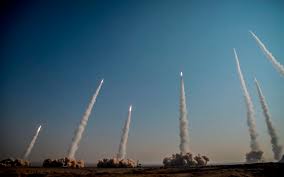
Iran does not lack missiles. It has one of the most advanced missile programs in the Middle East.
Key systems include:
- Shahab-3: Range up to 2,000 km
- Khorramshahr: Potential range exceeding 2,000 km
- Sejjil: Solid-fuel missile with faster launch readiness
These missiles can reach:
- Israel
- Saudi Arabia
- U.S. bases in the Gulf
But here is the critical point: there is no confirmed nuclear warhead mounted on these systems.
Missiles without nuclear payloads still matter. They enable:
- Conventional deterrence
- Regional influence
- Strategic signaling
But they do not equate to nuclear capability.
The Strait of Hormuz: Iran’s “Non-Nuclear” Nuclear Weapon
If you focus only on nuclear warheads, you miss Iran’s most immediate leverage: the Strait of Hormuz.
Roughly 20% of the world’s oil supply passes through this narrow corridor.
Iran does not need a nuclear weapon to disrupt global markets. It can:
- Deploy naval mines
- Harass or seize tankers
- Use fast attack boats and drones
Even the threat of disruption can spike oil prices globally.
This is why analysts often argue that Iran already holds a form of “economic nuclear weapon.”
You should connect the dots:
- Nuclear ambiguity increases perceived risk
- Perceived risk amplifies oil price volatility
- Oil price volatility translates into global economic pressure
Iran leverages this ecosystem effectively.
Israel, the U.S., and the Red Lines
Iran’s nuclear program exists under constant surveillance and implicit threat.
Israel has made its position clear:
- It will not allow Iran to acquire nuclear weapons
- It has conducted preemptive strikes in the past against nuclear facilities in Iraq and Syria
The United States maintains:
- Military presence in the Gulf
- Sanctions targeting Iran’s economy
- Diplomatic channels aimed at containment
You should understand the balance:
- If Iran crosses the nuclear threshold, it risks military strikes
- If it stays below, it maintains leverage without triggering war
This is a calculated equilibrium, not a temporary phase.
Why Iran Hasn’t Built the Bomb Yet
You might assume Iran is racing toward a nuclear weapon. The evidence suggests a more restrained approach.
Key reasons include:
1. Cost of Sanctions
Iran’s economy has faced severe restrictions:
- Limited access to global banking
- Reduced oil export revenues
- Currency instability
A confirmed nuclear weapon would likely trigger harsher sanctions.
2. Risk of Military Strike
Crossing the threshold could provoke:
- Israeli airstrikes
- U.S. military intervention
- Regional escalation
3. Strategic Ambiguity Works Better
Remaining close to capability:
- Keeps adversaries cautious
- Avoids triggering unified global response
- Preserves negotiation leverage
Iran benefits more from uncertainty than certainty.
Comparing Iran to Other Nuclear States
You should place Iran in context.
Countries with confirmed nuclear weapons include:
- United States
- Russia
- China
- India
- Pakistan
Each has:
- Conducted nuclear tests
- Declared or demonstrated capability
- Integrated nuclear doctrine into military strategy
Iran has done none of these publicly.
That distinction is not semantic. It defines the difference between capability and possession.
The Intelligence Game: Why Certainty Is Elusive
Nuclear programs operate in secrecy. Iran has:
- Underground facilities like Fordow
- Hardened enrichment sites
- Restricted access for inspectors
At the same time, global intelligence relies on:
- Satellite imagery
- Signal intelligence
- Human sources
You should recognize the limitation. Intelligence agencies deal in confidence levels, not absolute proof.
This creates a persistent gray zone where:
- Iran denies weaponization
- Rivals suspect hidden progress
- Markets react to uncertainty
This gray zone is not a failure of intelligence. It is a feature of Iran’s strategy.
The Oil Market Factor: Why This Debate Matters to You
If you think this is only a geopolitical issue, you are missing the economic impact.
Iran’s nuclear status directly influences:
- Crude oil prices
- Inflation rates
- Energy security
Even rumors of escalation near the Strait of Hormuz can push oil prices upward within hours.
You experience this through:
- Higher fuel costs
- Increased transportation prices
- Rising cost of goods
This is why the nuclear question persists in headlines. It is not abstract. It affects global economic stability.
The Future: What Happens Next
You should focus on three scenarios:
Scenario 1: Iran Stays Threshold
- Continues enrichment without weaponization
- Maintains strategic ambiguity
- Avoids direct conflict
This is the current trajectory.
Scenario 2: Iran Crosses the Line
- Produces a nuclear weapon
- Faces immediate international response
- Triggers regional arms race
This remains a high-risk move.
Scenario 3: Renewed Nuclear Deal
- Limits enrichment levels
- Restores inspections
- Extends breakout time
Diplomacy could revive constraints similar to the Joint Comprehensive Plan of Action.
Each path carries different consequences for global stability.
The Real Question You Should Be Asking
“Does Iran have nukes?” simplifies a complex reality into a binary answer.
You should instead ask:
- How quickly can Iran build one?
- What would trigger that decision?
- Who would respond, and how fast?
These questions determine risk, not the presence of a weapon.
Final Insight: Power Without Possession
Iran has demonstrated that nuclear influence does not require nuclear ownership.
By staying just below the threshold, it has:
- Altered global diplomacy
- Influenced energy markets
- Forced military recalculations
That is not a failure to build a bomb. It is a different kind of success.
You are not witnessing indecision. You are watching a calculated strategy that extracts maximum leverage from minimum confirmation.
References
Iran has a nuke, but it’s not a missile: Strait of Hormuz oil crisis, Iran war impact – NDTV
https://www.ndtv.com/world-news/iran-has-a-nuke-but-its-not-a-missile-strait-of-hormuz-oil-crisis-iran-war-impact-11388237?pfrom=home-ndtv_topscroll
International Atomic Energy Agency Reports on Iran
https://www.iaea.org
U.S. Intelligence Community Annual Threat Assessments
https://www.dni.gov
Arms Control Association – Iran Nuclear Profile
https://www.armscontrol.org
Stockholm International Peace Research Institute (SIPRI) Nuclear Forces Data
https://www.sipri.org
About The Author


