
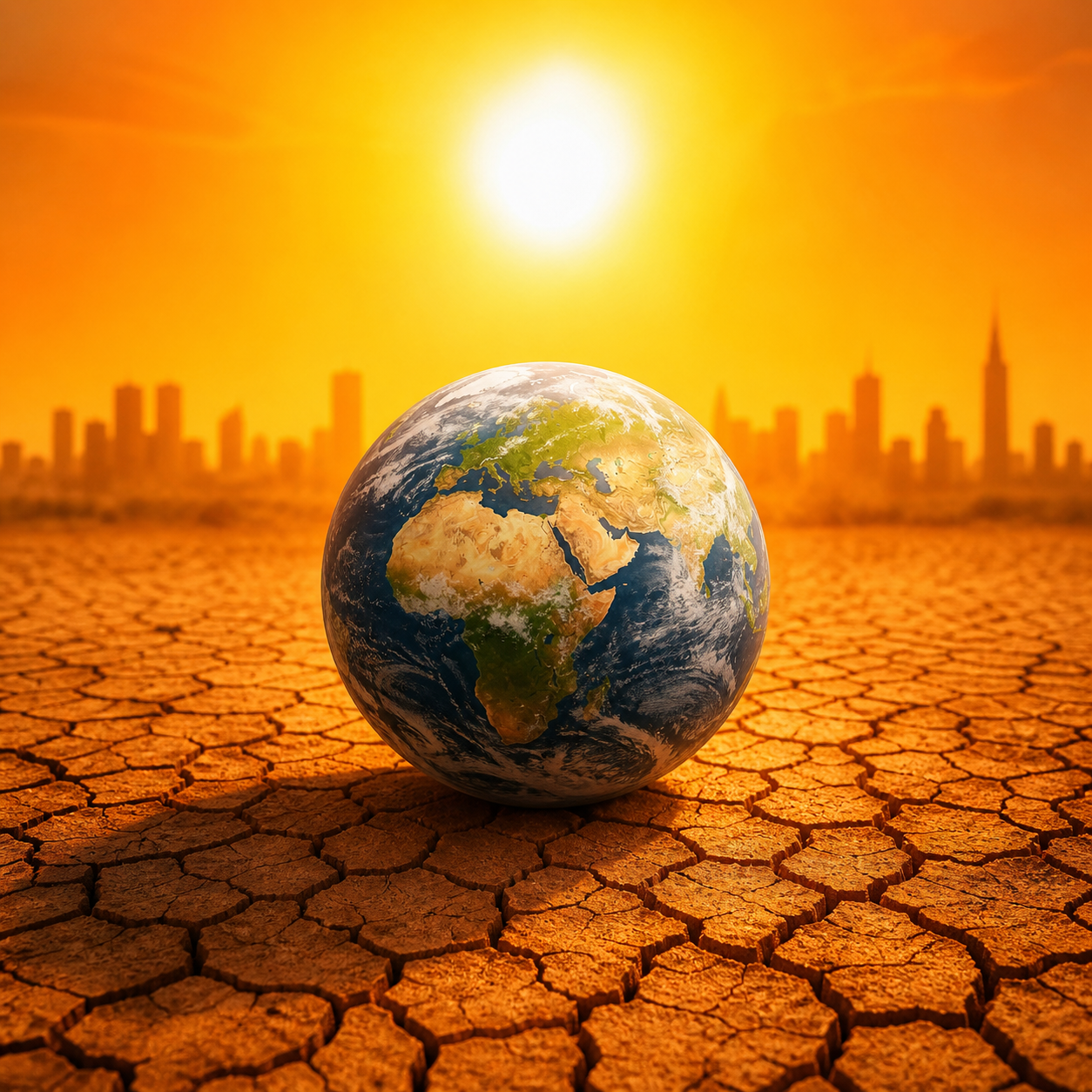
The world is not warming evenly. You are witnessing a geographic sorting of risk where some countries are moving toward conditions that strain human survival, not just comfort. In 2023 and 2024, multiple regions crossed wet-bulb temperature thresholds that scientists once treated as rare edge cases. Those thresholds matter because they measure how well your body can cool itself. When humidity and heat combine beyond certain limits, sweating stops working. The result is not just discomfort. It is systemic risk to health systems, labor markets, and economic output.
You already know temperatures are rising. What you may not have fully accounted for is how unevenly this heat will reshape economies, migration patterns, and political stability. Some countries will adapt. Others will face recurring shocks that compound year after year.
This analysis focuses on 10 countries where extreme heat is not a future scenario. It is already restructuring daily life. Each case is grounded in observed trends, projections, and policy responses.
1. India: Heat Stress Meets Population Density


India is not just getting hotter. It is getting more humid in key regions, which amplifies heat stress. In 2022 and 2023, several cities recorded temperatures above 45°C. Parts of eastern India have already approached wet-bulb temperatures of 32–33°C.
Why this matters to you:
- India has over 1.4 billion people, many working outdoors or in informal sectors
- Air conditioning penetration remains below 10 percent in many regions
- Urban heat islands intensify nighttime temperatures, limiting recovery
Economic implications:
- The International Labour Organization estimates India could lose over 5 percent of working hours annually by 2030 due to heat stress
- Agricultural productivity declines sharply above 35°C during key crop cycles
Future outlook:
You will see a shift toward:
- Night-time work schedules in construction and logistics
- Rapid expansion of cooling infrastructure, especially in tier-2 cities
- Policy-driven “heat action plans” becoming mandatory at the state level
2. Pakistan: Ground Zero for Wet-Bulb Extremes


Pakistan recorded temperatures above 50°C in Jacobabad. More critical, parts of Sindh and southern Punjab have repeatedly crossed dangerous wet-bulb thresholds.
What sets Pakistan apart:
- High humidity combined with extreme heat
- Limited healthcare infrastructure in rural areas
- Energy shortages during peak demand
Real risk:
- Human survivability limits may be exceeded for several hours in peak summers
- Urban centers like Karachi face compound risks due to population density
Future trajectory:
- Increased internal migration from rural heat zones to cities
- Water stress linked to the Indus River system will amplify heat impacts
- Rising mortality during heatwaves unless cooling access expands rapidly
3. Saudi Arabia: Extreme Heat in a Wealthy Desert Economy


Saudi Arabia regularly experiences temperatures above 48°C. Unlike lower-income countries, it has the financial capacity to adapt. Yet, heat still disrupts critical sectors.
Key challenges:
- Outdoor labor during infrastructure expansion projects
- Heat exposure during religious events like Hajj
- Water desalination dependency, which increases energy demand
What you should watch:
- Massive investment in climate-controlled urban environments
- Shifts in labor policies to restrict outdoor work during peak hours
- Rising energy consumption driven by cooling demand
Future reality:
Saudi Arabia will likely adapt technologically. The question is whether energy systems can keep pace without escalating emissions.
4. United Arab Emirates: Artificial Cooling vs Natural Limits


The UAE operates on engineered livability. During peak summer, outdoor activity becomes nearly impossible during daylight hours.
Current conditions:
- Temperatures frequently exceed 45°C
- Humidity spikes along coastal areas
- Urban design relies heavily on air-conditioned environments
What this means for you:
- High energy consumption tied directly to survival, not comfort
- Economic resilience tied to uninterrupted power supply
Future direction:
- Smart city design focused on reducing outdoor exposure
- Advanced materials and shading technologies
- Increased reliance on AI-driven energy management
5. Iran: Heat Meets Water Crisis


Iran faces a dual crisis. Rising temperatures intersect with severe water shortages.
Current indicators:
- Reservoir levels declining across multiple provinces
- Agricultural zones becoming non-viable due to heat and water scarcity
- Frequent power outages during peak heat periods
Systemic risks:
- Urban unrest linked to water shortages
- Food security pressures due to declining crop yields
Future outlook:
- Large-scale population shifts from rural to urban regions
- Increased geopolitical tensions over shared water resources
- Infrastructure strain as cooling demand rises without stable water supply
6. Australia: Heat and Fire Feedback Loop


Australia has already experienced catastrophic bushfires linked to extreme heat. The cycle is self-reinforcing.
What is happening:
- Heat dries vegetation, increasing fire risk
- Fires release carbon, intensifying warming
- Urban areas face heatwaves and smoke exposure simultaneously
Economic impact:
- Billions lost in infrastructure damage and insurance claims
- Agriculture disrupted by both heat and fire
Future trajectory:
- Expansion of fire-resistant urban planning
- Increased insurance costs making some regions economically unviable
- More frequent evacuation scenarios during summer months
7. United States: Regional Extremes, National Impact


The United States shows how heat risk varies within a single country. Cities like Phoenix now experience weeks above 43°C.
Critical issues:
- Power grid stress during prolonged heatwaves
- Urban heat islands in major cities
- Wildfire risk in western states
Data point:
- 2023 saw record-breaking heat across multiple states, with prolonged nighttime temperatures reducing recovery
Future outlook:
- Migration away from high-risk heat zones like parts of Arizona
- Rising cost of cooling driving inequality
- Increased federal investment in climate resilience infrastructure
8. China: Industrial Heat Risk


China’s heat problem is tightly linked to its industrial base.
Observed trends:
- Heatwaves disrupting hydropower generation due to low water levels
- Factory shutdowns in provinces like Sichuan during extreme heat periods
- Urban areas experiencing compounded heat and air pollution
Why it matters globally:
- Supply chain disruptions affect global markets
- Energy demand spikes stress national grids
Future direction:
- Expansion of renewable energy capacity to stabilize power supply
- Relocation of industries to less heat-prone regions
- Increased automation to reduce human exposure
9. Nigeria: Heat, Urban Growth, and Energy Poverty


Nigeria combines high temperatures with rapid urbanization and limited infrastructure.
Current conditions:
- Cities like Lagos experience rising temperatures with high humidity
- Power outages limit access to cooling
- Informal housing amplifies heat exposure
Key risks:
- Public health crises during prolonged heatwaves
- Reduced labor productivity in both formal and informal sectors
Future outlook:
- Increased investment in decentralized energy solutions like solar
- Urban planning challenges as population growth continues
- Heat becoming a major constraint on economic development
10. Brazil: Heat in a Changing Rainforest System


Brazil’s heat dynamics are tied to deforestation and changing rainfall patterns.
Key developments:
- Amazon regions experiencing higher temperatures due to forest loss
- Urban heatwaves in cities like São Paulo
- Agricultural zones facing heat stress and shifting rainfall cycles
Global implications:
- The Amazon acts as a climate regulator. Its disruption amplifies global warming
- Agricultural exports face volatility due to heat-driven crop failures
Future trajectory:
- Increased international pressure to curb deforestation
- Investment in climate-resilient agriculture
- Greater frequency of extreme weather events tied to heat
What the Future Looks Like: Patterns You Cannot Ignore
Across these countries, three patterns are becoming clear.
1. Heat Is Becoming an Economic Variable
You are no longer dealing with climate as a background factor. Heat directly impacts:
- GDP through lost labor hours
- Energy demand through cooling requirements
- Infrastructure resilience through thermal stress
2. Migration Will Accelerate
You will see:
- Rural populations moving toward cities with better cooling infrastructure
- Cross-border migration from unlivable heat zones
- Real estate shifts as certain regions lose long-term viability
3. Inequality Will Deepen
Access to cooling will define survival in extreme conditions. This creates:
- A widening gap between those who can afford climate-controlled environments and those who cannot
- Increased health risks among low-income populations
- Policy pressure on governments to subsidize cooling
The Question You Need to Ask
Are governments preparing for survivability or just reacting to temperature spikes?
Many current policies focus on short-term heatwave responses. What is missing is long-term planning that integrates:
- Urban design built for heat resilience
- Energy systems capable of sustained cooling demand
- Public health strategies tailored for extreme heat exposure
Final Insight
Extreme heat is not a distant risk. It is a structural shift already reshaping economies and societies. The countries listed here are not isolated cases. They are early indicators of what broader regions will face over the next two decades.
If you are evaluating markets, planning investments, or thinking about long-term stability, you need to factor heat into every decision. Not as an environmental issue. As a core economic and human constraint.
References
IPCC Sixth Assessment Report
https://www.ipcc.ch/report/ar6/
World Meteorological Organization Global Climate Reports
https://public.wmo.int/en/resources/library
International Labour Organization Report on Heat Stress and Productivity
https://www.ilo.org/global/publications/books/WCMS_711919/lang–en/index.htm
NASA Earth Observatory Heat and Climate Data
https://earthobservatory.nasa.gov/
NOAA Global Temperature Reports
https://www.noaa.gov/climate
The Lancet Countdown on Health and Climate Change
https://www.lancetcountdown.org/
World Bank Climate Change Knowledge Portal
https://climateknowledgeportal.worldbank.org/
UN Environment Programme Climate Reports
https://www.unep.org/resources
Nature Climate Change Journal Articles on Heat Extremes
https://www.nature.com/nclimate/
About The Author


