
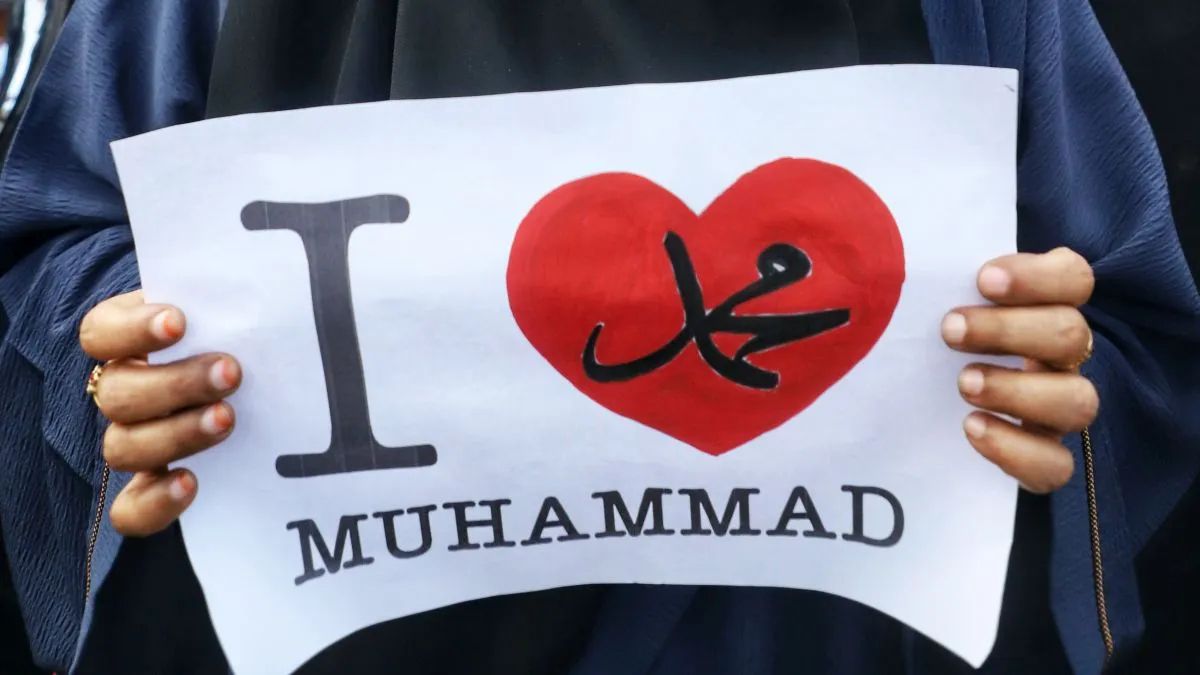
When a phrase as personal and seemingly simple as “I Love Prophet Muhammed” ignites weeks of confrontation, arrests, and viral outrage, the signal is unmistakable: religion, law enforcement, and digital media are colliding in new and unstable ways. What began with posters across a few districts in Uttar Pradesh has cascaded into mass protests, counter-campaigns, and a widening debate about freedom of expression, communal harmony, and the role of state power.
This is not just another case of communal unrest. It reveals how quickly identity politics can shift from symbolic expression to physical confrontation in today’s India, and how fragile the balance between freedom and order has become.
A Ground Reality Check
The first posters appeared during a religious procession in Kanpur on September 9. Within days, districts across Uttar Pradesh—Bareilly, Ghaziabad, Barabanki, Muzaffarnagar—were in the news. The posters carried a short line: “I Love Prophet Muhammed.”
That sentiment in itself is not unusual. What triggered unrest was its form—large public posters placed in contested neighborhoods, often without prior permissions. For some, it was an expression of devotion. For others, it felt like a territorial claim.
The response:
- Bareilly: After Friday prayers, more than a thousand people gathered. Clashes broke out, stones were thrown, vehicles vandalized, and more than 50 detentions followed. Ten police officers were reported injured.
- Barabanki: The removal of a banner led to violent clashes. Eight arrests were made, and 159 people were booked under charges including rioting and incitement.
- Muzaffarnagar: Six men were arrested for pasting the posters. Police raided homes and seized printing material.
- Ghaziabad: Hindu groups objected to the posters. Police removed them and arrested those responsible, but tensions spread online.
- Wider ripple: Counter-campaigns soon emerged. In Varanasi, posters reading “I Love Mahadev” were put up as a response.
Even within Muslim leadership, disagreement surfaced. The Shahi Imam of Lucknow, Maulana Khalid Rasheed Firangi Mahali, publicly called the posters “inappropriate” for public spaces, urging that devotion should not be turned into a street provocation.
Why It Matters
The protests are not just about posters. They reveal three deeper shifts that every policymaker, business leader, and engaged citizen should note.
1. Public Space as Identity Battleground
Religious identity in India has long found expression through festivals, processions, and rituals. But posters, slogans, and street displays turn personal devotion into a public contest. The posters became less about individual faith and more about staking a claim on who controls public narratives.
When one side uses public space to express devotion, others often respond in kind. That is how “I Love Mahadev” posters surfaced almost immediately, signaling the spiraling tit-for-tat dynamic that fuels confrontation.
2. Social Media as Accelerant
What might once have been a local skirmish now travels nationally within hours. Videos of stone-throwing crowds, police baton charges, and mass arrests spread across messaging apps and social platforms. Context often gets lost, but outrage multiplies.
This cycle has three steps:
- Trigger: A poster, removal, or police action sparks immediate reaction.
- Amplification: Clips circulate with partisan captions—either “police brutality” or “mob aggression.”
- Mobilization: Crowds assemble faster than authorities can respond.
This dynamic means that traditional methods of conflict resolution—local negotiation, quiet removal of materials, community mediation—are often too slow to contain the spread.
3. Enforcement and Escalation
Police face difficult choices. Remove posters quickly and risk backlash? Detain organizers and trigger crowds? Or allow them to stay and risk objections from other groups?
In Bareilly, aggressive police intervention—including tear gas—produced larger clashes. In Barabanki, removing a single banner triggered widespread violence. In each case, the way state power was exercised shaped whether protests simmered or exploded.
What’s at Stake
The issue goes beyond law and order. The trajectory of these protests highlights risks that touch on governance, economics, and India’s democratic culture.
- Freedom of Expression vs Public Order: At what point does religious expression in public become incitement? Where do you draw the line between faith and provocation?
- Community Trust in State: Perceptions of bias or excessive force erode legitimacy. Arrests without clear charges, as civil society groups allege, deepen mistrust.
- Political Exploitation: Identity-based tensions are often instrumentalized during election cycles. Posters may be less about faith than about mobilizing voter blocs.
- Digital Virality: The speed of online outrage outpaces official responses. Once a video circulates, narratives become entrenched.
- Economic Fallout: Repeated protests disrupt markets, lower investor confidence, and damage India’s image abroad as a stable democracy.
Lessons You Can Draw
Whether you are a policymaker, a business owner, or an active citizen, there are clear takeaways.
For Policymakers
- Strengthen communication protocols. When tensions spark, rapid clarification from district officials can prevent rumor-driven escalation.
- Invest in community mediation. Local religious leaders, respected neutral figures, and civil society can often de-escalate more effectively than armed police.
- Document enforcement. Clear recording of arrests, charges, and police actions prevents allegations of bias.
- Anticipate election cycles. Deploy preventive measures where identity-based mobilization is likely.
For Law Enforcement
- Balance response. Overreaction fuels resentment, underreaction fuels chaos. Training for rapid, proportionate response is key.
- Monitor digital signals. Local police must track WhatsApp groups and social media chatter to anticipate flashpoints.
- Community policing. Long-term trust reduces confrontation. Officers known in the community can negotiate before violence escalates.
For Civil Society and Citizens
- Promote intra-faith accountability. As some Muslim leaders have done, communities should define acceptable modes of expression.
- Challenge misinformation. Fact-checking groups, local media, and community influencers must provide accurate context.
- Push for systemic reform. Citizens can demand rules on public displays that apply equally across religions, removing perceptions of selective enforcement.
What This Means for India’s Future
These protests show that in today’s India:
- Symbolic acts, even those rooted in devotion, can become politicized quickly.
- Digital ecosystems amplify confrontation at unprecedented speed.
- State responses—whether heavy-handed or inconsistent—carry long-term implications for trust and legitimacy.
The broader question is whether India can balance the constitutional promise of religious freedom with the practical need to maintain order in diverse, crowded public spaces.
Do you, as a citizen, want a state that clamps down harshly on public expressions of faith? Or do you want a state that allows unregulated displays that may spark conflict? The choice is not easy, but it requires clear debate, transparent rules, and trust-building institutions.
Final Thoughts
The “I Love Prophet Muhammed” posters should have remained what they claimed to be: an expression of love. Instead, they became flashpoints of confrontation, police crackdowns, and political opportunity.
The trajectory of these protests will matter well beyond Uttar Pradesh. They test India’s ability to manage pluralism in the age of virality. They also test your willingness, as a participant in civic life, to insist on rules, accountability, and peace.
The posters themselves may fade. The lessons must not.
Photo Credit: Rediff
About The Author


