
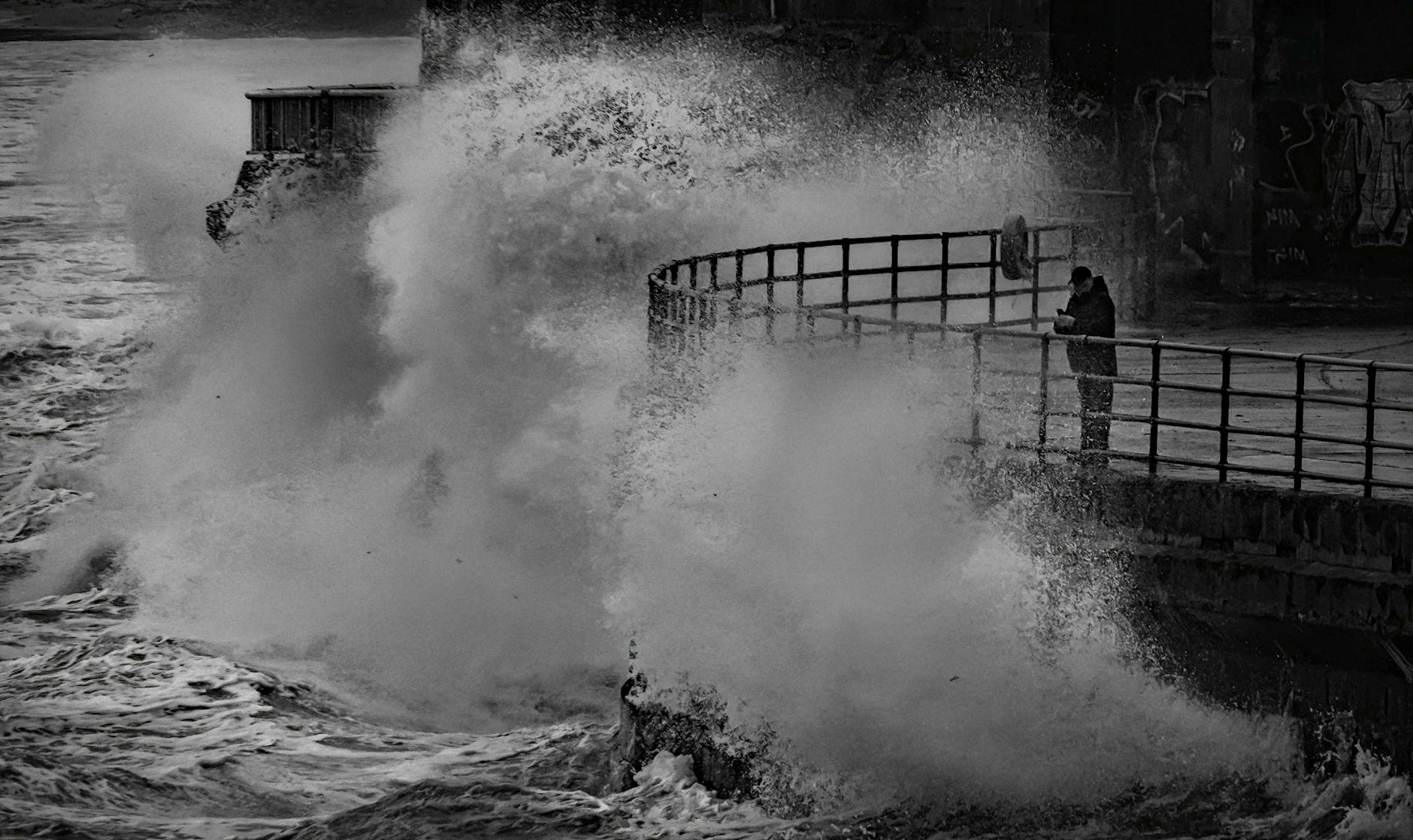
By 2035, nations from Bangladesh to Vanuatu face the highest climate change risks, with rising floods, cyclones, droughts, and sea-level threats overwhelming limited adaptation capacity.
By Namith DP | Aug 12, 2025
Climate change poses accelerating threats across the globe. Recent data from adaptation indexes, historical impact analyses, and forward projections reveal a consistent group of countries at highest risk through 2035. These countries confront intense climate hazards—heat extremes, coastal floods, cyclones, droughts—while facing limited capacity to adapt. This article identifies the 10 countries where those dual risk dimensions intersect most severely, supported by clear metrics and recent evidence.
1. Bangladesh — Coastal flood risk and population density
- Projections show large areas around coastal Bangladesh face rising annual flood exposure through mid-century. Climate Central reports densely populated delta zones at increasing risk.
- Cyclone frequency and intensity remain high. Bangladesh will face more frequent storm surges and tidal inundation.
- ND-GAIN ranks Bangladesh low in adaptive readiness compared to peers. Its early-warning systems show progress, yet finance constraints limit expanded defenses.
- Example: Urban centers like Dhaka already record severe flooding during monsoon. Economist and satellite data show that by 2035, millions will live within 1 meter of future mean sea level.
- Rank keywords: “Bangladesh climate vulnerability 2035”, “Bangladesh coastal flood risk”.
2. Pakistan — Floods, glacial threats, heatwaves
- Pakistan suffered catastrophic floods in 2022 alone, with losses exceeding $30 billion and exposure across large river valleys.
- IPCC confirms glacier melt and extreme rainfall will increase flood risk in the Hindukush-Karakoram region.
- Germanwatch lists Pakistan among nations with highest relative losses in recent decades.
- Pakistan’s infrastructure and budget lack resilience against compound events. ND-GAIN shows low readiness score.
- Clear local metric: flood-affected population rose by 30% between 2010–2022, per EM-DAT data.
3. Haiti — Cyclone exposure and institutional fragility
- Haiti experiences frequent cyclones and floods. Landslides compound storm damage.
- Germanwatch ranks Haiti among the top-five most impacted countries over 1993–2022, in terms of both fatalities and economic loss as share of GDP.
- Political instability and weak governance impede long-term reconstruction. ND-GAIN scores remain low.
- Development reports confirm that Haiti loses up to 8% of GDP annually to disaster-related disruptions.
4. Mozambique — Cyclones and recurring infrastructure loss
- Mozambique’s coastal corridor receives direct cyclone hits. Cyclones like Idai (2019) caused $2.2 billion in damage.
- Germanwatch lists Mozambique among the most affected nations by extreme weather in recent decades.
- Infrastructure often fails before reconstruction completes. Government budget cannot sustain repeated recovery.
- Rockefeller’s CliF index lists Mozambique among “Red Zone” nations with low adaptive finance access.
5. Madagascar — Dual threats: drought and cyclones
- Madagascar’s east coast suffers cyclones; south endures severe droughts.
- The country ranks high on hazard exposure and low on adaptive readiness.
- World Bank links climate variability directly to recurring food crises in southern Madagascar.
- Adaptation investment remains sparse; most agricultural areas depend on rainfed systems vulnerable to both floods and drought.
6. Philippines — Repeated cyclones and economic stress
- The Philippines receives over 20 typhoons annually. Historical loss data show average damage of $3-5 billion per year.
- Germanwatch cites the Philippines in the top-ranking list of most impacted nations, both overall and per capita.
- The country issues early warnings rapidly, but rebuilding drains disaster budgets.
- ND-GAIN shows moderate readiness, yet frequent hazard recurrence undermines long-term resilience.
7. Somalia — Chronic drought, insecurity, food crises
- Somalia faces cyclic droughts driven by warming and precipitation variability. IPCC classifies the Horn of Africa as a hotspot.
- World Bank projects recurring drought intensity through the 2030s.
- Government fragmentation and conflict block coordinated adaptation. Humanitarian aid fills gaps, but lacks scale for systemic resilience.
- In 2024, over 7 million Somalis suffered acute food insecurity, indicating adaptation failure.
8. Yemen — Compound drought, heat and humanitarian collapse
- Yemen suffers extreme heat and recurrent droughts. Rising temperatures increase water stress and crop failure.
- World Bank and UN report severe humanitarian crisis linked to climate-driven water scarcity.
- Ongoing conflict prevents infrastructure investment. ND-GAIN rates Yemen among the lowest readiness scores globally.
- UN data: by 2024, over half Yemen’s population relied on humanitarian assistance due to climate-exacerbated instability.
9. Vanuatu — Small-island extreme exposure
- Vanuatu experiences frequent and intense cyclones. Researchers document slow recovery between storms.
- Sea-level rise threatens coastal villages, many within meters of high tide.
- Germanwatch places Vanuatu among countries with highest per-capita impact and SIDS facing existential climate risk.
- Vanuatu’s government spends over 10% of GDP on disaster recovery; budget cannot support large coastal defenses.
- Key SEO terms: “Vanuatu climate risk index”, “Vanuatu sea-level threat 2035”.
10. Kiribati, Tuvalu, Marshall Islands — Atoll states under existential threat
- These nations face rapid land loss, saltwater intrusion, and periodic inundation.
- Climate Central projects several inhabited atoll islands lose land mass and freshwater viability well before 2040.
- ND-GAIN and Rockefeller indexes show extreme vulnerability and minimal readiness capability.
- Some governments already plan managed retreat/migration. These actions signal system collapse anticipation.
- SEO insights: “Kiribati sea-level rise 2035”, “Tuvalu adaptation capacity”.
Comparative Table
| Country / Entity | Primary Hazard(s) | Adaptive Capacity Status |
|---|---|---|
| Bangladesh | Coastal flooding, cyclones | Low–moderate (improving early warning) |
| Pakistan | Floods, glacier melt, heatwaves | Low |
| Haiti | Cyclones, floods, landslides | Very low |
| Mozambique | Cyclones, floods | Low |
| Madagascar | Cyclones, drought | Very low |
| Philippines | Typhoons, flooding | Moderate |
| Somalia | Drought, conflict-driven impact | Very low |
| Yemen | Heat, drought, humanitarian crisis | Very low |
| Vanuatu | Cyclones, sea-level rise | Very low |
| Kiribati / Tuvalu / Marshall | Sea-level rise, inundation | Extremely low |
Global Context and Quantitative Evidence
- The World Bank reports 1.2 billion people currently face high risk from at least one key climate hazard. Adaptive infrastructure fails to reach most.
- Germanwatch’s 2025 index ranks these ten among the most impacted over 1993–2022, particularly by storms and floods scaled to GDP and casualties.
- Rockefeller’s CliF index shows these countries cluster in a “Red Zone,” where hazard exposure meets limited financial access.
- IPCC AR6 emphasizes that hazard frequency increases will accelerate between 2025–2035, with hotspots in South Asia, East Africa, and SIDS.
Policy Actions Essential by 2035
- Accelerate adaptation finance:
- Governments and multilaterals must direct billions into resilient infrastructure—coastal barriers, flood-resilient housing, climate-smart agriculture.
- Rockefeller’s index shows a deep shortfall in adaptation funding across high-risk countries.
- Strengthen early-warning systems and governance:
- Bangladesh and the Philippines show measurable mortality reduction when early warnings and evacuation systems work.
- Reform financing mechanisms:
- Offer high-risk countries concessional capital for resilience. Reform debt rules to incentivize adaptation investments without fiscal collapse.
- Support relocation and land-use reform:
- Kiribati and Vanuatu illustrate the need for migration planning and legal frameworks for land retreat.
- Enable resilient livelihoods:
- In drought-prone regions like Somalia and Yemen, deliver support to pastoralists and farmers through drought-resistant seeds, mobile water systems, and social safety nets.
Conclusion
Each of these countries faces a distinct combination of climate threats such as cyclones, floods, droughts and sea-level rise. These hazards occur amid low infrastructure, governance, and financial resilience. Global and national actors must act by scaling adaptation finance, reforming development assistance, reinforcing early-warning systems, and supporting resilience-based livelihoods. Loss of life and economic damage measures today point clearly to where investments must occur immediately.
See also –
About The Author




Yikes
[…] Top 10 Countries Facing Serious Climate Risks by 2035 […]
[…] Top 10 Countries Facing Serious Climate Risks by 2035 […]
[…] Top 10 Countries Facing Serious Climate Risks by 2035 […]
[…] Top 10 Countries Facing Serious Climate Risks by 2035 […]