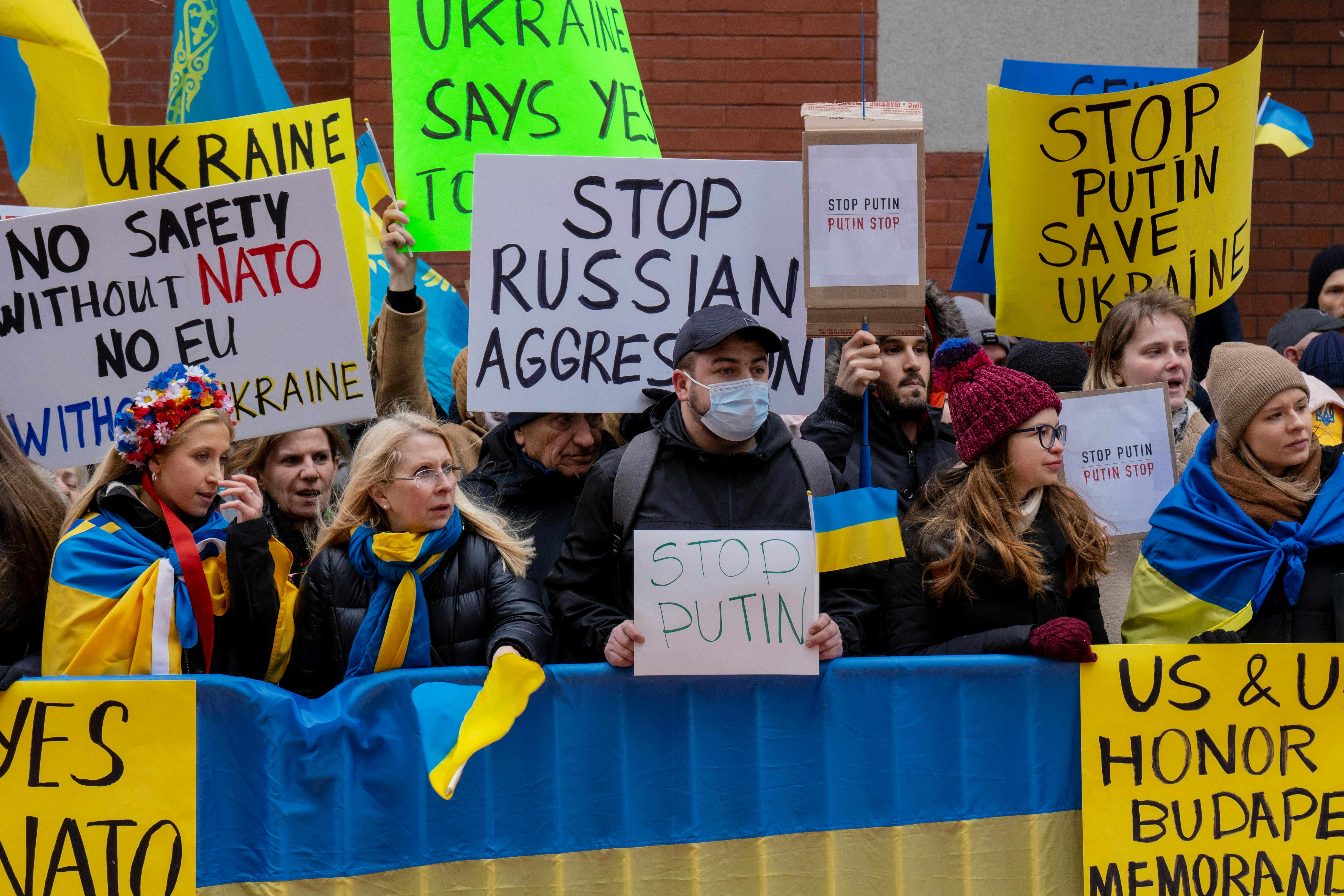
Russia’s full-scale invasion of Ukraine in February 2022 marked a watershed moment in modern geopolitics. Western alliances unified. Global supply chains fractured. Defense policies shifted dramatically. By 2025, strategic responses matured into enduring realignments, shaping global power architecture in multiple domains. NATO expanded northward, the European Union advanced armed integration, and Asia-Pacific countries recalibrated foreign and defense policy. Emerging economies rebalanced partnerships to hedge risk. This article traces the long-term impact of Russia‑Ukraine tensions through 2025 and beyond. It delves into NATO transformation, European defense posture, energy diversification, global trade bifurcation, legal norms reinforcement, defense innovation, Asia-Pacific strategy, and the diverging trajectories of Russia and Ukraine. It draws on verified data, legislative developments, and policy signals from 2025 to project how the conflict rewires global systems.
1. NATO Reinvention and European Defense Posture
By mid‑2025, NATO membership reached 32 as Sweden and Finland joined. Sweden deployed combat jets to Poland, stationed units in Latvia, and placed maritime assets in the Baltic. Finland hosted NATO’s land force headquarters above the Arctic Circle. Member states endorsed a long-term defense spending framework aiming for 5 percent of GDP by 2035 under the Hague Investment Treaty signed at the June 2025 summit.
NATO operationalized the Defense Innovation Accelerator for the North Atlantic (DIANA). In 2025, DIANA issued a challenge inviting 150 technology proposals in areas including energy-resilient power systems for bases, cyber‑defense tools against hybrid threats, and bio‑defense sensors. DIANA’s goal: scale dual‑use civilian innovation across allied defense sectors within two years.
NATO opened permanent command hubs in Poland, Romania, and Estonia, and expanded logistics networks stretching into the Black Sea region. Eastern European states upgraded munitions stockpiles, supply depots, and command-and-control infrastructure. EU member states increased cross‑border defense coordination through joint armaments procurement, boosting intra‑European defense production by 30 percent under the PESCO initiative.
Military readiness improved. In 2024, NATO staged ten large-scale exercises—four times the pre‑2022 level—focusing on rapid deployment, cyber‑electronic warfare, and integrated air defense. In 2025, new battlegroups formed in Lithuania, Slovakia, and the Black Sea region.
Finland and Sweden’s accession added significant military capacity; Finland fielded a brigade of 15,000 troops supported by robust mobilization reserves, while Sweden committed Gripen fighters and territorial defense units.
NATO’s strategic posture emerged less reactive and more enduring: forward bases, continuous rotational deployments, and integration of civilian innovation accelerated deterrence capabilities. Russia’s buffer-zone strategy lost strategic value as NATO infrastructure and capabilities encroached deeper along Russia’s periphery.
By 2025, collective defense readiness and industrial integration constituted a structural realignment across transatlantic defense cooperation that significantly constrains Moscow’s strategic options.

2. European Strategic Autonomy and Energy Diversification
Europe carried out one of its most aggressive energy realignment programs. Reliance on Russian gas fell from 45 percent in 2021 to around 18 percent in early 2025. Gas imports dropped from 157 billion cubic meters (bcm) annually to 54 bcm. EU gas storage levels held at 34 percent in March 2025—down from 60 percent in 2022—reflecting resilient but cautious demand management.
The EU’s central strategic roadmap adopted in 2025 mandated complete phase-out of Russian gas and oil by 2027, with new contract bans enforced earlier. By March 2025, solar output reached 45 terawatt-hours in Q1 alone, up 30 percent year‑on‑year. Renewables comprised over 24 percent of the EU energy mix by mid‑2025. Wind and hydro lagged due to permitting delays.
LNG imports increased significantly, representing 45 percent of total gas supply. The United States supplied 24 percent; Norway supplied 31 percent. EU members accelerated joint procurement mechanisms to stabilize pricing and avoid internal competition.
Europe invested $494 billion in clean energy in 2025 and executed long-term fossil import contracts—valued at $250 billion—through 2028 as transitional strategy. The Critical Raw Materials Act incentivized domestic mining, refining, battery manufacturing, and solar-gadget industries. Member states subsidized new gigawatt-scale plants across Germany, Spain, Poland, and the Netherlands.
EU directed funds to hydrogen pipeline corridors from North Africa and the Middle East to Southern Europe. Trading platforms for hydrogen and ammonia developed rapidly. Strategic battery storage pilots reached 150 megawatt-hours by mid‑2025 across four EU nations. Co‑investment from public and private sectors accelerated grid resilience and diversified supply.
This energy reorientation reduced Moscow’s leverage and enhanced EU resilience. By 2025, Europe reframed energy security as national defence and industrial policy, not simply climate strategy.
3. Global Realignments and Strategic Partnerships
The war forced Russia to pivot eastward. It deepened energy and financial ties with China, India, Iran, and Gulf partners. In January 2025, Russia ended the gas transit agreement through Ukraine, denying transit fees to states such as Slovakia and Ukraine and reducing gas flows by approximately €5 billion annually.
China adopted a posture of multipolar diplomacy. While maintaining limited cooperation in energy sectors, it vocally criticized Western sanctions and sought to present the conflict as a Western escalation. India preserved energy import contracts from Russia while simultaneously engaging in military exercises and defense dialogues with NATO-aligned states. India balanced pragmatic energy ties with strategic diversification.
Many Middle Eastern countries, including Saudi Arabia and the UAE, publicly supported sanctions but continued deep cooperation with Western capitals in energy and defense domains. They invested in LNG and solar projects across Europe while maintaining cautious ties with Russia.
African and Latin American states embraced pragmatic hedging. They joined investment dialogues with BRICS nations but kept open trade relationships with Western partners. Large infrastructure projects shifted toward multilateral agreements that minimized dependency on any single power.
This created bifurcation in economic systems: Western-aligned states opt for regulatory transparency and technological standards; states aligned with Russia rely more on Chinese-led exchange systems, ruble-pegged trade, and reduced compliance. Financial transparency, ESG standards, and IP enforcement diverged sharply between these blocs.
Western economies responded with reshoring incentives and supply-chain resilience programs. Semiconductors, pharmaceuticals, critical minerals, and energy infrastructure projects saw domestic investments. National funds offered tax credits and loans to relocate production or invest in allied partners.
Strategic energy diplomacy accelerated partnerships in Central and Eastern Europe, East Asia, and the Indo-Pacific. Defense agreements, joint naval exercises, and cybersecurity partnerships increased across five continents.

4. Technology Innovation and Defense Readiness
Russia–Ukraine conflict accelerated global military technological innovation. Western nations increased investment in autonomous warfare, hypersonic weapons, artificial intelligence for targeting and logistics, and electronic warfare. DIANA facilitated cross-border civilian-military dual-use innovation. In 2025 alone, DIANA awarded grants for drone swarms, synthetic material development, and cyber-secured energy grids.
European and U.S. militaries integrated AI-assisted targeting and logistics platforms. NATO forces deployed joint units enhanced with smart sensors, encryption, and distributed microgrid power sources. These microgrids, using solar, hydrogen, or battery storage, power remote bases with secure local energy.
Drone technology evolved rapidly. Ukrainian defense firms deployed autonomous loitering munitions supplied with Western guidance systems. NATO countries adapted these systems for hybrid and cyber-defence roles. Russia also stakes claim to antidrone platforms, but supply constraints and sanctions slowed scale-up.
Disinformation campaigns advanced using deepfake as a weapon. NATO established a secure data‑sharing framework across allied media outlets. Cyber‑defence investments tripled between 2022 and 2025.
Critical infrastructure protection improved. Major cities in Europe, North America, and East Asia mandated redundancy in grid design, requiring multiple substations and fuel backup storage. Governments instituted regular stress tests and red‑team wargames simulating hybrid attacks and energy disruptions.
By 2025, national research budgets grew to emphasize energy-resilient technologies, dual-use innovation topologies, and secure logistics. NATO’s cumulative investment in cyber‑physical system resilience punctuates how critical defence and tech strategy have become inseparable.
5. Asia-Pacific Security Rebalance
Russia’s war had ripple effects across Asia-Pacific strategy. In response to perceived Western resolve, China accelerated military modernization, especially naval and missile systems. Japan and South Korea increased defence budgets considerably in 2025, accelerated U.S. base access agreements, and invested in ballistic missile defense shields.
India expanded its engagement with NATO and Quad members, hosting joint exercises while maintaining energy imports from Russia, Gulf, and Western suppliers. India adopted a hybrid alignment strategy—balancing defence cooperation with the West and maintaining economic ties to Moscow.
Indonesia, Vietnam, and the Philippines amplified maritime and defence cooperation with Western allies including Australia, Japan, and the United States. Naval exercises increased by 35 percent in Southeast Asia, focusing on territorial integrity and sea-lane security.
Australia declared a permanent forward posture in the Indo-Pacific and formed new trilateral defence pacts with the U.S. and Japan to emphasize maritime stability and deterrence. Joint air drills with South Korea and Japan increased frequency. Australia also invested in regional critical mineral projects in Indonesia to secure downstream supply for energy transition.
Southeast Asian countries balanced Chinese economic ties with security partnerships with Western states. Vietnam increased submarine patrol cooperation; the Philippines negotiated enhanced access agreements; Malaysia deepened joint cyber‑defence training with the U.S.
This strategic recalibration underscored: the Russia–Ukraine conflict is not confined to Europe. It reinforced shared threat perception in Asia-Pacific, producing deeper interoperability and regional deterrence networks by 2025.
6. Ukraine’s Western Integration and Russia’s Isolation
Ukraine deepened integration with Western institutions. By 2025, it completed 12 of the 35 EU pre-accession chapters and passed reforms in anti-government corruption, judicial independence, and trade liberalization. It secured reconstruction and defence funding totaling over $200 billion. NATO provided equipment, training, and logistics support despite lacking formal membership.
Ukraine’s domestic reforms gained traction; its security services restructured, anti-corruption courts began operations, and digital ID systems expanded for governance transparency. Private investors deployed capital into renewable energy, military logistics, and enterprise software aligned with EU standards.
Russia, in contrast, sank into deeper isolation. Sanctions restricted access to Western capital markets, reduced IT exports, and limited technology imports. Financial systems outside Eurasian Economic Union countries froze Russian domestic assets. Russia strengthened energy contracts with China and India but faced trade stagnation with the West. Its defence industry capacity continued to erode due to technology blockade.
Russian elites invested in Chinese-run energy and infrastructure projects but faced failure in diversifying innovation outside energy and raw materials. Moscow consolidated influence across Central Asia and Africa via state-led pipelines, railway projects, and military contracts. However, these efforts replicated narrow economic dependence on China. The asymmetry in outcomes—Ukraine’s growing institutional alignment versus Russia’s growing dependency—deepened through 2025.
Conclusion
Russia–Ukraine tensions redefined global strategy across defence, economy, energy, and innovation domains. NATO and the EU transformed crisis measures into permanent institutions and industrial coordination. Europe rewired its energy system away from Russian supplies and sedimented climate policy into strategic autonomy. Parallel blocs emerged along ideological, technological, and supply‑chain lines. Asia‑Pacific strengthened strategic cooperation with Western powers and expanded local deterrence frameworks. Ukraine anchored itself in Western institutions and values, while Russia increasingly depends on limited, ideologically aligned partners. The conflict reaffirms that national strategy must integrate security, economics, technology, and diplomacy—not siloed policy. Governments that build resilient, coherent systems across these domains will shape the rules of global political order. Nations that delay comprehensive reform risk marginalization in a bifurcated world.
Sources
https://www.europarl.europa.eu
About The Author