The South China Sea remains one of the world’s most strategically important and politically sensitive maritime regions. In 2025, the disputes involving China and other claimant states have escalated into a full-spectrum geopolitical rivalry. China continues to expand its naval footprint and infrastructure in disputed areas, while Southeast Asian states increase legal, military, and diplomatic countermeasures. The region accounts for one-third of global shipping traffic, significant energy resources, and vital fisheries—making it both an economic and strategic focal point for regional and global powers.
In response, key stakeholders have redefined their strategic approaches. The Association of Southeast Asian Nations (ASEAN) has accelerated efforts toward a binding Code of Conduct. The United States and its Indo-Pacific allies have strengthened naval collaboration with ASEAN states. China, in turn, has extended partnerships with countries like Cambodia and strengthened its military presence. The 2025 environment reflects an increasingly multipolar and contested regional order.
1. The Status of Maritime Claims and National Objectives
China, Vietnam, the Philippines, Malaysia, Brunei, and Taiwan maintain overlapping claims in the South China Sea. The disputes center around island chains such as the Spratlys and Paracels, and maritime zones extending from these features.
- China’s nine-dash line, declared historically based, continues to cover nearly 90 percent of the South China Sea.
- Vietnam expanded presence around the Spratly Islands and increased reclamation by over 2,500 acres in 2025.
- The Philippines reinforced its claim by codifying its exclusive economic zones and resupply operations near the Second Thomas Shoal.
- Malaysia and Brunei emphasized resource development and legal defense rather than military posturing.
- Taiwan enhanced joint fisheries and research operations while promoting non-confrontational maritime policy.
In 2025, China constructed additional infrastructure on artificial islands, including airfields, radar stations, and deep-sea ports. It increased its coast guard fleet by 20 percent and continued grey-zone tactics—such as deploying maritime militias and intimidating civilian vessels.

2. ASEAN Diplomacy and Regional Legal Architecture
ASEAN has resumed efforts to finalize the long-delayed Code of Conduct (COC) with China. Under Malaysia’s 2025 chairmanship, negotiations have made tangible progress:
- Phase I finalized common definitions of illegal incursions and maritime boundaries.
- Phase II, underway as of mid-2025, focuses on enforcement protocols, emergency de-escalation hotlines, and communication standards.
- Phase III aims to draft legally binding provisions for submission by early 2026.
Claimant states such as the Philippines and Vietnam have pushed for enforceability, mandatory dispute arbitration, and demilitarization clauses. China prefers a non-binding agreement based on consensus and flexibility.
Meanwhile, the Philippines and Vietnam submitted new documents to the United Nations in 2025, reaffirming their maritime claims under the United Nations Convention on the Law of the Sea (UNCLOS). The Philippines enacted a Maritime Zones Law aligning its territorial waters with UNCLOS provisions, while Vietnam filed new evidence on harassment of energy operations.
Taiwan proposed technical maritime boundary delineations to regional governments and offered satellite imagery for fisheries management.
3. Military Modernization and Strategic Posturing
Military activity in the region intensified in 2025, marked by exercises, deployments, and strategic agreements.
- The Philippines expanded defense cooperation with the United States, Japan, and Australia. Its Enhanced Defense Cooperation Agreement (EDCA) sites now host new logistics and refueling bases.
- Vietnam completed the deployment of advanced radar and short-range missile systems across its island outposts.
- Malaysia commissioned new coast guard cutters and unmanned surveillance vessels.
- China launched amphibious landing drills, cyberwarfare simulations, and anti-access area denial (A2/AD) platforms.
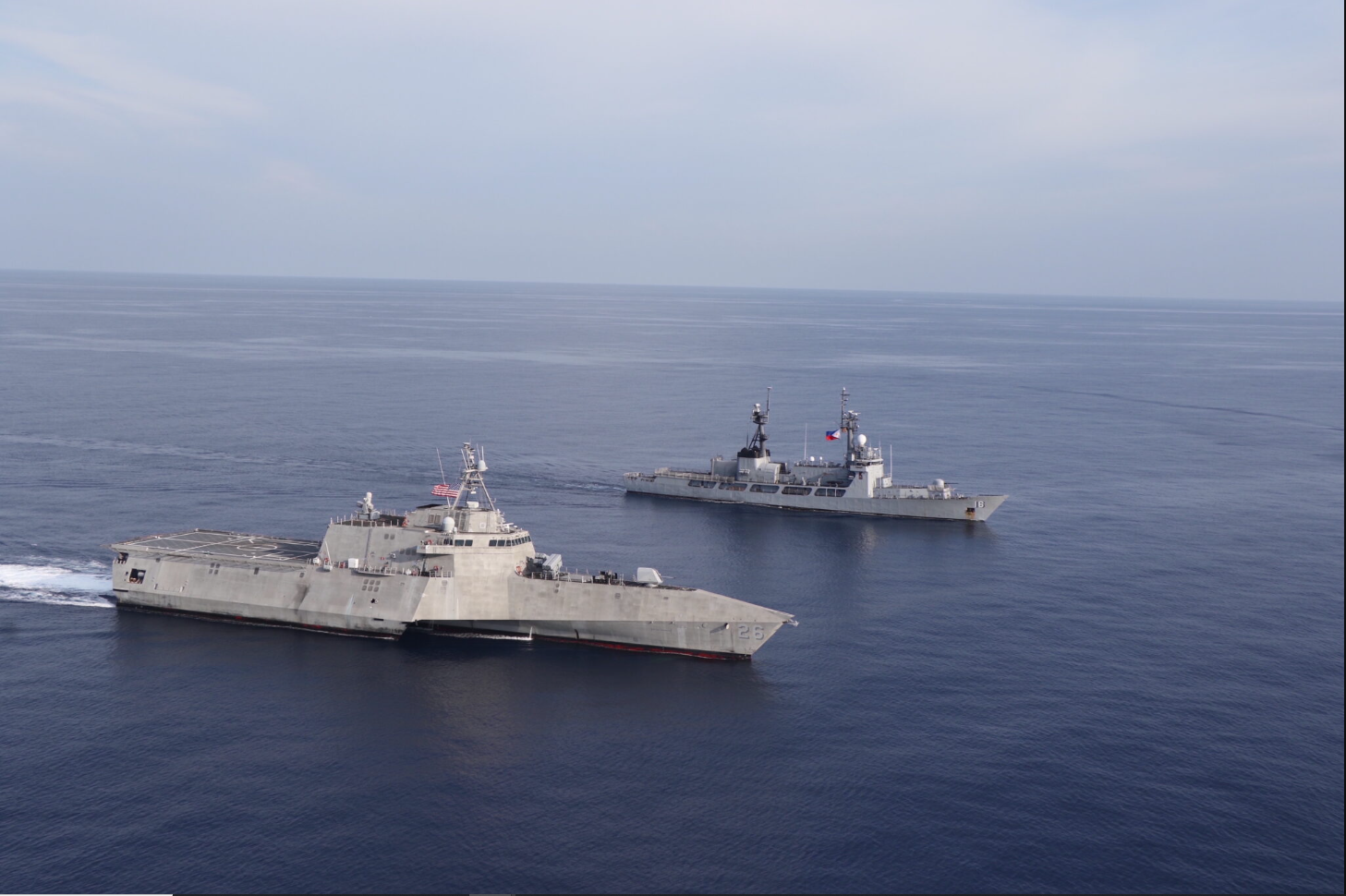
- U.S. forces increased joint maritime patrols, submarine surveillance, and port visits in the region.
By July 2025, over 30 joint military exercises had occurred between ASEAN members and their partners. “Bamboo Shield 2025,” a multilateral maritime exercise involving Vietnam, the Philippines, and Indonesia, focused on coordinated fisheries enforcement and anti-submarine tactics.
The Quad nations—India, Japan, Australia, and the U.S.—formalized interoperability agreements with the Philippines and Malaysia, enhancing joint response capability in contested waters.

4. Economic and Resource Competition
The South China Sea holds significant economic value. In 2025, new exploration and investment deals reshaped resource dynamics:
- An estimated $2.5 trillion worth of untapped oil and natural gas lies beneath contested waters.
- Fisheries generate 10 percent of the global catch and support 3.5 million livelihoods in Southeast Asia.
- Trade routes passing through the region carry more than $5 trillion annually.
Energy development became a central flashpoint:
- Vietnam awarded new offshore contracts near Vanguard Bank to South Korean and Japanese firms.
- The Philippines began joint exploration with Australia near Reed Bank.
- China maintained aggressive patrols to disrupt exploration activities it deemed illegal within its claimed area.
Fishing rights became another major issue. China imposed unilateral bans on foreign fishing from May to August 2025. The Philippines and Vietnam rejected the ban and dispatched coast guard escorts to protect their fleets.
Ecological degradation also worsened. Satellite monitoring in May 2025 showed that Chinese maritime infrastructure expansion had caused irreversible reef damage at Scarborough Shoal and Fiery Cross Reef.
5. Cyber, Surveillance, and Technological Integration
Digital infrastructure and surveillance capabilities are increasingly central to maritime strategy.
- China expanded cyber surveillance bases on Woody Island and Paracel Reef, integrating them with BeiDou satellite navigation systems.
- The U.S. installed undersea sensors near Palawan and conducted aerial reconnaissance through new agreements with the Philippines.
- ASEAN members, with support from Japan, developed shared Automatic Identification System (AIS) tracking for vessel detection.
In June 2025, Vietnam, Malaysia, and the Philippines launched a regional Maritime Domain Awareness (MDA) initiative. This real-time data-sharing system integrates drone surveillance, naval intelligence, and satellite feeds.
Digital mapping partnerships with European and Indian space agencies helped claimant states document unauthorized encroachments and reef degradation. AI-based vessel tracking and pattern recognition software were deployed by coast guards to identify suspicious behavior.
The Philippines’ “Blue Shield” system began issuing weekly alerts on potential threats, significantly improving civilian and commercial maritime navigation.
6. External Stakeholders and Great Power Politics
External players continue to shape the strategic landscape:
- The United States increased military funding and naval presence in the region, including stationing naval logistics units at EDCA bases.
- Japan signed new defense pacts with Vietnam and the Philippines to enable reciprocal access for naval vessels.
- India conducted its first patrol alongside Vietnam in the South China Sea in March 2025.
- Australia provided technical assistance for marine environmental protection and port infrastructure.
Meanwhile, China expanded economic and military ties with Cambodia and Laos. A naval facility under construction in Ream, Cambodia, is expected to house Chinese patrol craft by 2026. Beijing also secured new economic cooperation agreements with Thailand and Brunei, emphasizing infrastructure over security.
Russia resumed naval exercises with China in early 2025 and offered advanced surveillance platforms to Beijing.
European involvement is limited but growing. France conducted freedom of navigation patrols, while Germany provided training and maritime law support to ASEAN navies.
7. Strategic Options and Pathways Forward
Given the regional complexity, claimant states and partners have several options to ensure stability and cooperation.
- Advance the Code of Conduct: ASEAN should complete a binding, enforceable Code of Conduct with dispute resolution mechanisms by the end of 2026.
- Institutionalize Regional Surveillance: Expand real-time information sharing through ASEAN’s MDA initiative. Incorporate Quad and EU technical support to standardize protocols.
- Establish Legal Support Networks: Create a regional maritime legal advisory network to provide UNCLOS-based consultation for states facing legal threats or harassment.
- Promote Eco-Security Agreements: Launch a multilateral environmental agreement focused on coral reef preservation, monitored by third-party scientific bodies.
- Deploy De-Escalation Mechanisms: Introduce hotlines, joint rescue operations, and neutral incident investigation teams to reduce conflict escalation risks.
- Increase Civil-Military Transparency: Publish annual white papers detailing coast guard operations and defense postures in the South China Sea.
- Foster Trade Resilience: Invest in port diversification and alternate shipping corridors through Indonesia and India to reduce over-dependence on contested routes.
These measures will help balance deterrence with diplomacy, reinforce international law, and ensure the economic and environmental sustainability of the region.
8. Impact on Global Trade and Supply Chain Resilience
- Strategic shipping chokepoint: The South China Sea handles more than 30% of global shipping by volume. Any disruption due to military standoff or legal blockades threatens global supply chains, particularly for energy, semiconductors, and industrial raw materials.
- Energy corridor vulnerability: Over 80% of China’s oil imports and a substantial portion of Japan and South Korea’s LNG supplies pass through the region. In 2025, threats of blockades prompted Tokyo and Seoul to accelerate maritime energy insurance frameworks and diversification plans.
- Insurance premiums and risk assessments: Maritime insurers in 2025 increased premiums for vessels passing within 200 nautical miles of the Spratly Islands, citing sustained presence of armed coast guard and militia ships. This led shipping companies to reroute through the Sunda and Lombok Straits, increasing delivery times and costs.
- Container delays and port congestion: Vietnamese ports at Hai Phong and Da Nang experienced congestion due to rerouted traffic and additional customs inspections linked to maritime security alerts. This disrupted Southeast Asia’s role as a manufacturing hub, particularly for electronics and automotive parts.
- Corporate supply chain reconfiguration: Multinationals like Apple, Samsung, and Toyota intensified “China Plus One” strategies. In 2025, they expanded manufacturing in Vietnam, Thailand, and India to reduce dependency on China-centric logistics routes vulnerable to naval tensions.
- Resilient logistics infrastructure: ASEAN and Japan co-financed new digital infrastructure in 2025 to support AI-driven shipment tracking and rerouting algorithms. These systems now provide dynamic pathfinding to avoid high-risk zones, increasing trade resilience.
- Regional economic partnerships: The Regional Comprehensive Economic Partnership (RCEP) countries launched a maritime trade security coordination platform in June 2025, focused on keeping sea lanes open, mitigating insurance risk, and coordinating customs processes in periods of high tension.
Conclusion
In 2025, the South China Sea is a complex nexus of geopolitical rivalry, resource competition, and strategic realignment. China’s actions have accelerated ASEAN’s pursuit of a collective response. The increased involvement of the U.S., Japan, India, and Australia has reshaped security dynamics. The combination of military modernization, legal strategy, surveillance infrastructure, and environmental advocacy defines the emerging landscape.
The future of the South China Sea will depend on the region’s ability to codify norms, balance strategic interests, and prioritize cooperation over confrontation. A rules-based maritime order, backed by legal clarity and technological capability, remains the clearest path to peace and prosperity.
Sources
About The Author