
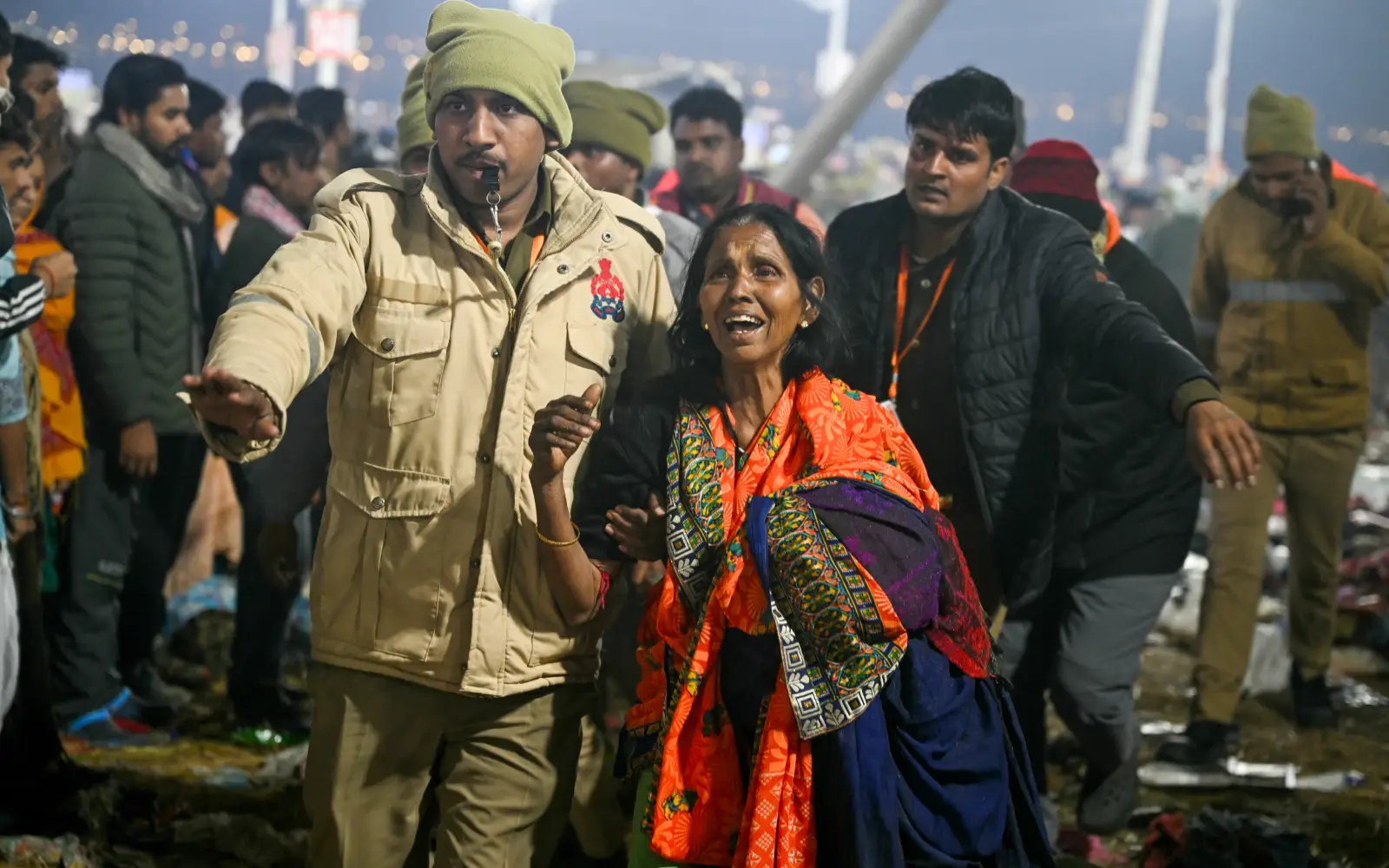
On January 29, 2025, the spiritual sanctity of the Maha Kumbh Mela in Prayagraj was overshadowed by a horrific tragedy. What was meant to be a day of devotion and purification turned into a nightmare as a massive stampede claimed the lives of at least 30 people, with the death toll feared to rise. The chaos unfolded in the early hours, just before the Mauni Amavasya holy dip, a day considered the most auspicious of the Kumbh Mela.
The Incident: A Morning of Mayhem
The stampede occurred around 4:00 AM IST at one of the main bathing ghats when an overwhelming crowd surged forward, eager to partake in the sacred ritual. According to eyewitness accounts, the rush was triggered by an unanticipated bottleneck in the movement of devotees, leading to a frantic push from the rear. Many pilgrims, including elderly individuals and children, were caught in the deadly crush.
Local authorities had anticipated an influx of millions, yet the sheer number of attendees seemed to exceed the planned arrangements. Emergency responders were seen scrambling to provide medical assistance, while survivors frantically searched for their loved ones in the aftermath of the tragedy.
A Gathering of Unprecedented Scale
The Kumbh Mela is the world’s largest religious gathering, drawing millions of Hindu devotees from across India and beyond. This year’s event was expected to witness over 400 million pilgrims throughout its six-week span, making crowd management a herculean task.
Despite extensive planning, which included the deployment of artificial intelligence for crowd density monitoring, nearly 300 surveillance cameras, and overhead drones, the massive congregation proved too difficult to control.
Casualties and Rescue Operations
By noon, authorities confirmed the deaths of 30 individuals, with over 100 others injured, some critically. The death toll remains fluid, as hospitals in Prayagraj continue to receive injured pilgrims. According to reports, many fatalities were caused by asphyxiation and trampling injuries.
Rescue operations were launched immediately, with medical teams and paramilitary forces working tirelessly to provide aid. However, many victims lay unattended for crucial minutes due to the dense crowd and lack of clear evacuation paths.
Government Response and Official Statements
In response to the tragedy, Prime Minister Narendra Modi expressed his condolences, assuring that every effort was being made to assist the affected families. Uttar Pradesh Chief Minister Yogi Adityanath has ordered a high-level inquiry into the causes of the stampede, focusing on whether lapses in crowd management contributed to the disaster.
The state government has also announced compensation of ₹5 lakh ($6,000 USD) for the families of the deceased and ₹1 lakh ($1,200 USD) for the injured.
Historical Tragedies at the Kumbh Mela
This is not the first time the Kumbh Mela has witnessed such a disaster. The sheer scale of the event has historically made it vulnerable to crowd-related tragedies:
- 1954: One of the deadliest Kumbh Mela stampedes occurred in Prayagraj, killing over 800 people.
- 2013: Another stampede during the Mela led to 36 deaths at the Allahabad railway station as pilgrims tried to leave the city.
- 2019: While no fatalities were reported, multiple incidents of crowd crushes led to injuries despite the authorities deploying 20,000 police personnel for crowd control.
The Role of Crowd Management and AI Monitoring
This year, authorities had introduced AI-powered surveillance and automated crowd control mechanisms to prevent such mishaps. However, these measures failed to prevent the disaster, raising questions about their effectiveness. Experts argue that while technology can aid in crowd control, human intervention and well-planned movement pathways remain crucial.
The Prayagraj administration had designated separate entry and exit points, but these were ignored as the crowd swelled beyond capacity. Pilgrims pushing against barricades led to a collapse in security, triggering the stampede.
Survivor Accounts: Panic and Loss
Eyewitnesses recounted harrowing tales of survival. A devotee, Ramesh Tiwari, who lost his 68-year-old mother in the crush, described the scene: “One moment we were walking towards the ghat, and the next, we were struggling to breathe. People were falling over each other, screaming for help.”
Another survivor, Anita Devi, recalled how she clung to a railing for dear life as the crowd surged around her: “I saw people getting crushed right in front of me. The screams were unbearable.”
Lessons for the Future
The Maha Kumbh Mela is an event of immense religious significance, but repeated tragedies highlight the urgent need for more stringent safety protocols. Experts suggest that future gatherings must include:
- Strict caps on entry numbers per zone to avoid overcrowding.
- Increased deployment of crowd control officers trained in handling massive gatherings.
- AI-integrated emergency response systems that trigger immediate alerts at critical pressure points.
- Pre-planned evacuation drills for both pilgrims and security personnel.
- Mandatory awareness campaigns educating attendees on safety protocols before arrival.
A Nation Mourns, Questions Arise
As the nation reels from yet another avoidable tragedy, the focus shifts to accountability. Were authorities too complacent in their planning? Did religious fervor outpace safety precautions?
The tragedy at the 2025 Maha Kumbh Mela serves as a grim reminder that even the most sacred gatherings must prioritize human life above all. While faith remains unshaken, it is the responsibility of both the government and religious leaders to ensure that worshippers can practice their devotion without fear of catastrophe.
Sources and Further Reading:
- NDTV: 30 Dead in Stampede at Maha Kumbh
- Reuters: Fatalities Feared in Maha Kumbh Festival Stampede
- The Guardian: India Crowd Crush Updates
- AP News: Several Feared Dead at Maha Kumbh
About The Author


