
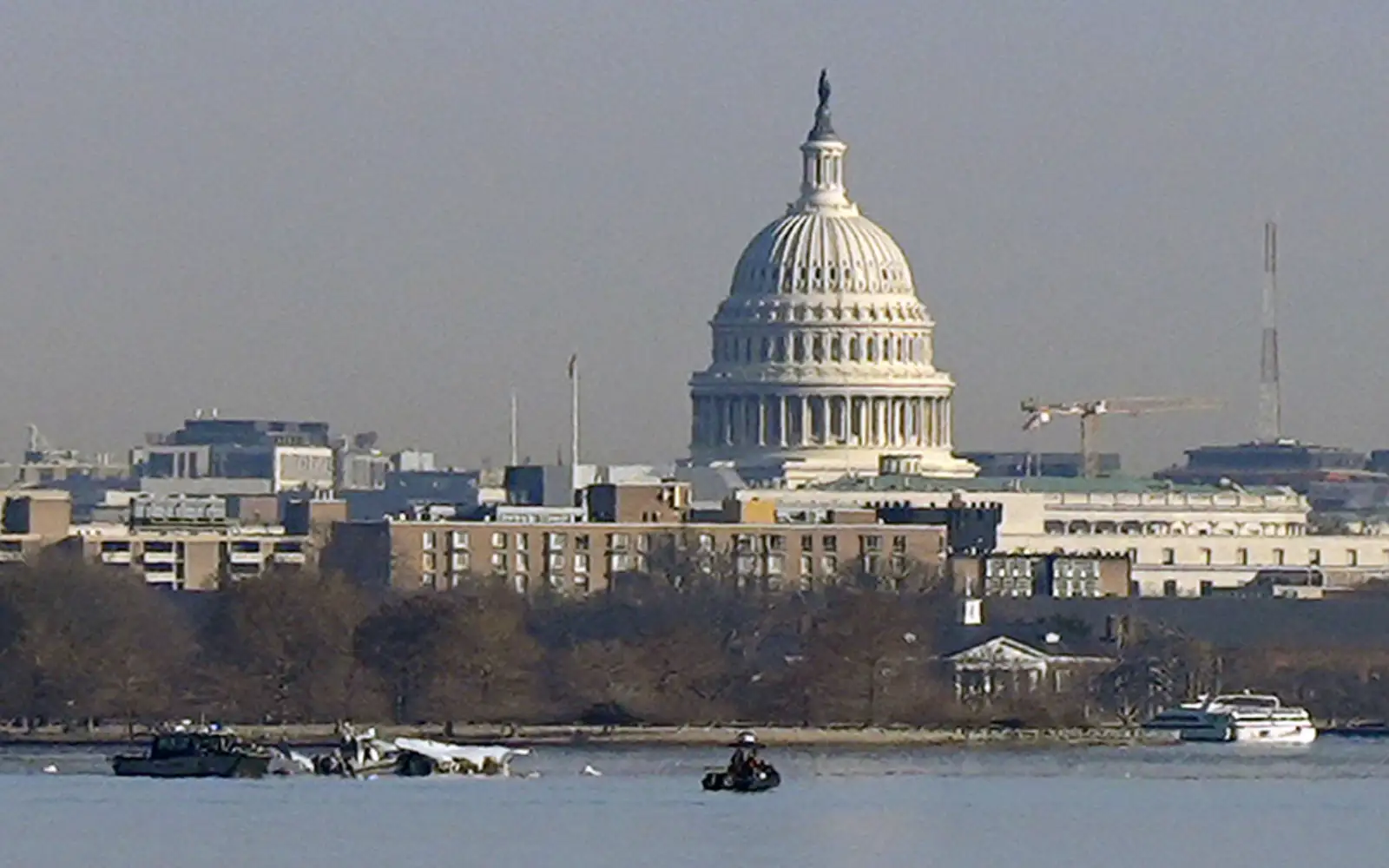
Washington, D.C., a city synonymous with power and precision, witnessed a horrifying moment on January 29, 2025, when a private jet, attempting to land at Ronald Reagan Washington National Airport (DCA), crashed into the icy waters of the Potomac River. The catastrophic accident, eerily reminiscent of the 1982 Air Florida Flight 90 disaster, has once again raised pressing questions about aviation safety, winter weather preparedness, and the limits of human and machine resilience.
A Routine Flight Turns into a Nightmare
The aircraft, identified as a Bombardier Challenger 600 series jet, was en route to DCA from Tennessee. It was carrying several passengers, including a high-profile business delegation, whose names have not yet been officially released. The flight, which should have been a seamless descent into one of the nation’s busiest airports, instead ended in tragedy just minutes before its scheduled landing.
According to air traffic control (ATC recordings), the pilot reported severe icing issues and struggled to maintain altitude as the aircraft entered its final approach. Witnesses on the ground described seeing the jet flying erratically before plummeting into the Potomac with a terrifying impact that sent debris scattering across the icy water.
“I saw the plane shaking, almost like it was fighting against the wind, and then it just dropped,” said Sarah Williams, a local commuter who was crossing the Arlington Memorial Bridge when the crash happened. “It was like a movie scene, but real, and I knew right away this was bad.”
The Weather Factor: Was This Preventable?
January in Washington D.C. is no stranger to unpredictable and often treacherous weather. On the day of the crash, meteorologists had warned of freezing rain, high winds, and rapidly deteriorating visibility. The National Weather Service had issued an advisory about ice accumulation, a known hazard for aircraft, especially during landing.
Despite these warnings, the flight continued its descent into DCA, an airport infamous for its short runways and challenging approach paths. Unlike other airports in the region, Reagan National doesn’t allow larger commercial aircraft to circle and attempt an alternate approach with more favorable conditions—it’s often a one-shot deal.
Experts are already speculating that the aircraft may have suffered from severe airframe icing, a phenomenon that reduces lift and increases drag, making it nearly impossible for a pilot to maintain control. While commercial aircraft undergo rigorous deicing procedures before takeoff, smaller private jets don’t always have the same level of oversight or resources. Was this jet adequately prepared for the conditions? And if the pilot was aware of the dangers, why wasn’t a diversion to a safer airport considered?
Rescue Efforts: A Race Against Time
The moment the jet struck the water, the city’s emergency response system was put to the ultimate test. D.C. Fire and EMS, alongside the U.S. Coast Guard and local police, rushed to the scene. The freezing temperatures made survival in the water nearly impossible, creating a desperate scramble to locate survivors before hypothermia set in.
Divers and first responders, battling against icy currents and floating wreckage, managed to pull at least two people from the river alive. However, several others remain missing, with authorities fearing the worst. As recovery efforts continue, the grim reality sets in—this was not just an aviation accident but a full-scale disaster.
History Repeating Itself? The Haunting Parallels to 1982
For those old enough to remember, this crash is disturbingly similar to the Air Florida Flight 90 tragedy, where a Boeing 737 took off from DCA during a snowstorm, only to crash into the Potomac moments later due to ice buildup on the wings. That disaster claimed 78 lives and led to significant reforms in aircraft deicing regulations.
Yet, here we are in 2025, faced with another winter aviation disaster. Have we really learned from the past, or have we become complacent?
The Investigation: What Went Wrong?
The National Transportation Safety Board (NTSB) has launched an extensive investigation into the crash, with early reports suggesting multiple potential causes, including:
- Icing Issues – Was the aircraft properly deiced before its descent? Did the pilots recognize the severity of the ice buildup in time?
- Pilot Decision-Making – Why was the flight not diverted to Dulles International (IAD) or Baltimore-Washington (BWI), both of which offer longer runways and less restrictive approach paths?
- Aircraft Performance – Was the Challenger jet equipped with the latest anti-icing technology, and was it functioning properly?
Investigators are currently retrieving the aircraft’s black box data and cockpit voice recordings, which will be crucial in understanding the final moments of the flight.
What Comes Next? A Call for Change
This tragedy is a wake-up call—one that forces us to question whether enough has been done to prevent ice-related aviation disasters. Private aviation, though vital for business and government officials, often operates under looser regulations than commercial airlines. Should there be stricter winter weather protocols for these flights? Should Reagan National impose stricter limits on landings during dangerous weather conditions?
The families of those onboard deserve answers, and the aviation community must ensure that this is the last time Washington D.C. witnesses such a tragedy.
Final Thoughts: A City in Mourning, A Nation Demanding Answers
As rescue teams continue their search in the frigid waters of the Potomac, Washington D.C. finds itself in a moment of collective grief and reflection. The echoes of past mistakes are loud, and the demand for change is even louder.
For now, we mourn the lives lost, we salute the first responders who risked everything to save others, and we wait—impatiently, desperately—for the truth about what really happened in the sky over our nation’s capital.
For ongoing updates, follow CNN’s live coverage here: CNN Live Updates on D.C. Plane Crash.
About The Author


