
By Namith DP | July 04, 2025
Introduction
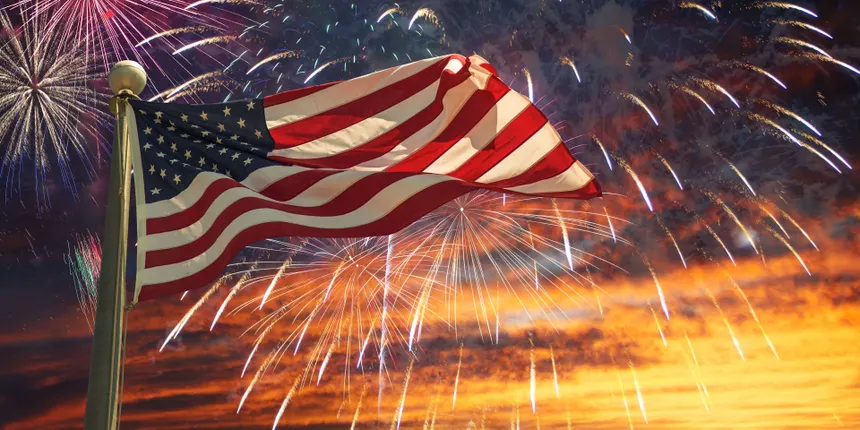
The Fourth of July, officially known as Independence Day, stands as one of the most politically and historically significant dates in the United States. Observed annually on July 4, it commemorates the adoption of the Declaration of Independence by the Second Continental Congress in 1776, marking the formal separation of the Thirteen Colonies from British rule. Far from being merely ceremonial, the date reflects foundational aspects of American governance, law, and identity. Understanding its origin, legal status, and evolution is crucial for interpreting the broader implications of American independence in contemporary civil and political discourse.
Part A: Origins, Legal Framework, and Foundational Significance of the Fourth of July
1. Historical Origins: Facts Behind the Declaration

The Declaration of Independence, ratified on July 4, 1776, was not the start of the Revolutionary War but a formal assertion of autonomy by the colonies. Several key events preceded and influenced the decision:
- Lexington and Concord Battles (April 19, 1775): First military engagements of the Revolutionary War.
- Olive Branch Petition (July 1775): Final attempt by the colonies to avoid war, which King George III rejected.
- Thomas Paine’s Common Sense (January 1776): Argued for complete independence in plain language, selling over 100,000 copies in the first few months and catalyzing public opinion.
Continental Congress Timeline:
| Date | Event |
|---|---|
| June 7, 1776 | Richard Henry Lee introduces the resolution for independence. |
| June 11, 1776 | A committee including Jefferson, Adams, and Franklin is appointed to draft the Declaration. |
| July 2, 1776 | Congress votes in favor of independence. |
| July 4, 1776 | Final version of the Declaration is adopted. |
Notably, while July 2 was the date of the vote, July 4 became the commemorated date because that’s when the Declaration’s text was formally adopted and printed.
2. Legal Recognition and Federal Holiday Status
The recognition of the Fourth of July as a federal holiday occurred much later, reflecting a gradual institutionalization of national memory.
- First Celebrations (1777–1780s): Fireworks, speeches, and parades emerged organically, especially in Boston and Philadelphia.
- Legal Status:
- 1870: Congress made Independence Day an unpaid federal holiday.
- 1938: Congress amended the law, granting paid leave for federal employees.
This evolution underlines the transformation of July 4 from a civic expression of independence to a formally acknowledged national holiday with defined labor and legal implications.
3. Content and Political Purpose of the Declaration
The Declaration of Independence, primarily drafted by Thomas Jefferson, serves both as a legal document and a political manifesto. It consists of five distinct parts:
- Preamble: Establishes philosophical principles of human rights and government accountability.
- Declaration of Rights: Articulates Enlightenment-era concepts, asserting that governments derive power from the consent of the governed.
- List of Grievances: Enumerates 27 specific accusations against King George III, ranging from taxation to the quartering of troops.
- Resolution of Independence: Officially declares the colonies’ independence from Great Britain.
- Signatures: Led by John Hancock, signatories represented a cross-section of colonial leadership.
Key Points:
- The Declaration was not a governing document (unlike the Constitution or Articles of Confederation).
- It functioned as a unilateral declaration, lacking diplomatic recognition at the time of issuance.
This document’s enduring relevance stems from its articulation of universal political rights, which have influenced both American jurisprudence and global democratic movements.
4. State-Level Variations and Observances
Although the Fourth of July is a national holiday, individual states historically recognized it differently. For example:
- Massachusetts (1781): First state to recognize July 4 as a state holiday.
- New York (1827): Declared July 4 a public holiday in its revised statutes.
- Southern States (Post-Civil War): Some areas avoided large-scale celebrations, reflecting political tensions over federal authority.
These discrepancies reflect how the meaning of Independence Day evolved through shifting political landscapes.
5. Role of Print Media and Public Engagement
The dissemination and public understanding of the Fourth of July owe much to early American media:
- 1776 Broadside Printings: The Dunlap Broadsides, printed by John Dunlap, were the first published versions distributed to states and military units.
- Newspapers: Early publications like the Pennsylvania Evening Post printed the full Declaration text on July 6, 1776, boosting public exposure.
This print campaign was essential for mobilizing public support and ensuring the colonies perceived the decision as legitimate and collective.
6. Presidential Acknowledgments and National Messaging
Since the early 19th century, U.S. presidents have used Independence Day to communicate national values and address contemporary issues:
- Thomas Jefferson and John Adams: Both died on July 4, 1826, the 50th anniversary, reinforcing the date’s symbolic power.
- Abraham Lincoln (1861): Used the day to reinforce unity during the Civil War, referencing the Declaration in speeches.
- Franklin D. Roosevelt (1941): Promoted July 4 as a moment of resolve against fascism, ahead of U.S. entry into World War II.
These strategic uses underscore the holiday’s role in shaping national narrative and policy direction.
7. Public Education and Civic Literacy
State-mandated curriculums often require the teaching of the Declaration of Independence, especially around national holidays:
- Common Core Standards: Emphasize critical analysis of founding documents, including the Declaration.
- State Examples:
- Texas Education Code §29.907: Requires instruction on the Declaration during Celebrate Freedom Week.
- Florida Statutes §1003.421: Mandates public schools to hold a minimum of 3 hours of instruction on the Declaration each year.
This legal emphasis ensures that the Fourth of July is not only celebrated but also understood in a constitutional and civic context.
Part B: Evolution of Fourth of July Celebrations, Regional Variations, and Political Messaging
1. Early Celebrations (1777–1820): Revolutionary Legacy and Local Commemorations

Independence Day was first celebrated on July 4, 1777, in Philadelphia with public readings, cannon salutes, and fireworks—despite the ongoing Revolutionary War.
Key Characteristics of Early Celebrations:
- Military Displays: Cannons and musket fire honored the cause of liberty and military sacrifice.
- Public Readings: Cities held public readings of the Declaration to reinforce its message.
- Church Services and Civic Sermons: Reflected the moral framing of liberty.
During this period, celebrations remained highly regional and reflective of local interpretations of independence and liberty.
2. Nationalization and Ritualization (1820–1870)
Following the War of 1812, Fourth of July observances took on new nationalistic dimensions. As American identity strengthened, so did the symbolism of the holiday.
Trends During This Era:
- Monument Dedications: The construction of monuments and civic buildings became tied to July 4 dedications.
- Media Amplification: Newspapers began printing full transcripts of Independence Day speeches.
- Oratory Tradition: Political leaders used July 4 as a platform to address national issues such as slavery, expansion, and unity.
Example: Frederick Douglass’s 1852 speech, “What to the Slave Is the Fourth of July?”, criticized the exclusion of enslaved Americans from the holiday’s promises.
These events illustrate how the Fourth of July became a contested, rhetorical battleground for defining liberty.
3. Institutional Recognition and Federalization (1870–1930)
With the legal recognition of the Fourth of July as a federal holiday in 1870, the nature of its observance began to shift from grassroots civic rituals to nationally coordinated events.
Developments During This Period:
- Public Education: Schools began incorporating July 4 into American civics instruction.
- Mass Parades and Citywide Events: Large cities like New York, Chicago, and Boston institutionalized parades as annual events.
- Commercial Sponsorships: Businesses began funding firework displays and parades, introducing commercial elements.
Data Point: By the 1890s, cities like Boston spent tens of thousands of dollars on pyrotechnics and public events, funded in part by local merchants and civic associations.
The holiday’s tone grew more inclusive but also more uniform, driven by both governmental and private-sector efforts.
4. Cultural Expansion and Mass Media (1930–1970)
As mass media proliferated, so did the ability to create shared national traditions around July 4. Radio, film, and later television played critical roles in shaping modern perceptions of the holiday.
Milestones:
- 1930s–1940s (Radio Era): Live broadcasts of fireworks and political speeches became standard.
- 1941: Congress made Independence Day a paid federal holiday, further entrenching its national significance.
- 1950s–60s (Television Era): National broadcasts of celebrations like the Boston Pops Fireworks Spectacular reached millions of Americans.
This era solidified many elements that persist today—flag-waving crowds, orchestral performances, and synchronized fireworks.
5. Regional Variations and Local Traditions
Despite a core of standardized national elements, Fourth of July celebrations vary widely across states and communities. These differences reflect local histories, demographics, and political cultures.
Examples of Regional Observances:
- Boston, MA: Known for the Boston Pops Fireworks Spectacular, one of the most watched events nationwide.
- Bristol, RI: Hosts the longest-running continuous Independence Day celebration in the U.S., since 1785.
- Washington, DC: Combines military parades, concerts, and presidential addresses on the National Mall.
Data Point: According to the National Park Service, over 700,000 people attend July 4 celebrations in Washington, DC each year.
These events show how different communities shape Independence Day around their local histories and civic values.
6. Political Messaging and Presidential Use of the Holiday
U.S. Presidents have consistently used the Fourth of July as a platform to address national challenges, reinforce unity, or project American values internationally.
Notable Presidential Uses:
- Franklin D. Roosevelt (1941): Framed July 4 as a defense of democracy against fascism amid WWII tensions.
- John F. Kennedy (1962): Delivered remarks on civil rights and the moral imperative of equality during July 4 ceremonies.
- Ronald Reagan (1986): Used the reopening of the Statue of Liberty on July 4 to promote American exceptionalism.
The political use of the holiday underscores its continued role as a tool for national storytelling and policy framing.
7. Security, Regulation, and Modern Logistics
Modern Independence Day celebrations require coordination between multiple agencies due to their scale, public visibility, and security risks.
Security Measures:
- Department of Homeland Security (DHS) and FBI classify large Independence Day events as SEAR Level 1 (Special Event Assessment Rating), requiring multi-agency coordination.
- FAA Restrictions: Temporary flight restrictions are imposed over major fireworks zones and national landmarks.
- ATF Oversight: The Bureau of Alcohol, Tobacco, Firearms and Explosives regulates public and commercial fireworks use.
Such logistical complexity highlights how the holiday operates as a significant event in the national security and public policy calendars.
8. Public Sentiment and Participation Data
Polling data reflects widespread public support and participation in July 4 events, but also reveals generational and political variations in interpretation.
Recent Polling (2023 Pew Research):
- 85% of Americans say they celebrate the Fourth of July in some way.
- 64% say the holiday makes them feel proud to be American.
- 28% say it prompts reflection on areas where the U.S. must improve.
- Generational Split: Older Americans more likely to view July 4 as a celebration of pride, while younger adults emphasize activism and critical engagement.
These insights reveal a nuanced understanding of patriotism that continues to evolve across demographics.
Part C: Contemporary Debates, Environmental and Social Impacts, and the Future of the Fourth of July
1. Debates on Inclusion, Identity, and Racial Justice

The historical narrative of July 4 centers on freedom and independence, but not all Americans have experienced these ideals equally. Activists, scholars, and civic groups have increasingly called for a more inclusive interpretation of the holiday.
Key Points of Debate:
- Slavery and the Founding: At the time of the Declaration’s adoption in 1776, over 500,000 people were enslaved in the American colonies (roughly 20% of the population).
- Frederick Douglass (1852): His speech “What to the Slave Is the Fourth of July?” continues to be cited in debates about how marginalized communities relate to the holiday.
- Juneteenth (June 19): Gaining federal holiday status in 2021, Juneteenth commemorates the end of slavery and has reignited debate about the symbolic scope of July 4.
Surveys suggest these debates resonate most with younger and racially diverse populations, leading some municipalities and educational institutions to offer broader historical programming during July 4 celebrations.
2. Environmental Impacts of Fireworks and Mass Gatherings
Fireworks have long been synonymous with July 4 celebrations, but their environmental footprint raises serious concerns about air quality, wildlife disturbance, and waste generation.
Environmental Findings:
- Air Quality: According to the EPA, average levels of particulate matter (PM2.5) spike by over 42% on July 4 compared to surrounding days.
- Heavy Metals: Fireworks contain strontium, barium, aluminum, and copper—all of which contribute to short-term spikes in air and water toxicity.
- Wildlife Impact: The National Audubon Society reports that loud fireworks disorient birds and other wildlife, often leading to fatalities or habitat abandonment.
In response, cities like Los Angeles, Aspen, and Palm Springs have shifted toward drone light shows or laser displays, citing reduced emissions and lower fire risks.
3. Public Safety and Gun Violence Concerns
Independence Day is also among the most dangerous U.S. holidays in terms of accidents and public safety risks.
Key Data:
- Fireworks Injuries: The Consumer Product Safety Commission (CPSC) reported over 10,200 fireworks-related injuries in 2022, with 74% occurring in the two weeks surrounding July 4.
- Gun Violence: According to Gun Violence Archive, July 4 consistently ranks among the top five deadliest days for firearm incidents annually.
- Traffic Accidents: The National Safety Council (NSC) estimates that 500+ fatalities occur each year in motor vehicle accidents during the holiday weekend.
These statistics have led many cities to implement stricter curfews, increase public surveillance, and restrict the sale of consumer-grade pyrotechnics.
4. Commercialization and the Business of Patriotism
The Fourth of July has also become a major retail and advertising event, often divorced from its civic origins.
Commercial Trends:
- Retail Spending: The National Retail Federation estimated that Americans spent over $9.5 billion during the 2023 July 4 weekend, primarily on food, apparel, decorations, and fireworks.
- Corporate Advertising: Major brands regularly release patriotic-themed marketing campaigns despite minimal year-round civic engagement.
- Criticisms: Scholars and journalists have criticized the commercialization of patriotism, arguing it dilutes the historical significance of the Declaration of Independence.
This consumer-driven approach often shifts attention from civic education and historical reflection to celebratory consumption.
5. Shifting Demographics and Generational Attitudes
Attitudes toward July 4 are changing, especially among Millennials and Gen Z, who prioritize civic engagement, environmental sustainability, and social justice.
Polling Insights (2023, Gallup):
- Gen Z (18–26): Only 57% say July 4 is “very important,” compared to 76% of Baby Boomers.
- Millennials (27–42): More likely to associate the holiday with protest, reform, and policy change.
- Latino and Asian American communities: Growing calls for broader narratives in July 4 programming that reflect immigrant experiences and Indigenous histories.
Public institutions and municipalities are beginning to respond by expanding holiday messaging and educational efforts.
6. Reform Proposals and Emerging Alternatives
In light of these concerns, reform proposals have emerged to reframe the Fourth of July or supplement it with complementary civic initiatives.
Examples of Reform Concepts:
- Green Fireworks Ordinances: Cities like Salt Lake City and San Diego have passed resolutions limiting traditional fireworks use due to drought and fire risk.
- Civic Education Days: Nonprofits and school districts have proposed establishing “Civic Literacy Days” during the July 4 season to foster public understanding of the Constitution and Declaration.
- Community Reflection Events: Museums and civic groups now host panels and exhibitions examining the complexities of American independence.
Case Study: The New-York Historical Society hosts a recurring July 4 event series that includes Indigenous perspectives on U.S. founding history.
These initiatives suggest that the Fourth of July is not static—it continues to be contested, reinterpreted, and reshaped.
7. International Observations and American Soft Power
U.S. embassies and consulates celebrate the Fourth of July globally as an exercise in diplomacy and soft power.
Diplomatic Functions:
- Public Receptions: Many U.S. embassies host formal Independence Day receptions attended by foreign officials, journalists, and cultural influencers.
- Policy Messaging: Ambassadors often use these events to promote shared values like democracy, free enterprise, and human rights.
- Budget Allocation: According to a 2022 U.S. State Department FOIA release, global July 4 celebrations cost approximately $5.4 million annually.
This global component underscores the holiday’s strategic importance beyond domestic audiences.
Conclusion
The Fourth of July remains one of the most prominent civic holidays in the United States, but it now sits at the crossroads of tradition and transformation. As society confronts challenges related to environmental sustainability, equity, security, and civic literacy, the meaning and mode of celebrating independence are under active reassessment. The holiday’s future will likely balance historical reverence with evolving public values, ensuring its continued relevance in a rapidly changing American and global context.
About The Author




Good insight.