
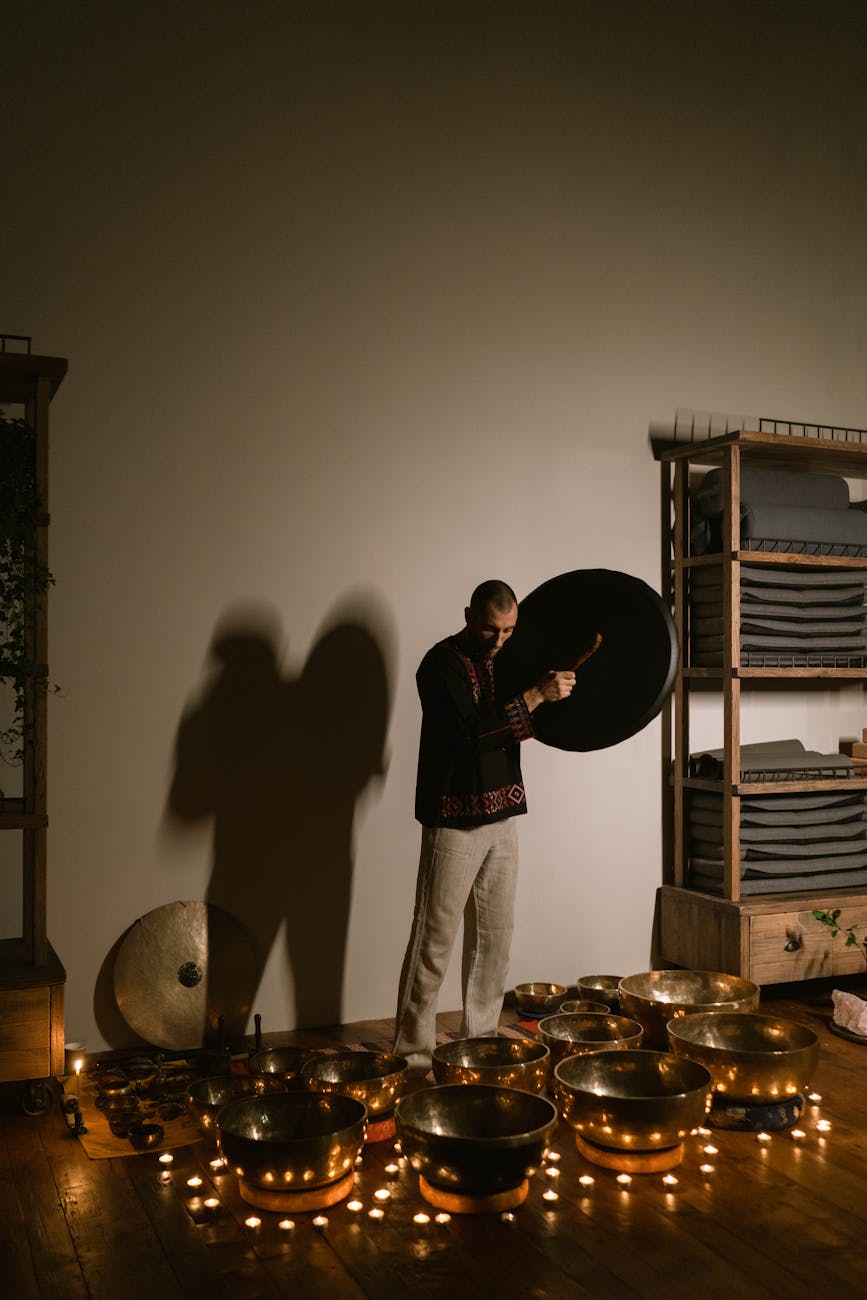
Rediscovering the Roots of Rhythm
In a world dominated by electronic beats and digital synthesizers, it may seem surprising that traditional musical instruments are experiencing a global revival. But that’s exactly what’s happening. From the bamboo flutes of South Asia to the gongs of Southeast Asia, and from Indigenous drums in North America to ancient string instruments in Europe and Africa, these once-forgotten tools of sound are being reawakened.
Their resurgence isn’t just about nostalgia—it’s about identity, resilience, and reconnection.
Why Traditional Instruments Are Returning
After decades of globalization, many communities are turning back to what was once pushed aside. Traditional instruments offer more than music. They offer a sense of:
- Cultural grounding
- Spiritual rhythm
- Historical continuity
- Resilience against erasure
This resurgence is partly due to:
- Cultural preservation efforts by Indigenous, minority, and marginalized communities
- Younger generations seeking authenticity in a digital world
- Fusion music that blends ancient sounds with modern genres
- Eco-conscious values, with many traditional instruments made from natural, local materials
As climate change and cultural erasure intensify, people are realizing: losing an instrument is like losing a language. A way of expressing the world disappears.
Instruments That Refuse to Be Forgotten
Let’s explore a few traditional musical instruments that are making powerful comebacks:
The Kora (West Africa)
A 21-stringed harp-lute played by griots (oral historians) in Mali, Senegal, and The Gambia.
Traditionally passed down in families, the kora is now being taught in universities, featured in fusion jazz, and used in storytelling projects that link past and present.
The Erhu (China)
Sometimes called the “Chinese violin,” this two-stringed bowed instrument is known for its haunting tone.
Once seen as old-fashioned, it’s now used in experimental ensembles, video game soundtracks, and viral social media covers.
The Djembe (West Africa)
This goblet-shaped drum is central to community life across Guinea, Ivory Coast, and beyond.
It’s used in healing rituals, education, and protest. Recently, it’s also found its way into yoga classes, global festivals, and urban percussion groups.
The Sarangi (India/Nepal)
A bowed string instrument said to “cry like a human voice.”
It nearly vanished with the decline of court music, but today it’s being revived through documentary projects, solo recitals, and online collaborations.
The Gamelan (Indonesia)
A traditional orchestra made of metallophones, drums, and gongs.
Balinese and Javanese gamelan groups are gaining popularity in international conservatories, experimental compositions, and even film scores.
What’s Driving This Cultural Return?
This revival isn’t spontaneous—it’s intentional. And it’s happening across multiple fronts:
1. Education and Transmission
Workshops, online classes, and intergenerational programs are helping preserve traditional techniques. Musicians who once learned informally are now teaching in formal spaces—from Zoom to music conservatories.
2. Cultural Hybridity
Fusion artists blend traditional instruments with hip-hop, jazz, techno, and lo-fi. This isn’t dilution—it’s evolution. It helps bring new audiences to old instruments without losing their essence.
3. Identity and Resistance
For Indigenous and colonized groups, reclaiming an instrument is a political act. It says: We are still here. And we sound like this.
Traditional musical instruments are not relics—they’re living vessels of culture, memory, and resilience. Their resurgence reflects a deep human need to reconnect with roots in a world spinning toward the artificial.
And as younger generations rediscover these instruments, they don’t just learn notes—they inherit stories.
When the Youth Lead the Revival
The return of traditional musical instruments isn’t led solely by cultural institutions or elder musicians. In many cases, it’s young people who are reviving ancestral sounds—often in ways their ancestors never imagined.
In South Korea, a new generation is taking the gayageum, a 12-string zither, and blending it with electronic loops. Artists like Luna Lee have brought traditional music into global YouTube charts by reinterpreting rock classics using traditional techniques.

In Colombia, hip-hop collectives in Bogotá sample Indigenous flutes and percussion in protest music, turning forgotten sounds into tools for social commentary.
In New Zealand, Māori youth are reclaiming taonga pūoro (traditional instruments) to support language revitalization, infusing te reo Māori lyrics with the haunting sound of pūtōrino (flute) and kōauau (nose flute).
These are not acts of nostalgia. They’re acts of reclamation and adaptation. The instruments return not as museum pieces, but as cultural technology.
Craftsmanship as Culture: The Makers Matter
Instruments are not just played—they are built. The loss of traditional instruments often correlates with the loss of the craft knowledge required to create them.
Today, artisan revival is inseparable from musical revival.
- In Peru, families in the Andes are returning to hand-carved quenas and zampoñas—traditional flutes made from cane, bone, or clay.
- In Uganda, young luthiers are learning to build adungus (African harps) using local wood and hide, preserving both sound and material memory.
- In Norway, Sámi crafters are reviving the fadno, a reed pipe nearly extinct after decades of cultural suppression.
Building these instruments isn’t just about sound—it’s about land, language, and lineage. The materials are sourced locally, the construction techniques passed down orally or visually. Rebuilding the instrument becomes a way to rebuild memory.
Sound Meets Screen: Social Media’s Role
The rise of platforms like YouTube, Instagram, and TikTok has dramatically altered how traditional instruments reach global audiences.
What was once a niche sound confined to folk festivals or ethnomusicology classrooms is now viral content.
- A Morin Khuur (Mongolian horsehead fiddle) solo can reach millions on TikTok.
- A teenager in Hanoi may stumble upon dan tranh performances (Vietnamese zither) on reels and begin learning it online.
- Hashtags like #traditionalinstruments and #culturalmusic have grown into micro-movements of rediscovery and pride.
For many young creators, learning an ancient instrument is both an identity project and an online brand—bridging the old world and the new in 60-second loops.

Instruments That Speak for the Voiceless
In many marginalized or colonized communities, traditional instruments speak what words cannot.
- In Australia, Aboriginal communities use didgeridoos not just for ceremonies but to express survival in a post-colonial landscape.
- In Greenland, young Inuit artists blend throat singing and drum dancing to resist Western cultural erasure.
- In North Dakota, Lakota teens are building and playing Native flutes to deal with mental health challenges and intergenerational trauma.
These are not performance arts. They are therapeutic technologies, ancestral forms of healing. Playing an instrument becomes an act of sovereignty, a way of saying: we are still here.
Case Studies: How the World is Bringing Them Back
Japan: The Revival of the Shamisen
The shamisen, a three-stringed lute, was once in decline. Now, it’s making a comeback through cross-genre experiments—from pop to anime soundtracks. Young women, who were traditionally excluded from public performance, are now leading shamisen festivals across the country.
Greece: Lyra of Crete Returns to the Stage
The Cretan lyra, a bowed string instrument tied to Greek identity, faded post–World War II. Today, local bands are bringing it back in indie rock concerts, uniting ancient sound with modern lyrics about migration and memory.
Pakistan: Rubab’s Rebirth
The rubab, once central to Afghan and Pashtun musical traditions, had nearly disappeared after decades of conflict. Now, music schools in Peshawar are teaching it again to children in refugee camps and conflict zones—as both cultural revival and psychological relief.
We’re witnessing something powerful. Traditional musical instruments—long silenced by colonization, conflict, or consumerism—are not disappearing. They are re-rooting, re-shaping, and resonating again, louder and more defiantly.
From TikTok to town squares, from classrooms to conflict zones, they carry messages no algorithm can dilute: that culture is not static. It adapts. It survives.
Institutional Support: When Culture Becomes Policy
While communities, artists, and youth often drive revival efforts from the ground up, governments and institutions are increasingly stepping in to support and protect traditional musical heritage.
In some countries, traditional instruments have been formally recognized as national treasures. This means funding for:
- Regional music schools
- Heritage preservation grants
- National performances and festivals
- Instrument-making apprenticeships
- Archival recordings and documentaries
But these programs only work when they avoid top-down tokenism. The most effective ones are designed in collaboration with community elders, craftspeople, and musicians—not just policymakers.
Elsewhere, public school systems are reintroducing folk instruments into curricula. Instead of only teaching Western notation and symphonies, students learn the sounds of their own soil. A child who once studied the recorder may now learn the bamboo flute. A marching band may feature frame drums and stringed lutes indigenous to the region.
NGOs and Grassroots Preservation
Beyond the government, countless NGOs, collectives, and nonprofits are working to protect endangered musical traditions.
They operate in villages, conflict zones, and remote islands—places often invisible to urban-centered funding. Their work includes:
- Audio and video documentation of master musicians
- Community concerts and knowledge-sharing circles
- Female-focused transmission efforts in matrilineal societies
- Toolkits for teachers on how to blend tradition with modern classroom models
These organizations help prevent what many call cultural amnesia—the quiet loss that occurs not because people stop caring, but because there’s no infrastructure to remember.
The Sacred and the Everyday
For many cultures, traditional instruments are not just entertainment. They’re sacred.
They are played at births and funerals, planting rituals and harvest ceremonies. They are part of spiritual systems, cosmologies, and social structure. Reviving them isn’t just about sound—it’s about worldview.
In some places, revival includes:
- Teaching the rituals associated with the instrument
- Learning songs tied to land, rain, or ancestors
- Observing gender or clan-based restrictions on who may play, when, and why
As young musicians return to traditional instruments, many are learning that the music is only half the story. The context is as important as the craft.
Revival done right does not extract tradition from ritual. It learns how to carry both forward.
What Modernity Often Misses
Contemporary culture often celebrates speed, novelty, and disruption. Traditional music, in contrast, asks us to slow down, listen, and repeat.
Modernity asks: what’s next?
Traditional music asks: what came before—and why are we forgetting it?
Reviving instruments challenges the very structure of how we value sound. It prioritizes memory over chart rankings. Community over virality. Presence over performance.
And in that slowness, something powerful returns.
Why It Matters Now
In the age of climate collapse, cultural homogenization, and digital overload, traditional musical instruments offer something rare: rootedness.
They remind people of who they are, where they came from, and what still lives in their bodies and breath. A wooden flute carved by hand tells a different story than an auto-generated beat. A hand drum, tuned by fire and skin, speaks a language of place.
When young people pick up these instruments, they don’t just make music. They make continuity.
They ensure that sound doesn’t vanish with the last generation.
Final Reflection
The return of traditional musical instruments is not a trend. It is a form of cultural survival. It is resistance. It is return.
And more than anything, it is reminder—that rhythm has always been with us. That before there were apps, there were gongs. Before there were festivals, there were fire circles. Before there were algorithms, there were lullabies.
And they still matter.
So when you hear an unfamiliar sound echoing across a street, a screen, or a stage—listen closely. It might not be new.
It might be the oldest thing you’ve ever heard.
About The Author


