
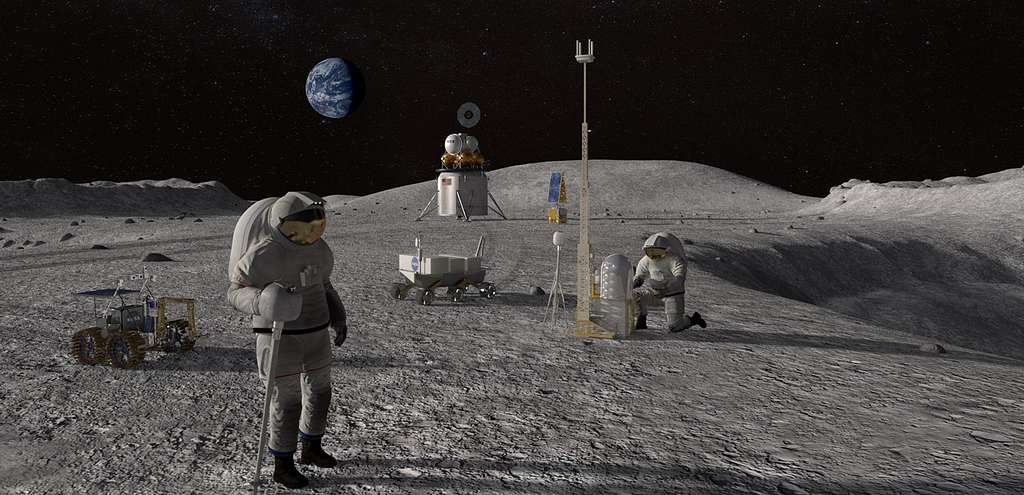
Humanity stands on the brink of a new era. For centuries, space was the domain of dreamers and science fiction writers. Today, it is becoming a reality. Nations and private enterprises are making rapid advancements, pushing toward a permanent human presence beyond Earth.
This article explores the next steps in space colonization, the interplanetary economy, and the industries that will define our future in space. From Moon bases to Mars settlements, asteroid mining to space-based industries, the foundations of a spacefaring civilization are being laid today.
The Current State of Space Exploration
NASA and Artemis: A Return to the Moon
NASA’s Artemis program is a critical milestone in human spaceflight. The program aims to land astronauts on the Moon by 2026 and establish a sustainable lunar presence by the 2030s.
Key aspects of Artemis:
- Lunar Gateway: A space station orbiting the Moon that will serve as a staging point for missions.
- Artemis Base Camp: A planned surface habitat at the Moon’s south pole.
- Collaboration with private companies: SpaceX, Blue Origin, and other firms are providing transportation and infrastructure.
SpaceX and Starship: The Mars Mission
Elon Musk’s SpaceX is leading the charge toward Mars. The company’s Starship rocket is designed for long-duration space travel and is fully reusable, making interplanetary missions more cost-effective.
- Starship is currently the most powerful rocket ever built.
- Initial cargo missions to Mars are planned for the late 2020s.
- Human colonization could begin as early as 2035.
China’s Space Ambitions
China’s National Space Administration (CNSA) is rapidly advancing its capabilities. The country has successfully landed rovers on Mars and plans to establish a lunar base with Russia by the 2030s.
China’s Tiangong space station is also expanding, signaling long-term plans for permanent human presence in space.
Why Colonize Space?
Expanding into space is not just an ambition—it is a necessity. Earth’s resources are finite, and a growing population will require new frontiers for habitation and industry.
Key Motivations for Space Colonization:
- Survival of Humanity: A single disaster could end civilization on Earth.
- Resource Scarcity: The Moon and asteroids contain valuable minerals.
- Technological Progress: Space exploration drives innovation in multiple fields.
Building a Permanent Presence on the Moon
Why the Moon?
- Close proximity to Earth (3-day journey).
- Low gravity makes it easier to launch deep-space missions.
- Water ice at the poles can be converted into fuel and drinking water.
Challenges of Lunar Colonization
- Radiation exposure due to the lack of atmosphere.
- Extreme temperature fluctuations (over 260°F during the day and -280°F at night).
- Building sustainable power sources and habitats.
NASA’s Artemis Base Camp and China’s International Lunar Research Station will be the first steps toward long-term lunar habitation. These bases will serve as research centers and refueling stations for future Mars missions.
Mars: The Next Frontier
Why Mars?
- Thin atmosphere offers some protection from space radiation.
- Water ice deposits exist beneath the surface.
- Similar day length to Earth (24.6 hours).
The Challenges of Mars Colonization
- Travel time of 6-9 months per trip.
- Lack of a breathable atmosphere.
- Psychological effects of long-duration isolation.
- Sustaining life through agriculture and resource extraction.
SpaceX’s long-term vision is to create a self-sustaining city on Mars. The first missions will likely involve robotic construction of habitats, followed by small human crews establishing life-support systems.
Asteroid Mining: The Future of Space Resources
Mining asteroids could unlock trillions of dollars worth of minerals. Some asteroids contain more platinum and rare metals than have ever been mined on Earth.
Key Resources in Asteroids
- Platinum-group metals (used in electronics and medicine).
- Nickel and iron (for space construction projects).
- Water ice (for drinking water and fuel production).
Current Initiatives
- NASA’s Psyche mission is set to explore a metal-rich asteroid in 2026.
- Private firms like AstroForge are developing robotic asteroid mining technology.
- The U.S. and Luxembourg have passed laws allowing private ownership of space resources.
Challenges of Asteroid Mining
- Cost of extracting and transporting materials back to Earth.
- Developing efficient robotic mining systems.
- Legal and ethical questions about space resource ownership.
The Emergence of Space-Based Industries
Space will not just be for exploration—it will become an economic powerhouse. Entire industries will operate in orbit and beyond.
Growth Areas
- Space Tourism: Blue Origin and Virgin Galactic are pioneering suborbital flights.
- Satellite Manufacturing: Companies like SpaceX and Amazon are deploying thousands of satellites for global internet access.
- Microgravity Research: Drug manufacturing and material development in space offer unique advantages.
- Space Construction: 3D printing will be used to build structures from lunar and Martian materials.
Economic Impact
- The global space economy is projected to exceed $1 trillion by 2040 (Morgan Stanley).
- Private investment in space startups now exceeds $10 billion annually.
- NASA’s Lunar Gateway and future commercial space stations will create new business opportunities.
What Needs to Happen Next?
- Cost Reduction: Advances in reusable rockets are essential.
- Infrastructure Development: Space habitats and fuel depots must be built.
- Legal Frameworks: International agreements are required for property rights.
- Sustainability Measures: Long-term success depends on closed-loop life-support systems.
- Public and Private Collaboration: Governments and private firms must work together.
Final Thoughts
Space colonization is not a distant dream. It is happening now.
- The Moon and Mars will be the first outposts.
- Asteroid mining will fuel expansion.
- A space-based economy will emerge within decades.
The challenges are immense, but so are the rewards. The nations and companies that lead this effort will define the next chapter of human history.
About The Author


