
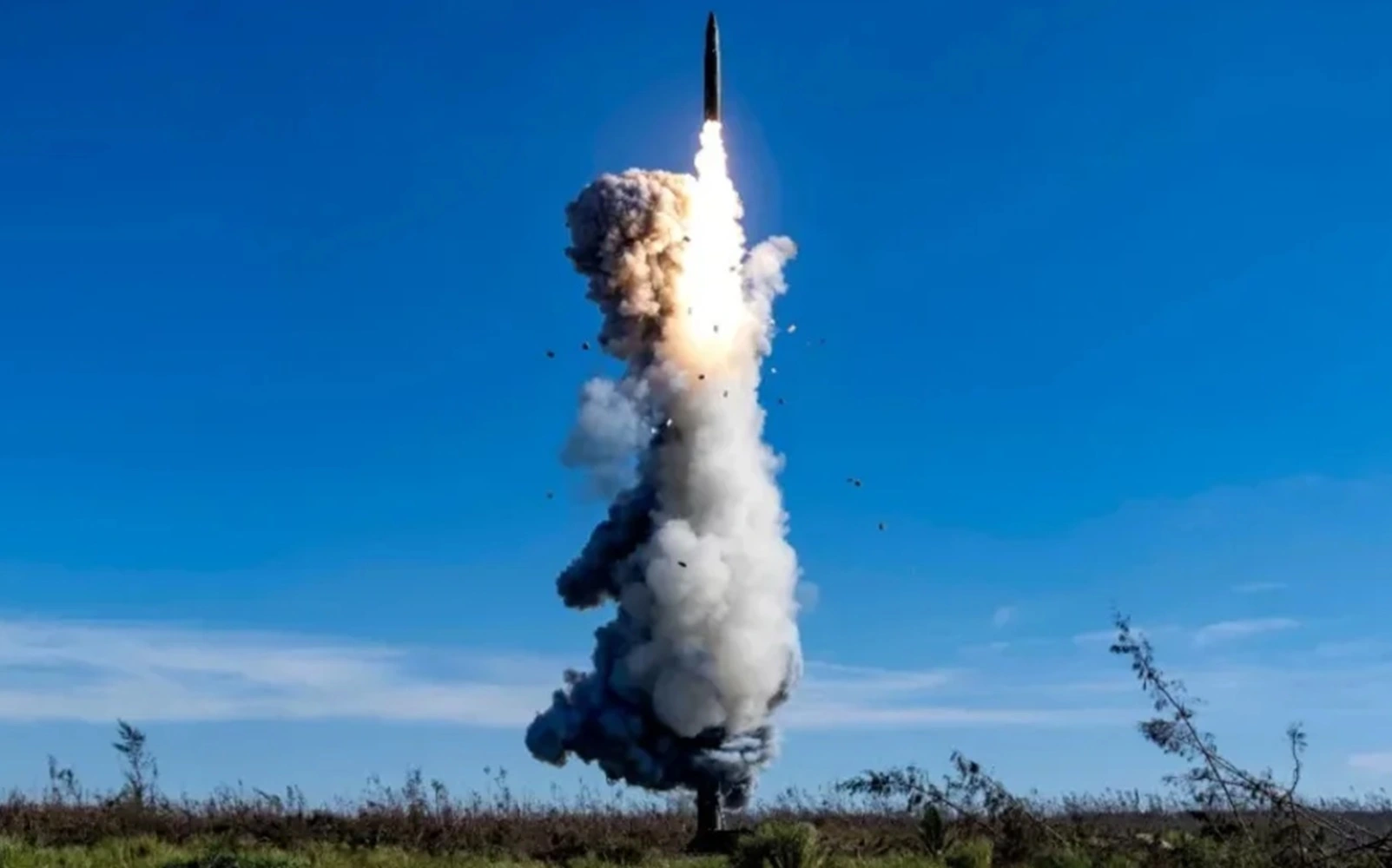
In an alarming escalation of its war against Ukraine, Russia launched an intercontinental ballistic missile (ICBM) on November 21, reportedly targeting central-eastern Ukraine. Kyiv’s air force labeled this the first known deployment of such a powerful, nuclear-capable weapon in the conflict. While there are no confirmed reports of a nuclear payload being used, the missile’s range and potential have sparked international concern.
The move has been interpreted as a response to Ukraine’s use of U.S.-provided long-range ATACMS missiles, which have hit targets within Russia. This tit-for-tat exchange marks a dangerous shift in the conflict, bringing strategic weaponry designed for global warfare into a regional setting. Observers see this as a potential warning to NATO allies amid growing tensions between Moscow and the West.
ICBMs like the RS-28 Sarmat, capable of carrying multiple nuclear warheads, are strategic deterrents rather than tactical weapons for battlefield use. Their deployment in Ukraine raises questions about Russia’s intentions and the erosion of traditional norms governing warfare. NATO and other powers are now scrutinizing this development to gauge whether it represents a desperate gambit or a calculated escalation.
While the attack’s immediate impact remains unclear, this incident underscores the blurring line between nuclear threats and conventional warfare. If the missile carried a conventional payload, it would demonstrate Russia’s intent to leverage fear through the use of its most potent arsenal. However, experts caution that introducing ICBMs—even conventionally armed—into active conflict zones risks misinterpretation and catastrophic miscalculations.
The launch coincides with broader shifts in Russia’s military doctrine and its suspension of the New START treaty, which limits strategic nuclear arsenals. Critics argue that Moscow’s increasing reliance on high-stakes displays of power indicates internal pressures within its military-industrial complex and broader geopolitical strategy.
The international community now faces the challenge of addressing this escalation without further fueling the conflict, with many calling for urgent diplomatic engagement to prevent a broader conflagration. As this unprecedented situation unfolds, it highlights the precariousness of the global security architecture in an era of growing authoritarianism and geopolitical rivalries.
About The Author


