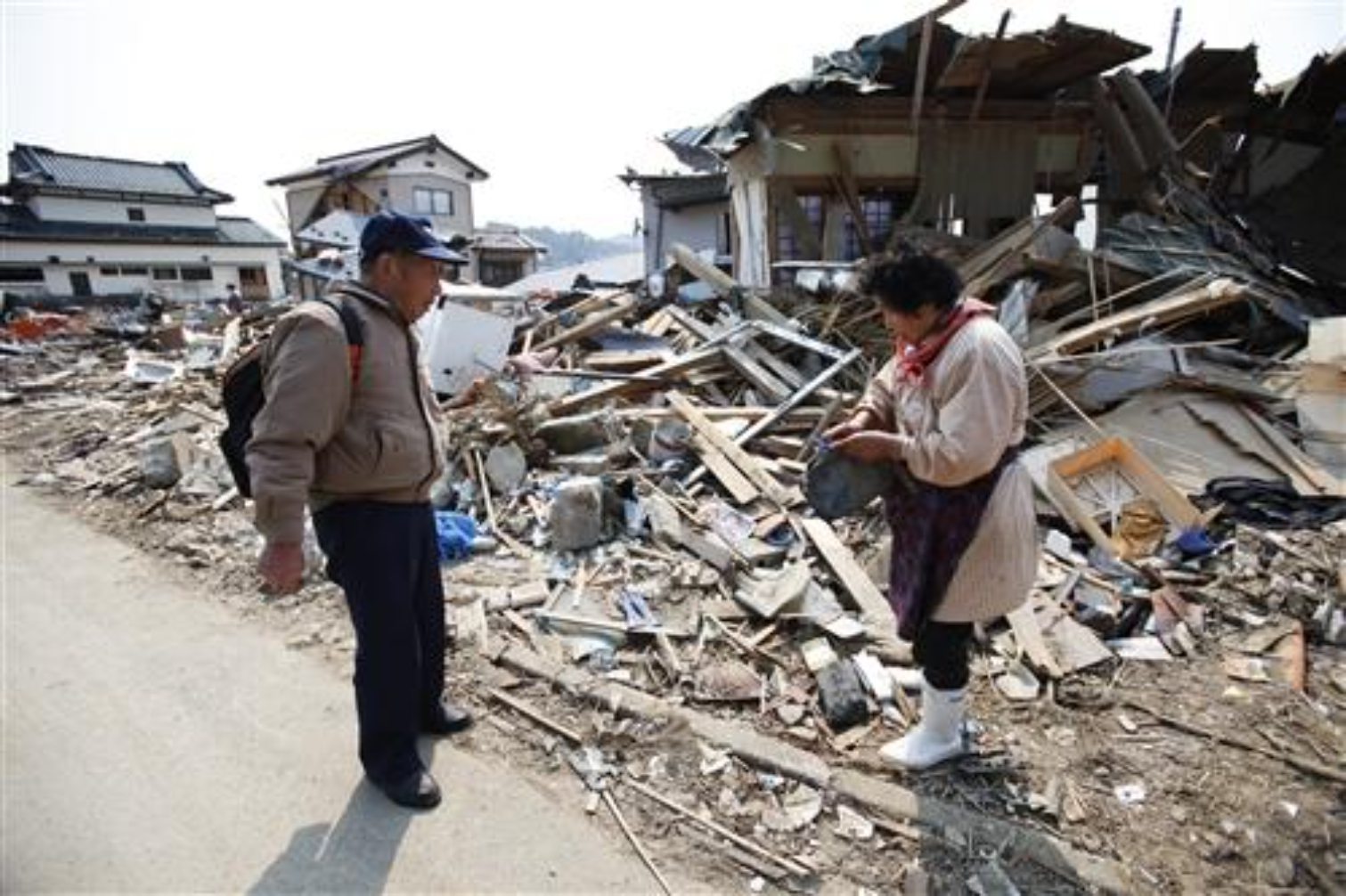
Powerful 7.4 Magnitude Earthquake Strikes Off Coast of Japan, Triggers Tsunami Warning and Series of Strong Aftershocks
Tokyo, Japan – A powerful earthquake with a preliminary magnitude of 7.4 struck off the coast of Fukushima Prefecture in northeastern Japan on Monday, January 1st, 2024. The temblor, which occurred at around 8:37 p.m. local time, prompted authorities to issue a tsunami warning for a large portion of the country’s eastern coastline. It also triggered a series of strong aftershocks, with Japan witnessing 21 earthquakes in just 90 minutes according to meteorological officials.
The epicenter of the initial quake was located at a depth of about 10 kilometers (6 miles) below the seabed, approximately 57 kilometers (36 miles) east-southeast of the coastal city of Namie in Fukushima, according to the Japan Meteorological Agency (JMA). The ground shaking was felt strongly across a wide area, including in Tokyo located roughly 240 kilometers (150 miles) southwest of the epicenter.
Shortly after the frightening initial jolt, tsunami warnings were announced covering the Pacific coastlines of Fukushima, Miyagi and nearby prefectures, indicating possible waves of up to one meter (3 feet) in height. Residents in those areas were told to immediately evacuate to higher elevations, while tsunami advisories were also issued for the coasts of Iwate, Ibaraki, and Chiba prefectures.
In addition to the risk of tsunamis, numerous large aftershocks caused further shaking and damage in communities across northeastern Japan. Within just 90 minutes there were 21 recorded temblors registering at magnitude 5 or higher based on JMA data.
“We urge the highest level of caution. The earthquake appears to be an ongoing sequence, and further damaging shakeouts from aftershocks are not out of the question,” said Gen Atsumi, chief administrator of Japan’s Earthquake Research Committee, in a public statement. “We ask that you check media often for updates on the regions under threat.”
So far there have been no immediate reports of major damage or casualties resulting from the initial earthquake beyond minor injuries. However, the danger of destructive tsunami waves slamming into Japan’s northeastern shoreline remains a serious threat. Areas closest to the epicenter are still recovering from the catastrophic 2011 Tōhoku earthquake and tsunami, which had a magnitude of 9.1 and triggered waves as high as 40 meters (130 feet), causing over 15,000 deaths.
Today’s earthquake and aftershocks emanating from offshore of Fukushima Prefecture struck at a relatively shallow depth, amplifying their shaking intensity at ground-level. The quakes also released well over 100 times more energy than the recent magnitude 6.3 tremblor that hit central Japan earlier this month, killing one person. Potential damage may be mitigated somewhat by stringent building codes implemented after the disastrous 2011 event. High seawalls have also been constructed to help withstand tsunami impacts.
Nonetheless, Japanese television showed buildings swaying vigorously for several minutes during both the initial quake and subsequent aftershocks. The Tokyo Electric Power Company, which operates the now-disabled Fukushima Daiichi nuclear plant damaged in 2011, has so far reported no additional damage from today’s seismic activity. Extensive searches near the structures and across the region are currently underway to fully gauge conditions.
Authorities have warned residents across large swaths of northeastern Japan to brace for yet more possible strong shaking in the hours and days ahead as seismic activity continues. Today’s earthquake took place along the volatile boundary between the North American and Pacific tectonic plates prone to frequent earthquakes. The JMA estimates up to a 30 percent chance of another high magnitude temblor in the next week as the geologic plates shift and resettle.
The government has assembled an emergency response task force to direct rescue, damage assessment and recovery efforts as the situation develops. Prime Minister Yuriko Koike has promised to make assistance for hard-hit regions a top priority and urged the public to closely follow evacuation protocols should more tsunami warnings be extended.
This is an evolving situation. For continued updates on the impact of and response to today’s damaging earthquake sequence in Japan, follow our live reporting online or tune into national broadcasts. Further information about disaster preparedness can also be found on official government websites.
About The Author