
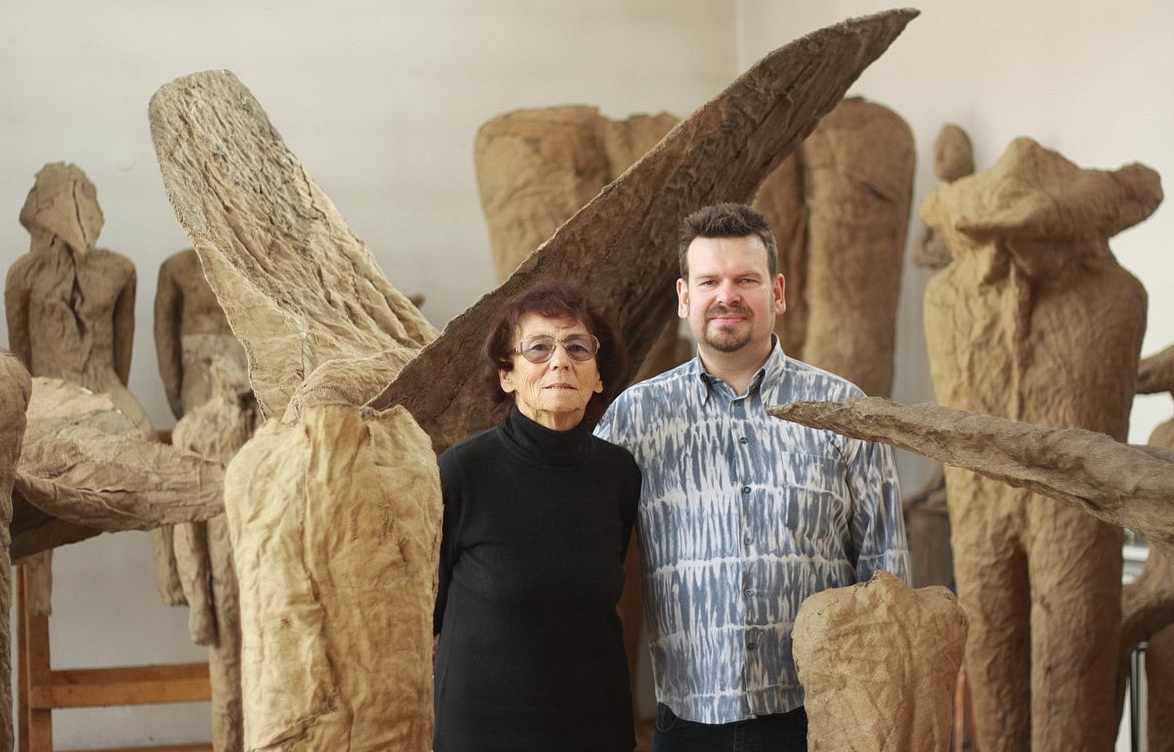
Magdalena Abakanowicz was a renowned Polish artist who left an indelible mark on the world of contemporary sculpture and textile art. With her innovative techniques, powerful sculptures, and thought-provoking installations, Abakanowicz became a leading figure in the art world, challenging conventions and pushing boundaries. This article delves into the life, work, and legacy of Magdalena Abakanowicz, highlighting her artistic journey and the profound impact she made.
Early Life and Education: Magdalena Abakanowicz was born on June 20, 1930, in Falenty, Poland. Growing up during World War II, she witnessed the horrors of war and its aftermath, which greatly influenced her artistic vision. After completing her high school education, Abakanowicz pursued studies in painting and sculpture at the Academy of Fine Arts in Warsaw. It was during this time that she first experimented with textiles and began to forge her own unique artistic path.
Breakthrough in Textile Art: Abakanowicz’s breakthrough came in the 1960s when she started working with textiles, introducing a new dimension to contemporary art. She abandoned traditional methods of textile creation and began manipulating materials such as sisal, burlap, and hemp to create intricate and large-scale textile sculptures. By employing these unconventional materials and techniques, Abakanowicz brought a raw and tactile quality to her artwork.
Notable Works: One of Abakanowicz’s most significant works is her iconic series of sculptures known as “Abakans.” These monumental, fiber-based sculptures are characterized by their organic forms and abstract structures. The Abakans, which often resembled strange and enigmatic creatures, became symbolic representations of the human condition, exploring themes of individuality, vulnerability, and collective identity.
Another notable series by Abakanowicz is the “Crowd” series, in which she created numerous headless, anonymous figures, alluding to the loss of individuality and dehumanization in modern society. These sculptures, typically made from polyester resin, were displayed in various formations, evoking a haunting and powerful presence.
In addition to sculptures, Abakanowicz also ventured into other artistic mediums such as drawings, prints, and installations. Her installations often invited viewer interaction, blurring the lines between art and the viewer’s experience. Notable installations include “Backs” and “Space of Stone,” both of which encouraged contemplation and introspection.
International Recognition and Legacy: Abakanowicz’s artistic brilliance and fearless exploration of new materials and techniques earned her international acclaim. Her works have been exhibited in prestigious galleries and museums worldwide, including the Museum of Modern Art in New York, the Centre Pompidou in Paris, and the Tate Modern in London. She received numerous awards and honors, including the Praemium Imperiale, the Kyoto Prize, and the Golden Lion at the Venice Biennale.
Furthermore, Abakanowicz’s groundbreaking contributions to contemporary sculpture and textile art have left an enduring legacy. Her innovative approach to materials, her exploration of collective identity and the human condition, and her ability to evoke emotional responses through art continue to inspire generations of artists. Abakanowicz’s works continue to be celebrated and revered, leaving an indelible impact on the art world.
Magdalena Abakanowicz’s artistic journey was one of constant exploration, innovation, and reflection. Through her groundbreaking sculptures and textile art, she challenged traditional norms, inviting viewers to question societal constructs and ponder the complexities of the human experience. Her ability to give voice to the voiceless and her commitment to pushing artistic boundaries have solidified her status as a pioneer in contemporary sculpture and textile art. The legacy of Magdalena Abakanowicz will continue to shape and influence the art world for years to come, inspiring artists to push the limits of their creativity and challenge the status quo.
About The Author


