
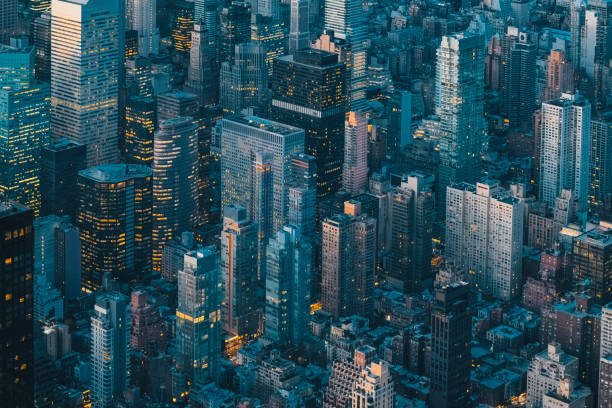
Global cities are under pressure to expand housing, infrastructure, and essential services as population growth accelerates. Africa and Asia are leading this shift, testing scalable models for dense, sustainable, and resilient development.
By Namith DP | August 08, 2025
By 2100, Earth’s population is expected to stabilize just under 10 billion. As more people migrate to cities and climate volatility reshapes where we can live, the pressure to accommodate billions in urban areas is escalating. The future will not be rural—it will be dense, vertical, and powered by infrastructure we must build now. But where, and how, will these 10 billion people actually live?
What Defines a Megacity?

A megacity is defined as an urban area with over 10 million residents. As of 2025, there are 37 megacities globally, and this number is projected to grow to at least 50 by 2050, according to the United Nations World Urbanization Prospects.
Key facts:
- In 1950, only New York City and Tokyo qualified.
- Today, Jakarta, Delhi, Lagos, São Paulo, and Mexico City each exceed 20 million.
- By 2035, Kinshasa and Cairo are expected to enter the top five.
Urban Population Growth Is Unstoppable
The global urban population has grown from 751 million in 1950 to over 4.4 billion in 2025. By 2050, 68% of the global population will live in urban areas.
Several drivers are fueling this shift:
- Economic migration: Urban areas offer higher wages, better access to healthcare, and educational opportunities.
- Demographic shifts: Lower fertility rates in urban centers coincide with higher life expectancy.
- Climate displacement: Rising sea levels and drought are rendering many rural areas uninhabitable.
Where Will the Next Megacities Emerge?
Africa: The Epicenter of Future Urbanization
Africa is expected to house 13 of the 20 fastest-growing cities by 2050. According to the UN-Habitat World Cities Report 2022, these include:
- Lagos, Nigeria: Expected to reach over 32 million by 2050.
- Kinshasa, DRC: Already Africa’s largest Francophone city, on track to exceed 35 million.
- Dar es Salaam, Tanzania: Could grow from 7 million to 21 million by 2050.
Africa’s urban infrastructure, however, remains underdeveloped. Many cities lack formal housing, sewage systems, and reliable electricity. Scaling sustainably will require massive international investment and urban planning reforms.
South and Southeast Asia: Already Overcrowded
The Delhi–Lahore–Dhaka–Kolkata corridor is one of the most densely populated urban regions in the world. With more than 600 million people, it rivals entire continents in scale.
Other emerging megacities:
- Chittagong, Bangladesh: Industrial growth and port activity will drive population surges.
- Hyderabad, India: Driven by IT and biotech sectors.
- Yangon, Myanmar: Political instability remains a bottleneck, but urbanization is accelerating.
Latin America: Expanding Without Sprawling
Cities like Lima, Bogotá, and Santiago are becoming megacities through densification rather than sprawl. Their challenges include vertical slums, water scarcity, and traffic congestion, but they are also models for middle-income urban growth.
What Are the Characteristics of Sustainable Megacities?
Not all megacities succeed. Some buckle under population pressure, while others become models of innovation. The defining factors include:
1. High-Density, Mixed-Use Development
Cities that prioritize walkability, access to public services, and vertical construction use less land per capita and emit fewer greenhouse gases. Singapore and Seoul exemplify this approach.
2. Mass Transit and Connectivity
Efficient transport systems reduce both time and carbon emissions. Tokyo moves over 8 million people daily through its subway. Curitiba, Brazil pioneered bus rapid transit that now serves as a model for over 150 cities.
3. Resilient Infrastructure
Smart infrastructure includes:
- Climate-resilient buildings
- Renewable-powered grids
- Flood and drought adaptation mechanisms
- Integrated water recycling and stormwater systems
Examples include Rotterdam’s floating buildings and Copenhagen’s stormwater parks.
Housing 10 Billion: Not Just a Numbers Game
To house 10 billion people, megacities must prioritize space efficiency, affordability, and sustainability. That requires addressing several systemic gaps.
The Affordable Housing Shortfall
According to the World Bank, over 1.6 billion people globally live in inadequate housing. Of these, nearly 150 million are homeless. The shortage is acute in cities like:
- Mumbai: Over 40% of the population lives in informal settlements.
- Nairobi: Slums like Kibera house over 250,000 in unregulated, high-risk environments.
- Manila: Government-backed public housing programs are years behind schedule.
Land Use Regulation Bottlenecks
Zoning laws that prohibit multi-family housing or impose minimum parking requirements inflate costs and reduce capacity. Houston, which has no zoning laws, is often contrasted with cities like San Francisco, where housing is severely constrained by local ordinances.
Urban Technology: A Core Enabler
Urban management at megacity scale demands real-time coordination, which only digital systems can provide.
Smart City Frameworks
Modern megacities use technology for:
- Traffic management via AI
- Smart grids and meters for energy optimization
- Facial recognition and sensors for law enforcement
- Public engagement platforms for participatory governance
Cities like Barcelona, Shanghai, and Dubai lead in this space. The global smart city market is projected to reach $1.03 trillion by 2030, according to Grand View Research.
Data-Driven Urban Design
Cities are beginning to deploy digital twins—virtual replicas of real cities—to test planning decisions before implementing them. Singapore’s Virtual Singapore platform is an advanced example.
Environmental Constraints Will Redraw Urban Maps

Urban expansion can’t occur in a vacuum. Climate change will fundamentally reshape where we can live.
Rising Temperatures
A study in Nature Sustainability (2023) estimates that by 2070, over 3 billion people could live in areas with extreme heat exceeding 29°C (84°F) annual mean temperature, if emissions continue unabated. This will:
- Increase cooling demand, straining electricity grids
- Force climate migration toward temperate regions
- Escalate urban heat island effects
Sea-Level Rise
According to the IPCC, up to 680 million people live in low-lying coastal zones. Cities most at risk:
- Jakarta (Indonesia): Sinking 6–10 cm/year; relocation plan already underway
- Miami (USA): Over $4 billion in sea-level adaptation investment committed
- Ho Chi Minh City (Vietnam): 23% of the city may be underwater by 2100 without mitigation
Who Will Build and Finance These Cities?
The Role of Public-Private Partnerships
Urban infrastructure requires capital-intensive, long-term investment. Public-private partnerships (PPPs) are increasingly used to fund transit, housing, and utilities. Key examples:
- London’s Crossrail project: Blended financing across municipal, national, and private sectors
- Mumbai Metro: PPPs are driving metro line expansions and station development
- Abu Dhabi: Housing and smart grid developments rely heavily on sovereign wealth partnerships
Development Banks and Global Institutions
Multilateral agencies like the World Bank, Asian Development Bank, and African Development Bank are instrumental in funding large-scale urban projects. In 2022 alone, the World Bank committed $8.7 billion to urban development initiatives.
Political and Governance Challenges
Urban Governance Fragmentation
Megacities often span multiple administrative jurisdictions, complicating planning and resource allocation. For example:
- New York City crosses five boroughs and shares metropolitan infrastructure with adjacent states.
- Lagos is constrained by national policies that often conflict with local governance.
Without strong coordination mechanisms, policy enforcement suffers.
Inequality and Informality
Inequality tends to rise with urban scale. Megacities show stark contrasts between formal and informal sectors. The top 10% of income earners in cities like São Paulo earn over 40 times more than the bottom 10%. Informal labor and housing dominate employment and shelter for many urban poor.
Can We Build the Cities of the Future Fast Enough?
The next 25 years will determine whether the megacities of 2100 will be livable or dystopian. To avoid systemic failure, urban growth must align with planetary boundaries and human rights.
Key imperatives:
- Increase the annual output of affordable housing units by at least 30%
- Expand urban green cover to mitigate heat and improve air quality
- Implement real-time data systems for managing traffic, energy, and public services
- Reform land regulation to allow mixed-use, high-density development
Conclusion: The Future Is Already Decided—But Not Built
The challenge of housing 10 billion people is not theoretical. Urbanization is the dominant force shaping our planet in the 21st century. Whether our megacities become centers of innovation and opportunity—or collapse under environmental and social strain—depends entirely on choices made now.
Governments, investors, urban planners, and citizens must all act with urgency and coordination. The stakes are high, but the roadmap is clear. The future of urban life must be sustainable, inclusive, and engineered for resilience.
See also –
About The Author




What about the resources? Won’t they get depleted quickly?