
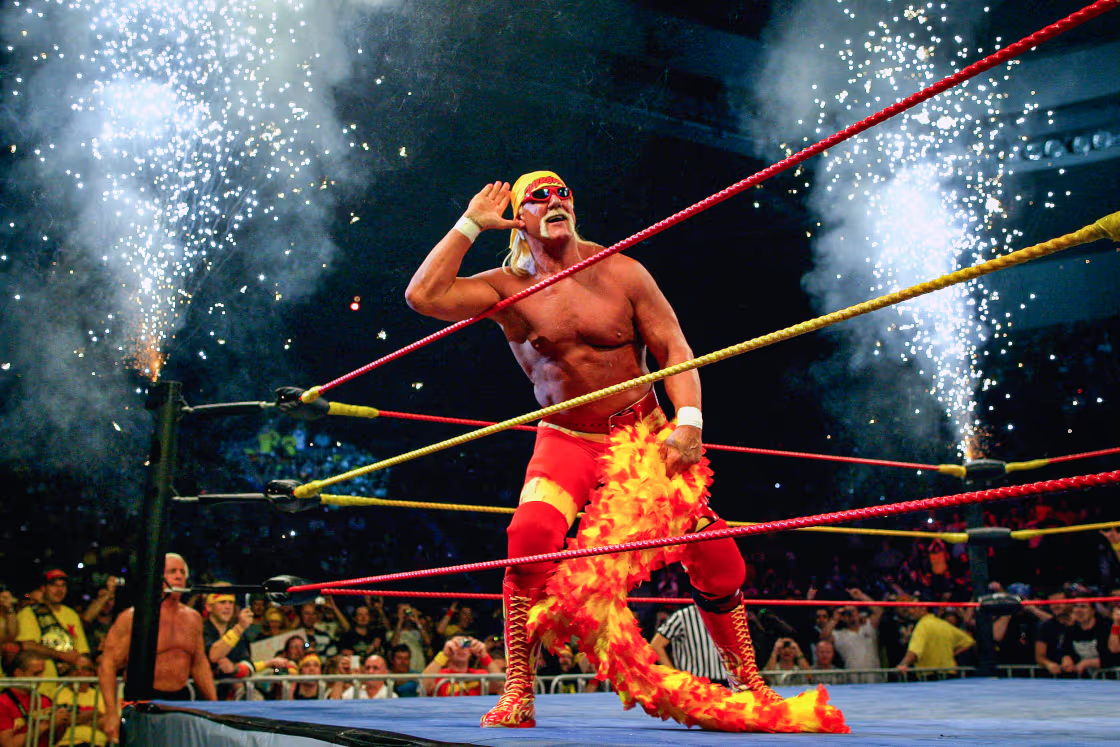
A six-time WWE Champion and cultural figurehead of the Hulkamania era, Hogan’s death marks the end of one of wrestling’s most impactful legacies.
By Namith DP | July 25, 2025
Terry Gene Bollea, globally known as Hulk Hogan, died on July 24, 2025, at age 71 due to cardiac arrest. Paramedics responded to an emergency call from Hogan’s Clearwater, Florida residence around 9:51 a.m. Despite resuscitation efforts, he was pronounced dead at Morton Plant Hospital just over an hour later, at 11:17 a.m. No foul play was suspected, and the official cause of death was listed as cardiac arrest, confirmed by Clearwater Police and hospital staff.
From Bodybuilder to Wrestling Phenomenon

Hogan’s rise to global fame began in the late 1970s, but his cultural dominance solidified in the 1980s:
- 1977: Made his wrestling debut in the Championship Wrestling from Florida promotion.
- 1983: Joined WWF under Vince McMahon and triggered the rise of the Hulkamania era.
- 1985–1993: Headlined eight of the first nine WrestleManias, including his legendary WrestleMania III match with Andre the Giant, which drew a then-record indoor attendance of over 93,000 fans.
- 1994–2000: Joined WCW, where he co-founded the New World Order (nWo) and played a major role in turning WCW into a dominant wrestling brand during the Monday Night Wars.
- 2005 & 2020: Inducted twice into the WWE Hall of Fame, once for his individual career and again as a member of the nWo.
Hogan’s character helped mainstream professional wrestling and was instrumental in turning WWE into a billion-dollar business. His signature red-and-yellow attire, exaggerated charisma, and catchphrases like “Whatcha gonna do when Hulkamania runs wild on you?” became instantly recognizable symbols of the 1980s.
Chronic Injuries from Wrestling Career
Over the last decade, Hogan disclosed undergoing an extensive series of surgeries:
- 10 back surgeries, including multiple lumbar and cervical fusions.
- 2 hip replacements, 2 knee replacements, and multiple procedures on shoulders and elbows.
- Hogan had also undergone an artificial disc replacement and was being treated for spinal stenosis, a condition common among retired wrestlers.
Medical experts note that the physical demands of professional wrestling, particularly in the pre-2000s era before modern safety protocols, have resulted in widespread chronic injuries among veteran performers. Hogan was among the most publicly open about these struggles, often citing the toll that decades of “slamming and bumping” took on his body.
Deathbed Rumors Preceded Actual Death
Hogan had recently been the subject of intense speculation online regarding his health:
- Tampa radio host Bubba the Love Sponge, a longtime friend, stated on-air that Hogan was “not doing well” and that “family members were preparing for the worst.”
- The rumors spread quickly across social media, amplified by unverified fan accounts and minor entertainment outlets.
- In response, Hogan’s representative publicly refuted these rumors as “grossly exaggerated,” stating Hogan was “at home recovering and not in a life-threatening condition.”
Despite that, less than two weeks after the rumors circulated, Hogan suffered cardiac arrest, confirming the concerns that had been dismissed publicly at the time.
Final Weeks Marked by Severe Health Complications
Reports from close family friends and medical staff indicated that Hogan’s final weeks were marked by escalating health concerns:
- He had difficulty breathing, required supplemental oxygen, and suffered from reduced heart function.
- Witnesses noted rapid weight loss and mobility challenges, including difficulty standing without assistance.
- On July 24, paramedics administered CPR for over 30 minutes before transporting him to the hospital.
- He had recently undergone a cervical fusion surgery in May 2025 to stabilize his spine and was still recovering from the procedure.
Despite appearances at wrestling conventions and interviews earlier this year, Hogan’s condition had deteriorated quickly over the past month.
Mainstream Crossover and Entrepreneurial Pursuits

Beyond the ring, Hogan made significant inroads into film, television, and business:
- Films: Starred in Rocky III (1982), No Holds Barred (1989), and Suburban Commando (1991).
- TV Appearances: Featured on The A-Team, Baywatch, and led the VH1 reality series Hogan Knows Best from 2005–2007.
- Music and Merchandising: Released an album in 1995, licensed video games, and created a multi-million-dollar merchandise empire.
In April 2025, Hogan co-founded Real American Freestyle, a new wrestling promotion designed to spotlight amateur and collegiate talent. He served as commissioner, and the promotion’s debut event was scheduled for August 30, 2025. Whether the event will proceed remains unclear.
Reactions from the Wrestling Community
Hogan’s death prompted an outpouring of tributes from across the wrestling and entertainment industries:
- Vince McMahon, WWE Chairman: “Hulk Hogan was the cornerstone of WWE’s success. No one did more to globalize this business than Hulk.”
- Ric Flair, wrestling icon: “Hulk made the business larger than life. He was a colleague, a competitor, and a friend.”
- The Undertaker posted a black-and-white image of Hogan from WrestleMania VII with the caption: “Rest easy, brother.”
- Donald Trump, who inducted Hogan into the WWE Hall of Fame in 2005, described him as “an American icon who inspired millions.”
On social media, the hashtag #RIPHogan trended globally for over 24 hours.
Wrestler Deaths and Industry Reform
Hogan’s death once again raises scrutiny over the long-term health impacts faced by wrestlers:
- A 2020 study published in PLOS One found that professional wrestlers have a 2.9x higher risk of premature death compared to the general population.
- WWE has since implemented Wellness Programs and banned chair shots to the head, among other reforms.
- Hogan, though no longer active in the ring since 2012, represented a generation of athletes who performed through injuries without modern protections.
Medical experts and former WWE talent are calling for extended post-career health support, especially for Hall of Famers and other long-tenured wrestlers.
Conclusion
Hulk Hogan’s death marks the loss of one of the most influential figures in the history of professional wrestling. His career spanned nearly five decades, touching not just wrestling fans but broader pop culture through television, movies, and media appearances. While his legacy includes moments of controversy—such as his 2015 suspension by WWE over leaked audio—his overall contribution to sports entertainment remains undisputed.
The widespread mourning across the industry affirms his place in wrestling history, not just as a showman, but as a symbol of its golden age. As WWE, AEW, and other organizations continue evolving, the loss of foundational figures like Hogan underscores both the sport’s growth and the price its pioneers paid.
For more news on notable deaths read –
About The Author




RIP Hogan, you will be missed
[…] Hulk Hogan Dies at 71: Wrestling Icon’s Death Ends a Pivotal Era in Sports […]