
By Namith DP | June 24, 2025
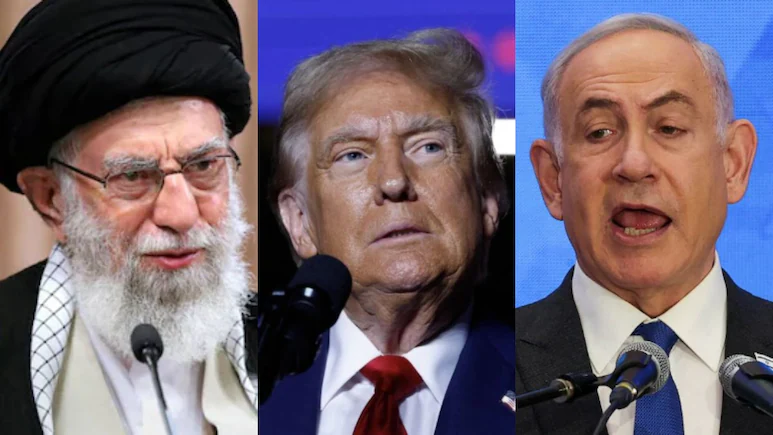
In June 2025, a fragile ceasefire was announced between Iran and Israel following weeks of missile exchanges and nuclear escalation. Brokered with Qatar’s mediation and former President Trump’s involvement, the truce remains contested, with continued strikes and no formal agreement. This in-depth report breaks down how the ceasefire unfolded, why it failed to fully hold, and what the geopolitical consequences could be for the Middle East and global security.
Introduction
In June 2025, after nearly two weeks of high-stakes military exchanges, former U.S. President Donald Trump announced a “complete and total ceasefire” between Israel and Iran. The statement followed a cascade of events—Israeli airstrikes on Iranian nuclear facilities, Iranian retaliatory missile launches across the region, and American diplomatic maneuvering through intermediaries such as Qatar. While the announcement marked a temporary halt to violence, the events that led up to it reveal a deeper pattern of regional hostility, strategic miscalculations, and diplomatic fragmentation.
Part 1: The Road to Ceasefire — How the Iran–Israel Crisis Escalated and Deescalated
Long-Term Tensions: Iran and Israel’s Strategic Rivalry
The Iran–Israel conflict is not new. For over two decades, the two countries have engaged in covert warfare, cyberattacks, and military confrontations through proxy groups.
Key Background Events:
- 2006–2020: Israeli operations targeting Hezbollah (Iran’s Lebanese proxy) escalate, particularly in Syria.
- 2021–2023: Mossad operations inside Iran reportedly sabotage nuclear facilities and assassinate key scientists.
- 2024: Iran ramps up uranium enrichment after the collapse of nuclear talks in Vienna; Israel increases surveillance and precision strike capabilities.
The geopolitical rivalry intensified as Iran moved closer to nuclear breakout capability and Israel adopted a more direct military posture. By mid-2025, this strategic tension had evolved into open conflict.
Breakdown of Diplomacy in Early 2025
In April 2025, backchannel talks resumed between the United States and Iran. These discussions, facilitated by Oman and Qatar, aimed to curb Iran’s nuclear program and reintegrate it into a rules-based international system. Negotiators included:
- Steve Witkoff, U.S. Special Envoy to Iran
- Abbas Araghchi, Iran’s Foreign Minister
- Qatari officials, acting as intermediaries
However, by June, those talks had stalled. Key sticking points included:
- Iran’s refusal to accept new IAEA inspection conditions.
- U.S. demands that Iran roll back uranium enrichment to 3.67%.
- Israeli intelligence leaks showing underground enrichment at Fordow had restarted using IR-6 centrifuges.
Summary Timeline:
| Date | Key Development |
|---|---|
| April 2025 | U.S.–Iran talks begin in Oman |
| May 2025 | Enrichment reports trigger U.S. concern |
| June 10, 2025 | Talks collapse in Rome |
| June 18–20, 2025 | Israeli airstrikes begin |
Israeli Airstrikes on Iranian Nuclear Facilities
On June 18, 2025, the Israeli Air Force launched coordinated strikes on several Iranian nuclear infrastructure targets. These included:
- Fordow: Allegedly housing covert enrichment facilities.
- Isfahan: Storage site for centrifuge components.
- Natanz: Central to Iran’s uranium production.
According to the International Atomic Energy Agency (IAEA), the strikes caused “very significant damage” to operational infrastructure. Israeli officials justified the attacks by citing Article 51 of the UN Charter on self-defense and claimed the operations targeted non-civilian military sites.
Israeli Objectives:
- Delay or destroy Iran’s ability to enrich uranium to weapons-grade levels.
- Demonstrate military superiority and deterrence.
- Preempt any future nuclear breakout before November 2025, the estimated breakout timeline.
Iranian Retaliation and Regional Escalation
Iran responded within 24 hours with a series of missile and drone attacks:
- Over 150 ballistic and cruise missiles launched at Israel’s southern and central regions.
- Israeli cities Beersheba, Haifa, and Ashdod were directly hit.
- Several drones targeted Israeli Defense Force (IDF) installations in the Negev Desert.
A particularly symbolic move was Iran’s decision to strike Al Udeid Air Base in Qatar, which hosts over 10,000 U.S. military personnel. Though no casualties were reported, the message was clear: the Islamic Republic was willing to widen the conflict.
Iran’s Tactical Messaging:
- Avoid escalation with the U.S. while signaling capability.
- Show regional allies (e.g., Hezbollah, Houthis, PMF) that Tehran remains uncompromising.
- Underscore its deterrent power in face of Israeli aggression.
Trump Steps In: The Ceasefire Announcement
In a surprise move on June 23, 2025, Donald Trump announced that both Iran and Israel had agreed to a phased ceasefire. The announcement came via Truth Social, hours before he departed for a NATO summit in Warsaw.
Claimed Terms:
- Iran would halt attacks by midnight ET (4 a.m. Tehran time).
- Israel would observe a 12-hour delay before ceasing operations.
- Trump described the deal as “a historic peace effort brokered through strength.”
Verification and Diplomacy:
- White House officials confirmed that Trump spoke directly with Israeli Prime Minister Benjamin Netanyahu.
- Iran, through Araghchi, acknowledged a conditional halt tied to Israeli restraint.
- Qatar facilitated backchannel negotiations, acting as an intermediary between the U.S. and Iranian defense officials.
Ambiguities in the Ceasefire
Despite Trump’s announcement, the ceasefire was not formally endorsed by either Iran or Israel in writing.
- Iran framed its halt as “conditional,” insisting Israel stop “illegal aggression” by the stated deadline.
- Israeli officials issued no formal confirmation. Analysts suggested Israel might continue targeting Iranian proxies in Syria and Lebanon, even if direct strikes on Iran paused.
This lack of clarity created a gray zone in which both sides could claim compliance while continuing military posturing.
Part 2: Fragile Implementation — Terms, Violations, and On-the-Ground Realities

Official Terms vs. Political Realities
Trump’s Announcement (June 23, 2025):
- Timeline: Iran would stop its attacks by 12 a.m. ET (4 a.m. Tehran time, June 24). Israel would cease operations 12 hours later.
- Framing: Trump called it a “historic peace agreement” made possible by “maximum pressure and strength.”
Iran’s Interpretation:
- Foreign Minister Abbas Araghchi told Iranian state media that Tehran would only comply if Israel halted all airstrikes first.
- Iran did not confirm a bilateral agreement with Israel or a direct negotiation with the U.S.
- Araghchi emphasized: “There is no signed document. Iran’s condition is a total halt of Israeli aggression by the stated deadline.”
(Islamic Republic News Agency, June 23, 2025)
Israel’s Position:
- No official Israeli government confirmation was issued.
- Government officials speaking anonymously to Haaretz stated Israel had “no intention of changing its posture until Iran fully disengaged its ballistic missile units.”
Structural Flaws:
- No verification body (e.g., IAEA, UN) was involved in monitoring ceasefire violations.
- No third-party peacekeeping forces or real-time intelligence sharing agreements were in place.
- Messaging came primarily through unofficial channels and diplomatic intermediaries in Qatar.
Violations After the Ceasefire Deadline
Within six hours of the deadline:
- Iranian Missiles Hit Beersheba: At least 12 short-range missiles struck civilian areas, killing 4 Israelis and injuring 11.
- Additional Rockets Targeted Haifa: Israel’s Iron Dome intercepted five of eight incoming missiles; three struck near industrial zones.
- UAVs Over Northern Negev: Iranian-made drones, launched by Hezbollah, were shot down by Israeli F-35s.
Iran claimed these attacks were “defensive” and had been launched before the ceasefire deadline. However, video footage timestamped after 4 a.m. Tehran time contradicts that assertion.
Civilian Casualties and Infrastructure Damage:
- Israel:
- 4 civilian deaths in Beersheba
- 11 injured, including 2 children
- Estimated $18 million in infrastructure damage
- Iran (from earlier Israeli strikes):
- 943 total reported casualties (including 600 military personnel)
- Critical damage to centrifuge facilities at Fordow and Isfahan
- Destruction of key IRGC command-and-control installations
Military Posture and Strategic Movements
Despite the ceasefire, both countries maintained high military readiness:
- Israel deployed three Iron Dome batteries near Ashkelon, rerouted air traffic from Tel Aviv’s Ben Gurion Airport, and canceled public events in central Israel.
- Iran repositioned missile units from western provinces to fortified bunkers and issued orders to proxy militias in Iraq and Syria to remain alert.
Notable Incidents Post-Ceasefire:
- June 24, 12:45 p.m. IST: Israeli air defenses intercepted a missile over Netivot.
- June 24, 3:30 p.m. IST: Explosions reported near an IRGC-linked facility in Syria, blamed on Israeli drones.
- June 25, 1:00 a.m. Tehran time: Iranian Revolutionary Guards reported movement of U.S. aircraft carriers in the Gulf region.
International Mediation and U.N. Response
Qatari Mediation:
- Doha played a key role in relaying U.S. and Iranian positions.
- Qatari diplomats confirmed Iran “did not formally sign any truce,” framing it as a mutual understanding relayed through Washington.
- Qatar called for a return to indirect nuclear negotiations in Muscat.
United Nations Security Council (UNSC):
- Russia and China called emergency meetings on June 24.
- Pakistan and Iran introduced a resolution condemning “unilateral acts of aggression,” implicitly referring to Israeli airstrikes.
- U.S., UK, and France blocked the resolution from moving to vote.
- No joint UNSC statement was issued.
EU and NATO:
- European Union issued a cautious statement urging “restraint and reengagement through diplomacy.”
- NATO refrained from comment during its June 25–26 Warsaw summit, where Trump discussed the ceasefire during closed-door sessions.
Media Reactions and Credibility Challenges
The credibility of the ceasefire narrative fractured along geopolitical lines:
- U.S. Conservative Media (e.g., Fox News): Framed the deal as a Trump-led breakthrough that reaffirmed “peace through strength.”
- Mainstream Western Media (e.g., BBC, Reuters): Focused on the post-deadline violations and the conditional nature of Iran’s participation.
- Iranian Press (e.g., Fars News, Press TV): Portrayed the ceasefire as a unilateral gesture of restraint, demanded compensation for the damage inflicted on its nuclear sites.
- Israeli Press (e.g., Haaretz, Jerusalem Post): Criticized the lack of Israeli public communication and pointed to risks of future flare-ups.
Global Energy and Economic Impact
Although fears of a broader regional war caused initial market turbulence, stability returned within 48 hours.
Economic Indicators:
- Brent Crude spiked to $94.75 on June 23, then fell back to $89.20 by June 25.
- Shipping firms rerouted some vessels away from the Strait of Hormuz briefly but resumed traffic by June 26.
- Defense stocks (e.g., Rafael, Raytheon) rose by 4–6% on June 24 in anticipation of prolonged conflict, before leveling off.
The absence of U.S. casualties or a direct American-Iranian confrontation helped calm international markets.
Key Takeaways
| Issue | Status | Implication |
|---|---|---|
| Official Agreement | None | Ceasefire remains informal and politically framed |
| Verification Mechanism | Absent | No body tasked with enforcement or monitoring |
| Regional Reactions | Mixed | Gulf States cautious; Iran’s allies vocal |
| Ceasefire Violations | Documented | Undermines credibility of truce claims |
| Civilian Impact | Ongoing | Deaths in Israel; infrastructure loss in both states |
Part 3: What Comes Next — Nuclear Stakes, Proxy Realignments, and Diplomatic Challenges
The Nuclear Equation: What Was Damaged and What Remains
Israeli Airstrike Impact
Israel’s June 18–20, 2025 strikes reportedly targeted key Iranian nuclear infrastructure, particularly at:
- Fordow Fuel Enrichment Plant: Satellite imagery confirmed structural damage to at least two underground halls housing IR-6 centrifuges.
- Isfahan Facility: Targeted for its uranium stockpiles and manufacturing capabilities.
- Natanz Complex: Hit with bunker-busting ordnance, disabling key electrical nodes.
According to the International Atomic Energy Agency (IAEA), the attacks set Iran’s uranium enrichment program back by “at least 12 to 18 months,” though this estimate depends on Iran’s access to replacement parts and technical staff.
Iran’s Remaining Capabilities
Despite the damage, Iran is believed to retain:
- Covert centrifuge production facilities outside known sites.
- Domestic expertise to rebuild IR-6 and IR-8 centrifuges.
- Enriched uranium stockpiles stored in undisclosed locations.
Iran has not rejoined the Joint Comprehensive Plan of Action (JCPOA) or permitted snap inspections by the IAEA. The risk of a nuclear breakout—the ability to produce a nuclear weapon within a short window—remains credible.
Proxy Forces and the Risk of Asymmetric Conflict
Even if direct military conflict pauses, Iran’s regional allies—known collectively as the Axis of Resistance—remain active and capable of reigniting hostilities.
Lebanon (Hezbollah)
- Has over 150,000 rockets capable of reaching across Israel.
- Conducted surveillance flights over Israeli territory during the June 2025 escalation.
- Secretary-General Hassan Nasrallah praised Iran’s retaliation but stopped short of announcing full involvement.
Iraq (Popular Mobilization Forces)
- Several Iranian-backed militias mobilized near U.S. bases in Erbil and Baghdad.
- Conducted cyberattacks targeting Israeli financial institutions.
Yemen (Houthi Forces)
- Issued threats to Saudi Arabia and UAE, accusing them of complicity with Israeli actions.
- Fired short-range ballistic missiles into the Red Sea, briefly disrupting shipping lanes.
Gaza (Palestinian Islamic Jihad, Hamas)
- Remained mostly silent during the recent confrontation but have historically responded to Iranian signals during Israeli conflicts.
Risk Assessment: These actors provide Iran with deniable strike capabilities and political leverage. Future flare-ups may not involve state-to-state combat but asymmetric warfare, disrupting oil flows, air travel, and border security across the region.
Global Reactions and Diplomatic Positioning
United States
- The Biden administration (under former VP Kamala Harris acting in opposition to Trump’s independent diplomacy) criticized Trump’s unilateral negotiations but stopped short of opposing the ceasefire.
- U.S. military assets in the Persian Gulf remained active, though no retaliatory strikes were authorized.
Russia and China
- Russia called for “a multipolar approach to Middle East security” and condemned U.S.–Israeli actions as “unilateral and destabilizing.”
- China proposed a new regional security dialogue under the Shanghai Cooperation Organisation (SCO).
European Union
- Issued a muted response, urging both sides to reengage through the IAEA framework.
- France and Germany called for a return to JCPOA talks but offered no new incentives or guarantees.
United Nations
- Security Council remains gridlocked.
- No resolution was passed condemning or endorsing either side’s actions.
- Secretary-General António Guterres called for the appointment of a special envoy for Middle East nonproliferation.
What Happens Next: Three Scenarios
1. Fragile De-escalation Holds (Best Case)
- Iran refrains from further retaliation.
- Israel halts direct strikes on Iranian territory.
- A new multilateral negotiation track is opened in Oman or Geneva.
Probability: Low
Requirements: Backchannel U.S.–Iran communication, Israeli intelligence assurance, GCC mediation.
2. Renewed Conflict by Proxy (Intermediate Risk)
- Iran uses Hezbollah or Iraqi militias to strike Israeli interests.
- Israel responds with strikes in Syria or Lebanon.
- Ceasefire erodes without formal collapse.
Probability: Medium
Indicators: Increased militia mobilization, escalation in border regions, cyberattacks.
3. Full-scale Regional War (Worst Case)
- Iran rebuilds nuclear capabilities rapidly.
- Israel re-launches preemptive strikes.
- U.S. drawn into combat via Gulf or Israeli defense pacts.
Probability: Moderate
Indicators: IAEA inspections denied, new uranium enrichment confirmed, ballistic missile exchanges resume.
Strategic Recommendations
For Iran:
- Reopen facilities to IAEA monitoring.
- Signal commitment to regional de-escalation through controlled militia activity.
- Negotiate limited JCPOA 2.0 framework via trusted intermediaries.
For Israel:
- Publicly clarify its position on the ceasefire to reduce ambiguity.
- Limit preemptive actions to verified military targets.
- Engage in trilateral talks with Egypt and Jordan on regional stability.
For the International Community:
- Establish independent ceasefire verification via UN or neutral third-party.
- Re-engage Gulf States (e.g., Qatar, UAE) in security guarantees and monitoring.
- Incentivize de-escalation through economic levers (e.g., gradual sanctions relief tied to compliance milestones).
Conclusion
The June 2025 Iran–Israel ceasefire is a tenuous halt to hostilities, not a resolution. While military action has slowed, the underlying drivers of conflict—nuclear brinkmanship, proxy warfare, and mutual distrust—remain intact. Iran’s nuclear future hangs in the balance, regional proxies stand ready, and international diplomacy remains fragmented.
Stabilization is possible, but only with proactive, verifiable engagement from all parties. Without it, the Middle East risks slipping into a deeper, deadlier confrontation in the months ahead.
About the author

References
- Reuters. “Trump Says Israel–Iran Ceasefire Now in Effect, Please Don’t Violate It.” Reuters, 24 June 2025, https://www.reuters.com/world/middle-east/trump-says-iran-israel-agree-ceasefire-2025-06-23/. Accessed 24 June 2025. theaustralian.com.au+4reuters.com+4reuters.com+4
- Reuters. “Qatari Prime Minister Secured Iran’s Agreement to U.S. Ceasefire Proposal After Call with Trump, Official Says.” Reuters, 23 June 2025, https://www.reuters.com/world/middle-east/qatari-prime-minister-secured-irans-agreement-us-ceasefire-proposal-after-call-2025-06-23/. Accessed 24 June 2025. reuters.com+1theguardian.com+1
- AP News. “Iranian Missile Barrage Strikes Israel after Deadline Trump Announced for Ceasefire Passes.” AP News, 24 June 2025, https://apnews.com/article/9e78510c88ccc5e262341f41550609c5. Accessed 24 June 2025. reuters.com+5apnews.com+5apnews.com+5
- Al Jazeera. “LIVE: Trump Says Israel–Iran Ceasefire Is Now in Effect.” Al Jazeera, 24 June 2025, https://www.aljazeera.com/news/liveblog/2025/6/24/live-trump-announces-ceasefire-no-confirmation-from-israel-iran. Accessed 24 June 2025. theguardian.com+3aljazeera.com+3reuters.com+3
- AP News. “Iranian State Broadcaster Hit as Iran Urges Trump to Make Israel Halt War.” Reuters, 16 June 2025, https://www.reuters.com/world/americas/israel-iran-battle-escalates-will-be-high-agenda-world-leaders-meet-2025-06-16/. Accessed 24 June 2025. reuters.com
About The Author




Good insight.
[…] The Iran–Israel Ceasefire of 2025: What Happened, Why It Matters, and What Comes Next […]
[…] The Iran–Israel Ceasefire of 2025: What Happened, Why It Matters, and What Comes Next […]