
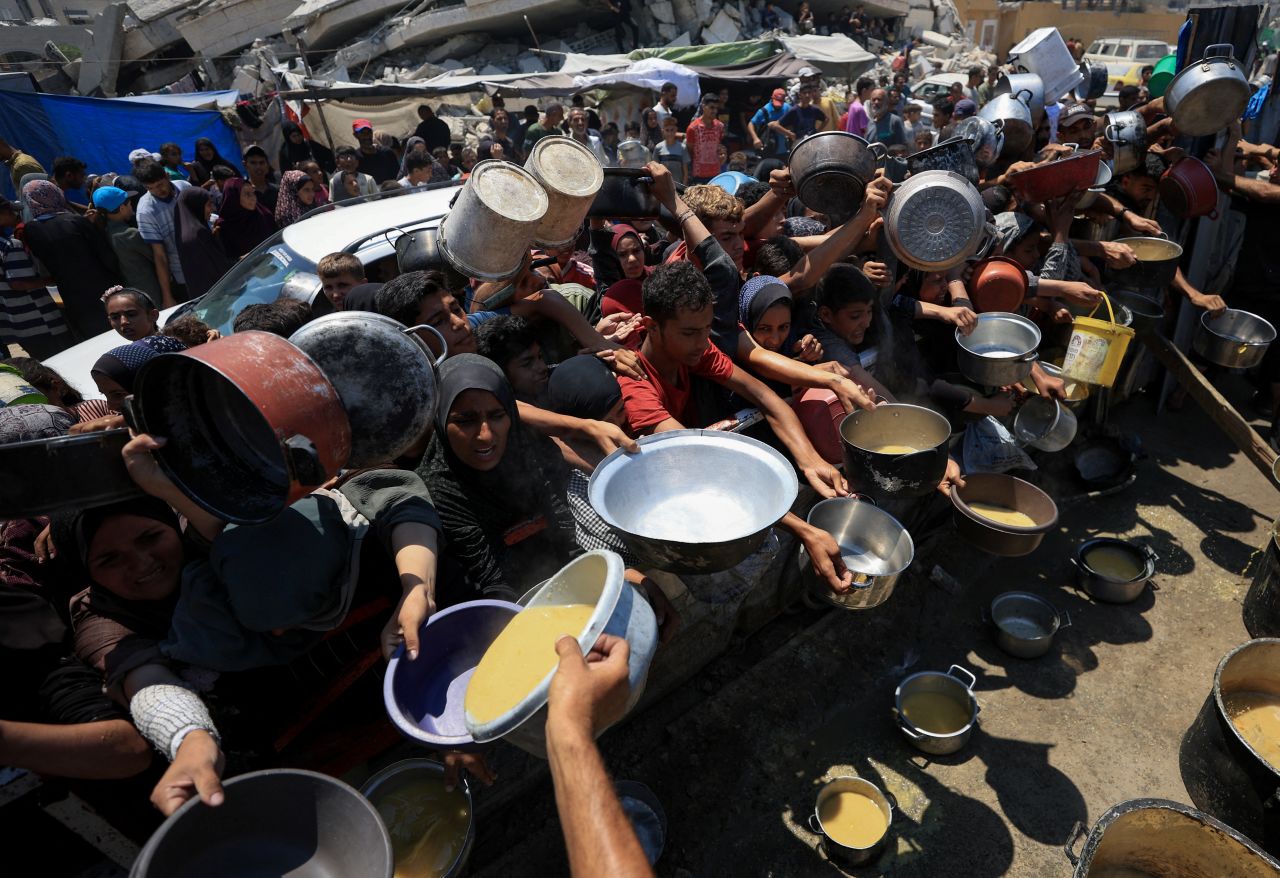
The United Nations, international NGOs, and even war reporters now describe conditions not merely as “critical,” but as an engineered famine with no precedent in the modern Middle East.
By Namith DP | July 26, 2025
Voices from the Edge: A Crisis That Defies Numbers
In northern Gaza, infants are dying not from bullets but from starvation. Hospitals lack IV fluids, food aid is either blocked or looted, and entire families survive on nothing but flour water. Local journalists themselves report losing over 20 kilograms since March — and they are among the lucky ones who still eat once a day.
These aren’t anecdotes — they are the outcomes of verifiable policy decisions and systemic failures in aid delivery, logistics, and political will. Since the breakdown of the brief ceasefire in early March 2025, the Gaza Strip has been under near-total siege.
Malnutrition and Famine: Hunger as a Weapon

From March to July 2025, at least 111 deaths from malnutrition have been documented, including 48 in July alone. Children make up nearly 50% of these fatalities. UNICEF reports that 10% of children under five in Gaza now suffer from severe acute malnutrition (SAM).
Contributing Factors:
- Blockade on specialized nutrition supplies such as RUTF (Ready-to-Use Therapeutic Food).
- Fuel shortages crippling hospitals’ ability to run incubators and intensive care units.
- Collapsed agricultural supply chains, leaving no locally grown food.
Despite global pledges, current stockpiles of therapeutic nutrition will be depleted by mid-August 2025
Breakdown in Aid Delivery: Facts on the Ground
Between January and July 2025, thousands of aid missions were denied, delayed, or canceled.
- 3,000+ trucks filled with flour, medicine, and fuel remain stranded at crossings.
- Israeli authorities cite “security concerns” and alleged Hamas interference.
- However, investigations by USAID and the UN found no substantial evidence of aid diversion by Hamas.
UN Secretary-General António Guterres stated on June 30:
“The obstruction of life-saving humanitarian supplies is unacceptable under international law. We are witnessing a man-made famine in slow motion.”
A recent independent investigation by Time Magazine revealed that multiple WHO-approved aid convoys were denied entry despite carrying only water, vaccines, and pediatric nutrition supplements.
Health Infrastructure: Targeted, Destroyed, Disabled
The World Health Organization (WHO) has verified over 500 attacks on Gaza’s health system since the start of the conflict.
- Only 4 hospitals remain partially functional, serving over 2 million people.
- Electricity shortages have rendered ICU units ineffective.
- Dialysis, surgery, and maternity wards operate only in daytime, with solar-powered triage tents becoming the norm.
Examples:
- Shifa Hospital: Bombed and raided in November 2023; now an empty shell.
- Al-Awda Maternity Hospital: Now handles three times its capacity, without anesthesia for cesarean operations.
- Al-Ahli Hospital in Gaza City: Reports say all neonatal wards ceased operations after oxygen ran out on July 19.
Sanitation and Water Access
Water and hygiene infrastructure has collapsed:
- 97 of 121 desalination plants, sewage stations, and drainage systems are either inaccessible or destroyed.
- Residents in Khan Younis and Rafah report bathing only once in 10–14 days, with severe scabies outbreaks in displacement shelters.
- Garbage collection has halted entirely in Gaza City, increasing the risk of cholera and dysentery.
In July, the UN Office for the Coordination of Humanitarian Affairs (OCHA) declared Gaza’s WASH infrastructure “below survival-level standards.”
Forced Displacement and Civilian Targeting

As of July 2025:
- Over 1.9 million Gazans are displaced.
- Nearly 92% of homes are damaged or destroyed.
- Educational infrastructure has collapsed—95% of schools damaged, with 72% directly hit.
Many displaced families have relocated up to six times since October 2023. Shelters meant for 500 people now house over 4,000 in some cases.
Gender-Based Violence and Disease Rise
The collapse of social systems has led to spikes in:
- Gender-based violence (GBV) in overcrowded shelters.
- Transactional exploitation for food and water.
- Diarrheal diseases accounting for 25% of illness reports in children under 5.
The UNFPA warned in its July report that 2 in 3 women no longer feel safe accessing toilets or hygiene stations.
International Response: Accountability and Legal Violations
- UN special rapporteurs have issued repeated warnings of potential war crimes and crimes against humanity.
- The International Criminal Court (ICC) is actively reviewing documented incidents of collective punishment, forced starvation, and indiscriminate attacks.
- Notably, Bob Geldof, WHO, and Médecins Sans Frontières (MSF) have all condemned what they call the “systematic dismantling” of civilian lifelines.
Israel maintains that its actions are in response to continued Hamas resistance, though multiple aid organizations have called for the immediate lifting of the blockade for neutral humanitarian agencies.
Humanitarian Collapse: Key Data Points
- Population affected: 2.2 million
- Deaths reported since Oct 7, 2023: Over 59,000 (UN, Gaza Health Ministry)
- Children among dead: 16,854 (approx. 31%)
- Displacement: Over 1.9 million (85% of the population)
- Acute food insecurity: 93% of population
- Catastrophic hunger level (IPC Phase 5): 470,000 people
- Hospitals operational: Only 4 of 36
- Water availability: <15 liters/day per person
- Sanitation coverage: Below 50% of pre-conflict levels
- Fuel needs covered: Less than 25%
What Needs to Happen Now
The international community must act decisively. These steps are essential:
- Immediate opening of all border crossings to humanitarian convoys.
- Unimpeded delivery of fuel, food, medicine, and hygiene kits via verified channels.
- Protection for humanitarian workers under Geneva Conventions.
- Deployment of independent observers to monitor aid distribution.
- Removal of political blockades preventing essential medical supplies.
Conclusion: Starvation is a Policy, Not a Consequence
Gaza’s crisis is not the result of natural disaster. It is the direct outcome of deliberate policies, enforced blockades, destroyed infrastructure, and denied access. The evidence is overwhelming. Every global humanitarian principle—from the Geneva Conventions to the UN Charter—is being violated.
If governments, aid agencies, and civil societies fail to intervene now, history will remember Gaza not just as a conflict zone, but as a deliberate humanitarian failure.
For more news on the Iran-Israel conflict read –
About The Author


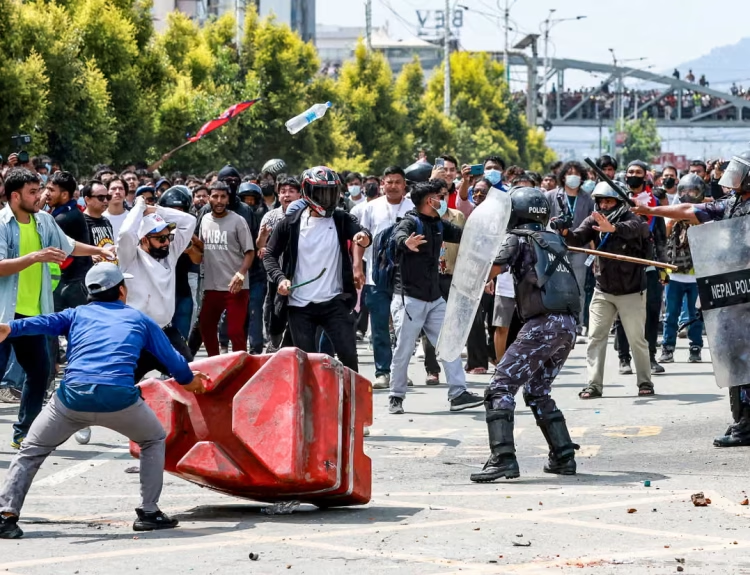


Aid needs to reach them immediately
[…] Gaza’s Humanitarian Crisis: A Call for Immediate Action […]