
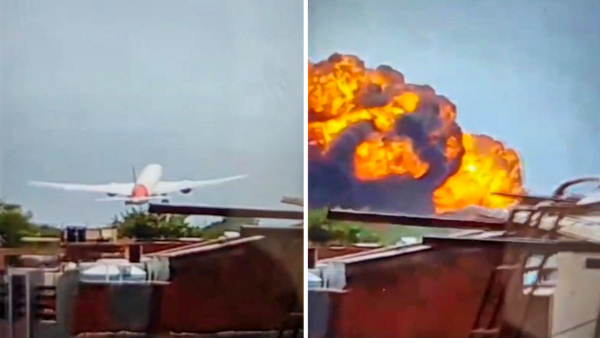
On June 12, 2025, at 1:38 PM IST, Air India Flight AI171, a Boeing 787-8 Dreamliner bound for London Gatwick, plummeted into Ahmedabad’s Meghani Nagar moments after takeoff. The aircraft, carrying 242 souls, struck a doctors’ hostel, unleashing a fireball that scarred the skyline. This wasn’t merely an accident—it was a seismic event that shook families, communities, and the global aviation industry.
As rescue teams comb through wreckage and investigators hunt for answers, you face pressing questions: What caused this disaster? How safe are the skies you travel? What steps can prevent such a tragedy again? This article dissects the crash with precision, drawing on verified data, expert insights, and human stories. From Air India’s legacy to the Boeing 787’s engineering, from the crash’s immediate aftermath to its long-term implications, we deliver a clear, actionable understanding of a defining moment.
Air India and the Boeing 787-8: A Legacy Meets Innovation
Air India, founded in 1932, has long symbolized India’s aviation ambitions. Now under Tata Group ownership since 2022, it operates 194 aircraft, including 27 Boeing 787-8 Dreamliners, with a historic 470-aircraft order placed in 2023 Air India Fleet. The Boeing 787-8, introduced in 2011, boasts a composite fuselage, fuel efficiency, and passenger comforts like larger windows. Air India’s 787 fleet, ordered in 2006, forms the backbone of its long-haul routes Boeing 787 Dreamliner.
The aircraft involved, VT-ANB, delivered in February 2014, was 11 years old and configured for 256 passengers Flightradar24 Blog. It flew a Delhi-Ahmedabad leg earlier that day, suggesting routine operation Flightradar24 Blog. Air India planned fleet retrofits starting April 2025, but VT-ANB’s upgrade status is unclear Live From A Lounge. This crash marks the 787’s first hull loss, a stark milestone for an aircraft with a strong safety record.
- Air India’s Fleet: 194 aircraft, including 27 Boeing 787-8s.
- Boeing 787-8 Features: Composite materials, 20% fuel savings, 250-300 passenger capacity.
- VT-ANB Details: 11 years old, 256 seats, no prior major incidents reported.
The Flight and the Crash: A Timeline of Tragedy
Flight AI171 departed Ahmedabad’s Sardar Vallabhbhai Patel International Airport at 1:38 PM IST on June 12, 2025, under clear skies Air India Flight 171. Captain Sumeet Sabharwal, with 8,200 flight hours, and First Officer Clive Kundar led the crew of 12, serving 230 passengers: 169 Indians, 53 Britons, 1 Canadian, and 7 Portuguese CNBC TV18.
Seconds after takeoff, the aircraft issued a mayday call, then vanished from radar at 625 feet Flightradar24 Blog. It crashed into a doctors’ hostel in Meghani Nagar, triggering explosions and dense smoke NDTV. Video evidence shows the undercarriage extended and flaps retracted, hinting at a possible mechanical issue Air India Flight 171.
| Flight AI171 Snapshot | Details |
|---|---|
| Flight Number | AI171 |
| Aircraft | Boeing 787-8 (VT-ANB) |
| Departure | Ahmedabad, 1:38 PM IST, June 12, 2025 |
| Destination | London Gatwick |
| Passengers/Crew | 242 (230 passengers, 12 crew) |
| Crash Site | Meghani Nagar, Ahmedabad |
| Last Altitude | 625 feet |
Ground Impact: A Community Devastated
The crash razed a doctors’ hostel in Meghani Nagar, a residential area near the airport. Debris scattered across streets, and fires raged, complicating rescue efforts Times of India. At least 30 fatalities have been confirmed, with more feared trapped Air India Flight 171. The urban setting intensified the disaster’s toll, raising critical questions: How do airports near populated areas manage risks? What can cities do to bolster safety?
- Casualties: Minimum 30 confirmed deaths, likely higher.
- Location: Doctors’ hostel, Meghani Nagar, dense urban area.
- Damage: Widespread fire, structural collapse, debris spread.
Rescue Operations: Racing Against Time
Emergency response was immediate. Fire brigades, medical teams, and over two dozen ambulances converged on the site NDTV India. The Ministry of Civil Aviation opened a control room in Delhi Times of India. Air India launched a hotline (1800 5691 444) for families Air India. The airport halted operations briefly but has since reopened India Today.
- Response Teams: Fire services, ambulances, police, and medical personnel.
- Coordination: Ministry control room, Air India hotline.
- Airport Status: Operations resumed after temporary closure.
Leadership and Global Reactions
Leaders voiced profound sorrow. Indian Prime Minister Narendra Modi called the crash “heartbreaking” The Hindu. UK Prime Minister Keir Starmer pledged support for British nationals The Guardian. Indian President Draupadi Murmu labeled it a “heart-rending disaster” India Today. The Tata Group committed to aiding victims Economic Times.
- Indian Response: Modi, Murmu, and Tata Group express solidarity.
- International Support: UK’s FCDO activates crisis team.
- Boeing’s Statement: Acknowledges incident, gathering data Flightradar24 Blog.
Passengers and Crew: Faces of the Tragedy
The 242 on board included 169 Indians, 53 Britons, 1 Canadian, and 7 Portuguese The Guardian. Unconfirmed reports mention former Gujarat Chief Minister Vijay Rupani as a possible passenger Economic Times. The crew, led by Captain Sabharwal, brought decades of expertise, underscoring the loss to Air India CNBC TV18.
- Passenger Breakdown: Diverse nationalities, 230 total.
- Crew: 12 members, led by experienced pilots.
- Notable Figures: Potential presence of Vijay Rupani, unverified.
Investigation: Seeking the Cause
India’s Directorate General of Civil Aviation (DGCA) spearheads the probe, with international experts expected to assist CNBC TV18. Clear weather eliminates environmental factors [Air India Flight 171 https://en.wikipedia.org/wiki/Air_india_Flight_171]. The mayday call suggests a sudden issue, possibly mechanical. Investigators will scrutinize:
- Flight Data Recorders: To reconstruct the flight’s path.
- Cockpit Voice Recorders: To capture crew communications.
- Maintenance Logs: To assess VT-ANB’s condition.
What could trigger such a rapid failure in a modern aircraft? Early findings may shape global safety standards.
Safety Implications: Lessons for the Industry
The 787’s first hull loss jolts aviation. The crash highlights risks of urban airports and demands action:
- Takeoff Protocols: Enhance pre-flight and climb-phase checks.
- Urban Airport Safety: Reassess zoning near runways.
- Emergency Preparedness: Streamline urban disaster response.
The industry must act to restore trust. Have you flown recently? Your experiences with safety briefings could inform future training.
Human Stories: Voices from Ahmedabad
The crash’s human impact is raw. Resident Nirmal Dabhi searched for his brother-in-law, Prashant Patel, feared on board Times of India. Meghani Nagar locals described a “sky on fire” as debris fell Hindustan Times. Families at hospitals clung to hope, their anguish a reminder of the stakes.
- Nirman Dabhi: Seeks family, represents personal loss.
- Meghani Nagar Residents: Faced chaos, survived destruction.
- Hospital Scenes: Families await news, highlighting grief.
Actionable Steps for You
If you suspect a loved one was on AI171, call Air India’s hotline (1800 5691 911) or check Air India Support. If you travel frequently:
- Stay Alert: Review safety cards during flights.
- Monitor Updates: Follow DGCA and Boeing reports for safety changes.
- Engage Locally: In Ahmedabad, support recovery efforts via local NGOs.
How will you adjust your travel habits? Knowledge drives safety.
Future Outlook
The AI171 crash will reshape aviation. Investigations may prompt global safety reforms, from aircraft design to airport planning. For now, Ahmedabad grieves, and families seek closure. The world must honor the 242 lost by ensuring safer skies.
- Expected Outcomes: Tighter regulations, urban safety reviews.
- Community Focus: Support for victims’ families.
- Global Impact: Renewed safety commitment.
Key References
The Guardian International Coverage
Photo Credit OneIndia
About The Author


