
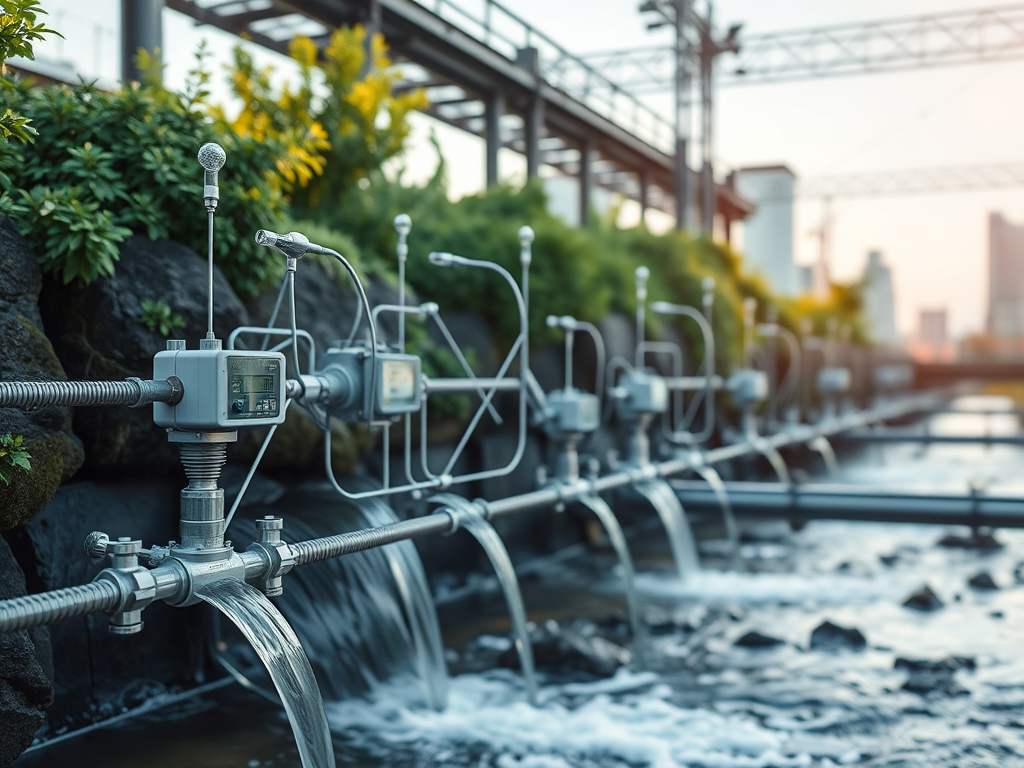
The Urgency of a Finite Resource
Water is not infinite. Despite its abundance in oceans and rivers, usable freshwater is critically limited. Global demand for water has increased sixfold over the last century, while supply chains remain outdated, inefficient, and reactive. According to the United Nations, by 2030, the world could face a 40% shortfall in freshwater resources if current trends persist.
Conservation efforts have traditionally relied on policy enforcement, manual monitoring, and citizen engagement. But today, a new force is redefining how we manage this vital resource: the Internet of Things (IoT). With IoT, water conservation shifts from a manual, reactive discipline to a data-driven, proactive science.
This article explores how IoT water management is reshaping the way cities, industries, and households conserve and distribute water — not in theory, but in practice.
What Is IoT Water Management?
IoT water management refers to the deployment of interconnected sensors, devices, and software platforms that collect, analyze, and act on water-related data in real time. These systems enable:
- Remote monitoring of water flow, pressure, and quality
- Early detection of leaks and pipeline failures
- Optimization of irrigation and industrial processes
- Real-time alerts and automated responses
The objective is to provide precise, continuous, and actionable insight into every drop of water moving through a system. Whether it’s a municipal pipeline, a crop field, or a cooling tower, IoT enables smarter decisions and better resource stewardship.
Core Components of IoT in Water Conservation

Understanding IoT water management requires breaking it down into its core functional parts:
1. Sensors and Actuators
- Flow Meters: Monitor usage rates in real time
- Pressure Sensors: Detect anomalies indicating leaks or blockages
- Water Quality Sensors: Track pH, turbidity, chlorine, and microbial content
- Soil Moisture Sensors: Measure saturation levels to prevent over-irrigation
- Actuators: Open or close valves, adjust pressure, or reroute water
2. Connectivity Infrastructure
- Wireless Protocols: LoRaWAN, NB-IoT, 5G for low-power, long-range communication
- Edge Devices: Gateways that aggregate data before sending it to the cloud
- Cloud Platforms: Centralized data hubs enabling remote access, analysis, and alerts
3. Data Analytics and AI
- Predictive analytics for system failures
- Machine learning models to forecast usage patterns
- Optimization algorithms for water allocation and flow regulation
4. User Interfaces and APIs
- Dashboards for operators
- Mobile apps for consumers
- APIs for integration with SCADA, ERP, or utility billing systems
Together, these components form a closed feedback loop: sensing → transmitting → analyzing → acting. This closed loop is what distinguishes IoT systems from traditional water infrastructure.
Municipal Water Systems: Detecting Leaks Before They Cost Millions
In cities, one of the largest contributors to water loss is leakage from aging pipelines. The World Bank estimates that nearly 25–30% of distributed water globally is lost before it reaches the consumer. This is known as Non-Revenue Water (NRW).
IoT in Action:
- Smart Meters in cities like London and Singapore have drastically reduced NRW by offering consumption data down to 15-minute intervals.
- Acoustic Sensors and vibration monitors detect tiny anomalies in water pressure that signal a growing leak, enabling preemptive maintenance.
- Digital Twin Models of water infrastructure simulate the behavior of real-world systems to test emergency responses or maintenance scenarios in advance.
Results:
- Real-time monitoring has cut NRW rates by over 20% in certain districts
- Repairs are now scheduled before major ruptures, reducing both costs and downtime
- Utilities avoid penalties and maintain compliance with water regulations
IoT water management is not about simply tracking water use. It’s about extending the life of infrastructure and reducing operational risk at scale.
Agriculture: Maximizing Yield, Minimizing Waste
Agriculture accounts for over 70% of global freshwater withdrawals. And yet, most irrigation systems are based on fixed schedules, not real-time crop needs.
Smart Irrigation with IoT:
- Soil Moisture Sensors detect exactly when and where plants need water
- Weather Sensors and forecasting models adjust irrigation cycles based on rainfall predictions
- Automated Valves and Drip Systems distribute water with centimeter-level precision
Case Study: Precision Agriculture
In India’s Punjab region, IoT-powered drip irrigation systems have reduced water use by 40% while increasing crop yield by 25%. Farmers receive alerts via mobile apps, and water is only dispensed where sensors indicate dryness.
Broader Impact:
- Reduces nutrient runoff and salinization
- Lowers energy use from water pumps
- Increases drought resilience
With growing climate unpredictability, adaptive water systems are not a luxury — they are essential.
Industry: Driving Efficiency Across the Supply Chain
Industries such as power generation, pharmaceuticals, food processing, and textiles are major water consumers. Many face regulatory pressure to monitor and reduce usage.
Industrial Use Cases:
- Closed-Loop Cooling Systems: IoT sensors detect heat and flow patterns to reuse water more efficiently
- Real-Time Effluent Monitoring: Tracks chemical levels in wastewater to ensure legal compliance
- Predictive Maintenance: Identifies when valves, pumps, or tanks need servicing before failure
Benefits to Enterprises:
- Compliance with water discharge permits
- Operational savings from optimized use
- Risk mitigation against supply shortages
Large corporations, including beverage giants and semiconductor manufacturers, are adopting IoT-based water platforms not just to conserve water, but to ensure uninterrupted business operations.
Residential and Commercial Buildings: Making Every Drop Count
Smart water systems are now extending into homes, hotels, and commercial buildings. These systems aim to provide transparency, accountability, and automation.
Key Capabilities:
- Leak Detection: Real-time alerts when abnormal water flow is detected
- Usage Analytics: Hourly or daily usage tracking via apps
- Automated Shutoff: Prevents damage during pipe bursts or appliance failures
Example: Smart Water Heaters
Modern water heaters use IoT to learn usage patterns and heat water only when needed, reducing both water and energy waste.
Impact:
- Lower utility bills
- Water savings of 10–15% in large buildings
- Improved asset protection through early fault detection
IoT makes water conservation an active feature, not a manual responsibility.
Smart Cities and Policy Implications
Smart water management is becoming a core feature of smart city planning. Municipalities are deploying IoT to meet sustainability targets and increase service reliability.
Governance Benefits:
- Real-Time Data for Decision-Makers: Enables evidence-based policies and rapid emergency response
- Citizen Engagement Platforms: Residents can track usage, report leaks, or participate in reward programs
- Urban Planning Insights: Predict population-driven demand and guide infrastructure investments
Regulatory Trends:
- National water quality mandates are now requiring continuous monitoring
- Funding and grants are increasingly tied to deployment of smart infrastructure
Cities that deploy IoT water management are not just conserving resources. They are building smarter, safer, and more resilient environments.
Barriers to Adoption
Despite the clear benefits, challenges remain in scaling IoT water management systems.
Key Challenges:
- High Initial Investment: Sensor deployment, data infrastructure, and integration require significant upfront costs
- Interoperability Issues: Many existing water systems rely on legacy infrastructure that doesn’t communicate with modern IoT devices
- Data Privacy and Security: Securing sensor networks and usage data remains a concern, especially in residential contexts
- Technical Expertise: Small utilities or municipalities may lack the talent to manage complex IoT ecosystems
Addressing these barriers requires public-private collaboration, standardized protocols, and capacity-building initiatives.
The Future of IoT Water Management
As IoT matures, several emerging technologies will enhance water conservation even further.
1. Edge AI
- Local data processing reduces latency and enables faster decision-making
- Devices can act autonomously in remote or disconnected environments
2. Satellite IoT Integration
- Combines remote sensing with ground-level sensors to monitor river basins and aquifers
- Ideal for agriculture, disaster response, and national planning
3. Blockchain for Water Data Integrity
- Ensures trust in shared data for transboundary or public-private water projects
- Useful in regions with shared water resources and regulatory uncertainty
4. Digital Water Markets
- Real-time pricing models based on usage, availability, and demand
- IoT can support these exchanges by providing certified usage data
Water is becoming a managed commodity. The technologies used to manage it must be as dynamic as the environment itself.
Final Thoughts: Precision, Not Sacrifice
IoT water management redefines the narrative around conservation. It is not about restriction or sacrifice. It is about precision — delivering exactly what is needed, when and where it is needed. Whether in a home, farm, factory, or megacity, this precision enables smarter choices, lower costs, and a more sustainable future.
We no longer need to guess where our water is going. We can know it. Measure it. Optimize it.
And that, ultimately, is the most powerful form of conservation: informed action.
About The Author


