
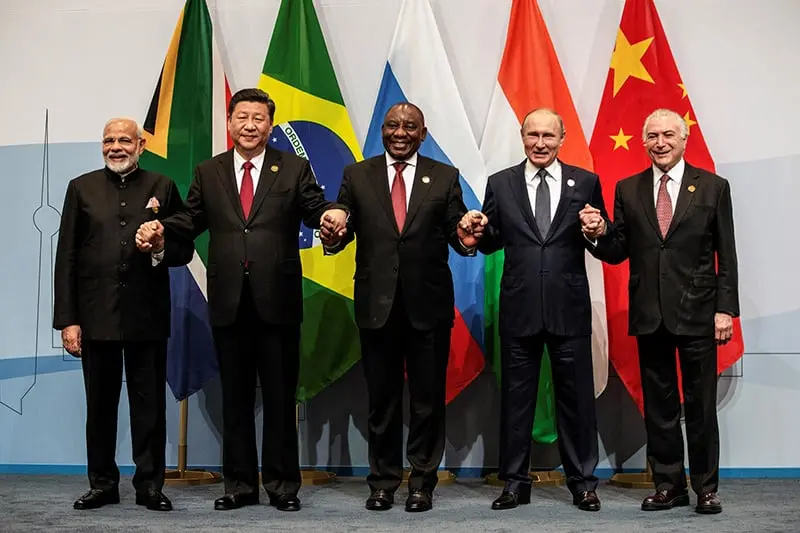
In a bold and controversial move, U.S. President-Elect Donald Trump has threatened to impose 100% tariffs on imports from BRICS countries—Brazil, Russia, India, China, and South Africa—if they proceed with creating a unified currency to challenge the U.S. dollar. This policy proposal is designed to safeguard the dollar’s position as the world’s dominant reserve and trade currency. However, the potential repercussions for international trade, diplomatic relations, and economic stability warrant a closer examination.
Background and Context
The BRICS bloc, recently expanded to include Iran, Egypt, Ethiopia, and the UAE, has explored alternative financial systems to reduce reliance on the U.S. dollar. Proposals like bilateral trade in local currencies and currency swap agreements have gained traction, partly due to U.S.-led sanctions on countries like Russia and Iran, which have pushed them toward economic independence from Western financial systems. While a unified BRICS currency remains largely speculative due to logistical and political hurdles, discussions on de-dollarization have gained momentum, reflecting global frustrations with the dollar’s hegemony. Read more | Learn more.
Trump’s tariff threat is ostensibly a preemptive measure against these shifts. His rhetoric underscores the dollar’s pivotal role in maintaining American economic influence, as about 60% of global reserves and a significant share of international trade are dollar-based. Explore details.
Potential Implications of the Tariff Policy
- Global Trade Disruption
A blanket 100% tariff on BRICS nations would dramatically increase costs for U.S. businesses and consumers. Key imports, including electronics, machinery, and essential commodities, would become prohibitively expensive. Moreover, retaliatory tariffs from BRICS countries could impact U.S. exports, exacerbating trade imbalances. Details here. - Accelerated De-Dollarization
Ironically, such a policy might push BRICS countries further toward de-dollarization. Countries already exploring alternatives like the yuan, rupee, and bilateral trade agreements might double down on these efforts to bypass U.S. sanctions and tariffs, undermining the dollar’s global dominance in the long term. Insights. - Strained Diplomatic Relations
Targeting BRICS nations en bloc risks alienating key U.S. allies like India and Brazil, which have maintained balanced relationships with the West and the Global South. For instance, India has explicitly stated it does not support a unified BRICS currency, signaling that Trump’s blanket approach could complicate its diplomatic ties. Learn more. - Economic Isolation
The U.S. economy could face isolation as BRICS nations—accounting for a significant share of global GDP—might pivot toward deepened intra-group trade and alternative markets like the EU, ASEAN, and Africa. This could diminish the U.S.’s influence in global economic governance. Explore this issue.
Feasibility of a BRICS Currency
Despite Trump’s alarmism, the feasibility of a BRICS currency remains low. Unlike the eurozone, BRICS nations lack economic cohesion, a unified monetary policy, and mutual trust. China’s dominance in trade and finance raises concerns about a potential yuan-centric system, which countries like India might resist. Moreover, technical challenges like exchange rate stability, transaction mechanisms, and political consensus further complicate the prospects of such a currency. Read more.
Conclusion: A Double-Edged Sword
Trump’s proposed tariffs reflect a defensive posture against the evolving multipolar world order. While protecting the dollar is a legitimate concern, the approach risks unintended consequences, including domestic inflation, geopolitical isolation, and accelerated alternatives to U.S.-led financial systems. Policymakers must tread carefully, balancing assertiveness with diplomacy to maintain global economic stability and U.S. interests.
This policy, if implemented, could be one of the most significant economic gambits of the decade. It underscores the need for nuanced strategies in addressing the complexities of a shifting global economic landscape. Full story.
About The Author


