
A Stark Difference in Dunes: How Part Two Diverges from Villeneuve’s Original
Denis Villeneuve’s 2021 sci-fi epic Dune was a critical and commercial success, raking in over $400 million at the box office and earning 10 Academy Award nominations. By bringing the first half of Frank Herbert’s seminal 1965 novel to the big screen with an all-star cast and jaw-dropping visuals, Villeneuve succeeded where others had failed before him in adapting this dense and complex work of science fiction.
However, Dune merely set the stage for the real story to come in the second half of Herbert’s opus. With Dune: Part Two scheduled for release in November 2024, audiences will soon discover how Villeneuve’s ambitious two-part adaptation ultimately differs in key ways from its 2021 predecessor. From the source material it draws upon to the stakes, tone, characters, and scale of the story it tells, Part Two represents a massive expansion and divergence from Villeneuve’s original film.
While the first Dune covered approximately the first half of Herbert’s novel, Part Two will adapt material primarily from the latter half, or second half, of the book. This next chapter sees Herbert’s narrative move from the relatively grounded political machinations and world-building of Dune to more unrestrained, mind-bending science fiction and philosophy. Freed from the burden of excessive exposition and scene-setting, Part Two can explore more imaginative and metaphysical concepts like the abilities of the Fremen people, the prophecies surrounding Paul Atreides and his role as the kwisatz haderach, and the true nature of the spice melange and its impact on the cosmos.
As Paul assumes his destined role as the leader of the Fremen and squares off against the nefarious Padishah Emperor and the forces of the spice-fueled economy, the stakes become quite literally universal in scale. What began as a struggle over control of the desert planet Arrakis escalates into an intergalactic revolution with reverberations felt at every level of society. Villeneuve has described Part Two as an “insane” riff on classic revenge narratives, culminating in an explosive and violent climax that entirely transforms the structure of this far-future universe.
If the 2021 Dune felt at times overly withholding or reserved in its storytelling, burdened by lengthy explanations and unable to truly unleash its full potential, audiences should expect the remarkably different Part Two to dive headfirst into the deep and contentious themes that made Herbert’s novel such a landmark work. As actor Timothée Chalamet, who stars as Paul Atreides, explained: “Part One was a more conventional introduction to the world. Part Two is really where the experiment begins.”
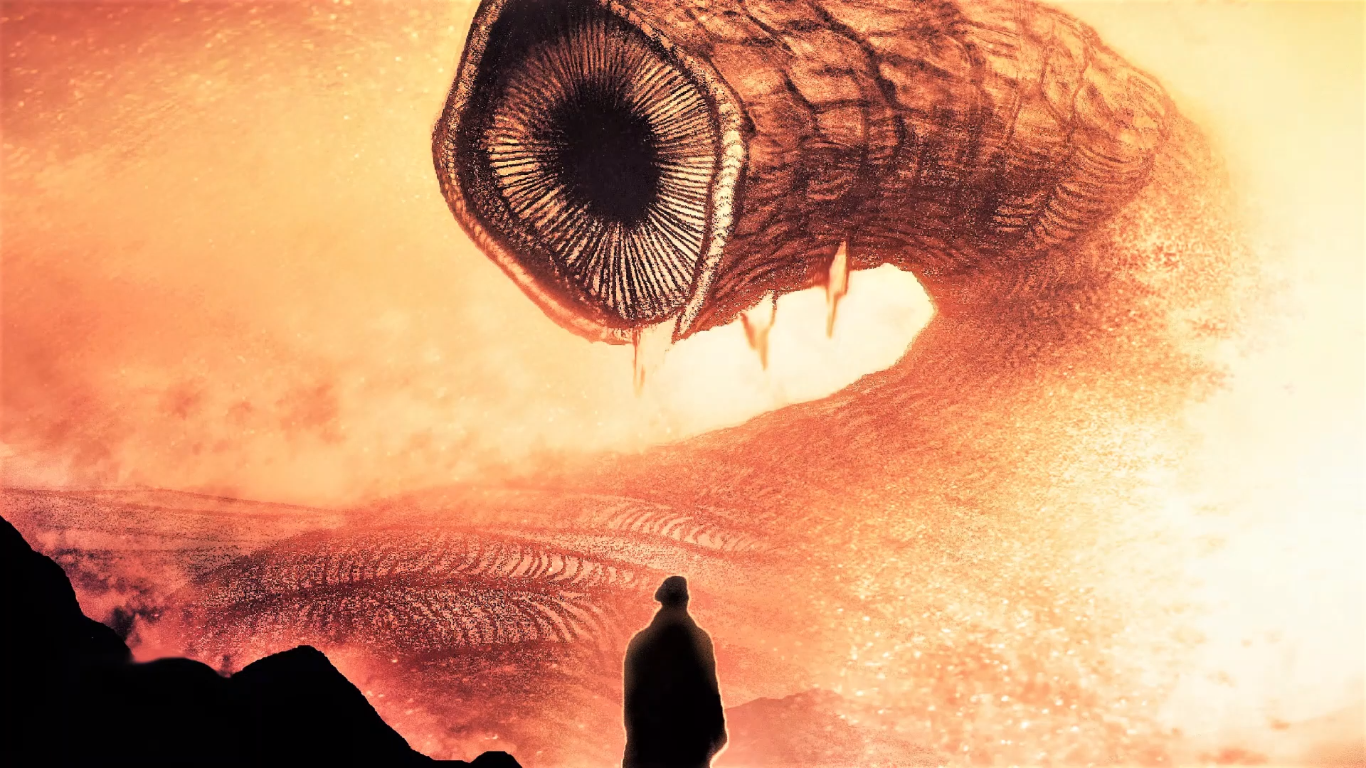
Conceptually and stylistically, Part Two promises a narrative that is bolder, stranger, and more trippy than the original. Now that Villeneuve has laid the foundations of Arrakis, the Fremen culture, spice, and the powers of the Bene Gesserit order, he can explore these elements with less restraint, indulging in the phantasmagorical sensibilities that define much of Herbert’s vision. The director has teased that the film will feature “pretty, pretty intense scenes of psychedelia” and visions inspired by works like Hieronymus Bosch’s The Garden of Earthly Delights.
Dune featured its fair share of majestic if clinical world-building and striking action setpieces, but the sci-fi spectacle of Part Two is expected to reach even greater heights of free-wheeling imagination. Through lavish scenes imagining what psychic powers feel like from the perspective of characters like Paul or his mother Lady Jessica, or through the revelation of threats and technologies only hinted at in the first film, Part Two will aim for an experience that is simultaneously intellectually heady and viscerally overpowering.
Beyond style and premise, Part Two will also mark a major shift in the nature of some of its central characters and performances. As Paul is forced to reckon with his burgeoning messianic powers and take up arms as the leader of the Fremen people, actor Timothée Chalamet will be tasked with portraying a character thrust into the crucible of war, responsibility, clairvoyance, and destiny. Paul of Part Two is hardened, disillusioned, and almost unrecognizable from the idealistic youth at the start of Dune. His transformational arc is central to Herbert’s novel and Chalamet faces the immense challenge of making it feel convincing and earned.
On the other side of the conflict, Stellan Skarsgård will step into a more significant role as the villainous Baron Vladimir Harkonnen. Part One only scratched the surface of his depravity and monstrosity, but Part Two figures to make the Baron more overtly reprehensible and megalomaniacal in his quest for vengeance and control over the spice trade. And Javier Bardem joins the fray as Stilgar, the gruff and hardened Fremen warrior who acts as Paul’s mentor. Bardem’s character embodies the harsh realities of leading an oppressed civilization into battle for the future of an entire planet and civilization.
With these richer character arcs and higher dramatic stakes, not to mention the grand scope of part of Villeneuve’s vision, Dune: Part Two looks to be moving in a sharply different direction from its grounded, cerebral predecessor. That 2021 film was an impressive and artfully crafted piece of science fiction worldbuilding – but it seems to have only been the prologue to something bigger, weirder, and more overwhelmingly immense.
Balancing the established tones and foundation of Dune with Herbert’s more adventurous, philosophically complex machinations is no easy task for Villeneuve or his ensemble cast. But if executed well, Part Two could finally bring the full scope and thematic richness of Dune to life in a way few other sci-fi films have achieved. Even if it stumbles, Part Two at the very least seems poised to take audiences places stranger and less expected than the celebrated world-building exercise that preceded it. Only time will tell where Villeneuve’s ambitions will lead this generation’s most acclaimed sci-fi franchise.
About The Author


