
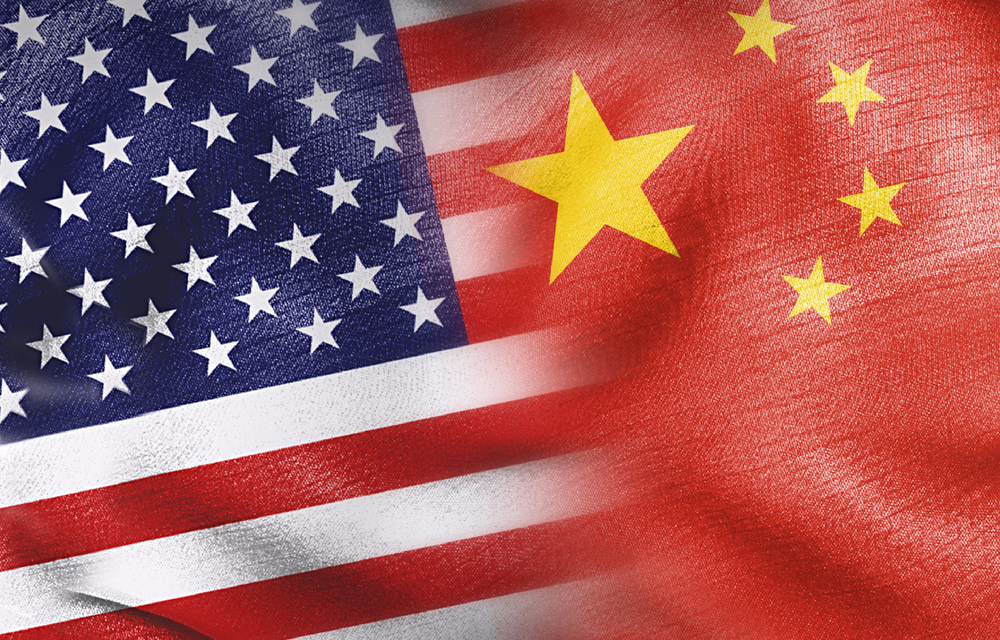
For decades, the relationship between the United States and China has been complicated, and in recent years, it has become increasingly tense. From trade disputes to concerns about human rights violations, the two countries have found themselves at odds on a variety of fronts. Despite the difficulties, there are opportunities for the two countries to find common ground and work towards a more productive relationship.
The Challenges of US-China Relations
The trade war, which has been ongoing since 2018, is one of the most pressing issues confronting US-China relations. The US has imposed tariffs on a wide range of Chinese goods, and China has retaliated in kind. Tariffs have had a significant impact on both economies, with some estimates claiming that the trade war has cost the United States more than $40 billion and China more than $35 billion.
Another major issue is China’s human rights violations, particularly in the Xinjiang region, where the Chinese government has been accused of imprisoning over a million Uyghur Muslims in “re-education” camps. The US government and numerous international organisations have condemned these actions, but China has reacted angrily, denying any wrongdoing and accusing the US of meddling in its internal affairs.
China’s growing assertiveness in the South China Sea, where it has built artificial islands and claimed vast swaths of territory, is a third challenge. The US has responded by conducting freedom of navigation operations and increasing its military presence in the region.
Cooperation Possibilities
Despite these challenges, there are opportunities for the United States and China to collaborate. Climate change is one of the most important areas of potential collaboration. Both countries are major greenhouse gas emitters, and addressing the global climate crisis will be impossible without their cooperation. The two countries agreed to collaborate to combat climate change in 2021, and China has set a goal of reaching carbon neutrality by 2060.
Global public health is another potential area of collaboration. The COVID-19 pandemic has highlighted the importance of international cooperation in responding to public health crises, with the United States and China playing critical roles. The two countries collaborated in the early stages of the pandemic to share information and resources, and there are opportunities for future collaboration in vaccine development and distribution.
Finally, the United States and China share a common interest in maintaining Asian regional stability. While the two countries have disagreed on issues such as the South China Sea, they also have a shared interest in preventing the spread of nuclear weapons and promoting regional economic growth. They can help ensure that Asia remains a stable and prosperous region by cooperating.
Conclusion
Relations between the United States and China are complex and challenging, but there are also opportunities for cooperation. The two countries can improve their relationship by cooperating on issues such as climate change, public health, and regional stability. To achieve these objectives, however, both parties must be willing to engage in dialogue and compromise, as well as set aside their differences on issues such as trade and human rights. Only through cooperation will the United States and China be able to overcome their challenges and build a more stable and prosperous future.
About The Author


