
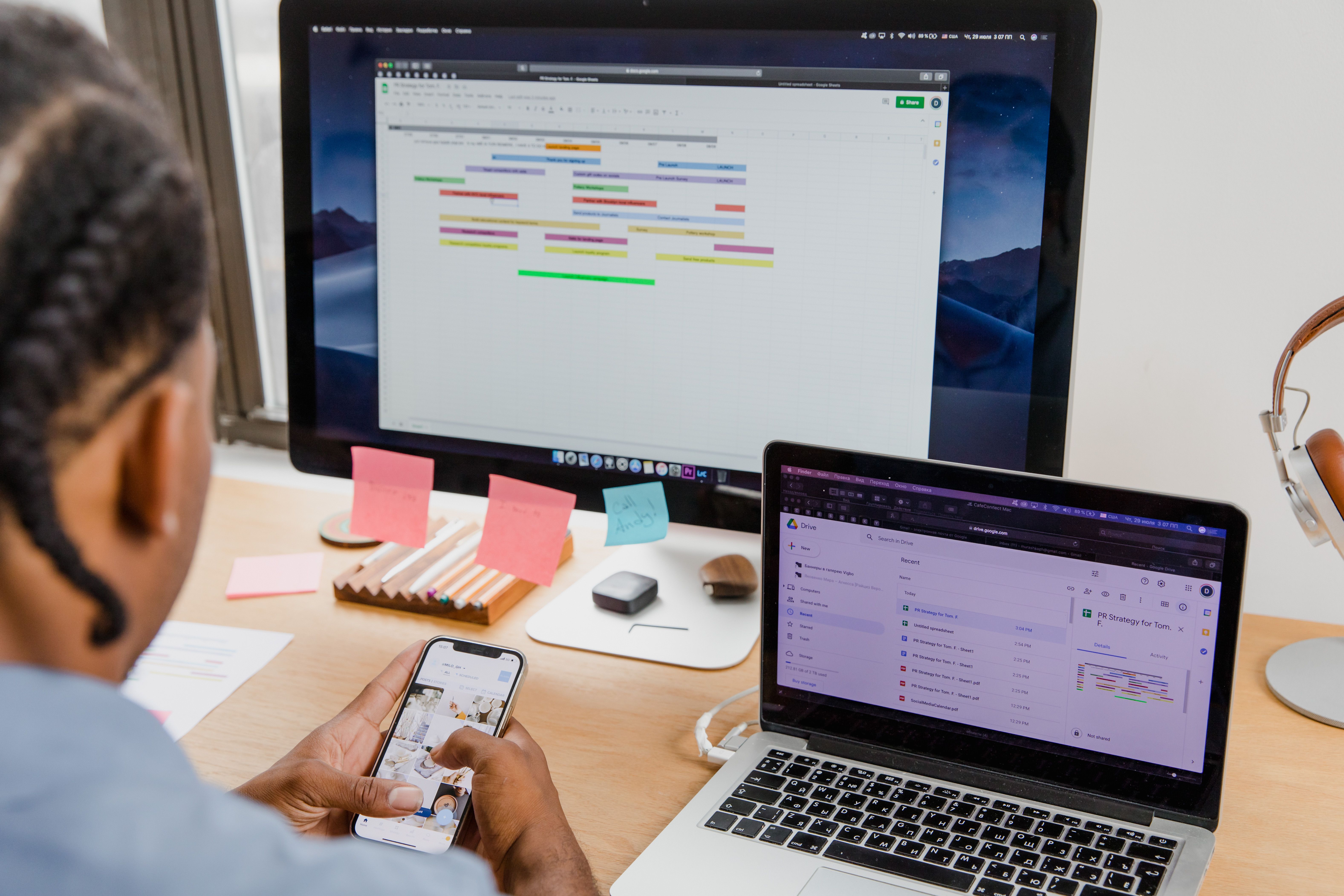
You are not struggling because you lack discipline. You are dealing with an environment that constantly fragments your attention.
Research shows the average knowledge worker switches tasks every 40–60 seconds on digital devices. A study from the University of California, Irvine found it can take over 20 minutes to regain full focus after a single interruption. Yet most people face dozens of interruptions per hour.
This is not a personal failure. It is a structural problem. If you treat it like a motivation issue, you will keep searching for fixes that do not work.
This article breaks down why you feel mentally scattered and gives you practical, evidence-based ways to regain control of your attention.
What It Means to Feel Mentally Scattered
Feeling mentally scattered reflects a breakdown in core cognitive functions.
These include:
- Attention control: Staying focused on one task
- Working memory: Holding and processing information
- Task switching control: Moving between tasks with intention
When these systems are overloaded, you experience:
- Starting tasks without finishing them
- Losing track of what you were doing
- Feeling busy without meaningful output
- Constant mental noise
- Difficulty prioritizing
This state is known as cognitive overload. It is measurable and well documented.
Why You Feel Mentally Scattered All the Time
You cannot fix the problem unless you understand its drivers.
- Digital Overload Is Constant
Most people interact with multiple platforms daily. Each app competes for your attention through notifications and alerts.
Key facts:
- The average user engages with more than 7 platforms daily
- Notifications trigger dopamine release, reinforcing checking behavior
- Frequent checking becomes automatic, not intentional
Result:
- Your attention becomes reactive
- Your brain expects constant stimulation
- Multitasking Reduces Performance
Multitasking is often seen as a skill. Research shows the opposite.
Stanford studies found heavy multitaskers:
- Perform worse on memory tasks
- Struggle to filter irrelevant information
- Switch tasks more frequently
Your brain does not multitask. It switches tasks.
Each switch creates “attention residue,” where part of your focus remains stuck on the previous task.
Impact:
- Lower accuracy
- Increased time to complete work
- Faster mental fatigue
- Chronic Stress Disrupts Focus
Stress changes how your brain functions.
When stress levels rise:
- Cortisol increases
- Prefrontal cortex efficiency decreases
- Amygdala activity increases
This shifts your brain toward survival mode.
You start to:
- React instead of plan
- Focus on urgency instead of importance
- Struggle to think clearly
- Poor Sleep Weakens Cognitive Control
Sleep directly affects attention and memory.
Evidence shows:
- Less than 6 hours of sleep impairs cognition
- Sleep deprivation reduces focus and decision-making ability
- Cognitive performance can resemble mild intoxication
If your sleep is inconsistent, your attention will be unstable.
- Lack of Clear Priorities Creates Mental Clutter
When your goals are vague, your brain keeps scanning for what to do next.
This creates:
- Constant internal questioning
- Decision fatigue
- Reduced focus
Without clear priorities, your attention fragments.
Why Most Productivity Advice Does Not Work
Many solutions fail because they increase complexity instead of reducing it.
Common issues:
- Long to-do lists increase cognitive load
- Too many apps create more inputs
- Complex systems require constant decision-making
You do not need more tools. You need fewer decisions.
How to Stop Feeling Mentally Scattered
You need a system that reduces inputs, simplifies decisions, and strengthens focus.
- Reduce Inputs First
You cannot improve focus while constantly adding new distractions.
Start with these steps:
- Turn off non-essential notifications
- Limit social media access during work hours
- Check email at fixed times instead of continuously
- Keep only necessary tabs open
A McKinsey report found professionals spend nearly 28 percent of their time on email. Reducing this alone can significantly improve focus.
- Use Time Blocking Instead of Task Lists
A to-do list tells you what to do. It does not tell you when.
Time blocking assigns tasks to specific time slots.
Example:
- 9:00–10:30: Deep work session
- 11:00–11:30: Email responses
- 2:00–3:30: Study or project work
Benefits:
- Reduces decision fatigue
- Creates structure
- Improves execution
- Train Your Brain to Single-Task
Single-tasking is a skill you can build.
Use focused work sessions:
- Work for 25–50 minutes on one task
- Take a 5–10 minute break
- Repeat
During focus sessions:
- Do not check your phone
- Avoid switching tabs
- Write down distractions instead of acting on them
This retrains your attention span.
- Externalize Your Tasks and Thoughts
Your brain is not designed to store everything.
Use a capture system:
- Write down tasks immediately
- Maintain one central task list
- Review it daily
Benefits:
- Reduces mental clutter
- Frees working memory
- Improves clarity
- Create Clear Work Boundaries
Without boundaries, your brain stays in a constant state of partial attention.
Use simple routines.
Start of Day
- Identify top three priorities
- Define your first task clearly
End of Day
- Write down unfinished tasks
- Plan the next day
This reduces mental carryover and improves sleep.
Optimize Your Environment for Focus
Your environment directly affects your attention.
Physical Environment
Improve focus by:
- Keeping your workspace clean
- Reducing visual distractions
- Using consistent lighting
Clutter increases cognitive load and stress.
Digital Environment
Structure your digital space:
- Limit open tabs to 3–5
- Use full-screen mode when working
- Organize files by project
Less visual noise leads to better focus.
Build Recovery Into Your Day
You cannot sustain focus without recovery.
Your brain needs downtime to function effectively.
Use these methods:
- Take short walks without devices
- Use 20-minute naps when needed
- Practice mindfulness or breathing exercises
Research shows rest improves memory and learning.
Improve Nutrition and Hydration
Your brain consumes significant energy.
Support it with:
- Stable meals with protein and healthy fats
- Reduced sugar intake during work hours
- Adequate hydration
Even mild dehydration reduces cognitive performance.
Address the Psychological Resistance to Focus
You may avoid tasks that feel difficult or unclear.
Common triggers:
- Lack of clarity
- High effort required
- Fear of failure
To reduce resistance:
- Break tasks into smaller steps
- Define the first action clearly
- Start before you feel ready
Action reduces avoidance.
A Simple Daily System to Stay Focused
Use this structure consistently.
Morning
- Identify top priorities
- Time block your schedule
- Remove distractions
Midday
- Take a deliberate break
- Avoid passive scrolling
Afternoon
- Continue focused work sessions
- Batch shallow tasks
Evening
- Review completed work
- Plan the next day
Consistency improves results over time.
Signs You Are Becoming Mentally Scattered Again
Watch for early indicators:
- Frequent tab switching
- Checking your phone without purpose
- Feeling busy but not productive
- Skipping breaks
When you notice these signs, reset your system immediately.
Shift From Reactive to Intentional Work
Most people operate reactively.
You need to become intentional.
This means:
- Deciding priorities before starting your day
- Protecting time for deep work
- Accepting limits on what you can do
Focus improves when your actions match your priorities.
The Key Question You Need to Answer
Where does your attention go each day?
Track it for one week.
You will identify:
- Time lost to low-value activities
- Frequent interruptions
- Lack of structured work
Once you see these patterns, you can change them.
References
“Attention Span During Lectures: 8 Seconds, 10 Minutes, or More?” – Advances in Physiology Education
https://journals.physiology.org/doi/full/10.1152/advan.00109.2016
“The Cost of Interrupted Work: More Speed and Stress” – University of California, Irvine
https://www.ics.uci.edu/~gmark/chi08-mark.pdf
“Multitasking: Switching Costs” – American Psychological Association
https://www.apa.org/research/action/multitask
“Digital 2023 Global Overview Report” – DataReportal
https://datareportal.com/reports/digital-2023-global-overview-report
“Sleep and Sleep Disorders” – Centers for Disease Control and Prevention
https://www.cdc.gov/sleep/index.html
“Getting Things Done: The Art of Stress-Free Productivity” – David Allen
“Resting State Brain Activity” – Nature Reviews Neuroscience
https://www.nature.com/articles/nrn3245
“The Power of Small Wins” – Harvard Business Review
https://hbr.org/2011/05/the-power-of-small-wins
Author Bio:
Elham is a psychology graduate and MBA student with an interest in human behavior, learning, and personal growth. She writes about everyday ideas and experiences with a clear, thoughtful, and practical approach. Connect with her here: https://www.linkedin.com/in/elham-reemal-273681250/
About The Author


