
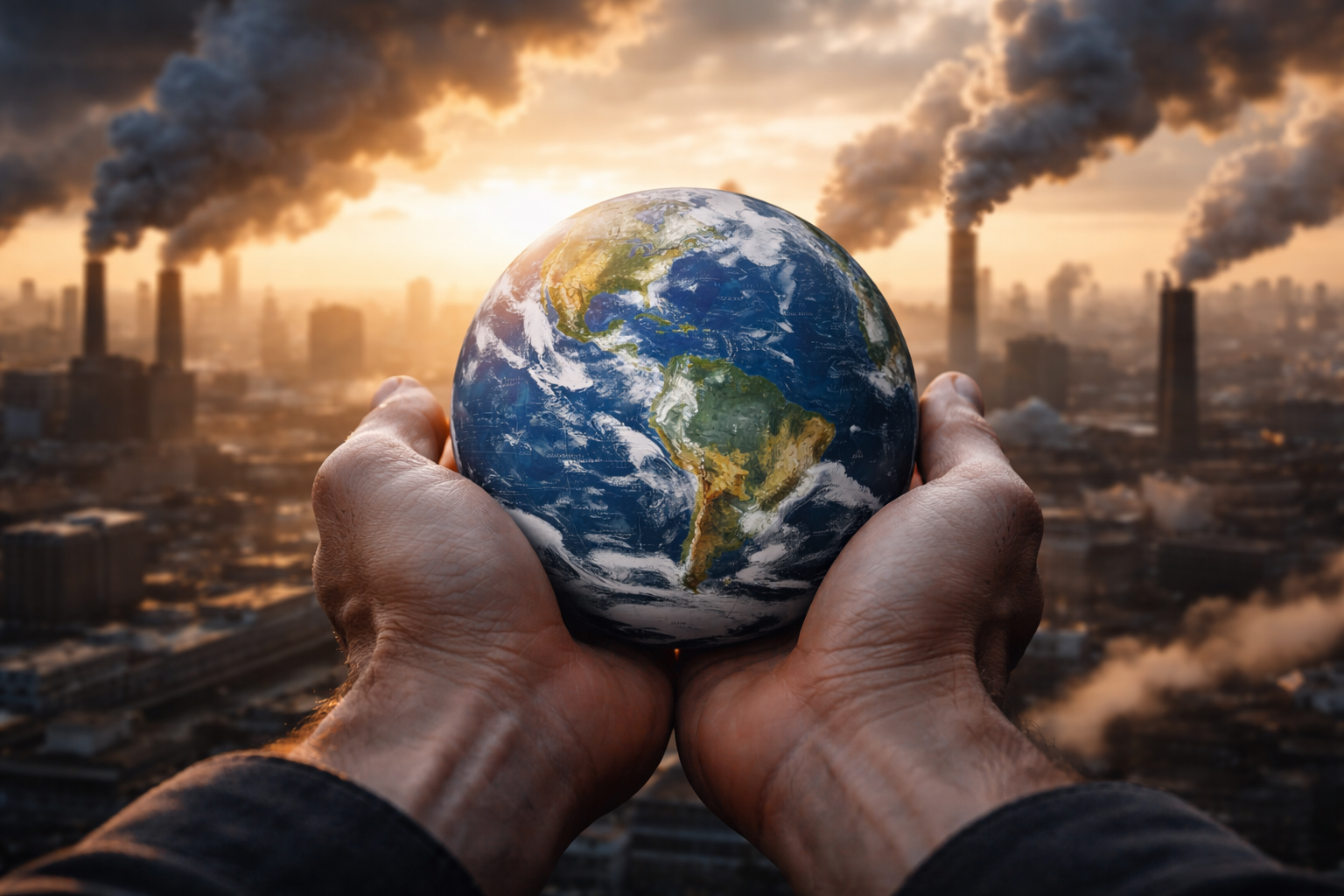
The year 2026 marks a decade since the signing of the Paris Agreement, yet the global carbon ledger remains stubbornly in the red. You likely know the statistics by heart. You understand that global mean temperatures are flirting with the 1.5-degree Celsius threshold. You see the satellite imagery of receding permafrost and the economic data reflecting the skyrocketing costs of climate-related insurance premiums. Information is not your problem. The world possesses more climate data today than at any point in human history. We have mapped every glacier and modeled every storm surge. But you are witnessing a paradox where the more we know, the less we seem capable of doing.
This disconnect between awareness and agency is the defining crisis of our era. It suggests that our fundamental assumption—that education leads to behavior change—is a systemic fallacy. For decades, the primary strategy of NGOs, governments, and scientists was to fill the information void. The logic was simple: if people understood the gravity of the threat, they would demand radical change. This strategy failed. It ignored the reality that human psychology, economic structures, and political systems are not designed to prioritize abstract, long-term threats over immediate, tangible rewards. You are living through the consequences of a world that is over-informed but under-mobilized.
Why does your brain prioritize a slight increase in quarterly earnings or the convenience of a short-haul flight over the preservation of a habitable biosphere? The answer lies in the architecture of your cognition and the rigid inertia of the systems you inhabit.
The Cognitive Dissonance of Survival
You possess a brain evolved for the Pleistocene, not the Anthropocene. Your ancestors survived by focusing on immediate threats: the predator in the grass or the lack of food for the winter. This evolutionary legacy creates a “hyperbolic discounting” effect. You value a small reward today far more than a significant benefit thirty years from now. When you read a report about projected sea-level rise in 2050, your brain processes it as a theoretical abstraction rather than a physical emergency.
Knowing the facts does not bypass this biological hard-wiring. In fact, more information often leads to “finite pool of worry.” Psychologists observe that as your concern for one issue grows, your capacity to worry about another shrinks. When you face immediate economic pressures or local political instability, climate change is pushed to the periphery of your mental map. You are not being indifferent. You are being human.
Do you find yourself rationalizing small, carbon-intensive choices because you feel the larger system is already broken? This is cognitive dissonance in action. To resolve the tension between your knowledge of the climate crisis and your lifestyle, you create “neutralization strategies.” You tell yourself that your individual footprint is negligible compared to industrial emissions, or that future technology will inevitably solve the problem. This mental gymnastics allows you to maintain your current behavior while still considering yourself an informed and responsible citizen. Knowledge, in this context, becomes a tool for justification rather than a catalyst for change.
The Economic Trap of Short-Termism
The global economy operates on a timeline that is fundamentally at odds with the climate cycle. You participate in a market that rewards speed and quarterly growth above all else. This “discounting of the future” is baked into our financial models. Most corporations use a high discount rate when calculating the value of future assets, which effectively makes the world of 2050 worth almost nothing in today’s currency.
If you are a CEO or a fund manager, your fiduciary duty often compels you to ignore long-term ecological risks if they threaten short-term returns. The “tragedy of the horizon” means that by the time the financial impacts of climate change are undeniable and catastrophic, they will be beyond the point where market corrections can fix them. You are operating within a system that treats the environment as an externalized cost—a free resource and a free waste bin.
Think about the infrastructure around you. The cities you live in, the power grids you rely on, and the supply chains that deliver your goods were built on the premise of cheap, abundant fossil fuels. Replacing this trillion-dollar infrastructure requires massive upfront capital with a ROI that spans decades. Knowing that internal combustion engines are obsolete does not change the fact that you might live in a city designed entirely for cars. You are often “locked-in” to high-carbon behaviors by the very geography of your life. Knowledge of the crisis does not provide you with a high-speed rail line where only a highway exists.
The Enforcement Gap and Sovereignty Resistance
By 2026, the primary barrier to action is no longer scientific uncertainty; it is the “enforcement gap” in global governance. You see nations making bold Nationally Determined Contributions (NDCs) at COP summits, only to return home and approve new offshore drilling licenses. The Paris Agreement relies on a “name and shame” mechanism that lacks the teeth to penalize non-compliance.
Why do sovereign states prioritize short-term energy security over long-term stability? Because the Westphalian system is designed to protect national interests in a zero-sum game. If your country unilaterally imposes a steep carbon tax, your industries may lose competitiveness to nations that do not. This creates a “race to the bottom” where knowledge of the common good is sacrificed at the altar of local economic survival.
You must recognize that “Polycentric Governance” is the only way forward. This involves cities, regions, and financial alliances setting their own rules independently of national gridlock. In 2026, we see cities like Tokyo and Paris implementing direct building decarbonization mandates that bypass national reluctance. Are you looking to your local leaders for action, or are you still waiting for a global consensus that may never come?
The Failure of Language and Alarmism
For years, climate communication relied on the “deficit model.” The idea was that the public lacked the facts, and if scientists simply shouted those facts louder, action would follow. This resulted in a decade of “doomism”—a constant barrage of apocalyptic imagery and terrifying statistics.
Does hearing about the “end of the world” make you want to install heat pumps, or does it make you want to change the channel? Extensive research shows that fear-based messaging often leads to paralysis rather than mobilization. When you feel a threat is overwhelming and that your actions are futile, you experience “learned helplessness.” You retreat into apathy as a defense mechanism.
The language used by experts also creates a barrier. Terms like “mitigation,” “sequestration,” and “anthropogenic forcing” are clinical and detached. They fail to resonate with your daily experience. You do not experience “climate,” you experience “weather.” You do not see “carbon dioxide,” you see a higher electricity bill. By framing the issue as a scientific puzzle rather than a moral, economic, and social transformation, leaders have made the solution feel like someone else’s job.
The Myth of Individual Responsibility
You have been told for years that the solution to climate change lies in your hands. Use less plastic. Eat less meat. Drive less. While individual choices matter, the heavy emphasis on personal carbon footprints was often a deliberate strategy by major polluters to shift the burden of responsibility away from systemic change.
Knowing your carbon footprint is useful, but it can also be a distraction. It leads to “virtue signaling” where small, symbolic actions replace the difficult work of political and corporate agitation. If you spend your energy worrying about plastic straws while your pension fund is invested in coal expansion, you are winning a battle while losing the war.
Real change requires moving beyond the “conscious consumer” model. You cannot shop your way out of a systemic crisis. The knowledge you possess must be directed toward the levers of power—legislation, regulation, and institutional investment. Why is it easier for you to change your diet than to demand your local representative support a carbon tax? The latter feels intimidating and slow, yet it is the only scale that matches the problem.
The Political Economy of Stalling
Knowledge is power, but power also controls knowledge. You are operating in an information environment where well-funded interest groups have spent decades muddying the waters. This is not just about climate denial—which has largely evolved into “climate delay.”
The new strategy is to acknowledge the science but argue that the solutions are too expensive, too premature, or too disruptive to the “working class.” This creates a “deadlock of interests.” You see politicians who talk about green energy targets while simultaneously subsidizing new gas pipelines. They are responding to the immediate demands of their donors and the electoral cycle, which rarely looks beyond the next four years.
Can you identify the “delay tactics” in the news today? Watch for the promotion of technologies that do not yet exist at scale, such as mass carbon capture, as a reason to keep burning oil today. This is the “sunk cost” fallacy at a civilization level. We have invested so much in the fossil fuel economy that we are terrified of the transition, even when we know the current path is suicidal.
The Hidden Psychology of Moral Licensing
One of the most insidious reasons your knowledge fails to result in action is a phenomenon known as “moral licensing.” Have you ever felt that because you recycled meticulously all week, you “earned” the right to take a gas-guzzling SUV trip or buy a fast-fashion garment?
This internal ledger allows you to offset a “good” deed with a “bad” one, effectively neutralizing the impact of your awareness. In the corporate world, this manifests as greenwashing. A company may invest in a high-profile reforestation project to distract from its continued investment in high-emission supply chains. They use the knowledge of the crisis to craft a narrative of progress while maintaining the status quo.
You must ask yourself: is your climate awareness being used to change your life, or is it being used to feel better about not changing it? This psychological trap keeps us in a cycle of performative activism that feels like progress but lacks the scale to alter our trajectory.
The Carbon Lock-In: Architecture of Inertia
Knowledge of the climate crisis often hits a physical wall: the “carbon lock-in.” This is the technical and institutional inertia that arises from our existing physical infrastructure. If your city is built around the assumption of private car ownership, knowing that EVs are better does not solve the problem of urban sprawl or the lack of charging stations.
By 2026, we are beginning to see the true cost of this lock-in. It is not just about the carbon we emit today, but the carbon we have “committed” to emit over the lifespan of our current power plants, factories, and buildings. Most of the infrastructure planned or under construction today is incompatible with a 1.5-degree world.
Are you demanding that new developments in your city be fossil-free, or are we still building 20th-century solutions for 21st-century problems? Breaking the lock-in requires more than knowledge; it requires the political will to devalue existing assets and invest in radical new designs. We must treat every new gas connection as a future liability that will need to be decommissioned at great expense.
The Missing Piece: Agency and Infrastructure
So, how do we bridge the gap? Knowledge must be paired with two things: high agency and accessible infrastructure.
High agency means you believe that your actions will actually result in a change. This is currently missing for most people. You need to see clear, local pathways to action. Instead of being told to “save the planet,” you need to be shown how to join a local energy cooperative that is building a community solar farm. You need to see that your vote changes the transit map of your city.
Infrastructure means the “green choice” must be the easiest, cheapest, and most obvious choice. You should not need to be a climate expert to live a low-carbon life. It should be the default. When the most convenient way to get to work is a clean, fast train, you will take it—not because you are worried about the ice caps, but because it is a better way to travel. Knowledge becomes irrelevant when the system itself is sustainable.
We must stop treating climate change as a “topic” to be learned and start treating it as the “context” in which all other decisions are made. You do not need more facts. You need a different world to live in.
Moving Beyond Awareness in 2026
The time for “raising awareness” is over. We are now in the era of implementation. This requires a shift in focus from the “what” to the “how.”
You must demand that climate risk be integrated into every financial audit and every building code. You must insist that the cost of carbon be reflected in the price of every product. This is not about being “environmentally friendly.” It is about being economically honest.
The gap between what we know and what we do is where our future is being decided. Closing that gap requires you to acknowledge the limitations of your own psychology and the deliberate obstacles placed by those who benefit from the status quo.
Are you ready to stop being a spectator of the data and start being an architect of the transition? The data has told us everything it can. The rest is a matter of will.
The urgency of 2026 demands that we move past the comfort of information. We have the maps. We have the tools. We even have the money. What we lack is the courage to dismantle the systems that make our knowledge useless. You know what needs to happen. Now, look at your city, your workplace, and your government. Does the reality you see match the facts you know? If not, that is where your work begins.
Practical Steps for Systemic Influence
To move from knowledge to action, you must pivot your focus toward three high-impact areas that transcend individual lifestyle choices.
First, focus on “financial activism.” Your bank and your retirement funds are the engines of the global economy. Most people are unaware that their savings are actively funding the expansion of the industries they worry about. Investigate where your money sleeps. Moving your capital to institutions that have committed to a total divestment from fossil fuels is one of the most powerful systemic signals you can send.
Second, engage in “hyper-local policy.” Global summits are spectacular but often toothless. The real decisions about energy, transport, and land use happen at the municipal level. You have far more influence over your city council than you do over a national government. Attend zoning meetings. Demand bike lanes. Support high-density, energy-efficient housing. These local victories aggregate into national trends.
Third, foster “social contagion.” Humans are social animals. We don’t do what we know; we do what we see our peers doing. When you install a heat pump or join a car-sharing program, talk about it—not as a moral sacrifice, but as a superior, modern choice. Make sustainability aspirational and normal rather than radical and difficult.
The Psychological Shift from Guilt to Power
Finally, you must reject the burden of climate guilt. Guilt is a passive emotion that leads to burnout. Power is an active state that leads to persistence. The narrative of personal failure—that you are “to blame” because you live in a high-carbon society—is a trap. You are a participant in a system you did not design, but you are also a citizen with the power to redesign it.
Do you want to be the generation that knew everything but changed nothing? Or do you want to be the generation that took the most complex data set in history and used it to build a resilient, thriving civilization? The window for that choice is narrowing. 2026 is not just a year on a calendar. It is a deadline for the transition from theory to practice.
Stop waiting for a “magic” technology or a perfect leader. You have the information. You have the motive. The only thing left to acquire is the momentum.
The Role of Corporate Fiduciary Reform
Knowledge of climate risks should, in theory, drive corporate action. However, the legal definition of “fiduciary duty” often acts as a straitjacket. If you are a board member, you are legally bound to prioritize shareholder value. If “value” is defined solely as short-term profit, then long-term climate action can be seen as a breach of duty.
We need a radical redefinition of fiduciary duty that includes “long-term systemic stability.” In 2026, we are seeing the first lawsuits against directors who failed to account for foreseeable climate risks. This is where your knowledge becomes dangerous to the status quo. When CEOs can be held personally liable for ignoring the science, their “knowledge” will suddenly translate into “action.”
Are you pressuring your employer to adopt a “double materiality” framework, where the company reports not just how the climate affects them, but how they affect the climate? This is the shift from being “informed” to being “accountable.”
Global North Responsibility and the Equity Gap
Knowledge of climate change is distributed globally, but the capacity to act is not. You live in a world where the Global North is responsible for the vast majority of cumulative historical emissions, yet the Global South suffers the most immediate and severe consequences.
Action is often stalled by this “equity gap.” Developing nations argue, quite rightly, that they should not be denied the right to develop because the West spent 200 years polluting the atmosphere. Knowing the science means knowing that we cannot solve the crisis without a massive transfer of technology and capital from the rich to the poor.
If you live in a wealthy nation, your “action” must include advocating for international climate finance. We cannot expect a nation struggling with basic electricity access to prioritize decarbonization without external support. True climate knowledge includes the understanding that “justice” is not a luxury; it is a prerequisite for survival.
The Information Overload and the “New Denialism”
As we approach the late 2020s, we are seeing a shift from “denial” to “distraction.” The volume of information is so high that it creates a “cacophony of concern.” You are presented with a thousand different solutions—hydrogen, nuclear, wind, carbon offsets, vertical farming—each with its own set of proponents and detractors.
This fragmentation of focus is a form of soft denial. It keeps us debating the “perfect” solution while we fail to implement the “good” ones we already have. You must learn to cut through the noise. The priority is clear: stop burning fossil fuels and protect existing ecosystems. Everything else is secondary.
Are you spending your time debating the nuances of fusion energy, or are you demanding the expansion of the electrical grid today? Knowledge is only useful if it leads to focus. In 2026, focus is our most valuable resource.
Conclusion: The Architecture of Choice
The bridge between knowledge and action is not made of more data; it is made of new systems. You cannot think your way out of a burning building; you have to find the exit.
The exit is a world where the sustainable choice is the default choice. This requires us to stop being “aware” and start being “insistent.” We must insist on a political economy that values the future. We must insist on a financial system that accounts for reality. And we must insist on an infrastructure that allows us to live according to what we know.
You have the knowledge. You have the urgency. Now, you must find the agency. The era of the “informed observer” is over. Welcome to the era of the “active architect.” Your knowledge has brought you to this point. Your actions will determine where we go next.
References
Intergovernmental Panel on Climate Change (IPCC) Sixth Assessment Report
https://www.ipcc.ch/report/ar6/syr/
The Tragedy of the Horizon – Speech by Mark Carney
International Energy Agency (IEA) World Energy Outlook 2025
https://www.iea.org/reports/world-energy-outlook-2025
NASA Global Climate Change: Vital Signs of the Planet
https://climate.nasa.gov/vital-signs/global-temperature/
Yale Program on Climate Change Communication: Global Warming’s Six Americas
https://climatecommunication.yale.edu/about/projects/global-warmings-six-americas/
The Carbon Disclosure Project (CDP) Global Report
https://www.google.com/search?q=https://www.cdp.net/en/research/global-reports
United Nations Environment Programme (UNEP) Emissions Gap Report
https://www.unep.org/resources/emissions-gap-report-2025
World Economic Forum Global Risks Report 2026
https://reports.weforum.org/docs/WEF_Global_Risks_Report_2026.pdf
Frontiers in Psychology: Climate change inaction: Cognitive bias influencing managers decision making
https://www.frontiersin.org/journals/psychology/articles/10.3389/fpsyg.2023.1130059/full
World Resources Institute: Behavioral Science and Climate Adaptation
https://www.wri.org/insights/behavior-change-science-climate-adaptation
Nature Climate Change: The “Carbon Lock-in” of Global Energy Systems https://www.google.com/search?q=https://www.nature.com/nclimate/articles/s41558-020-0810-6
Journal of Environmental Psychology: Moral Licensing in the Context of Sustainability https://www.sciencedirect.com/journal/journal-of-environmental-psychology
Author bio
Julian is a graduate of both mechanical engineering and the humanities. Passionate about frugality and minimalism, he believes that the written word empowers people to tackle major challenges by facilitating systematic collaborative progress in science, art, and technology. In his free time, he enjoys ornamental fish keeping, reading, writing, sports, and music. Connect with him here https://www.linkedin.com/in/juliannevillecorrea/
About The Author


