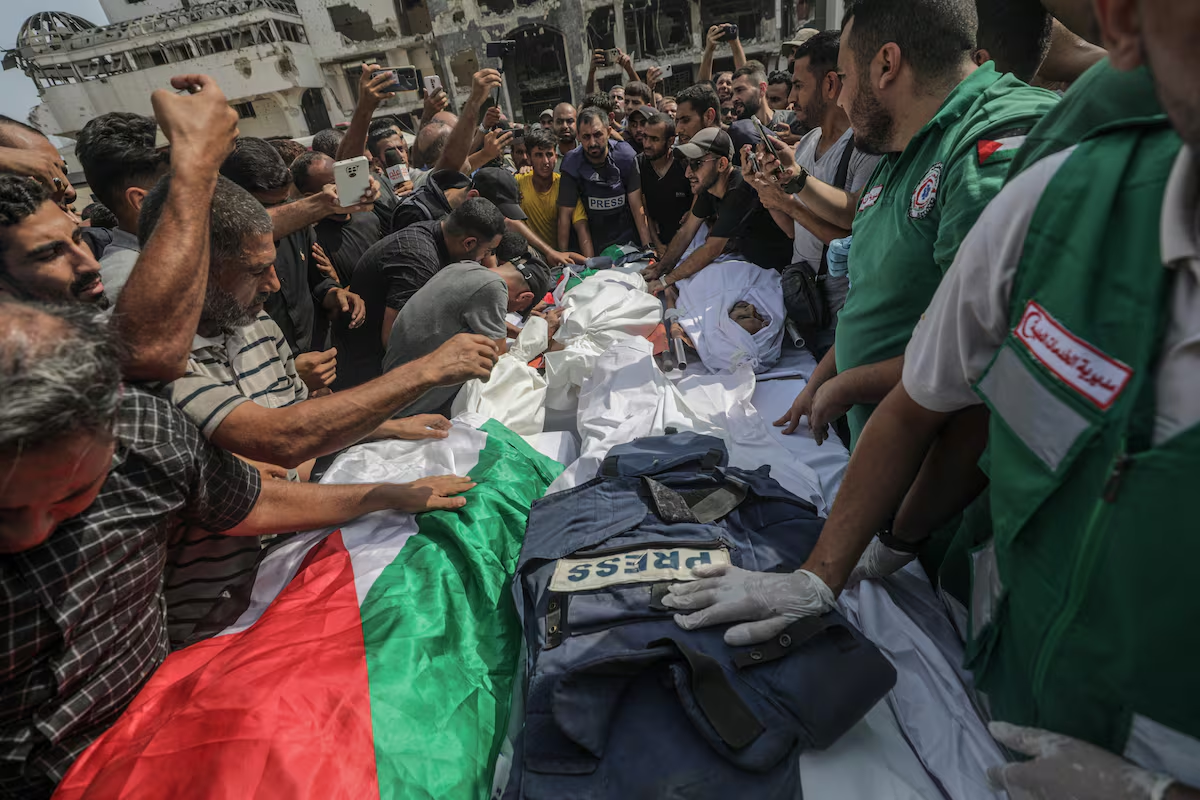
Journalists Anas al-Sharif, Ismail Abu Hatab, and Hossam Saleh Al-Adlouni, along with two others were killed, prompting international condemnation.
By Namith DP | Aug 12, 2025
Since October 7, 2023, Gaza has become one of the deadliest places in the world for journalists. The Committee to Protect Journalists (CPJ) reported that as of early August 2025, at least 112 journalists and media workers have been killed in Gaza during the ongoing Israel–Hamas conflict. This figure includes reporters, photographers, and media support staff, many of whom died while on assignment or with their families in residential areas targeted by strikes.
The Scale of Loss

The CPJ has confirmed these deaths through multiple independent sources, including family testimonies, newsroom confirmations, and cross-referenced casualty lists. Gaza’s death toll among media professionals in less than two years surpasses that of some entire decades in other conflicts. By comparison:
- During the Iraq War (2003–2011), CPJ documented 190 journalist deaths over eight years.
- In Syria (2011–2023), 308 journalists were killed over more than a decade.
- In Gaza, more than 100 have been killed in under two years.
The concentration and pace of journalist fatalities in Gaza have prompted alarm among press freedom organizations and the United Nations, which have called for independent investigations into potential violations of international law.
Key Cases
Anas al-Sharif – A reporter for Al Jazeera Arabic, al-Sharif was killed in December 2023 while covering the aftermath of an airstrike in northern Gaza. Al Jazeera stated that his press vest and helmet were clearly marked. CPJ confirmed he was on assignment and had previously reported receiving threats.
Fatima Hassouna – One of the few women covering frontline conditions in Gaza, Hassouna worked for local radio. She was killed in March 2024 during shelling in Rafah while interviewing displaced families. Her death highlighted the additional challenges faced by female journalists in conservative and conflict-ridden environments.
Hossam Shabat – A young photojournalist documenting the humanitarian impact of the war, Shabat was killed in September 2024 while photographing damage in Gaza City. His work had been featured in international outlets, giving a rare visual record of civilian life during the conflict.
Omar al-Qattaa – A freelance video journalist, al-Qattaa died in an airstrike on his neighborhood in November 2023. Colleagues noted he had been covering the war almost daily without access to safety equipment.
Each of these deaths represents both a personal tragedy and the loss of vital documentation from inside one of the most restricted reporting environments in the world.
Gaza’s Press Environment Before the War
Before the October 2023 escalation, Gaza’s press community operated under severe constraints. Local journalists faced:
- Restrictions on movement due to border closures and permit systems.
- Limited access to protective gear, especially for freelancers.
- Pressure from local authorities and armed groups, with occasional arrests.
International journalists were rarely granted entry without Israeli or Egyptian approval, meaning local reporters formed the backbone of Gaza’s news coverage. This dynamic made their safety essential for global awareness of events on the ground.
Historical Context: Journalists Killed in War
Gaza’s high death toll among journalists is not without precedent, but it is exceptional in pace and proportion.
- Iraq War (2003–2011) – 190 journalists killed, with the deadliest year being 2007 (32 killed). Many were targeted kidnappings or killings by insurgents.
- Syria (2011–2023) – 308 journalists killed over 12 years, often during bombardments or targeted by armed factions.
- Balkans (1990s) – 49 journalists killed, including those covering the siege of Sarajevo.
- Afghanistan (2001–2021) – 64 journalists killed, many during suicide bombings claimed by the Taliban or Islamic State.
While war zones have always posed extreme risks to media workers, Gaza stands out for the proportion of journalists killed relative to its population and the length of the conflict. CPJ has called it “the deadliest period for journalists since they began keeping records in 1992.”
International Law and Accountability
Under the Geneva Conventions, journalists in conflict zones are considered civilians and are protected from attack unless they take a direct part in hostilities. The Rome Statute of the International Criminal Court classifies intentional attacks on journalists as a potential war crime.
Despite these protections, accountability is rare. Investigations into journalist deaths often stall due to lack of access, disputed evidence, and political pressure. For example:
- The killing of Palestinian-American journalist Shireen Abu Akleh in the West Bank in May 2022 led to international outcry but no prosecution.
- Similar cases in Iraq and Afghanistan have seen lengthy investigations without criminal convictions.
UN experts have emphasized that repeated strikes killing journalists in Gaza may indicate patterns that warrant independent war crimes investigations.
Global Reaction
International condemnation has been widespread:
- Reporters Without Borders (RSF) filed complaints with the International Criminal Court over journalist deaths in Gaza.
- The United Nations Human Rights Office has called for “full, transparent, and independent” investigations.
- Al Jazeera Media Network has petitioned the ICC, citing targeted attacks against its reporters.
Media watchdogs argue that the high number of journalist fatalities suggests systemic failure to protect press workers, rather than isolated accidents.
The Humanitarian Dimension

Journalists in Gaza are not just chronicling war — they are living through it. Many have lost homes, family members, and colleagues. They work without reliable electricity, internet, or safe transport. Several have continued reporting even after being displaced multiple times.
The destruction of media offices, such as the bombing of the al-Jalaa Tower in May 2021, which housed Associated Press and Al Jazeera, has compounded operational challenges. In 2024 and 2025, smaller local radio and news agencies have been forced to close entirely after losing staff and equipment.
Implications for Global Journalism
The scale of journalist deaths in Gaza raises pressing questions for the global media industry:
- Should news organizations be required to provide safety gear and evacuation plans for local freelancers?
- How can independent investigations into journalist killings be made more effective?
- What role should international bodies play in enforcing protections?
Without reliable reporting from conflict zones, the global public loses a crucial check on misinformation and propaganda.
Conclusion
The recent deaths of journalists in Gaza represent both an acute crisis for press freedom and a continuation of a grim historical pattern in which war correspondents pay the ultimate price for their work. The unprecedented pace of fatalities demands not just memorials but systemic change — in safety protocols, international accountability, and the recognition of journalism as an essential civilian function during war.
The lessons from Gaza’s tragedy should inform global standards for protecting journalists, ensuring that those who bear witness in the world’s most dangerous places can do so without being forced to choose between their lives and the truth.
See also –
About The Author