
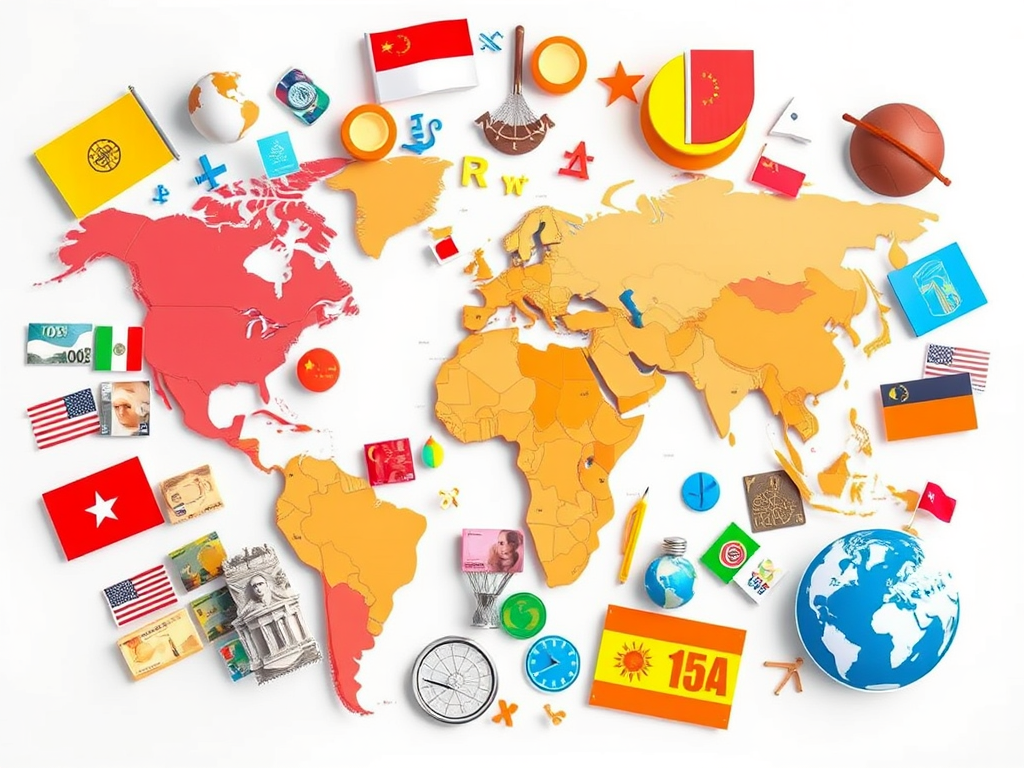
From the India-Mauritius CECPA to the Pacific Alliance, these overlooked trade deals are fueling regional growth, strengthening strategic partnerships, and creating new opportunities for global businesses beyond the usual power blocs.
By Namith DP | July 21, 2025
While major trade deals like NAFTA, the EU Single Market, and the CPTPP dominate headlines, several lesser-known Free Trade Agreements (FTAs) are quietly reshaping economies across the globe. These under-recognized agreements—though narrower in media attention—play a critical role in redefining regional integration, improving digital and service trade, and accelerating investment flows in strategic sectors. This article examines eight such FTAs that are delivering outsized economic and diplomatic results, backed by measurable data and policy relevance.
Why Underrated FTAs Deserve Attention
Free Trade Agreements help countries access new markets, eliminate tariffs, standardize regulations, and ensure investor protections. The lesser-known ones often target niche sectors or smaller economies, but their cumulative effects are significant. Some of them also act as policy laboratories for broader reforms and future multilateral cooperation.
Key Benefits Include:
- Strategic geopolitical alignment
- Support for SME internationalization
- Access to high-growth sectors such as fintech, clean tech, and education services
- Enhanced regional connectivity and infrastructure investment
1. India-Mauritius CECPA
Signed: February 2021 | In Force: April 2021
Countries Involved: India and Mauritius
Why It’s Important:
- India’s first FTA with any African country.
- Covers goods, services, investment, and intellectual property.
- Includes 310 Indian products and 615 Mauritian products under preferential treatment.
Strategic Value:
- Strengthens India’s outreach to Africa under its “Vision SAGAR” and “Africa Focus” strategies.
- Positions Mauritius as a launchpad for Indian firms targeting continental Africa.
Economic Evidence:
- Bilateral trade surged to $995 million in FY2023, a 44% increase from FY2021.
- Indian exports include textiles, pharmaceuticals, and engineering goods.
2. Australia–Peru Free Trade Agreement (PAFTA)
Signed: February 2018 | Effective: February 2020
Core Features:
- Tariff elimination on 99.4% of Australian goods exported to Peru.
- Market access for education, legal, financial, and mining services.
- Progressive e-commerce and digital trade provisions.
Outcomes:
- Australian dairy exports rose by over 400% in the first year.
- Enhanced cooperation in services, particularly for mining support and environmental technologies.
Why It’s Underrated:
- Provides a South America entry point for Australian firms, with benefits beyond bilateral trade, such as integration into Latin American value chains.
3. EU-Singapore Free Trade Agreement (EUSFTA)
Signed: October 2018 | In Force: November 2019
Details:
- Removes duties on 84% of Singaporean exports to the EU immediately; 100% in 5 years.
- First EU FTA with an ASEAN country.
- Includes rules for sustainable trade, data protection, and IP enforcement.
Strategic Relevance:
- Strengthens EU presence in Southeast Asia.
- Allows Singaporean companies to benefit from European public procurement markets.
Measurable Gains:
- Bilateral goods trade increased to over €47 billion in 2022, up from €42 billion in 2019.
4. African Continental Free Trade Area (AfCFTA)
Launched: January 2021 | Members: 54 of 55 African Union nations
Objectives:
- Remove tariffs on 90% of goods over 5–10 years.
- Expand trade in services, intellectual property, and e-commerce in upcoming phases.
Opportunities:
- Create a single African market of 1.3 billion people with a GDP of over $3.4 trillion.
- Enable SMEs to scale across borders with harmonized customs and rules of origin.
Potential Impact:
- Increase intra-African trade by 33%, raise incomes by 9%, and lift 30 million people out of poverty by 2035.
5. Chile–Thailand Free Trade Agreement
Signed: October 2013 | In Force: November 2015
Key Provisions:
- 90% tariff elimination over 10 years.
- Priority sectors include automotive parts, electronics, salmon, and wine.
Strategic Importance:
- Connects two resource-rich but geographically distant economies.
- Enables South America–Asia diversification away from China and the U.S.
Trade Growth:
- Bilateral trade hit $1.5 billion in 2022, up from $940 million in 2016.
6. Pacific Alliance FTAs (Chile, Colombia, Mexico, Peru)
Established: 2011
Primary Goal: Regional integration and open regionalism in Latin America
Standout Features:
- Eliminated tariffs on 92% of goods.
- Supports regional digital infrastructure, education mobility, and capital markets integration.
Broader Participation:
- Observer countries include Singapore, South Korea, and New Zealand.
- Moves toward convergence with Mercosur are in discussion.
Regional Trade Expansion:
- Intra-bloc trade grew by 35% from 2016 to 2021, even amid COVID challenges.
7. CAFTA-DR (U.S.–Central America–Dominican Republic FTA)
Signed: 2004 | Effective: 2006–2009
Members:
U.S., Costa Rica, El Salvador, Guatemala, Honduras, Nicaragua, Dominican Republic
Policy Significance:
- Streamlined textile supply chains between Central America and the U.S.
- Institutionalized IP, labor, and environmental protections.
Underrated Outcomes:
- Total trade grew from $35 billion in 2006 to $62 billion in 2023.
- Facilitated nearshoring of electronics and medical equipment manufacturing.
8. Japan–Mongolia Economic Partnership Agreement
Signed: February 2015 | Effective: June 2016
Trade Focus:
- Removes tariffs on 96% of Japanese exports.
- Promotes Mongolian exports of cashmere, wool, leather, and mineral products.
Strategic Gains:
- Reduces Mongolia’s economic dependence on China and Russia.
- Expands Japan’s diplomatic and economic presence in Central Asia.
Measured Results:
- Bilateral trade increased by nearly 50% from 2015 to 2021, despite pandemic-era setbacks.
Final Takeaway: Business and Policy Implications
These eight FTAs provide clear evidence that less-publicized trade deals can deliver strong economic dividends. For global businesses and trade policymakers, the lesson is clear:
Overlooked does not mean underperforming. In fact, many of these agreements are better designed for:
- Targeted regional diversification
- Emerging sector liberalization (services, digital trade, IP)
- Resilience through strategic geographic hedging
Organizations operating in Asia, Latin America, Africa, and Oceania should track and leverage these FTAs more proactively—especially as geopolitical uncertainty continues to reshape global supply chains.
For more news on trade read –
About The Author




I didn’t even know these existed