
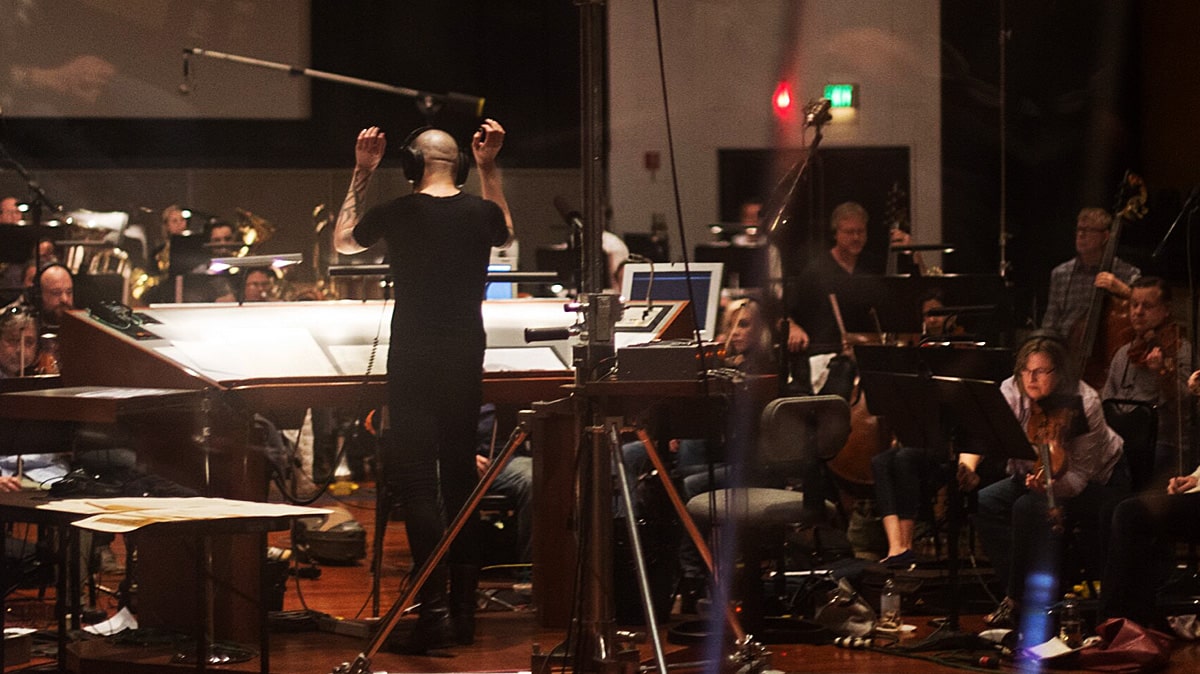
Cinema is often described as a visual experience, but any film aficionado understands that a movie’s ability to stir emotions, create tension, or inspire awe often lies in what we hear rather than what we see. Behind the visuals, an unseen force manipulates how audiences feel: the film score.
The link between film scores and emotion is one of cinema’s most powerful tools. Music, whether orchestral, electronic, or minimalist, has the unique ability to bypass logic and connect directly with the human psyche. A well-crafted score doesn’t merely accompany a scene—it transforms it, guiding perception, elevating atmosphere, and evoking emotion that lingers long after the screen fades to black.
In this comprehensive exploration, we’ll dissect the psychology of film music, analyze iconic examples, and reveal how composers intentionally design scores to manipulate emotional engagement.
The Psychology: Why Music Moves Us
To understand how film scores affect emotion, one must grasp the science behind it. Human beings have evolved to respond instinctively to sound. Before the development of language, sound signaled danger, comfort, or social interaction.
Music taps into this primal system. Studies from cognitive neuroscience reveal that music stimulates the amygdala—the brain’s emotional processing center—faster than images or dialogue. Even without conscious awareness, certain melodies, harmonies, or rhythms provoke physiological reactions: increased heart rate, goosebumps, tears, or chills.
Emotional Cues Encoded in Music
- Dissonance triggers anxiety or tension.
- Harmonic resolution offers relief or satisfaction.
- Major keys evoke joy, triumph, or nostalgia.
- Minor keys induce sadness, introspection, or melancholy.
- Rising pitch or tempo amplifies suspense and urgency.
Thus, when composers strategically align music with narrative events, they orchestrate the audience’s emotional journey with precision.
How Film Scores Shape Emotional Engagement

1. Establishing Emotional Tone
Music sets the mood before a single frame unfolds. Consider John Williams’ score for Jaws (1975). The iconic, minimalist two-note motif creates unease long before the shark appears, conditioning the audience to associate those tones with imminent danger.
In contrast, Howard Shore’s ethereal music in The Lord of the Rings trilogy (2001-2003) transports viewers to an epic, mythic world, signaling wonder, adventure, and grandeur.
2. Amplifying Emotional Peaks
Certain cinematic moments achieve emotional transcendence through music’s influence. In Interstellar (2014), Hans Zimmer’s swelling organ score during Cooper’s farewell to his daughter intensifies heartbreak. The scene, already dramatic, becomes overwhelming as the music crescendos.
3. Guiding Audience Interpretation
Music colors perception, often altering how viewers interpret ambiguous scenes. In The Shining (1980), ominous, atonal music turns mundane hotel corridors into spaces of dread. Without the score, the visuals lack immediate menace.
4. Creating Emotional Continuity
Leitmotifs—recurring musical themes—bind narrative and emotion across scenes. John Williams’ “Force Theme” in Star Wars consistently evokes hope, courage, or sacrifice, maintaining emotional continuity throughout complex plotlines.
Case Studies: Masterpieces of Emotional Scoring
Schindler’s List (1993)
John Williams’ haunting violin theme, performed by Itzhak Perlman, encapsulates grief, loss, and fragile humanity. The music’s mournful tone amplifies the historical tragedy, making personal heartbreak palpable.
Inception (2010)
Hans Zimmer’s layered, time-bending score reflects the film’s dreamlike structure. The iconic “Time” track builds an emotional crescendo during Cobb’s final ambiguous moments, deepening the scene’s existential weight.
The Lion King (1994)
Elton John’s songs, combined with Hans Zimmer’s orchestral themes, create an emotional tapestry of triumph, sorrow, and redemption. African rhythms and choral elements enrich authenticity, enhancing emotional resonance.
Joker (2019)
Hildur Gúðnadóttir’s cello-driven score embodies Arthur Fleck’s psychological unraveling. Minimal yet visceral, the music transforms discomfort into empathy, blurring moral boundaries and intensifying emotional complexity.
Techniques Composers Use to Influence Emotion

Dissonance and Consonance
- Dissonance: Clashing notes provoke unease or suspense (Psycho, 1960).
- Consonance: Harmonious chords offer relief, hope, or triumph (The Shawshank Redemption, 1994).
Key Signatures and Modes
- Major keys: Joyful, triumphant (Superman, 1978).
- Minor keys: Melancholic, introspective (Requiem for a Dream, 2000).
- Modal shifts: Signal tonal ambiguity or transition (Blade Runner 2049, 2017).
Tempo and Rhythm
- Accelerated tempos: Heighten tension, urgency (Dunkirk, 2017).
- Slow, sustained notes: Elicit reflection or sorrow (Gravity, 2013).
Silence as Contrast
Strategic absence of music heightens realism or unease. Quentin Tarantino’s films (Pulp Fiction, Kill Bill) often deploy sudden silences to subvert expectations.
Instrumental Choices
- Strings: Melancholy or intimacy.
- Brass: Heroism, grandeur.
- Percussion: Aggression or momentum.
- Synth/electronics: Futuristic, alienation, or disorientation.
- Cultural instruments: Establish authenticity or setting (e.g., Taiko drums in Inception).
Soundtracks vs. Scores: Emotional Synergy
Both original scores and curated soundtracks influence emotion, albeit differently:
| Element | Function | Example |
|---|---|---|
| Original Score | Tailored to manipulate narrative emotion | Zimmer’s Dune (2021) |
| Soundtrack | Pre-existing songs evoke cultural familiarity | Guardians of the Galaxy (2014) |
Great films blend both, enriching emotional layers. Forrest Gump (1994) uses Alan Silvestri’s score alongside nostalgic pop songs, enhancing historical context and emotional depth.
The Neuroscience of Emotional Scoring
Beyond cultural associations or learned responses, the impact of film music is deeply rooted in human biology. Functional MRI studies demonstrate that music activates the brain’s limbic system, particularly the amygdala, hippocampus, and prefrontal cortex—regions associated with memory, emotion, and decision-making.
Notably, certain compositions can trigger “frisson”—a neurological phenomenon characterized by chills or goosebumps. Researchers link frisson to moments of harmonic resolution, unexpected shifts in dynamics, or emotionally charged melodies.
This neurological reaction explains why film scores can provoke intense feelings even when detached from visual context. A haunting violin, booming drum, or celestial choir resonates with innate emotional pathways.
Genre-Specific Emotional Scoring
Different film genres employ distinct musical strategies to shape emotion:
Horror
- Dissonant, atonal music induces dread (The Exorcist, 1973).
- Sudden crescendos or stingers heighten jump scares (It Follows, 2014).
Romance
- Sweeping strings and gentle piano foster intimacy (Pride & Prejudice, 2005).
- Warm harmonic progressions evoke longing or fulfillment (La La Land, 2016).
Action & Adventure
- Pulsating rhythms and bold brass build momentum (Mad Max: Fury Road, 2015).
- Heroic leitmotifs signal triumph (Indiana Jones, 1981).
Science Fiction
- Synth-heavy, futuristic textures evoke mystery or alienation (Blade Runner, 1982).
- Ethereal choirs or minimalist drones create atmosphere (Arrival, 2016).
Drama
- Sparse, melancholic instrumentation elicits introspection (Manchester by the Sea, 2016).
- Emotional swells amplify catharsis (The Social Network, 2010).
These conventions help audiences intuitively interpret tone, pacing, and narrative stakes across genres.
Composer Profiles: Masters of Emotional Scoring
John Williams
The architect of some of cinema’s most iconic themes, Williams masterfully uses leitmotifs to evoke emotion—be it the wonder of E.T., the heroism of Superman, or the dread of Jaws.
Hans Zimmer
Renowned for blending electronic and orchestral sounds, Zimmer crafts emotionally charged scores with visceral impact—from the thunderous drums of Inception to the haunting organs of Interstellar.
Hildur Gúðnadóttir
Her minimalist, cello-driven compositions redefine modern film music. With Joker, she crafted an unsettling yet intimate sonic landscape, aligning music with character psychology.
Ennio Morricone
The late Italian maestro elevated the Spaghetti Western with emotive, unconventional scores. The Good, the Bad and the Ugly and Cinema Paradiso remain testaments to his ability to fuse melody with raw human sentiment.
Technological Innovations and the Future of Film Music
Adaptive and Interactive Scoring
Emerging technologies, particularly in video games and virtual reality, influence film music. Adaptive scores change based on viewer choices or scene dynamics, deepening emotional immersion—a concept gaining traction in interactive films.
AI-Composed Scores
Artificial intelligence can now generate music mimicking human emotional nuance. While controversial, AI composers are being explored for experimental cinema and indie projects, blurring lines between machine logic and human feeling.
Expanding Musical Diversity
Globalization and digital platforms expose audiences to diverse musical traditions. Contemporary film scores increasingly integrate world instruments, non-Western scales, and experimental sounds to evoke broader emotional spectrums.
Conclusion: Film Scores as Emotional Architects
Music is cinema’s invisible emotional architect. From swelling orchestras to eerie silences, film scores guide our hearts and perceptions, transforming moving images into profound emotional experiences.
Understanding the deliberate, technical artistry behind film music reveals how deeply film scores affect emotion, manipulating mood, tension, and catharsis with precision. Whether composed by legendary maestros or crafted with cutting-edge AI, the future promises ever more innovative, emotionally resonant soundscapes.
In every memorable cinematic moment—from heroic triumphs to tragic farewells—it is music that whispers to our souls, ensuring we not only watch stories but feel them.
About The Author


