Introduction
National symbols—flags, anthems, coats of arms, monuments, and public holidays—are more than decorative or ceremonial artifacts. They are instruments of collective memory, national identity, and political messaging. These symbols are created and adopted to express a unified narrative of nationhood, but their meanings are never static. Over time, as societies evolve, so too do their interpretations of these emblems. What was once a unifying force can become divisive. What was once contested can become cherished.
In a world shaped by historical revisionism, migration, activism, and cultural plurality, national symbols are constantly reexamined. This article explores how these symbols originate, what they signify, and how their meanings have changed—or are being challenged—across different eras and contexts.
Origins of National Symbols
Most national symbols are rooted in a nation’s foundational myths, independence struggles, or collective aspirations. They are often formalized during moments of great upheaval—revolutions, decolonization, wars, or unification efforts.
Common types of national symbols:
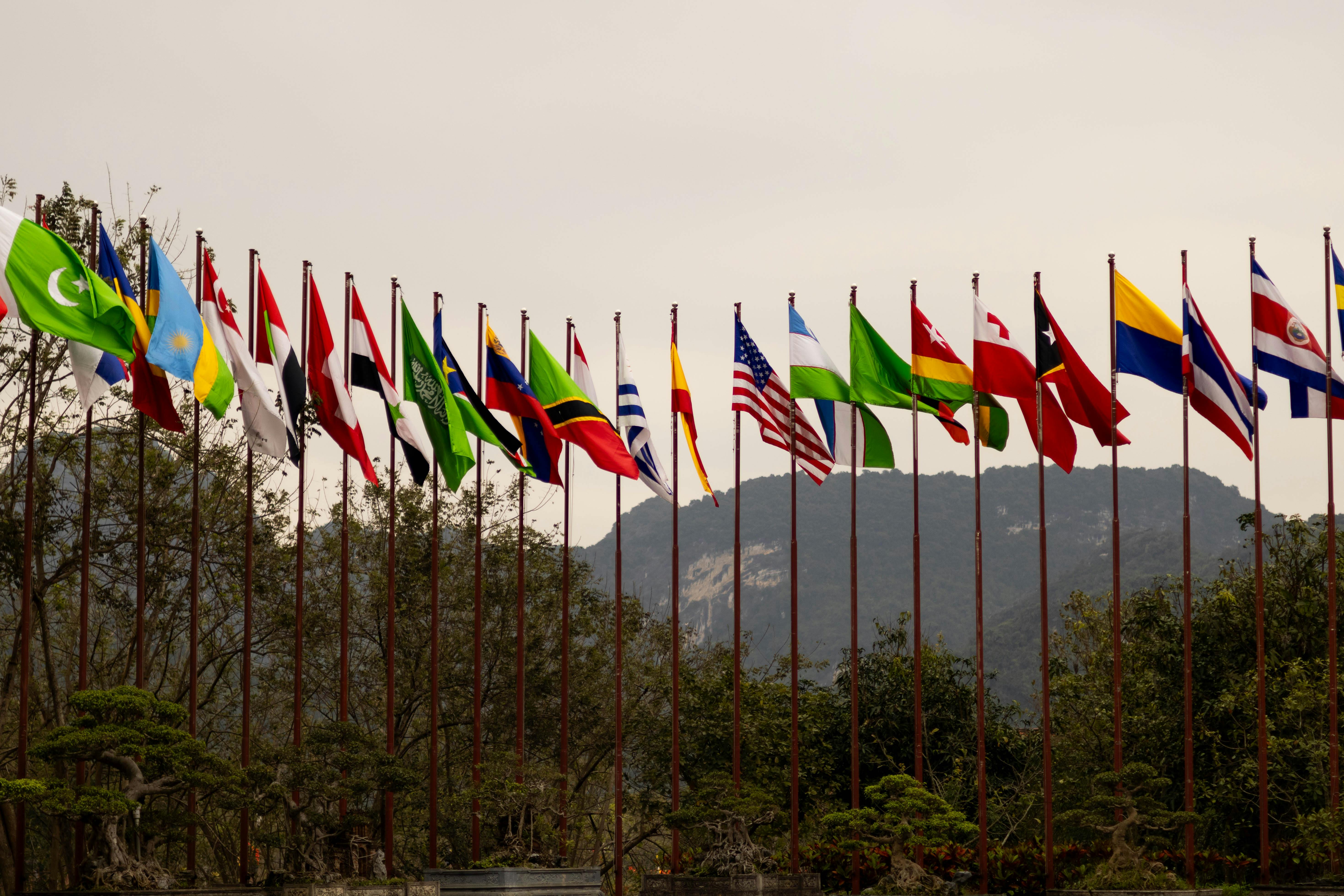
- Flags: Represent the nation’s ideals, history, or geography through colors and shapes.
- National anthems: Use music and lyrics to evoke patriotism, sacrifice, and unity.
- Coats of arms and seals: Feature heraldic elements that symbolize cultural or historical identity.
- Monuments and memorials: Embody narratives of victory, mourning, or resistance.
- Cultural icons: Animals, flowers, or landmarks tied to national character or natural heritage.
These symbols are often the product of political decisions and are disseminated through education, media, and civic rituals to foster a shared sense of belonging.

The Role of National Symbols in State Formation
When a state is formed—whether through independence, revolution, or unification—it requires mechanisms to legitimize itself and bind diverse populations into a collective identity. National symbols serve this function by projecting continuity, stability, and unity.
Their purposes include:
- Legitimizing political authority: By linking new governments to historical or cultural traditions.
- Fostering national unity: Especially in ethnically or linguistically diverse societies.
- Creating emotional attachment: Through symbols of sacrifice, heroism, or shared struggle.
- Defining boundaries: Marking what is “ours” in contrast to what is “foreign.”
For example, post-revolutionary France adopted the tricolor flag, the Marseillaise, and Marianne as symbols of the republic, consciously rejecting the royal iconography of the ancien régime. Similarly, post-colonial African nations created new flags and anthems that represented liberation rather than colonial legacies.
Symbolism and Interpretation
Symbols derive their power from interpretation. A flag’s color may represent sacrifice, nature, or religion depending on the context. A monument may be revered by one generation and rejected by the next.
Examples of symbolic ambiguity:
- The Union Jack in the UK represents national pride for many but also recalls colonial dominance for others.
- The Confederate flag in the United States is seen by some as heritage, and by others as a racist relic of slavery and segregation.
- Statues of historical leaders—such as Cecil Rhodes or Christopher Columbus—are being contested globally for their associations with imperialism and genocide.
This fluidity reveals a deeper truth: national symbols are not fixed in meaning. Their interpretations shift with historical awareness, generational change, and sociopolitical movements.
National Symbols and Inclusion
A critical aspect of national symbols is whose stories they represent—and whose they omit. In diverse societies, symbols that once unified a dominant group can become exclusionary or oppressive to minorities.
Challenges to inclusivity:
- Colonial imagery in coats of arms or official seals that ignores Indigenous heritage.
- Gendered or militaristic language in anthems that alienates parts of the population.
- Ethnic or religious symbols that marginalize those outside the dominant group.
Efforts to revise or replace such symbols often meet resistance, as they are perceived to threaten national unity or tradition. Yet, rethinking national symbols is essential in building a more inclusive narrative of nationhood—one that reflects the plurality of its citizens.
Case Study: The South African Flag and Anthem
After the end of apartheid in 1994, South Africa faced a symbolic crisis. The old national flag and anthem were seen as emblems of white minority rule. In response, the country adopted new national symbols that consciously integrated elements from all racial and ethnic groups.
- The new flag, introduced in 1994, blends six colors representing the country’s diverse communities and symbolizes convergence and unity.
- The national anthem combines five of South Africa’s eleven official languages and merges parts of the apartheid-era anthem with Nkosi Sikelel’ iAfrika, a liberation hymn.
These changes demonstrate how national symbols can be transformed to promote reconciliation rather than division.

National Symbols in a Globalized World
In the age of globalization, migration, and diaspora communities, national symbols face new tests. They are no longer only viewed within their nation of origin, but also through the lens of global audiences and international values.
New dynamics:
- Diasporic reinterpretation: Immigrant communities may adopt or adapt national symbols to reflect dual identities.
- International scrutiny: Controversial symbols can spark diplomatic tensions or social media backlash.
- Cross-border appropriation: Symbols like the keffiyeh or the maple leaf may be repurposed in ways that challenge or expand their meanings.
The meaning of a national symbol, therefore, is increasingly shaped by transnational conversations—not just by national consensus.
As societies confront the complexities of their histories, national symbols are increasingly under scrutiny. What was once revered as an emblem of unity or pride may now be critiqued for representing exclusion, violence, or historical amnesia. Across the world, communities are reexamining statues, flags, public holidays, and even currency designs—not simply for aesthetic or political reasons, but as part of a broader reckoning with historical truth and justice.

This shift underscores an important reality: national symbols are not static relics but active participants in the stories nations tell about themselves. In this section, we explore contemporary debates around these symbols, the cultural and political forces driving them, and the efforts to reshape national identity through symbolic reform.
The Politics of Memory and Monuments
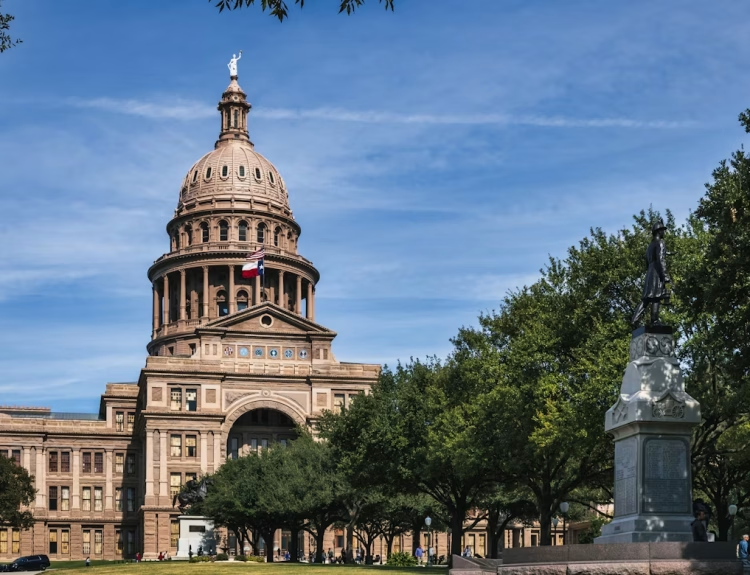
Monuments, particularly statues of political figures, military leaders, or colonial administrators, are among the most contested national symbols. They are public representations of whom a nation chooses to honor—and why.
Key tensions:
- Historical significance vs. moral judgment: Many monuments were erected to honor individuals for nation-building roles, yet their actions—particularly involving slavery, genocide, or repression—clash with contemporary ethical values.
- Preservation vs. justice: Some argue for preserving monuments as historical artifacts, while others see their removal as necessary for healing and accountability.
- Visibility and trauma: For communities harmed by the legacies represented in statues or memorials, their continued public display can feel like an erasure of lived suffering.
Global examples:
- In the United States, the removal of Confederate monuments accelerated following the 2017 Charlottesville rally and 2020 Black Lives Matter protests. Statues of Robert E. Lee and Jefferson Davis were among those taken down amid debates about racial justice and historical memory.
- In the United Kingdom, activists toppled the statue of slave trader Edward Colston in Bristol in 2020, sparking broader conversations about Britain’s colonial past.
- In India, colonial-era statues like those of Queen Victoria have been removed or relocated post-independence, reflecting a shift from imperial to national symbolism.
Renaming Public Spaces
The symbolic power of names—whether of streets, universities, airports, or government buildings—cannot be overstated. Renaming has become a common tool for countries seeking to revise national narratives.
Why renaming matters:
- Names reflect values and priorities. Changing them signals a shift in collective consciousness.
- Renaming can honor previously excluded communities or individuals who contributed to national development.
- It allows for a more inclusive representation of the nation’s identity, especially in multicultural societies.
Examples:
- In South Africa, many apartheid-era place names have been replaced with Indigenous names or tributes to anti-apartheid leaders.
- In New Zealand, efforts to restore Māori names for landmarks and cities continue, with growing public support.
- In Canada, institutions are being renamed to acknowledge Indigenous peoples and remove colonial references.
Renaming is often controversial, as it can be perceived as erasing history. However, proponents argue that it is less about erasure and more about rebalancing whose stories are elevated.
Reinterpreting Flags and National Holidays
Flags and national holidays are among the most widely shared and emotionally resonant national symbols. They are present in schools, parades, government buildings, and international events—embedding themselves in the everyday consciousness of citizens.
Yet, these symbols too are being reexamined.
Flags under scrutiny:
- The Confederate flag in the U.S., once a regional emblem, has become a flashpoint in debates about racism and national memory.
- Colonial-era flags in former British, French, or Spanish territories have been replaced to reflect post-independence identities.
- In Australia, some Indigenous activists and communities reject the Australian flag in favor of the Aboriginal or Torres Strait Islander flags, arguing that the national flag symbolizes colonization and exclusion.
National holidays contested:
- In the U.S., Columbus Day is increasingly replaced by Indigenous Peoples’ Day to acknowledge the colonization and genocide of Native Americans.
- In Canada, Canada Day has been met with protests in recent years, especially after the discovery of unmarked Indigenous graves at former residential schools.
- In Mexico, some activists have called for reevaluating celebrations like Día de la Raza, which historically honored Spanish conquest, and instead focus on Indigenous resilience.
These shifts reflect a growing demand to align national pride with ethical responsibility and historical truth.
The Role of Education and Public Debate
Changes to national symbols are rarely imposed quietly—they involve extensive public debate, education campaigns, and often political struggle. The classroom, in particular, becomes a key battleground for how symbols are taught, interpreted, and contested.
Educational reforms may include:
- Updating textbooks to reflect multiple perspectives on national history.
- Including Indigenous, Black, and minority voices in national narratives.
- Teaching the historical context of national symbols—not just their origins but also their evolution and impact.
In democratic societies, open debate about national symbols is a healthy sign. It indicates a willingness to grow, acknowledge mistakes, and redefine shared values. Suppressing such debate, on the other hand, can lead to increased polarization and disillusionment.

Who Gets to Decide?
A central tension in the evolving meaning of national symbols is the question of authority. Who has the right to decide what a symbol means or whether it should be changed?
Decision-making structures:
- Government committees or commissions are often tasked with evaluating symbols, but may lack public legitimacy if they don’t include diverse voices.
- Grassroots movements, led by marginalized communities, often drive change but can face resistance from institutional power.
- Legal frameworks may limit or enable symbolic change through heritage laws, free speech protections, or constitutional mandates.
The most sustainable reforms tend to involve broad consultation, transparent processes, and a willingness to listen across ideological lines. When symbols are truly national, so too must be the conversation around them.
National symbols are among the most enduring expressions of collective identity. Yet, as societies grow more diverse and reckon with the complexities of their histories, the challenge is not only to preserve these symbols—but to make them more representative of who the nation truly is. Far from relics of the past, national symbols can be sites of renewal, dialogue, and even justice—if approached with care, humility, and inclusivity.
This final section explores how national symbols can evolve responsibly, providing inspiration from successful reforms and outlining principles for ethical redefinition.
Reimagining Symbols Through Shared Storytelling
For national symbols to remain meaningful, they must resonate with the people who live under them. This means building new symbols—or reinterpreting existing ones—through participatory storytelling that includes marginalized voices and honors cultural diversity.
Ways to build shared ownership:
- Public consultations and forums that invite communities to reflect on what national identity means today.
- Creative competitions to design new flags, anthems, or logos that capture contemporary values.
- Oral history and archive projects that document the perspectives of groups historically excluded from national narratives.
Symbols created through collaborative processes are more likely to be embraced, defended, and passed on—because people see themselves reflected in them.
Symbolic Reform as Cultural Healing
In many countries, symbolic change is part of a broader process of reconciliation. Whether in post-conflict states, postcolonial nations, or societies grappling with historical injustices, updating national symbols can serve as a gesture of recognition and healing.
Key examples:
- Rwanda, following the 1994 genocide, redesigned its national flag to represent unity, peace, and hope—deliberately avoiding colors associated with political division.
- Germany, after World War II, redefined its anthem by using only the third stanza of the original song, emphasizing unity and freedom while distancing itself from militaristic nationalism.
- Canada’s Truth and Reconciliation Commission has spurred conversations about incorporating Indigenous symbols into national ceremonies, currency, and education.
In each case, symbolic reform was not just aesthetic—it was ethical. It reflected an effort to acknowledge harm, restore dignity, and build a more inclusive national identity.
Balancing Heritage with Progress
Not all historical symbols need to be discarded. Many can be recontextualized, reframed, or supplemented to offer a fuller picture of a nation’s story. Erasure is not the only option—education, reinterpretation, and juxtaposition can also transform public memory.
Approaches to consider:
- Historical plaques and reinterpretation: Rather than removing controversial monuments, some cities have added context about their origins, controversies, and impact.
- Counter-monuments and additions: New statues or installations can be placed alongside older ones to offer multiple perspectives.
- Symbolic layering: In multicultural societies, different flags or anthems can be used in parallel to recognize multiple heritages.
The goal is to move from monolithic narratives to pluralistic ones—where complexity, contradiction, and coexistence are acknowledged as part of the national story.
Designing Symbols for the 21st Century
Modern national symbols need not adhere to 19th- or 20th-century standards of representation. Digital tools, evolving aesthetics, and global communication platforms allow for new forms of symbolism.
Design trends for modern relevance:
- Inclusive iconography: Emblems that incorporate gender neutrality, ethnic diversity, and natural elements that resonate across communities.
- Language plurality: Anthems or mottos that reflect linguistic diversity and unity.
- Ecological symbolism: Flags and crests that highlight environmental values or local biodiversity, reflecting growing global concern for sustainability.
Symbols that speak to contemporary realities are more likely to unify people across generations and backgrounds.
The Role of the Arts and Cultural Institutions
Artists, poets, musicians, and writers have always played a key role in shaping national imagination. When allowed space, the arts can help reframe symbols in ways that are emotionally resonant and intellectually rich.
Examples of creative contributions:
- National poetry competitions that redefine patriotism in modern terms.
- Film and theatre productions that interrogate historical myths and elevate untold stories.
- Exhibitions and digital archives that celebrate alternative cultural contributions to the nation’s legacy.
Cultural institutions such as museums, libraries, and universities must also play their part—offering platforms for debate, documentation, and dialogue.
Principles for Ethical Symbolic Reform
While every country’s context is different, several principles can guide responsible change:
- Transparency: The process of altering or reinterpreting a symbol must be open, democratic, and well-communicated.
- Inclusivity: Stakeholders from across social, ethnic, gender, and generational lines must be included.
- Contextualization: Any change must consider historical significance, cultural continuity, and the impact on public memory.
- Education: Reform must be supported by educational efforts that help people understand why change is happening.
- Respect for multiplicity: One symbol cannot do all the work. A healthy symbolic landscape includes space for regional, Indigenous, and minority expressions as well.
When these principles are followed, symbolic reform becomes not only possible—but meaningful.
Conclusion
National symbols are not inert—they are dynamic reflections of who we are, who we were, and who we wish to become. They can unite or divide, include or exclude, inspire or wound. As societies grow more diverse, self-aware, and globally connected, the need to revisit and reshape these symbols becomes not just necessary, but urgent.
This is not about abandoning tradition. It is about expanding it. It is about making space for new stories while honoring the old. It is about choosing symbols that reflect not only our past, but our shared hopes for a just, inclusive, and pluralistic future.
Because when national symbols evolve with their people, they don’t lose meaning—they gain it.
References
- UNESCO – Memory of the World Programme
https://en.unesco.org/programme/mow
(Addresses preservation of historical narratives and heritage symbols.) - BBC News – Edward Colston statue: Why was it pulled down?
https://www.bbc.com/news/uk-england-bristol-53004748
(Covers the toppling of a British slave trader’s statue and public symbolic debate.) - The Guardian – Black Lives Matter sculpture of Jen Reid removed from Colston plinth
https://www.theguardian.com/world/2020/jul/16/black-lives-matter-sculpture-of-jen-reid-removed-colston–bristol - The Guardian – Toppled Edward Colston statue goes on display in Bristol
https://www.theguardian.com/uk-news/2021/jun/04/toppled-edward-colston-statue-display-bristol-blm-protests-exhibition
About The Author