
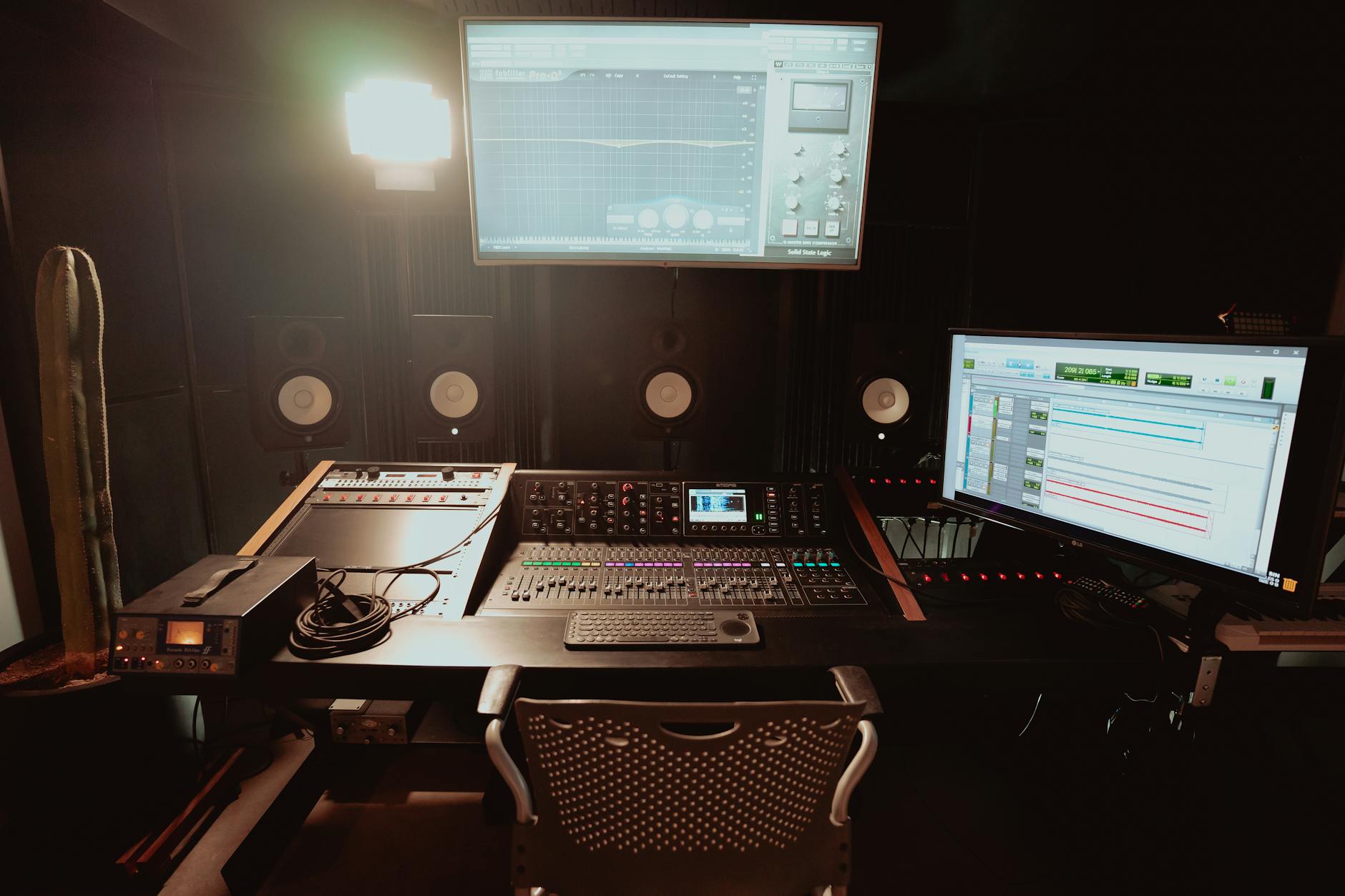
🎬 Introduction: The Unseen Force of Narrative
When we think of storytelling, we often picture captivating visuals, stunning cinematography, or powerful performances. But if you strip away the sound, even the most visually arresting narrative can fall flat. The roar of a dragon, the whisper of leaves in a forest, or the trembling silence before a gunshot—sound design is what gives stories emotional texture, psychological depth, and immersive reality.
In storytelling across cinema, gaming, podcasts, and virtual reality, sound design doesn’t simply accompany the narrative—it enhances, deepens, and often, drives it. Sound design storytelling is an art form that shapes how stories are received, interpreted, and remembered.
Let’s explore how and why sound has become one of the most critical tools in modern storytelling.
🔍 What Is Sound Design in Storytelling?

At its core, sound design is the creative and technical process of creating and integrating auditory elements to support the narrative arc. These elements include:
- Dialogue – What characters say and how they say it
- Foley – Recreated real-world sounds (footsteps, door creaks, clothes rustling)
- Ambient Sound – Background noise that sets a scene (ocean waves, city traffic, forest birds)
- Sound Effects (SFX) – Exaggerated or synthetic noises (explosions, sci-fi machines)
- Music/Score – Emotional undercurrent, often setting mood or rhythm
- Silence – An intentional void that amplifies tension or introspection
Each element, when used intentionally, becomes a storytelling device.
🎙️ “The ear is the avenue to the heart.” — Voltaire
🧠 The Psychological Impact of Sound on Storytelling
Sound reaches us in ways visuals cannot. Neuroscience research confirms that auditory stimuli are processed in the amygdala and hippocampus, brain areas responsible for emotion and memory. That’s why a familiar song can make us nostalgic or a sudden loud noise can trigger anxiety.
⚡ Key Emotional Impacts:
- Fear: Low frequencies and sudden silence build suspense
- Sadness: Minor keys and slow tempo deepen melancholy
- Joy: Fast, rhythmic beats in major keys uplift the mood
- Tension: Dissonant chords and irregular rhythms create unease
Unlike visuals, sound bypasses rational thinking and dives straight into the subconscious.
🎥 The Functions of Sound in Narrative
1. Establishing Setting and Mood
Sound design can immediately place a listener or viewer in a specific environment or emotional state. Think of:
- Rainfall and thunder for a moody noir film
- Birdsong and wind for a peaceful countryside
- Dissonant drones for dystopian futures
2. Signaling Transitions
Sound can cue scene changes, time jumps, or flashbacks. Transitions often use:
- Whooshes
- Echoes
- Crescendos
- Fade-outs
3. Foreshadowing
Strategic use of music or sound hints at future events. A recurring theme or motif might signal a character’s return or a looming tragedy.
4. Creating Suspense or Release
Alfred Hitchcock used silence and then sudden sound to jolt the audience. The release of tension through a loud payoff (a scream, a gunshot) is often enhanced by silence beforehand.
🧱 Components of Sound Design
| Component | Description |
|---|---|
| Diegetic Sound | Sounds originating from within the story world (e.g., dialogues, footsteps) |
| Non-Diegetic | External elements like background scores or narrations |
| Foley | Real-time reproduction of natural sound synchronized with on-screen action |
| Ambience | Background sounds that establish spatial awareness |
| Music/Score | Composed music to reflect emotions, moods, or themes |
| Silence | Absence of sound used for emphasis, anticipation, or emotional gravity |
🎮 Sound Design in Different Storytelling Mediums
🎬 Film and Television
In film, sound design has evolved into a narrative powerhouse. Sound bridges the emotional gap between viewer and scene, often adding subtext.
🔹 A Quiet Place (2018)
The absence of sound becomes the central mechanic. We experience fear and suspense through what we don’t hear.
🔹 Inception (2010)
The iconic “BRRRAAM” sound adds weight, gravity, and an otherworldly sense of time—enhancing the dream-within-a-dream concept.
🔹 Star Wars
Ben Burtt, the original sound designer, gave us the hum of lightsabers, R2D2’s beeps, and Darth Vader’s breath—sonic icons that shaped generations.
🎧 Podcasts and Audio Dramas
In audio storytelling, sound is everything. With no visuals to guide them, listeners rely on auditory cues to form mental imagery.
Example: Welcome to Night Vale
This podcast builds an entire surreal world using ambient tones, eerie music, and a soft-spoken narrator. Every crackle, whisper, and shift in tone adds depth to the story.
🕹️ Video Games
Sound design in games is both aesthetic and interactive. It helps in:
- Signaling player actions (a different sound for each weapon reload)
- Building atmosphere (haunting winds in horror games)
- Offering feedback (level-up chimes or danger alarms)
🔹 Hellblade: Senua’s Sacrifice
Uses binaural audio to simulate psychosis. Voices swirl around the player, creating disorientation that mirrors the protagonist’s mental state.
🥽 Virtual and Augmented Reality
Spatial audio is the future of immersive storytelling. With technologies like Dolby Atmos and binaural recording, users can “hear” a 360° world.
- Footsteps behind you sound like they’re really behind you.
- In AR, audio cues can direct your focus without screen clutter.
🛠️ Tools and Techniques in Sound Design
🔧 Software Tools:
- Pro Tools – Industry standard for film and TV sound mixing
- Logic Pro X – Favored by composers and audio designers
- Ableton Live – Popular for real-time sound effects and music
- FMOD / Wwise – Used in dynamic sound for games
🎤 Recording Techniques:
- Foley Stage Recording
- Field Recording (Ambiences from real locations)
- Synthesis (Creating artificial sounds)
📚 Academic Insights on Sound Design
According to Michel Chion in Audio-Vision: Sound on Screen, sound has three modes:
- Causal Listening – Determining the source
- Semantic Listening – Understanding language/speech
- Reduced Listening – Focusing purely on the sound’s traits
Sound design storytelling utilizes all three modes to manipulate narrative perception.
💡 Expert Quotes
🎧 “Sound is half the experience in a movie.” — George Lucas
🎧 “If the audience knows where they are, and how they should feel, you’ve done your job right.” — Randy Thom (Sound Designer, The Revenant)
📈 Future Trends in Sound Design Storytelling
- AI-generated Soundscapes: AI is already composing soundtracks and dynamically generating effects.
- Voice Cloning & Deepfake Audio: Used in recreating historical figures or creating multilingual audio dubs.
- Haptic Sound: Vibrations and tactile feedback combined with sound to add a physical layer to storytelling.
- Personalized Audio: Interactive experiences where your choices change the soundtrack or ambient cues.
🧭 How to Use Sound Design in Your Own Projects
Whether you’re a filmmaker, podcaster, or game designer:
✅ Best Practices:
- Plan sound during scripting—don’t treat it as an afterthought
- Design soundscapes, not just effects
- Use contrast—silence vs. noise, harmony vs. dissonance
- Use thematic motifs—musical cues tied to characters or emotions
- Prioritize clarity—especially in dialogue-heavy formats
🎓 Case Studies: Sound as Story Engine
🔹 The Last of Us Part II
Cinematic sound coupled with environmental cues turns gameplay into emotional narrative.
🔹 Stranger Things
Synthwave music sets both tone and era, fusing story and sound in perfect 1980s harmony.
🔹 Blade Runner 2049
Sound design builds a desolate, decaying world even before you absorb the visuals.
🧠 Conclusion: Sound Is Story
In the evolving world of immersive media, sound is not just a background feature—it’s the soul of the experience. Sound design storytelling is what transforms visuals into cinema, text into emotion, and gameplay into journey.
As we move into the future with AI, VR, and spatial audio, the storytellers who master sound will be the ones who create worlds, not just stories.
📝 “You don’t just watch a great story—you feel it. And sound is what makes you feel.”
About The Author


