
By Namith DP | June 17, 2025
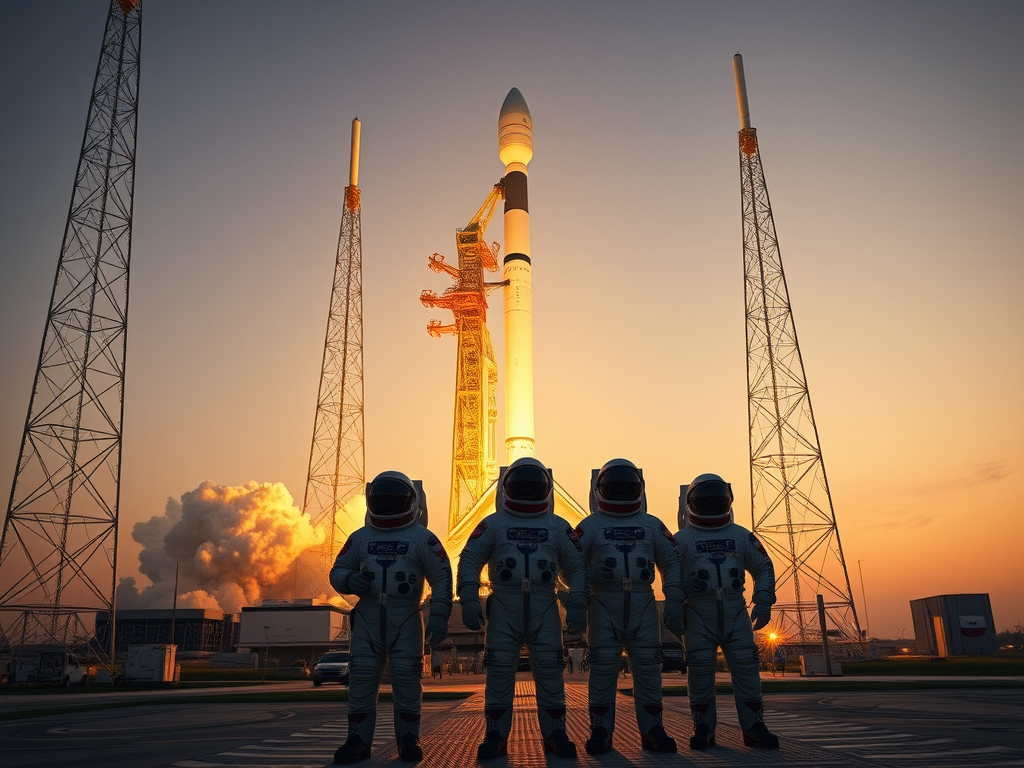
Axiom Mission 4 (Ax-4) marks a pivotal moment in commercial spaceflight. With an international crew, cutting-edge science, and strategic partnerships, the mission redefines space access and private-sector innovation aboard the International Space Station.
Introduction: A New Phase in Human Spaceflight
On January 18, 2024, Axiom Mission 4 (Ax-4) launched from NASA’s Kennedy Space Center. While previous commercial missions focused on space tourism or high-profile corporate experiments, Ax-4 shifted focus toward applied science and international collaboration. Aboard were four professional astronauts from three different nations, each contributing to a tightly coordinated research agenda aboard the International Space Station (ISS).
The Ax-4 mission marked a turning point in the commercial space sector, not because of novelty or spectacle, but due to its operational maturity. With professional astronauts from Turkey, Italy, Sweden, and the United States, the mission proved that space is no longer the exclusive domain of government space agencies. Commercial missions can now support national interests, conduct peer-reviewed research, and promote diplomatic cooperation.
Mission Overview: Technical Facts and Flight Milestones

Launch Date: January 18, 2024
Launch Vehicle: SpaceX Falcon 9
Crew Vehicle: Crew Dragon “Freedom”
Mission Duration: 18 days (14 aboard ISS)
Landing: February 9, 2024, off the coast of Daytona, Florida
Mission Operator: Axiom Space (Houston-based private company)
Docking Port: ISS Harmony module, forward-facing port
Crew Members
Commander – Peggy Whitson (USA)
- Veteran of NASA’s Astronaut Group 16, Whitson already holds the record for the most cumulative days in space by a U.S. astronaut (~675 days).
- Served previously as Commander of Axiom Mission 2.
- Currently Axiom Space’s Director of Human Spaceflight, heading missions focused on science, outreach, and private-sector microgravity R&D .
Pilot – Shubhanshu Shukla (India, ISRO)
- Group Captain in the Indian Air Force, seasoned test pilot with over 2,000 flight hours in diverse aircraft (MiG‑21, Su‑30MKI, Jaguar, etc.).
- Selected as an ISRO Gaganyaan astronaut; this mission marks only the second time an Indian has gone to space—and the first to visit the ISS.
- Will lead a series of scientific and outreach activities, including experiments refreshed by ISRO due to launch delays .
Mission Specialist – Sławosz Uznański-Wiśniewski (Poland/ESA)
- An ESA “project astronaut,” fluent in English and French.
- Selected from over 22,500 applicants in ESA’s 2022 Astronaut Reserve.
- Will be Poland’s second-ever astronaut—and first on the ISS—conducting research and outreach from orbit.
Mission Specialist – Tibor Kapu (Hungary)
- Mechanical engineer from Budapest University, selected through Hungary’s HUNOR program from 247 candidates.
- Would become Hungary’s second astronaut—and first on the ISS—following two Soviet-era flights .
- Worked in polymer tech and space radiation protection, also a recreational skydiver.
International Participation: A First for Several Nations
Ax-4 stood out not only for its commercial scope but also for its geopolitical significance.
Turkey’s Human Spaceflight Debut
- Alper Gezeravcı became the first Turkish astronaut in space, a milestone that has domestic political and scientific implications.
- The Turkish Space Agency (TUA) worked with Axiom Space under a bilateral agreement.
- Gezeravcı carried out 13 science experiments, including microgravity studies in fluid dynamics, biotechnology, and radiation shielding.
Sweden’s First ESA Astronaut via a Commercial Mission
- Marcus Wandt became the first ESA astronaut to participate in a commercial crewed mission.
- As part of ESA’s “Huginn” mission, Wandt conducted biomedical and AI studies developed by Swedish universities and startups.
- ESA has endorsed the commercial path for increasing flight opportunities beyond traditional ISS allocations.
Italy’s Continued Commercial Leadership
- Walter Villadei, a colonel in the Italian Air Force and engineer, represented Italy’s increasing stake in space technology.
- He led experiments in radiation biology and space medicine.
- Italy remains a leading ESA contributor and a pioneer in low Earth orbit (LEO) commercialization.
Scientific Output: Mission Objectives and Experiments
The Ax-4 mission carried out over 30 scientific experiments, many of which were designed for translational or applied outcomes.
Biomedical Research
- Microgravity Immune System Studies: Investigations into immune cell behavior in microgravity to aid drug development and autoimmune disorder research.
- Neurovestibular Adaptation: A study on how astronauts’ brains adapt to weightlessness, providing data on space motion sickness and post-flight disorientation.
- Tissue Engineering: 3D culturing of human tissues to explore regenerative therapies without Earth’s gravitational constraints.
Technological Experiments
- Radiation Shielding Materials: Tested new polymer-based materials designed to protect astronauts from cosmic radiation.
- AI-based Space Station Monitoring Tools: Swedish-developed software assisted in autonomous diagnostics of onboard systems.
- Fluid Dynamics in Microgravity: Turkish experiments analyzed how different liquid compositions behave in zero gravity, aimed at improving satellite fuel systems.
Educational and Outreach Activities
- Live sessions with schools in Turkey, Sweden, and Italy.
- Real-time experiment demonstrations for STEM students.
- Cultural items carried aboard, such as national flags and scientific books, were later returned as symbols of public engagement.
Private Sector’s Role in Low Earth Orbit
Axiom Space served as the mission organizer, coordinator, and integrator. The company handled everything from crew selection to in-flight operations. With support from NASA and SpaceX, Axiom Space demonstrated that private firms can provide reliable and secure access to LEO.
Infrastructure and Services Provided by Axiom:
- Mission Integration: End-to-end planning, payload support, safety certification.
- Training Facilities: Simulations and ISS familiarization at NASA and in Houston.
- Post-Flight Analysis: Scientific debriefs and data return protocols handled by Axiom in cooperation with space agencies.
NASA continues to support these missions through its Commercial Low Earth Orbit Development (CLD) program, which provides resources and docking rights on the ISS. These collaborations will ultimately lead to the creation of Axiom Station, a modular, private successor to the ISS expected in the late 2020s.
The Commercialization of Professional Spaceflight
Ax-4 illustrated that the space industry is maturing beyond low-risk tourism.
Key Characteristics of Ax-4’s Professional Model:
- All astronauts were trained, certified, and medically qualified by national and international standards.
- All experiments were peer-reviewed, with data intended for publication in scientific journals.
- Cost-sharing between governments and private firms allowed budget-efficient access to space.
This approach bridges the gap between national space programs and commercial enterprise. Countries that lack their own launch capabilities now have meaningful access to orbital research and astronaut experience.
Financial Model and Budgeting
- Mission Cost (estimated): $200–250 million USD
- Funding Sources: National governments (Turkey, Sweden, Italy), ESA, private donors, Axiom Space
- Breakdown:
- ~$55 million per seat on Crew Dragon
- ~$10–15 million for payload integration and experiment planning
- Remainder for training, mission support, and post-mission analysis
This cost structure is far lower than traditional government-only missions, which often exceed $1 billion when including infrastructure and personnel.
Public Reception and Government Statements
Turkey
- President Recep Tayyip Erdoğan praised the mission as “a national turning point” and announced plans for a lunar rover program by 2030.
- National media extensively covered the launch, increasing public interest in STEM education.
Sweden
- ESA hailed Wandt’s participation as an “innovation accelerator.”
- Swedish Space Corporation released a roadmap for future microgravity biotech research.
Italy
- Italian officials emphasized Villadei’s mission as part of a broader push for space-based industrial growth.
- Italy renewed its ESA contributions and committed funding to Axiom’s future station modules.
Geopolitical Implications of Ax-4’s Diverse Crew
The Ax-4 mission demonstrated a significant shift in how nations form alliances in space. It enabled middle-power countries to assert their interests through strategic cooperation rather than long-term national programs.
Key Takeaways:
- Turkey entered a new era of space diplomacy, becoming the second Muslim-majority country after the UAE to send a citizen to the ISS.
- Sweden showed that ESA can flexibly engage with commercial providers, creating more equitable access for smaller member states.
- Italy reinforced its identity as a dual-use (civil and defense) space power.
A mission that brought together NATO allies and ESA participants under a commercial banner created a unique template for future multinational cooperation. As geopolitical competition intensifies in space, missions like Ax-4 could serve as both scientific and diplomatic platforms.
Looking Ahead: Axiom’s Long-Term Vision
Axiom Space plans to launch the first module of its private space station in 2026, which will eventually detach from the ISS and function independently.
Axiom Station: Key Features
- Modular design for expansion and docking
- Dedicated research and manufacturing modules
- Crew accommodations for government and commercial astronauts
- Partnering with countries lacking sovereign space programs
Ax-5 and Ax-6 are already in development, with interest from Saudi Arabia, the UK, and various Latin American countries.
Conclusion: Why Ax-4 Matters
Axiom Mission 4 was not a stunt. It was a professionally executed, scientifically rigorous, diplomatically strategic operation. It signaled the rise of a new ecosystem where national pride, economic interest, and scientific progress intersect in orbit.
Rather than mimicking past government-led missions, Ax-4 built something new: a framework for how the next generation of international science, diplomacy, and commerce will operate in space.
About the author

References
- “Axiom‑4 to Launch on Thursday; ISRO Refreshes Samples for Astronaut Shukla’s Experiments.” The Economic Times, 16 June 2025. https://economictimes.indiatimes.com/tech/technology/axiom-4-to-launch-on-thursday-isro-refreshes-samples-for-astronaut-shuklas-experiments/articleshow/121889417.cms
- The Guardian. “Astronaut Mission Postponed amid Leak Concerns at International Space Station.” The Guardian, 13 June 2025. https://www.theguardian.com/science/2025/jun/13/international-space-station-leak
- “ISS Leaks ‘Small’; ‘Not Uncommon’ to Delay Launch: NASA.” Times of India, 16 June 2025. https://timesofindia.indiatimes.com/science/iss-leaks-small-not-uncommon-to-delay-launch-nasa/articleshow/121868907.cms
- “Space Station Leak Delays Houston Firm’s Launch of Commercial Astronauts.” Houston Chronicle, 13 June 2025. https://www.houstonchronicle.com/news/houston-texas/space/article/space-station-leak-axiom-space-ax-4-20373921.php
- ISS National Laboratory. “Private Astronaut Mission Includes Research to Open Space to Astronauts With Diabetes.” 3 June 2025. https://issnationallab.org/press-releases/ax4-suite-ride-diabetes-research/
- ISS National Laboratory. “Axiom Mission 4 Partners with ISS National Lab to Conduct the Most Research to Date on a Private Astronaut Mission.” 5 June 2025. https://issnationallab.org/press-releases/ax4-science-demonstrates-growing-need/
- NASA. “Station Waits Extra Day for Axiom Mission 4 Launch, Studies Eyes and Proteins.” 9 June 2025. https://www.nasa.gov/blogs/spacestation/2025/06/09/station-waits-extra-day-for-axiom-mission-4-launch-studies-eyes-and-proteins/
- NASA. “NASA, Partners Delay Axiom Mission 4 Launch to Space Station.” 12 June 2025. https://www.nasa.gov/blogs/spacestation/2025/06/12/nasa-axiom-space-delay-axiom-mission-4-launch-to-space-station/
- NASA. “NASA, Partners Update Axiom Mission 4 Launch Opportunity Due to Weather.” 9 June 2025. https://www.nasa.gov/blogs/spacestation/2025/06/09/nasa-partners-update-axiom-mission-4-launch-opportunity-due-to-weather/
- Wikipedia contributors. “Axiom Mission 4.” Wikipedia, 17 June 2025. https://en.wikipedia.org/wiki/Axiom_Mission_4
- Next Spaceflight. “Falcon 9 Block 5 | Axiom Mission 4 (Ax‑4).” Next Spaceflight. https://nextspaceflight.com/launches/details/7350
About The Author





Good insight.
[…] Axiom Mission 4: Commercial Spaceflight Breaks New Ground in Science and Diplomacy […]