
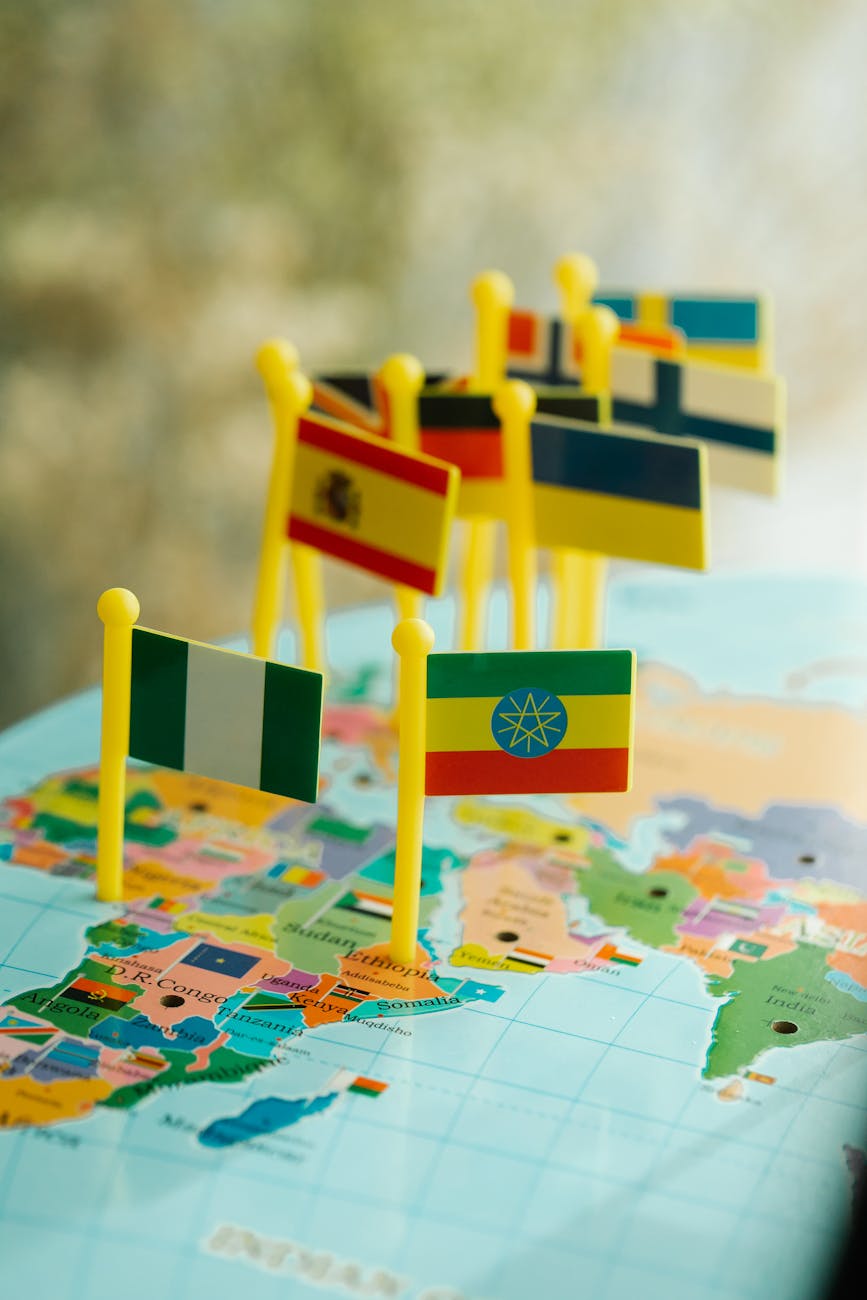
The World Is a Classroom
When 16-year-old Amina from Nigeria logs into a virtual literature class with peers from Japan, Finland, and Brazil, something remarkable happens. Cultures collide—in the best possible way. They debate Chinua Achebe’s Things Fall Apart, not just from a literary lens, but through lived experiences, colonial histories, and indigenous narratives. This is no longer a local classroom—it’s a microcosm of the world.
Cross-cultural education is no longer a niche pedagogical strategy; it’s the heartbeat of global learning. As borders blur and digital platforms bridge divides, understanding how education adapts to and thrives in multicultural contexts becomes vital.
What Is Cross-Cultural Education?
At its core, cross-cultural education integrates the customs, beliefs, and values of different cultural backgrounds into the learning process. It’s not just about learning about other cultures—it’s about learning with them and through them.
It includes:
- Multinational classrooms (physical or digital)
- Culturally diverse curricula
- Language immersion programs
- Collaborative international projects
- Exchange and study-abroad opportunities
This form of education fosters global citizenship, empathy, adaptability, and nuanced critical thinking—skills essential in today’s interconnected world.
Trend 1: The Rise of International and Hybrid Schools
According to ISC Research, the number of international schools grew by 53% globally between 2010 and 20231. These schools cater to expatriate and local families who want their children educated in a global context.
Key Drivers:
- Globalized job markets
- Multinational corporations relocating families
- Rise in demand for bilingual and multicultural education
Case Study:
The United World Colleges (UWC) network emphasizes education for peace and sustainability, bringing together students from 150+ countries. Their diverse student body isn’t just a statistic—it’s a pedagogical pillar.
Trend 2: Digital Platforms Enabling Cross-Border Classrooms
EdTech platforms have shattered the physical constraints of geography. Initiatives like:
- Coursera for Refugees
- ePals Global Community
- Microsoft’s Global Learning Connection
…are making cross-cultural education accessible, even in underserved regions.
Stat Spotlight:
UNESCO reports that over 1.5 billion learners participated in online learning during the COVID-19 pandemic—a large portion of which included culturally integrated virtual classrooms2.
Trend 3: Culturally Responsive Pedagogy
Educators are moving beyond Eurocentric curricula to embrace culturally responsive teaching. This method:
- Validates students’ cultural backgrounds
- Incorporates diverse historical and cultural perspectives
- Avoids “othering” in classroom narratives
Example:
In New Zealand, Māori culture is not only respected but actively embedded in national education policies. Schools use traditional storytelling, language, and indigenous worldviews as learning tools.
Trend 4: Study-Abroad Reimagined
While traditional study-abroad programs still thrive, new models are emerging:
- Virtual Exchange Programs: Like Soliya, where students from MENA and Western countries collaborate on social issues.
- Micro-Immersion Experiences: Short-term international volunteering or project-based exchanges.
Impact Highlight:
Students involved in international education show 17% higher intercultural competence scores compared to peers, as per a 2022 study by the American Council on Education3.
Trend 5: Language as a Bridge, Not a Barrier
Bilingual and multilingual education is now a strategic priority in many countries. China promotes English alongside Mandarin; India blends Hindi, English, and regional languages in its National Education Policy.
Why it matters:
Language inclusion helps preserve identity while promoting global understanding. It breaks down stereotypes and increases engagement.
Challenges in Cross-Cultural Education
While cross-cultural education promises enriched learning, global empathy, and inclusive growth, it also presents complex challenges. These obstacles, if left unaddressed, can unintentionally widen gaps rather than bridge them. Let’s unpack the most pressing issues:
1. Cultural Misunderstandings: When Inclusion Backfires
One of the greatest risks in cross-cultural education is the superficial integration of diversity—what some experts call “checkbox multiculturalism.” When cultural differences are acknowledged in tokenistic or shallow ways, it can lead to:
- Stereotyping instead of understanding
- Reinforcement of existing biases
- Alienation of minority students
Example:
In a classroom celebrating “World Culture Day,” students may dress in national costumes or bring ethnic food. While well-intentioned, these activities can reduce rich cultural identities to costumes or cuisine, trivializing deeper historical, political, or linguistic nuances.
Educator Insight:
A global survey by OECD found that nearly 38% of students in international classrooms felt their culture was either misrepresented or oversimplified during school activities[^1].
2. Curriculum Conflicts: Whose History Gets Taught?
Education is never neutral—it reflects values, priorities, and power structures. Standardized national curricula often fail to represent multiple cultural narratives, especially in postcolonial or multi-ethnic societies.
Challenges include:
- Omitting indigenous or minority perspectives
- Using language that marginalizes certain communities
- Presenting a single dominant worldview as “universal”
Case Study:
In India, debates around school history textbooks often highlight the exclusion or rewriting of Mughal, Dalit, and tribal contributions to national history. Similarly, in the U.S., the exclusion of African American history in many state curriculums has led to growing public backlash and calls for educational reform.
Impact:
Students from underrepresented backgrounds may feel invisible or invalidated in their learning journey, leading to disengagement or even dropout.
3. The Digital Divide: Inequality in a Connected Age
While technology has enabled borderless education, it has also revealed—and sometimes widened—deep digital inequalities. Access to cross-cultural education is still a privilege, not a right, in many parts of the world.
Barriers include:
- Lack of stable internet access
- Inadequate digital literacy
- Limited access to multilingual or culturally sensitive digital tools
Real-World Example:
During the COVID-19 pandemic, UNESCO reported that more than 463 million children globally were unable to access remote learning due to lack of digital resources[^2]. In rural Sub-Saharan Africa, less than 10% of households had internet access during lockdowns.
The Irony:
While cross-cultural collaboration became the norm for privileged students, millions of others were left behind—not by design, but by default.
4. Teacher Preparedness: The Human Gap in Global Classrooms
Educators are the linchpins of any educational reform, yet most teacher training programs worldwide are not equipped to prepare instructors for multicultural classrooms.
Common gaps include:
- Lack of training in cultural sensitivity and bias awareness
- Inexperience in managing linguistic diversity
- Limited exposure to international case studies or pedagogical frameworks
Survey Data:
A 2021 study by Education International found that 62% of teachers in OECD countries had never received formal training on managing cultural or ethnic diversity in classrooms[^3].
Consequence:
Even well-meaning educators may unintentionally marginalize students—by mispronouncing names, favoring certain dialects or accents, or dismissing non-Western knowledge systems as “less academic.”
Solution Path:
There is a growing push to embed cultural intelligence, trauma-informed teaching, and global competencies into teacher certification programs—especially in countries with rapidly diversifying student populations.
A Call for Conscious Globalization in Learning

Cross-cultural education is one of the most powerful tools we have for shaping compassionate, informed, and adaptable global citizens. But to truly live up to this promise, we must go beyond flags and festivals, beyond translation apps and token modules.
We need:
- Deep inclusion, not just surface diversity
- Curricula that question, not just conform
- Technology that empowers, not excludes
- Teachers who listen, not just lecture
Because the ultimate goal of education isn’t just to prepare students for exams—it’s to prepare them for the world. And the world, now more than ever, demands cross-cultural fluency, humility, and hope.
Benefits of Cross-Cultural Education
1. Enhanced Cognitive Flexibility
Exposure to multiple viewpoints boosts problem-solving and adaptability.
2. Greater Empathy and Tolerance
Students develop respect for difference and common humanity.
3. Career Readiness
Global employers seek candidates with international perspectives and intercultural skills.
4. Civic Engagement
Students trained in cross-cultural environments often become more involved in community and global initiatives.
Real-World Applications: Cross-Cultural Learning in Action
✔ Corporate Training
Companies like Google and IBM incorporate cross-cultural modules in their onboarding to foster inclusive workplace dynamics.
✔ Diplomatic and Peace-Building Initiatives
UNESCO’s Intercultural Dialogue Programs aim to reduce conflict through education-driven empathy building.
✔ Health and Medicine
Global medical schools increasingly train students to consider cultural contexts in diagnosis and care plans.
Looking Ahead: The Future of Cross-Cultural Education
➤ AI and Personalization
AI-driven platforms are beginning to tailor learning content based on cultural relevance and linguistic context.
➤ Curriculum Decolonization
A major movement in universities across Africa, Asia, and Latin America is focused on rewriting curricula to reflect indigenous knowledge systems and local perspectives.
➤ Transnational Educational Policies
Global bodies like UNESCO, the OECD, and the World Bank are working toward more harmonized frameworks that value cultural diversity.
Education as a Bridge, Not a Wall
Cross-cultural education doesn’t just teach students to coexist—it equips them to co-create. In an age of rising polarization, climate crises, and geopolitical tension, the classroom remains one of the last neutral spaces where the future is negotiated, not dictated.
As Nelson Mandela said, “Education is the most powerful weapon which you can use to change the world.” And today, that weapon must be forged in the fires of global understanding.
References
- ISC Research. (2023). International School Market Analysis. https://www.iscresearch.com ↩
- UNESCO. (2020). Education: From disruption to recovery. https://en.unesco.org/covid19/educationresponse ↩
- American Council on Education. (2022). Assessing Intercultural Learning Outcomes in Study Abroad Programs. https://www.acenet.edu ↩
About The Author


