
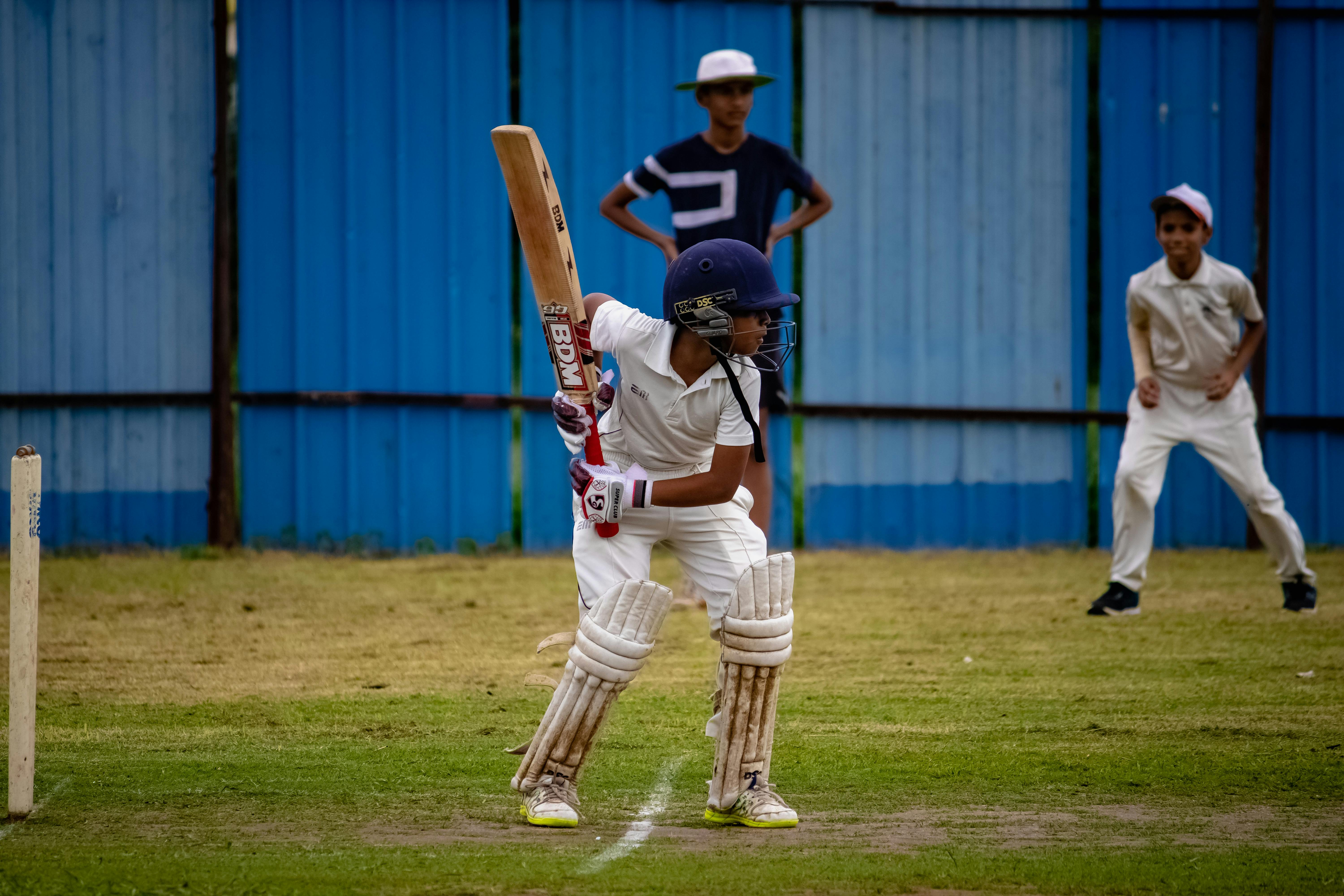
In 2025, over 3 million young cricketers are enrolled in structured training programs across the globe. This figure reflects a sharp uptick in investment from national boards, franchises, and private academies. These centers are no longer seen as supplementary; they are strategic pillars of global cricketing success.
From India’s NCA to England’s Performance Centre and Australia’s development hubs, cricket youth academies now represent the primary pathway from raw talent to elite competition. This article unpacks their critical role in nurturing talent, shaping strategy, and securing cricket’s future.
1. Why Cricket Youth Academies Matter
Cricket youth academies develop players in a controlled and professional environment, far superior to informal coaching setups.
Core Contributions:
- Early talent identification at school and grassroots levels
- Technical coaching for all formats—Test, ODI, T20
- Fitness and injury prevention programs
- Tactical awareness and match intelligence
With increasing international fixture loads and franchise commitments, early conditioning is vital. Players now start preparing for elite competition from as early as age 12.
2. The Rise of Data-Driven Coaching
In 2025, cricket youth academies have fully embraced sports technology and analytics. Coaching methods that once relied purely on human instinct now operate with the support of real-time performance data, biomechanical feedback, and AI-based training systems.
Top academies around the world—such as the ECB’s Performance Centre and Australia’s National Cricket Campus—utilize technology to provide precise, personalized coaching. These advancements allow players to train smarter, not just harder.
Key Technological Integrations in Youth Academies:
- Motion sensors: Analyze bowling release points, arm angles, and pace variations for enhanced biomechanical efficiency.
- Smart bats: Provide data on timing, bat speed, and shot placement for both technique correction and match preparation.
- Wearable fitness trackers: Monitor heart rate, sprint load, and fatigue, enabling safer, more optimized physical conditioning.
- AI-based scenario simulators: Replicate pressure situations and decision-making challenges to sharpen mental agility.
This data-driven approach ensures that each athlete’s development plan is individually customized. Coaches no longer rely on assumptions; instead, they use hard evidence to correct flaws, identify potential, and monitor progress. As a result, cricket youth academies are now producing technically sound and match-ready players with unprecedented consistency.
3. India’s Academy Ecosystem: A Global Benchmark
India remains the leader in academy-based development, with a robust pipeline from U-14 to the national team.
Key Centers of Excellence:
- National Cricket Academy (NCA), Bengaluru – Operated by the BCCI, this center has produced stars like Jasprit Bumrah and Shubman Gill.
- MRF Pace Foundation, Chennai – Specializes in fast bowling development with global reach.
- Franchise-run academies like MI Juniors and RR Academy – Integrate IPL-level training for young prospects.
As of 2025, 8 of India’s current national team members came directly through academy systems, including their recent World Cup-winning captain.
4. Building Mental Strength from an Early Age
Modern academies do not train cricketers only for technique. They also build mental strength, emotional intelligence, and leadership.
Curriculum Enhancements:
- Scenario-based match simulations to build decision-making
- Psychology sessions to deal with pressure and failure
- Team dynamics workshops to build unity and trust
- Media handling and public speaking practice
These elements have become non-negotiable. Top players like Joe Root, Meg Lanning, and Rohit Sharma have all credited youth training environments for shaping their mindset.

5. How Franchise Leagues Are Boosting Youth Development
The professional franchise system has transformed youth development into a business priority.
Emerging Trends in 2025:
- Youth drafts before franchise seasons
- Global scouting networks feeding into academies
- Pre-season rookie camps with mentorship from pros
- Incentives for homegrown players in team selection
Several 2025 IPL players under age 22 are academy products, including recent breakout stars from Assam and Kerala. Youth academies are no longer feeders—they’re now launchpads.
6. Women’s Cricket Academies: Scaling Up
In 2025, women’s cricket youth academies have gained visibility, structure, and funding.
Structural Advances:
- Full-time contracts for women’s academy coaches
- Government-backed scholarships for girl cricketers
- Integration into major franchise networks like WPL and WBBL
- Dedicated training blocks for spin, pace, and wicketkeeping
With participation among girls up by 35% in the last two years, the academies have become the primary vehicle for closing the gender gap in cricket development.
7. Youth Academies and the Cricket Economy
Youth academies contribute significantly to local economies and sports job creation.
Areas of Economic Impact:
- Direct employment: coaches, trainers, physios
- Indirect employment: ground staff, transport, nutrition
- Technology partnerships: performance-tracking devices, apps
- Media and content: in-house documentaries, YouTube channels
On average, every well-run academy generates nearly 70 jobs and supports multiple local businesses, particularly in Tier-2 and Tier-3 cities.
8. Expanding the Global Footprint
Youth academies are playing a leading role in cricket’s globalization. 2025 sees structured academies functioning in over 30 non-traditional cricket nations.
Global Engagement Programs:
- England’s ECB programs in Africa and the Middle East
- India’s training camps in USA, Canada, and Germany
- Australia’s partnership with Pacific and Southeast Asian nations
Players from countries like Brazil, Rwanda, and Japan are now entering U-19 ICC events—almost all trained through newly established youth academies.
9. Data Is the New Selector
Cricket academies now serve as data providers to selectors, analysts, and franchises.
Metrics Now Tracked:
- Ball release and spin rate for bowlers
- Heat maps and shot frequency for batters
- Mental recovery time post-error or failure
- Heart-rate fluctuation in high-pressure moments
Selection committees in 2025 demand evidence beyond averages. Academy data is helping eliminate subjective bias in selection.
10. Democratizing Access: From Metro to Village
Academies today are increasingly accessible to players from rural and underprivileged backgrounds.
Accessibility Programs:
- Government-funded cricket scholarships
- NGO-led scouting in remote districts
- Free hostel and transport for rural talent
- Inclusive training for differently-abled players
In India, over 45% of national-level U-19 players now come from non-metro cities—a remarkable shift from a decade ago.
11. Challenges Still Persist
While progress is clear, academies in 2025 are also facing complex challenges.
Ongoing Issues:
- Lack of uniform regulation across private academies
- Risk of over-specialization at an early age
- Pressure from sponsors compromising training focus
- Over-dependence on technology in player development
Strong oversight from boards like BCCI, ECB, and ICC is necessary to preserve academy integrity and player welfare.
12. The Pathway: From Academy to National Cap
The structured journey from academy to international cricket is now well-defined and fiercely competitive.
Standard Career Path:
- Local school or club cricket
- District academy with certified coaches
- State or regional excellence center
- U-19 national pool
- Exposure through domestic/franchise leagues
- Full national team integration
In 2025, this path is not just a roadmap—it’s an expectation. Players, parents, and coaches build careers around it.
Final Word: The Engine Room of Global Cricket
Cricket youth academies in 2025 are strategic institutions, not just training centers. They produce technically skilled, mentally strong, and physically fit players who are capable of performing on global stages. These academies also build leaders, create jobs, promote inclusion, and accelerate the sport’s global reach.
For countries that dream of international titles, investment in cricket youth academies is not optional—it’s essential. The future of cricket isn’t being written in stadiums; it’s being rehearsed every day in nets, dorms, and data labs across youth academies worldwide.
Sources:
- World Bank → https://www.worldbank.org
- Statista → https://www.statista.com
- Government of India Data → https://data.gov.in
- World Health Organization (WHO) → https://www.who.int
- Pew Research Center → https://www.pewresearch.org
- International Cricket Council (ICC) Reports → https://www.icc-cricket.com/news
About The Author


