
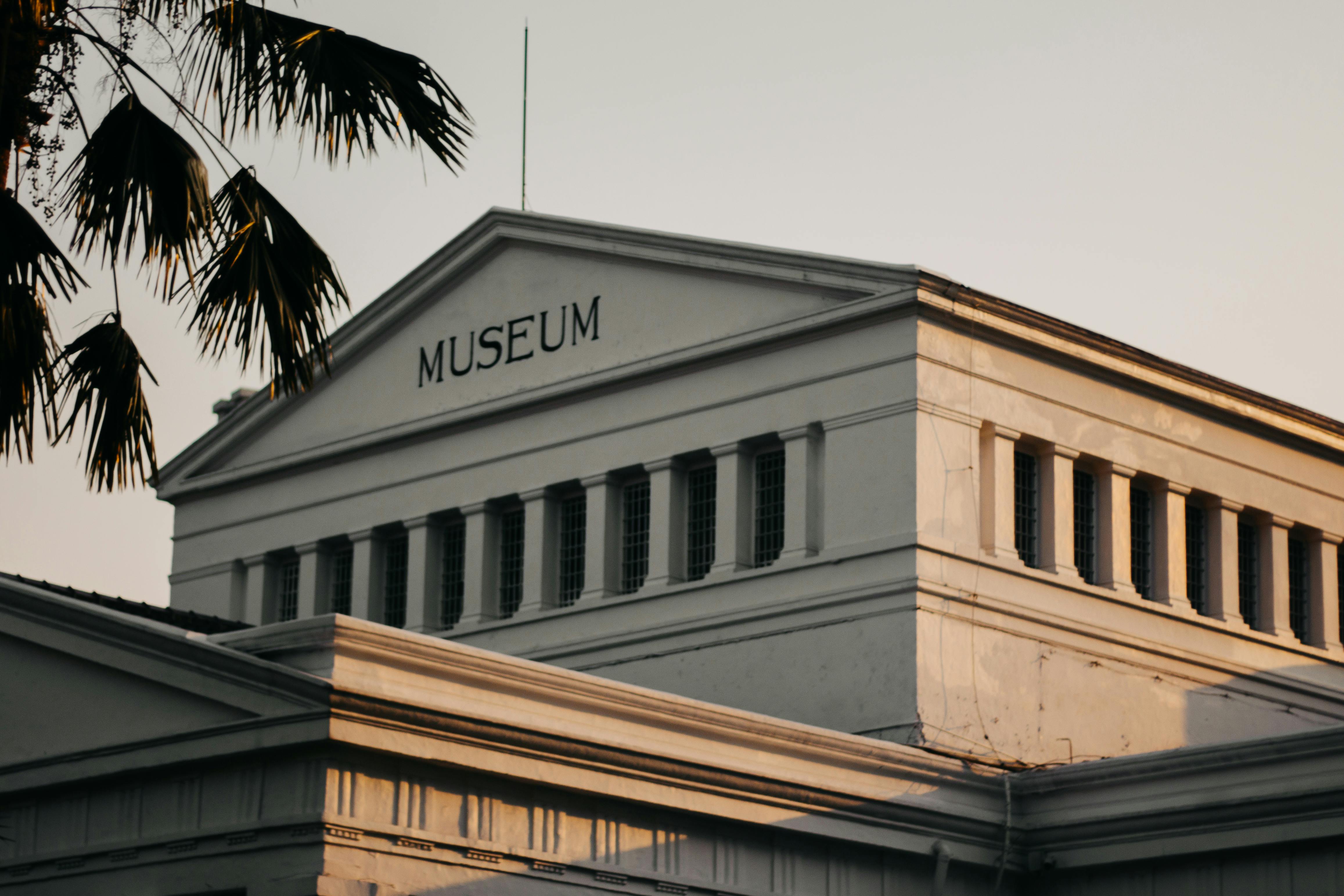
Introduction: The Museum as a Colonial Artifact
Museums are often seen as guardians of history—quiet institutions where the past is preserved, studied, and displayed. But beneath the glass cases and curated labels lies a more complex reality. Many museums were born not from neutral scholarship but from imperial conquest. Their collections were assembled during eras of colonization, often through theft, coercion, or unequal exchange. Today, as global conversations around reparations, racial justice, and Indigenous rights grow louder, so too does the call to decolonize museums.
Decolonizing museums is not about emptying galleries or erasing history. It’s about challenging the authority of dominant narratives, returning control of cultural heritage to originating communities, and reimagining what a museum can be in a world striving for equity. This process is layered, emotional, and urgent.
What Does “Decolonizing Museums” Mean?
The phrase “decolonizing museums” refers to a critical movement that examines how colonialism shaped museum collections, structures, and storytelling. It aims to:
- Acknowledge colonial origins of objects and institutions
- Return stolen or looted artifacts to their countries or communities of origin
- Include Indigenous and marginalized voices in curatorial practices
- Rethink the museum’s purpose, architecture, and power dynamics
- Shift from extractive to relational modes of stewardship
It is not just a political project—it is a moral and epistemological one. Decolonization challenges who gets to tell history, whose knowledge is considered valid, and who gets to see their culture represented with dignity.
The Colonial Roots of Museum Collections
Most major Western museums—such as the British Museum (London), Musée du quai Branly (Paris), and the Metropolitan Museum of Art (New York)—were founded during or after colonial expansion.
Their collections include thousands of objects acquired during military occupations, religious missions, or ethnographic expeditions. These include:
- Benin Bronzes taken during the 1897 British invasion of the Kingdom of Benin (present-day Nigeria)
- Māori ancestral remains collected by European anthropologists in New Zealand
- Egyptian funerary objects, removed during colonial rule and sold to European buyers
- Native American ceremonial items acquired by missionaries or traders under duress
In many cases, these objects were not gifts, but spoils—removed from their spiritual, communal, or political context and placed into cabinets of curiosity to be studied by outsiders.

Museums as Storytellers—But Whose Stories?
Museums don’t just display objects; they tell stories. Through labels, floor plans, and curatorial language, they create narratives about culture, progress, and civilization. But for decades, these narratives have often favored a Western, Eurocentric point of view.
- African masks have been displayed as “tribal art,” devoid of their sacred or political significance.
- Indigenous artifacts have been labeled as relics of a “dying culture” rather than evidence of ongoing, evolving traditions.
- Asian religious icons have been treated as aesthetic objects, stripped of their devotional or ritual context.
These portrayals flatten complexity and reinforce stereotypes. They also disconnect diasporic and Indigenous communities from their own heritage, as their cultural treasures are not accessible—or even visible—in local contexts.

The Call for Repatriation
One of the most visible demands in the decolonizing museums movement is repatriation—the return of cultural artifacts to their communities of origin.
- In 2021, France returned 26 royal treasures to Benin, a historic step after decades of activism and negotiation.
- Germany committed to returning its share of the Benin Bronzes in 2022.
- The Smithsonian Institution in the U.S. has launched a formal process to review and return contested artifacts.
- In Canada, Indigenous communities have reclaimed regalia, masks, and drums that were once kept in museum basements.
Repatriation is not always straightforward. Some nations lack facilities to care for fragile artifacts, and some items have passed through many hands. But these concerns are often used as excuses for delay. The core issue is not storage—it’s sovereignty. Repatriation is about recognizing the right of people to define, control, and access their own heritage.
For ongoing updates and case studies, see:
International Council of Museums (ICOM) – https://icom.museum/en/ressource/the-role-of-icom-in-the-field-of-return-or-restitution-of-cultural-property-1986-1989/
Who Gets to Curate?
Decolonizing museums also involves rethinking who curates and interprets collections. For decades, museum professionals—largely white, Western-trained, and institutionally elite—have held the power to decide what gets shown and how it is explained.
Today, this is changing. More institutions are:
- Hiring Indigenous and local curators for relevant exhibitions
- Forming advisory councils with elders, descendants, and spiritual leaders
- Consulting communities on how to handle human remains, sacred objects, and intangible cultural heritage
- Collaborating with artists and scholars from formerly colonized nations to produce new kinds of displays
This shift moves the museum from a top-down institution to a shared cultural space. It does not eliminate curatorial expertise—it expands it.
One notable example is the Abbe Museum in Maine, USA, which partners with Wabanaki tribal members in co-curating all exhibitions.
Link: https://www.abbemuseum.org/blog/tag/Decolonization

Architecture, Language, and Institutional Change
Decolonization extends beyond objects to the physical and linguistic structure of museums.
- Architectural spaces once designed like temples or palaces are now being reimagined to welcome rather than dominate.
- Didactic panels are being rewritten to include multiple perspectives, often in multiple languages.
- Digital repatriation projects allow communities to access 3D scans, oral histories, and archival photos of their heritage, even if the originals are not yet returned.
Museums like the Museum of Anthropology at UBC (Vancouver, Canada) and Te Papa Tongarewa (Wellington, New Zealand) are leading this architectural and interpretive reimagining.
UBC MOA: https://moa.ubc.ca/
Te Papa: https://www.tepapa.govt.nz/
Decolonizing museums begins with difficult truths. It asks institutions to look inward, confront uncomfortable histories, and question their own authority. But in doing so, museums gain the opportunity to become something new: places of justice, healing, and shared knowledge.
Rather than temples of empire, museums can become platforms for dialogue—where multiple histories coexist, and no single voice drowns out the others.

Rethinking Museums From the Ground Up
While many legacy institutions are taking cautious steps toward decolonization, a parallel movement is growing from outside traditional museum spaces. Communities around the world are creating new museum models—ones not built on colonial logic, but on relational ethics, cultural sovereignty, and shared authority.
These aren’t merely exhibition spaces. They are living archives of identity, survival, and return.
Community-Led Museums: New Models of Curation
1. The National Museum of the American Indian (USA)
Run by the Smithsonian, but heavily shaped by Native American advisory boards, this museum has redefined how Indigenous heritage is represented in the United States.
- Exhibits are created in direct consultation with tribes, elders, and artists.
- Oral storytelling and living traditions are prioritized over static objects.
- A dedicated repatriation office works with Native communities to return ceremonial and funerary items.
Link: https://americanindian.si.edu

2. Museum of Black Civilisations (Senegal)
Opened in 2018 in Dakar, this institution is not simply a museum—it’s a statement.
- It challenges the narrative that Africa is “without history,” a colonial myth perpetuated by 19th-century European anthropologists.
- It aims to reclaim Africa’s role as the origin of global civilization and a source of artistic innovation.
- It also demands the return of looted African art currently held in Western institutions.
3. First Nations Cultural Centres (Australia and Canada)
In both countries, state-backed museums often fall short. Indigenous communities have responded by building their own centers of memory and education.
Examples include:
- Yarrabah Arts and Cultural Precinct (Queensland, Australia)
- U’mista Cultural Centre (British Columbia, Canada)
These places are owned and operated by Indigenous communities, featuring language revitalization, dance performances, and spiritual reconnections—things traditional museums have historically excluded.
Link: https://www.umista.ca
Digital Repatriation and Cultural Tech
While the physical return of objects is crucial, the rise of digital repatriation is helping bridge the gap. It involves creating:
- High-resolution 3D scans of cultural artifacts
- Audio recordings of oral traditions and music
- Open-access archives for Indigenous communities
- Virtual exhibitions led by local curators and artists
Examples:
- Zuni Virtual Museum (USA): Created by the Zuni tribe to house digital versions of artifacts still held in other institutions.
Link: https://artsandculture.google.com/partner/ashiwi-awan-museum - Return, Reconcile, Renew (Australia): A digital initiative addressing repatriation of ancestral remains.
Link: https://returnreconcilerenew.info
Digital tools also allow communities to control how their culture is presented—choosing not only what is shown, but how and to whom.
Language, Labels, and Interpretation
Decolonization also includes the interpretive layer—the words museums use to describe objects, people, and histories.
Traditionally, colonial museums used terms like:
- “Primitive” or “tribal art”
- “Discovered in the field”
- “Unknown maker” (often erasing women or Indigenous creators)
New approaches are emerging:
- Labels co-written by communities, artists, or descendants
- Multilingual signage (including Indigenous languages)
- Acknowledgment of land sovereignty and colonial violence in opening texts
One pioneering example is the Pitt Rivers Museum at the University of Oxford. Once a symbol of British imperial anthropology, it has undergone major changes:
- Removed all human remains from public display in 2020
- Rewrote labels to reflect contested histories
- Hosted talks and exhibitions on decolonial ethics
Link: https://www.prm.ox.ac.uk
Global Institutions Making Promises—And Facing Pressure
Some of the most prominent European museums have acknowledged the need for change, but implementation remains uneven.
The British Museum (UK)
- Holds over 8 million objects, including the Rosetta Stone and Benin Bronzes.
- Has long resisted repatriation, citing legal restrictions and conservation concerns.
- Faces growing pressure from Nigeria, Greece, and Egypt.
Critics argue the museum profits from colonially acquired objects while denying communities access to their heritage.
Link: https://www.britishmuseum.org
Humboldt Forum (Germany)
- Opened in Berlin in 2020, the museum has faced backlash for including African and Oceanic artifacts acquired during German colonial rule.
- It has committed to transparency and ongoing repatriation, including returning Benin Bronzes.
While the commitment is notable, observers note that decolonization must go beyond promises—it requires structural change.
Link: https://www.humboldtforum.org/en
Decolonizing Through Art and Resistance
Contemporary artists are also driving the conversation. Their work doesn’t just criticize—it proposes new models of memory and engagement.
- Kara Walker’s installations interrogate U.S. slavery and museological voyeurism.
- Zanele Muholi’s portraits reclaim South African queer identities erased by formal history.
- Ahmet Ögüt, a Kurdish artist, stages interventions inside European museums to expose their colonial holdings.
Art becomes protest—and sometimes, reconciliation.
The Work Still Ahead
Decolonizing museums is not a single act of return. It’s a continuous practice that includes:
- Institutional restructuring
- Community collaboration
- Historical honesty
- Emotional accountability
This work is slow, often bureaucratic, and occasionally symbolic—but it is also deeply transformative.
It requires museums to become active participants in justice, not just passive record-keepers.
Museums are no longer just places to observe—they’re places to interrogate, to feel, and to reimagine. As more institutions embrace decolonial practices, they inch closer to becoming what they could have been all along: spaces not only of preservation, but of repair.

Future Visions and Youth-Led Change
As public trust in traditional institutions continues to shift, the museum stands at a crossroads. It can remain a monument to past imperial power—or it can become a platform for reparation, imagination, and community-led storytelling. Across the world, activists, artists, scholars, and young people are driving this change forward.
Decolonizing museums is not simply about giving back—it’s about giving way. To new perspectives, to co-authorship, and to the stories that were once silenced.
The Role of Youth and Grassroots Activism
Many of the most powerful museum critiques today come not from within, but from the outside—from young people and grassroots organizers.
University students, community historians, and cultural workers are demanding:
- Transparency in how collections were acquired
- Immediate return of looted cultural property
- Representation of Black, Indigenous, and marginalized voices in permanent exhibitions
- An end to sponsorships from corporations complicit in human rights abuses or environmental destruction
Social media platforms have become powerful megaphones. Hashtags like #DecolonizeThisPlace, #ReturnTheBronzes, and #MuseumDetox have mobilized thousands and created global pressure campaigns.
These movements are not only confrontational—they’re visionary. Many offer blueprints for what ethical, community-first institutions could look like.
What Does a Decolonized Museum Look Like?
The decolonized museum is not defined by marble halls or European display methods. Instead, it’s shaped by fluidity, humility, and local context. It asks:
- Who owns this story?
- Who benefits from this display?
- Who has the right to interpret, access, or withhold this history?
Features of a decolonized museum may include:
- Rotating curatorships shared with community members and cultural practitioners
- Non-linear exhibit design, allowing for multiple entry points and interpretations
- Rematriation rooms, where women, elders, or spiritual leaders can engage with sacred objects privately
- Living archives, incorporating oral history, song, dance, and food alongside objects
- Transparent acquisition logs, displaying not just where artifacts came from, but how and under what conditions
Rather than acting as the “voice of history,” the museum becomes a host—a steward of stories, not their owner.

Beyond Objects: Decolonizing Ways of Knowing
True decolonization reaches deeper than what’s on display. It questions how knowledge itself is structured.
Many Indigenous communities emphasize relational, embodied, and ecological knowledge systems—very different from the object-centered, catalogued, and hierarchical frameworks of colonial institutions.
A decolonized museum might:
- Invite plant medicine experts to speak alongside conservation scientists
- Present origin stories as valid cosmologies, not “myths”
- Offer language learning stations in endangered dialects
- Incorporate land acknowledgments as evolving commitments, not token plaques
In this model, the museum doesn’t just display culture—it learns from it.
Rethinking Value and Legacy
Colonial museums have long defined value in terms of rarity, antiquity, or market price. A sacred mask kept for centuries in a forest shrine may be labeled “crude” if it doesn’t conform to Euro-aesthetic standards. A clay pot may be judged by age rather than ceremonial meaning.
Decolonizing museums involves rethinking what is valuable. Value might be spiritual, communal, or pedagogical. It may reside not in the object itself, but in the story behind it—or in the community that still lives by its meaning.
Future museums will need to shift from being collectors of objects to cultivators of relationships.
Museums as Sites of Healing
For many communities, museums are painful spaces. They contain bones of ancestors, items of war, symbols of erasure. Decolonization requires not only logistical change, but emotional and spiritual accountability.
Some healing-centered approaches include:
- Ceremonial returns, where objects are repatriated through ritual and celebration, not bureaucracy
- Memory walks, guiding visitors through difficult histories with facilitators, not audio guides
- Healing gardens or quiet rooms, allowing reflection and grief
- Dialogues between curators and descendants, conducted publicly and respectfully
These practices acknowledge that museums are not neutral—they hold trauma, and they must also hold space for care.

The Museum in 2050: A Speculative Glimpse
What might a truly decolonized museum look like by the middle of the 21st century?
- It may not even be a building—it could be a network of community hubs, co-managed across geographies.
- Collections might be shared digitally and rotated equitably between the institutions that house them.
- Storytelling festivals, language schools, and intergenerational art spaces may replace traditional galleries.
- Care work, cultural labor, and ancestral memory may be treated as curatorial specialties.
- Rather than showcasing trophies, the museum may become a place to ask hard questions, foster empathy, and build relationships across borders.
In short: the museum could become less a monument to what has been taken—and more a workshop for what must be returned, remembered, and reimagined.
Final Reflection
Decolonizing museums is not about perfection—it is about participation. It asks us to unlearn, listen, and be uncomfortable. It asks us to center voices that were pushed to the margins. And it challenges us to reimagine what stewardship looks like—not as a claim of ownership, but as a covenant of care.
Museums of the future will not be judged by how many artifacts they hold, but by how many communities they serve, histories they honor, and relationships they heal.
The work is not finished. It has only just begun.
About The Author


