
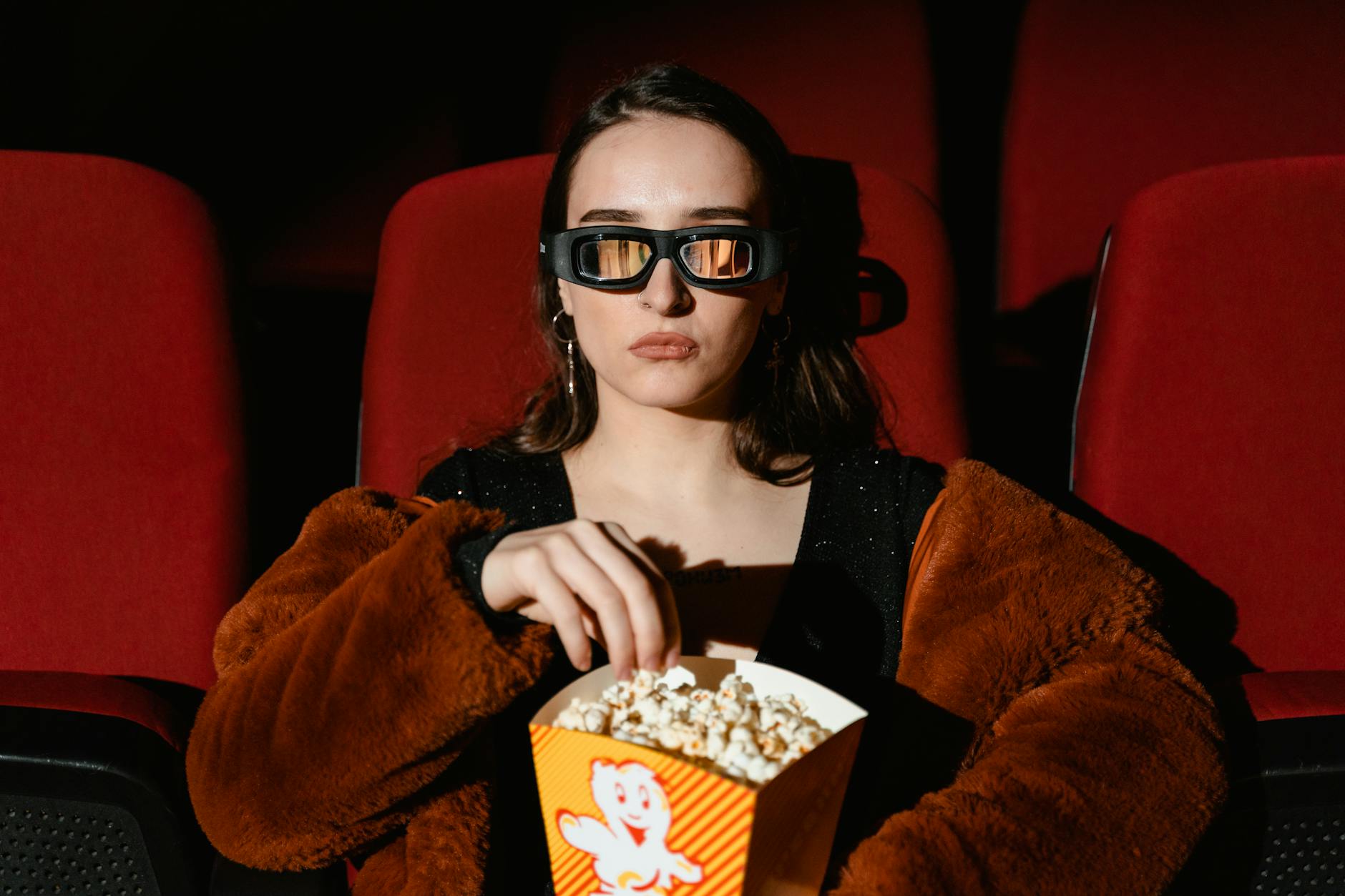
Why Movies Feel So Real — Even When We Know They’re Not
A child watches The Lion King and cries when Mufasa dies. An adult revisits Schindler’s List and leaves the theater shaken. A couple watches La La Land, smiling with soft hearts and wet eyes. What connects these wildly different experiences? It’s not just good acting or clever direction. It’s your brain.
We don’t just watch movies. We feel them — deep in our bones, beyond logic, often beyond words. They hijack our emotions, accelerate our heartbeats, pull tears from dry eyes, or leave us speechless in the dark, long after the screen goes black.
Why do movies hold this strange power over us?
The answer lies in neuroscience — in the circuits of emotion, memory, and perception that films skillfully stimulate. This article explores the neuroscience emotional movies connection: how stories on screen speak the language of your brain and body.
1. Your Brain on Movies: A Beautifully Manipulated Machine
When you sit down in a theater or press play at home, your brain begins a silent collaboration with the film. It decodes images, interprets faces, responds to music, tracks movement — all within milliseconds. And in doing so, it generates emotion. Not imagined emotion. Real emotion.
What’s Happening Inside You:
- The amygdala fires up when something on screen feels threatening.
- The hippocampus draws comparisons to your memories — real or imagined.
- The insula creates visceral responses like goosebumps or nausea.
- The prefrontal cortex debates: “Is this real?” and often decides, “I know it’s not… but it feels real.”
This collaboration isn’t accidental. Filmmakers use pacing, sound, facial expressions, and structure to guide your brain’s responses. The movie is the script. Your brain is the performer.
2. Mirror Neurons: The Invisible Bridge Between You and the Character
Ever found yourself grinning when a character laughs, or feeling your chest tighten as they cry? That’s not just empathy. It’s neuroscience.
Inside your brain are special cells called mirror neurons. They fire not only when you act — but also when you observe someone else acting.
When a character is punched, your body flinches. When a mother on screen loses her child, your own heart mourns. It’s not performance. It’s your brain simulating the emotion as if you’re the one experiencing it.
Study Highlight: Neuroscientists in Italy found that watching facial expressions in films activates the same neural regions as making them in real life. (Source)
This is why we form emotional bonds with characters we’ve never met — and why their stories sometimes feel like ours.
3. The Emotional Soundtrack: How Music Bypasses Logic and Hits the Heart

Imagine watching Inception without Hans Zimmer’s pulsating score. Or Titanic without James Horner’s haunting melody. The music makes the emotion.
Music speaks directly to the emotional centers of the brain, particularly the limbic system, bypassing the logical interpreter in the prefrontal cortex. It creates mood, tension, relief, or nostalgia — sometimes before you even realize why.
Brain Responses to Film Music:
- Dopamine release in reward pathways.
- Activation of nucleus accumbens (linked to pleasure).
- Increased heart rate variability, a sign of emotional engagement.
Fact: Minor keys often evoke sadness; major keys suggest resolution. But more importantly, transitions between them generate emotional intensity.
Study Highlight: Stanford researchers showed that music causes heightened activity in areas linked to emotion and memory — even in people who claimed they weren’t “musical.” (Source)
The emotional power of music is primal. It’s not about understanding the notes. It’s about feeling the vibration — and filmmakers know exactly how to use it.
4. Storytelling and Brain Chemistry: Why You Can’t Look Away
The structure of a story mimics the ebb and flow of your neurotransmitters.
Every time the tension builds in a thriller, your body responds by releasing cortisol, the stress hormone. Every time the hero finally wins, your brain rewards you with dopamine, the “pleasure” chemical.
This cycle — rise, fall, relief — is addictive. It creates suspense, emotional investment, and satisfaction.
Common Narrative-Induced Neurochemical Reactions:
- Cortisol: Released during conflict or uncertainty.
- Dopamine: Spikes during resolution or surprise.
- Oxytocin: Boosts during emotional bonding moments.
Study Highlight: Princeton research showed that when people watched an emotionally engaging story, their brain activity synchronized — as if they were “emotionally tuned” to the same frequency. (Source)
That’s why stories work better than statistics. Your brain is built to process emotion through narrative.
5. Close-Ups and Micro-Expressions: How Faces Talk to the Brain
Movies let us observe people up close in a way we never could in real life. A slight eyebrow lift, a flicker of the lip, a glassy eye — all become magnified, and your brain takes note.
These subtle cues engage:
- The fusiform gyrus (facial recognition center).
- The superior temporal sulcus (perceives gaze and movement).
- The amygdala (decides what emotions to feel in response).
Even if you don’t consciously register a tear in someone’s eye, your brain probably does — and it adjusts your emotional state accordingly.
6. The Horror Effect: How Scary Films Activate Ancient Fear Pathways

Jump scares, eerie silence, or prolonged tension aren’t random — they activate your fight-or-flight response.
Brain Areas Affected:
- Amygdala: Triggers fear.
- Hypothalamus: Signals danger.
- Autonomic Nervous System: Prepares your body to run — even though you’re just watching.
Your palms sweat. Your breathing quickens. Your pupils dilate. But you’re safe. That safe danger makes horror films thrilling.
Fact: Horror viewers often report enjoying fear because the amygdala is active — but the prefrontal cortex reassures them it’s not real.
7. Editing and Timing: Controlling Your Attention Second by Second
Fast cuts, slow fades, lingering shots — they do more than move the plot. They sculpt your attention.
When editing matches your brain’s rhythm, you stay engaged. When it surprises you, you get jolted. This constant dance between expectation and disruption shapes how you feel.
MIT researchers found that fast-paced editing reduces activity in the Default Mode Network — the part of the brain responsible for daydreaming — making you more present. (Source)
When a movie “flows,” it’s not random. Your brain is being guided — sometimes subtly, sometimes with a jolt.
8. Culture and Memory: Why One Film Can Mean Different Things to Different People
You don’t walk into a movie with a blank slate. You bring history, culture, memory, and personal experience. All these things influence how your brain processes what you see.
A scene in Life of Pi may spark spiritual awe in one person, but existential discomfort in another. A love scene might trigger joy — or sadness — depending on the viewer’s emotional history.
Study Highlight: Neuroscientists found that audiences from different cultural backgrounds activated different parts of the brain in response to the same scene. (Source)
Movies don’t exist in isolation. They plug into the emotional wiring we already have.
9. The Role of Color and Visuals: Beyond What Meets the Eye
Warm light often signals safety. Cold blue light signals alienation. Red can mean love — or danger.
Color affects the visual cortex, but also areas responsible for emotional and hormonal shifts. Some colors calm the brain; others awaken it.
Fact: Red environments increase arousal and heart rate. Blue ones reduce it. (Source)
Cinematographers use this science to sculpt emotional tone without a single word being spoken.
10. Before the First Scene: How Your Brain Reacts to Trailers
Even before you decide to watch a film, your brain is already emotionally engaged.
Trailers are engineered to maximize suspense and engagement in under three minutes. They use emotional hooks — sound, imagery, pacing — to stimulate dopamine and anticipation.
Neuromarketing firms now use EEG and eye-tracking to test trailers before release. (Source)
It’s not manipulation. It’s precision storytelling — designed for your brain.
Final Thoughts: Movies as Emotional Technology
Films are more than entertainment. They are emotional simulations, neurologically tuned for impact. Every scene, every note, every silence is designed to reach inside your brain and activate it.
Understanding the neuroscience emotional movies connection reveals just how advanced and intimate the relationship between cinema and the brain has become.
In the future, we may see:
- Films that adapt in real-time based on viewer emotion.
- Therapeutic cinema for trauma or anxiety.
- Educational films tailored to maximize attention and memory.
What remains constant is this: a well-told story will always find its way into the brain — and into the heart.
About The Author


