
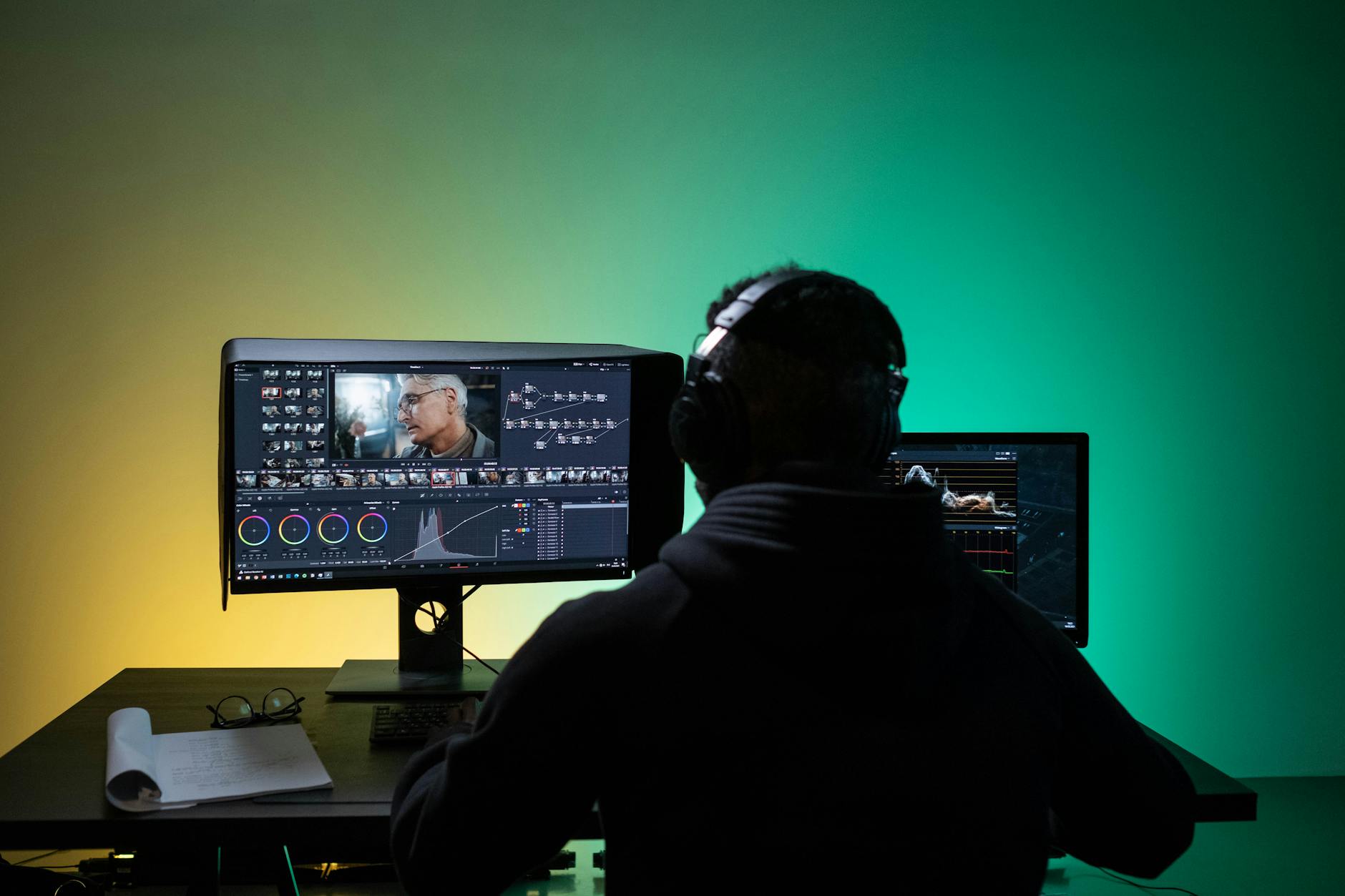
Film Editing in the Age of Acceleration
The craft of film editing has always been the heartbeat of cinema. It dictates how stories unfold, how emotions land, and how visual pacing shapes audience perception. As of 2025, the integration of emerging technologies is redefining this discipline. While creativity remains central, the tools, workflows, and expectations surrounding editing have changed radically.
Modern editors now operate in hybrid environments combining cloud-based platforms, artificial intelligence (AI), machine learning, and high-resolution digital workflows. These tools are not supplemental. They are foundational to the way films are conceived, edited, and delivered.
This article explores how technology in film editing is transforming the profession—from pre-visualization to post-production—and why staying ahead of these changes is essential for filmmakers, editors, and production teams.
Evolution of Editing Tools: From Razor Blades to Real-Time Software
A Brief Historical Perspective
- Early 1900s: Editing involved physically cutting and taping film strips.
- 1980s: Linear editing using video tape recorders (VTRs) became industry standard.
- 1990s–2000s: Non-linear editing (NLE) with tools like Avid Media Composer, Final Cut Pro, and Adobe Premiere Pro allowed greater flexibility.
- 2010s–2020s: Introduction of real-time collaboration, cloud storage, and AI-assisted features began to dominate.
Current Landscape
Today’s editing workflows are software-driven and data-heavy. High-resolution formats such as 4K, 6K, and 8K demand more storage, faster processing, and smarter tools.
According to a 2024 Adobe industry report, 72% of professional editors use AI-assisted functions during rough cuts or scene organization (source).
AI Integration in Film Editing

What AI Does in the Edit Suite
AI is used not to replace editors but to reduce their mechanical workload. Key features include:
- Scene Detection: Automatically isolates different shots based on changes in frame, motion, or lighting.
- Speech-to-Text: Auto-generates captions and dialogue logs.
- Auto-Reframe: Adjusts video framing for multiple aspect ratios.
- Smart Previewing: Highlights scenes based on action, emotion, or dialogue keywords.
Case Example: IBM Watson and Morgan
In 2016, IBM Watson edited a trailer for the sci-fi film Morgan by analyzing visuals, sound, and composition across other horror movies. It reduced the task of trailer assembly from weeks to 24 hours (source).
Although a human editor finalized the sequence, the AI selected relevant clips with high emotional intensity—demonstrating that machines can accelerate the storytelling process when trained appropriately.
Cloud Editing: Real-Time, Global Collaboration
Key Advantages
- Remote Access: Editors can log into workstations from any location.
- Asset Management: Secure access to media libraries via shared cloud folders.
- Collaboration: Editors, directors, VFX teams, and sound engineers can work simultaneously on a project.
Industry Adoption
- Frame.io, now part of Adobe, is used by over 1 million creatives worldwide.
- Blackmagic Cloud (by DaVinci Resolve) supports real-time grading, editing, and sound mixing.
During the COVID-19 pandemic, cloud editing solutions saw a 300% increase in adoption, according to a report by Raindance Film School (source).
Real-Time Rendering and GPU Acceleration

High-performance computing is vital for modern film editors. Graphic Processing Units (GPUs) like NVIDIA RTX or Apple’s M2 Ultra dramatically improve:
- Timeline scrubbing speeds
- Real-time visual effect previews
- Multicam editing
- Color grading playback
In 2023, DaVinci Resolve Studio introduced real-time noise reduction and AI-powered masking tools—only made possible through advanced GPU optimization.
Machine Learning in Scene Structuring
How ML Models Learn Editing Patterns
Machine learning systems are now being trained on large datasets of films to understand:
- Scene length averages by genre
- Emotional arcs based on soundtrack and lighting
- Shot transitions and cutting rhythm
These insights inform AI tools that assist human editors in structuring sequences that align with genre expectations or audience psychology.
Real Use: Magisto and Vimeo AI
Apps like Magisto or Vimeo Create use ML to auto-assemble content for marketing and social platforms. Though these tools are geared toward short-form video, the underlying technology is scaling up to professional film editing platforms.
Immersive and 360-Degree Editing
Unique Technical Demands
Editing immersive video for virtual reality or augmented reality presents new challenges:
- Spatial Continuity: Cuts must not disorient the viewer in a 360-degree space.
- Audio Sync: Ambisonic audio tracks must match viewer movement.
- Metadata Management: Each file includes geospatial and depth data that must be preserved during export.
Software such as Adobe Premiere Pro (VR Mode) and Mistika VR are designed specifically for immersive content.
Case Study: Gloomy Eyes
This VR film combined animation, immersive spatial editing, and synchronized sound design. Editors had to rebuild traditional storytelling structures into spatial environments, requiring constant viewer perspective simulation.
Automation and Time Optimization
Repetitive Tasks Eliminated
- Batch Syncing: Multi-camera footage can now be synced using waveform analysis.
- Smart Audio Cleanup: Tools like Izotope RX and Adobe Podcast Enhance remove ambient noise, clicks, and plosives without manual editing.
- Shot Matching: DaVinci Resolve’s color tools allow automatic color grading to match clips shot on different cameras or in varying lighting conditions.
This automation improves efficiency, allowing editors to focus on narrative rather than mechanical fixes.
The Changing Skillset of Film Editors
What Editors Must Know Today
- Software Proficiency: Avid, Premiere Pro, DaVinci Resolve, Final Cut X
- AI-Aware Workflows: Ability to leverage automation without compromising creativity
- Cloud Navigation: Knowledge of data storage, multi-user workflows, and media sync
- File Management: Proficiency in handling massive 4K–8K files
- Basic Coding: Editors working on interactive media or real-time graphics may require scripting skills (Python, Lua)
Film schools and editing courses are adapting their curriculum to reflect these evolving demands.
Ethical and Creative Implications
Automation and Authorship
As AI begins to suggest or implement edits, questions arise:
- Who owns the creative decision?
- Does the editor become a supervisor rather than an artist?
- Can AI reinforce biases present in training data?
These concerns echo debates in other creative industries. However, the consensus in the professional editing community remains clear: tools enhance, but humans create.
Accessibility and Democratization of Editing
Entry Barriers Lowered
The last decade has witnessed a remarkable shift in the accessibility of film editing. Once tethered to costly hardware, specialized training, and elite production studios, the editing process is now within reach for millions of creators worldwide. Freemium and open-source tools—like CapCut, DaVinci Resolve (Free), Lightworks, and iMovie—offer robust editing suites capable of handling advanced color grading, keyframe animation, and multi-camera timelines. Many of these platforms now include AI-powered features such as auto-cutting, noise reduction, and smart scene detection—once considered cutting-edge even for Hollywood productions.
Democratization Through Learning Platforms
The rise of online learning ecosystems has further dismantled traditional barriers. Platforms such as:
- MasterClass, which features award-winning editors like Thelma Schoonmaker and Walter Murch;
- LinkedIn Learning, offering modular, software-specific tutorials;
- Coursera and edX, delivering university-level coursework in media studies and digital post-production—
have empowered a global audience to gain formal expertise at a fraction of the time and cost of conventional film school.
As a result, self-taught editors are now directing music videos, cutting trailers, and working on short films, sometimes competing with seasoned professionals for freelance and studio assignments.
Crowdsourced and Mobile Editing Ecosystems
In regions where traditional film infrastructure is limited, mobile editing apps have revolutionized content creation. TikTok, Instagram Reels, and YouTube Shorts have become training grounds for rapid, high-impact visual storytelling. Apps like InShot, KineMaster, and Splice let users cut, color-grade, and layer audio—all from a smartphone.
This mobile-first revolution has spawned new editing styles defined by speed, rhythm, and brevity. Filmmakers in countries like India, Nigeria, Brazil, and Indonesia are using mobile editing tools to produce full-length feature films and documentaries that reach millions through digital platforms.
Implications for Professional Editors
The democratization of editing is not without consequence. While it has broadened participation and diversity in filmmaking, it has also heightened competition. Today’s editors must distinguish themselves not merely through technical execution but by demonstrating narrative strategy, stylistic intentionality, and cultural fluency.
A growing number of professional editors are enhancing their skills with motion graphics, color science, and audio mastering—creating full-spectrum post-production portfolios. In some cases, editors also serve as content strategists or creative consultants, helping shape tone, structure, and messaging across marketing, branded content, and serialized streaming formats.
The Rise of Creator-Editors

A new hybrid role has emerged: the creator-editor. These individuals handle ideation, shooting, editing, and publishing in an integrated workflow. Platforms like YouTube and Patreon have monetized this end-to-end model, rewarding editors who can produce not just polished content but an entire content strategy.
The traditional linear model—director to cinematographer to editor—is now being challenged by nonlinear creative processes where editing influences the shoot and vice versa. In this environment, the editor becomes not just a post-production technician but a co-author of the content.
Quality vs. Quantity
One paradox of this democratization is that while tools and training are widely accessible, high-quality storytelling remains rare. Algorithms may suggest edits and automate cuts, but compelling narrative arcs, emotional pacing, and thematic cohesion still require human judgment and aesthetic sensitivity.
Viewers now consume hundreds of edited videos daily—from social ads to Netflix trailers to explainer animations. This saturation raises audience expectations and puts pressure on editors—professional or amateur—to deliver not just content, but meaningful, resonant experiences.
What This Means for the Future
The future of film editing will not be defined by who has access to software, but by who knows how to use it to tell better stories. The editors who thrive in this environment will be those who adapt quickly, think visually, and remain committed to narrative clarity. Certifications and degrees may carry less weight than a strong digital portfolio and a demonstrated ability to meet modern aesthetic demands.
In this landscape, democratization is not dilution. It is acceleration and expansion. It has opened the doors to new voices, new cultures, and new aesthetics—each contributing to the evolving global language of cinema.
Conclusion: A Reimagined Future
Technology is not replacing film editors—it is redefining what they can accomplish. From the automation of repetitive tasks to real-time collaborative workflows and AI-assisted decision-making, the modern edit suite has become a fusion of creative intuition and computational precision. The intersection of AI, cloud collaboration, immersive editing, and machine learning has created unprecedented opportunities to enhance efficiency without compromising artistic control.
Yet, the essence of film editing remains unchanged. At its core, editing is about rhythm, perspective, emotion, and structure. It’s about choosing the exact frame to cut, the silence to hold, and the moment to accelerate. No algorithm, no matter how advanced, can fully replicate the human instinct that determines how a story feels.
The role of technology is to empower—not erase—the editor’s creative authority. It allows editors to shift focus from technical barriers to narrative craftsmanship. With the continued evolution of digital tools, the editors of tomorrow will need to be both technologists and storytellers.
Understanding the evolving role of technology in film editing is no longer optional. For industry professionals, it is the difference between staying relevant and falling behind. Embracing these changes with clarity and adaptability will define the next generation of cinematic storytelling.
About The Author


