
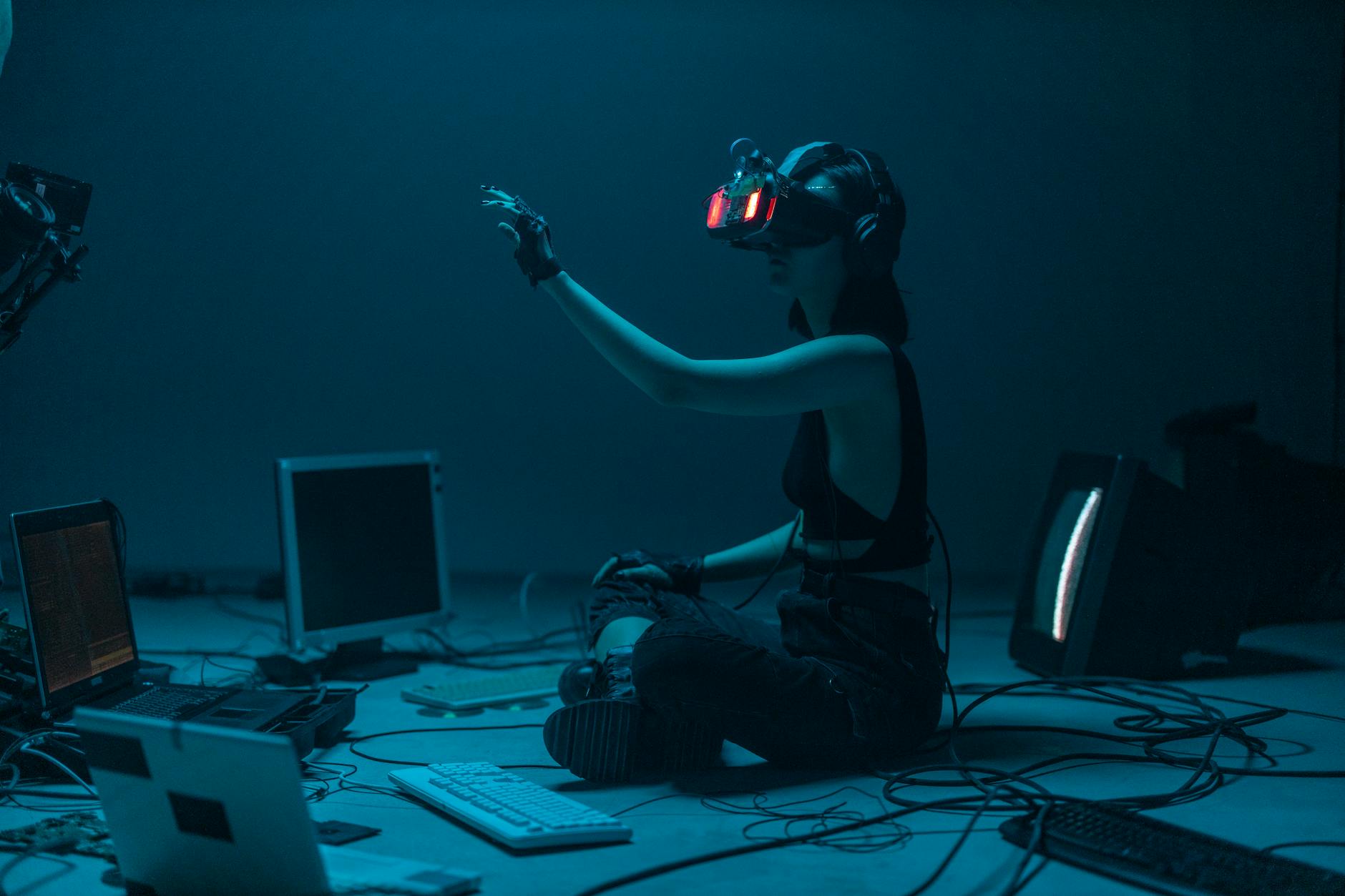
The Headset That Changed Everything
On a chilly winter morning in a small town in Himachal Pradesh, 14-year-old Rehan put on a Virtual Reality headset for the first time. Moments later, he found himself exploring the human circulatory system—not through a diagram, but from the inside. He watched red blood cells race past him, heard his teacher’s voice guide him through oxygen exchange, and reached out instinctively to touch a valve.
That 20-minute class was the first time Rehan had ever truly understood biology.
This is not science fiction. This is the reality of VR in education—an evolution redefining how we teach, learn, and imagine knowledge.
Understanding the Emotional & Educational Gap
Every student learns differently. Some are visual learners, others absorb information through interaction. Traditional classrooms—though foundational—often cater to a single learning style: auditory or visual via chalkboards and textbooks.
This limitation leaves behind students who need more—more immersion, more freedom to explore, more engagement. Virtual Reality (VR) classrooms step in to offer exactly that.
But it’s not just about technology. It’s about human need. It’s about making learning felt, not just read.
What Is VR in Education?

VR in education refers to using immersive virtual environments that simulate real or fictional settings where students can interact with learning content.
Key Components:
- Headsets: Oculus Quest, HTC Vive, or budget-friendly Google Cardboard
- Learning Platforms: ENGAGE, ClassVR, and zSpace
- Interactive Content: 3D simulations, virtual labs, historical recreations
Instead of reading about Mars, students walk its terrain. Instead of imagining Ancient Rome, they stroll through its markets and temples. That’s the kind of education that sticks.
The Emotional Benefits of VR Classrooms
1. Empathy through Immersion
Students can “be” inside a refugee camp in Syria, or witness the world through the eyes of someone with a disability. These immersive experiences foster empathy, cultural understanding, and human connection that textbooks cannot provide.
2. Confidence Building
Imagine a shy student who’s terrified to speak in front of peers. A VR public speaking app allows them to practice speeches in virtual auditoriums, gradually reducing their fear and boosting their self-esteem.
3. Safe Spaces to Fail and Learn
VR offers low-risk environments for trial and error. Whether it’s experimenting in a virtual chemistry lab or solving engineering puzzles, failure in a VR classroom doesn’t come with stigma—it comes with learning.
Academic Advantages of VR in Education
1. Improved Retention and Engagement
A study published by PwC in 2020 found that VR learners were 4 times faster to train than in traditional classrooms and 275% more confident in applying skills post-training.
Source: PwC
2. Equal Access to Experiences
VR levels the playing field. Not every school can afford a trip to NASA, but VR brings NASA to the classroom. This is transformative for underfunded schools, especially in rural and underserved areas.
3. Enhanced Memory Recall
According to the Journal of Educational Psychology, students learning via VR had 33% higher recall than those learning through traditional methods. The brain retains experiences more effectively than text.
Use Cases and Examples

1. Science and Medicine
- Case Western Reserve University uses VR for anatomy classes, letting students “walk” through the human body.
- Medical students at Stanford perform simulated surgeries to practice techniques.
2. History and Social Sciences
- The Anne Frank House VR allows students to explore the secret annex in Amsterdam, building emotional context to World War II studies.
- TimeLooper enables virtual time travel to historical moments like the D-Day invasion.
3. STEM and Robotics
- Labster provides virtual science labs to schools without equipment.
- Google Expeditions lets students explore coding principles in a gamified VR format.
Current Limitations and Emotional Realities
1. Cost and Infrastructure Gaps
The cost of VR headsets and compatible systems can alienate rural and government-funded schools. This technological divide reflects a deeper injustice—where innovation becomes a privilege instead of a right.
2. Content Quality and Cultural Sensitivity
Not all VR content is created equal. Some lessons may unintentionally carry biases or exclude regional relevance, affecting student relatability and understanding.
3. Physical Concerns
Students have reported motion sickness and eye fatigue. There’s also the concern of over-reliance on screen-based learning, which needs careful balancing with physical activity.
Government and Policy Support
Several governments are experimenting with VR pilots:
- India’s NITI Aayog launched ATL labs with VR modules across 5000+ schools.
- South Korea integrated VR into vocational training in high schools.
- The EU Commission funds projects under the Digital Education Action Plan (2021–2027) that prioritize immersive learning.
Global policy is catching up, but large-scale implementation demands equity-driven rollouts.
Private Sector Innovations
- Meta (formerly Facebook) is investing billions in educational VR, focusing on collaborative virtual campuses.
- Google’s Tilt Brush & Expeditions provide low-cost virtual field trips.
- Unimersiv and VictoryXR offer curriculum-aligned immersive experiences.
Startups like Veative Labs (India) are making subject-specific VR content available in regional languages, tackling both technological and linguistic gaps.
Future of VR in Education: Trends to Watch

1. Mixed Reality Classrooms
Combining AR and VR, students can toggle between physical and virtual learning environments in real time.
2. Global Classrooms
Students from different countries can meet, collaborate, and co-learn inside the same virtual campus—erasing borders and biases.
3. AI-Powered Learning Paths
VR tools powered by AI will soon offer personalized experiences—where the lesson adapts in real time to the student’s pace and understanding.
4. Increased Accessibility
Innovations like haptic gloves and voice-controlled interfaces aim to make VR learning accessible to differently-abled learners.
Real Stories: Voices from the Classroom
Maya, 11, from Kerala:
“I saw the Eiffel Tower in VR. I told my brother every detail. He couldn’t believe I hadn’t been to Paris!”
Mr. Ranjan, Teacher in a Delhi Public School:
“When my students built their own solar system in VR, they argued about gravity and orbits. I’ve never seen them so involved.”
Fatima, 17, in Syria (via UNICEF VR Pilot):
“In the headset, I was back in my classroom from before the war. I remembered how I loved learning. I want that life again.”
These voices reflect the emotional and transformational power of VR in education. It’s more than data—it’s human connection rekindled through technology.
Ethical Considerations
We must proceed with care. While VR opens doors, it raises questions:
- Data Privacy: Are student interactions in VR being tracked responsibly?
- Mental Health: How do we ensure students don’t confuse simulation with reality?
- Cultural Appropriateness: Are VR environments reflecting diversity?
Educational policies must include ethics councils, parental consent systems, and student wellness check-ins to ensure responsible deployment.
Final Thoughts: A Future You Can Touch
The goal of education is not just to inform, but to inspire. VR classrooms help us get there—not as a replacement for teachers or textbooks—but as a powerful extension of them.
Imagine every student, no matter their geography or background, touching the future with both hands—curious, empowered, and unafraid. That is the role of VR in education. Not just technology. Transformation.
Suggested VR Platforms for Educators:
- ClassVR
- ENGAGE
- VictoryXR
- Google Expeditions (archived, now in third-party use)
- Labster Virtual Labs
- Unimersiv
About The Author


