
The Brain Doesn’t Retire: A Story We Keep Forgetting
It was a cold evening in Kyoto when 78-year-old Masako Wakamiya clicked “Submit” on her first mobile app. She’d been a banker most of her life, someone who tallied numbers and handled ledgers. But now, after retirement, she had taught herself to code. Her app—a calendar for seniors like her—wasn’t groundbreaking in its technology. But it was revolutionary in what it symbolized: a refusal to let age define relevance.
Stories like hers whisper to us something we often ignore—that learning is not a stage in life. It is life. It doesn’t retire. It doesn’t expire. And the science behind why and how we keep learning, even when the world assumes we shouldn’t, is both beautiful and empowering. This is the heart of lifelong learning psychology—the quiet, enduring engine that fuels human potential.
Why Do We Keep Learning Long After School Ends?
Think back to the last time you learned something just because you wanted to—no exam, no grades, no pressure. Maybe it was learning to bake your grandmother’s bread recipe. Maybe it was finally understanding how to fix that leaky sink. That feeling? That’s what psychologists call intrinsic motivation. It’s one of the most powerful forces behind lifelong learning.
In our youth, learning is often driven by obligation. We learn because we must. But as we age, learning becomes a choice. And that choice is deeply tied to who we are. Our identity. Our self-worth. Our desire to keep growing.
People don’t just learn to change jobs or to keep up. They learn because staying curious keeps them alive—not just biologically, but emotionally. Curiosity, autonomy, and a sense of purpose—they’re not just nice feelings. They’re psychological lifelines.
Reflective Question: When was the last time you learned something purely for yourself?
The Brain’s Quiet Rebellion Against Aging
For decades, we believed the brain peaked in early adulthood. That after a certain age, we were in cognitive decline. But the brain—stubborn as it is—has proved otherwise.
Neuroplasticity, the brain’s ability to rewire and adapt, doesn’t just belong to the young. It stays with us. It might take longer to master new skills at 60 than at 16, but the learning still happens. The pathways still form. The joy still emerges.
Research from the Harvard Medical School and Massachusetts General Hospital shows that adult brains, especially in the prefrontal cortex and hippocampus, retain the ability to form new neural connections well into old age (https://hms.harvard.edu/news-events/publications-archive/brain/dancing-brain?utm_source=chatgpt.com).
When older adults challenge themselves—by picking up a new language, learning to dance, or joining a book club—they’re not just passing time. They’re literally reshaping their brains. And every new connection is a quiet act of rebellion against the myth of decline.
Key Takeaways:
- Neuroplasticity does not end with youth
- Learning in older age supports memory, creativity, and emotional wellbeing
Suggested Reading:
What Drives Lifelong Learners?
Walk into any library, night class, or online forum, and you’ll see them—people who never stopped asking questions. What drives them?
- A hunger for relevance: When the world changes fast, learning keeps you from feeling left behind.
- A need for meaning: For many, learning becomes a path to understanding the world—and themselves.
- Joy: Yes, pure joy. There’s a deep, satisfying happiness in figuring something out, especially when no one expected you to.
Take Rosa, 52, who started an online photography course after her divorce. “I felt invisible for a long time,” she said. “But learning how to see beauty again through a lens—it helped me see myself differently.”
That’s not a course outcome. That’s a life reclaimed.
Reflective Question: What’s something new you’ve always wanted to learn but haven’t tried yet?
The Learning Mindset: Not Just for Kids
Psychologist Carol Dweck introduced the concept of a growth mindset—the belief that abilities aren’t fixed, that they can be developed. While it’s often taught to children, it’s arguably even more vital for adults.
Adults carry scars. They remember report cards. They remember being told they weren’t “math people” or “creative types.” These beliefs calcify over time. But they can be unlearned.
Lifelong learning psychology is, in many ways, about healing. About undoing the narrative that learning has an expiration date. About giving people permission to be beginners again—and not feel ashamed.
Suggested Resource:
Accessible Language Tip:
- Growth mindset means believing you can improve through effort and learning, not that you’re stuck with what you’re born with.
Real Stories, Real Lives
When corporate giants like AT&T invested billions into retraining employees for the future, it wasn’t just about productivity. It was about dignity. Workers who had once felt obsolete began to feel empowered. They weren’t being replaced; they were being reborn.
Or look at Finland, where adult education reform turned night classes into sanctuaries. People from all walks of life—parents, retirees, immigrants—came together to learn coding, languages, critical thinking. Not to earn a degree. But to earn confidence.
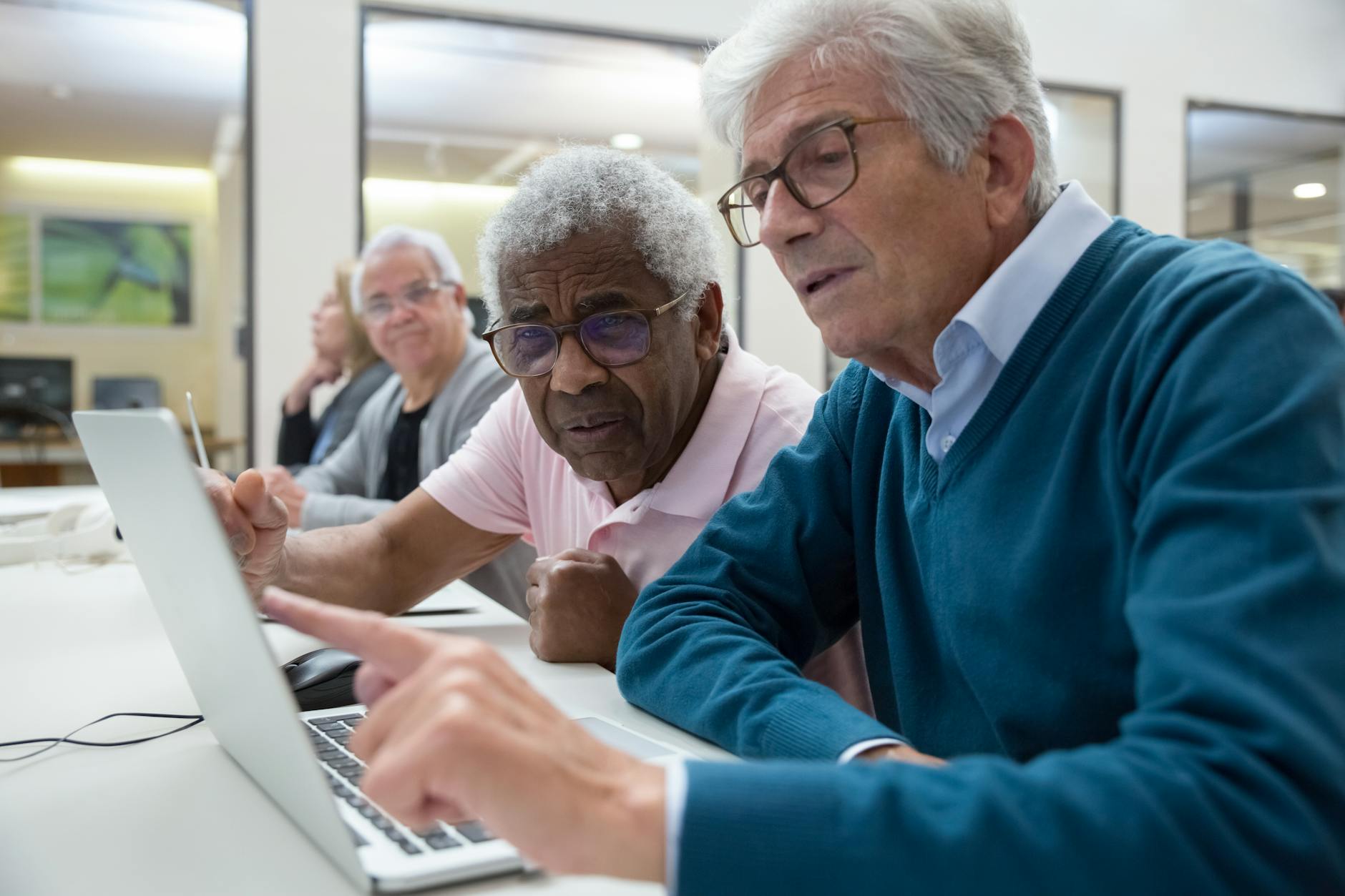
Then there’s Ben. At 61, he enrolled in a basic computer skills class at his local community center in rural Texas. “I always felt like the world left me behind,” he confessed. But after three months, he was writing emails, managing spreadsheets, and FaceTiming his granddaughter.
And Nivedita, a widowed homemaker in Bangalore, who had never worked outside the home. At 58, she began taking English classes through a local NGO. “My grandchildren teach me words,” she laughed. “Now I teach them too.”
These aren’t data points. They’re humans. They’re stories. They’re reminders that education, when freed from the rigidity of youth, becomes deeply human.
Barriers We Don’t Talk About Enough
Sure, there are practical barriers—time, money, access. But the bigger ones? Shame. Fear. Doubt.
So many adults don’t try to learn because they’re afraid of being “bad” at something. Of looking foolish. Of proving all their past failures right. Lifelong learning psychology teaches us that these fears are real—but not final.
With the right support—safe learning environments, patient mentors, peer encouragement—people begin to trust themselves again. And once they do, the learning never really stops.
Visual Suggestion: An infographic showing emotional vs. practical barriers to adult learning
Helpful Resource:
Learning in the Margins
Not all learning happens in classrooms. Sometimes it’s in the quiet moments:
- A father learning how to braid his daughter’s hair from YouTube
- A grandmother learning to text so she can talk to her grandchildren
- A refugee learning a new language to start over
These moments don’t come with certificates. But they’re acts of courage. And they carry the same psychological weight as any formal degree.
Reflective Question: What skill have you learned outside of a classroom that changed how you see the world?
What the Future Holds
The future of learning is personal. Adaptive. Compassionate. We’re moving away from rigid syllabi and toward systems that meet people where they are. AI tutors. Learning platforms that adjust in real time. Community programs that focus on healing as much as teaching.
But none of it matters unless we address the emotional core: the human desire to grow, connect, and matter.
The most advanced learning tools in the world won’t help someone who feels too broken to begin. That’s why lifelong learning psychology is more than science. It’s a reminder. A promise.
Recommended Platforms for Lifelong Learning:
Want to explore more? Leave a comment with your learning goal or story. Let’s learn from each other.
You Are Not Finished
No matter your age, your past, or your fears—you are not done. You are not too late. There’s a version of you who still wonders, still reaches, still wants to understand.
Lifelong learning isn’t about becoming someone else. It’s about becoming more of who you are.
And if no one told you that before, let this be the first time you hear it:
Your brain isn’t done.
Your heart isn’t done.
You are not done.
About The Author


