
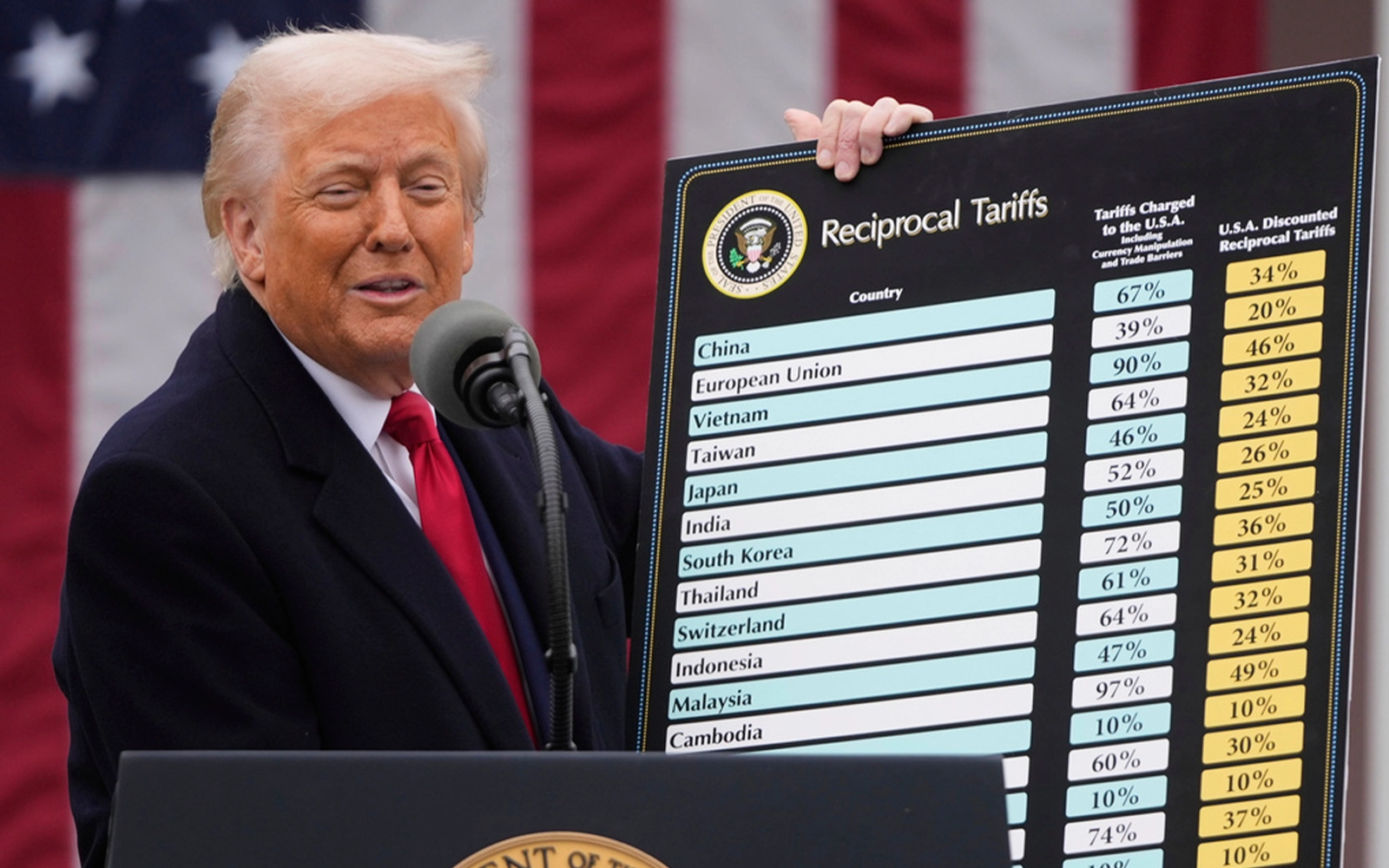
Donald Trump’s proposed 10% blanket tariff on all U.S. imports, paired with a 60% duty on Chinese goods, isn’t just campaign talk. It’s a seismic policy shift that central banks, the International Monetary Fund (IMF), and global economists are now treating as a likely scenario—with real consequences.
The Federal Reserve has begun modeling its impact. The IMF released early warnings. Central banks from Europe to Asia are recalibrating forecasts. This isn’t protectionism in theory—it’s a test of economic resilience in real time.
So, what would these tariffs actually mean for you, your business, and the global economy?
The Trump Tariff Proposal: What’s on the Table?
Donald Trump has proposed:
- A 10% universal tariff on all U.S. imports, regardless of origin.
- A 60% tariff on Chinese imports, citing strategic trade imbalances and national security concerns.
- A broader strategy to “re-shore” American manufacturing, reduce trade deficits, and penalize non-cooperative trading partners.
These moves would represent the most aggressive U.S. tariff regime since the 1930 Smoot-Hawley Act.
The Federal Reserve’s View: Inflation Risks and Economic Drag
The Fed typically avoids wading into political territory. But its researchers have already begun evaluating the macroeconomic impact of these proposed tariffs.
According to early modeling presented by economists affiliated with the Fed system:
- A 10% tariff on all imports could increase consumer prices by 2–3% over 12 months, forcing the Fed to maintain higher interest rates for longer.
- U.S. GDP could shrink by 1.5% within two years as supply chain disruptions raise production costs across industries.
- Long-term business investment may decline due to uncertainty in global trade policy.
Source: Federal Reserve Bank of New York – Liberty Street Economics
Inflation, which the Fed has spent two years fighting through aggressive rate hikes, could see a resurgence. Consumers would pay more for everyday goods—from smartphones to auto parts.
IMF Warning: A “Global Recession Risk”
In a direct statement, the IMF cautioned that a Trump-style global tariff regime could “trigger retaliation from trading partners,” raising the risk of a full-blown trade war.
Key findings from IMF models:
- A global GDP contraction of up to 0.8% if the U.S., EU, and China enter a tit-for-tat tariff cycle.
- Supply chains across electronics, automotive, and agriculture would suffer from multi-tiered price shocks.
- Global inflation could increase by 1.5 to 2 percentage points on average.
Source: International Monetary Fund – World Economic Outlook
You might wonder: haven’t we seen tariffs before under Trump’s first term? Yes—but this time, the scale and scope are unprecedented.
Impact on U.S. Consumers and Businesses
For American households and companies, the costs are not abstract. They’re embedded in every invoice, shipping delay, and retail price tag.
Consumer Costs:
- The average U.S. household could pay $1,500 more annually due to higher prices on imported goods.
- Groceries, electronics, and vehicles would be hit the hardest.
Business Impact:
- Import-heavy industries like electronics, auto manufacturing, and retail face higher input costs and inventory shortages.
- U.S. exporters may face foreign retaliatory tariffs, shrinking overseas markets.
- Small and mid-sized enterprises (SMEs), which lack the buffer to absorb these costs, could see profit margins erode by up to 5%.
Case Study: A 25% tariff on steel in 2018 raised production costs for American manufacturers by 9%, leading to layoffs in smaller firms unable to pass costs onto consumers. (Source: Peterson Institute for International Economics)
China’s Response: Not Sitting Quietly
China has already begun preparing a set of retaliatory measures, including:
- Tariffs on key U.S. exports: soybeans, aircraft, semiconductors.
- Legal actions at the World Trade Organization (WTO).
- Strengthening trade partnerships with the EU, ASEAN, and the Global South to reduce reliance on U.S. imports.
The U.S.–China trade relationship, worth over $575 billion in 2023, is one of the world’s most consequential. If fractured, both economies would lose—not just in trade volume, but in innovation and strategic advantage.
Wall Street’s Outlook: Volatility and Defensive Strategies
Markets don’t like unpredictability. Investors are already positioning for a tariff-induced shock:
- The S&P 500 dropped 4% in the week following Trump’s tariff announcement.
- Sectors most exposed to global trade—semiconductors, automotive, and apparel—saw declines of 6–9%.
- Hedge funds are increasing allocations to commodities and U.S. Treasuries, anticipating inflation and market volatility.
Source: Bloomberg Markets
If you’re managing a portfolio or corporate treasury, it’s time to start modeling tariff risks.
Supply Chain Reconfiguration: The Hidden Cost
Multinational corporations are already reassessing their supplier networks. But moving production out of China isn’t fast—or cheap.
- Re-shoring to the U.S. increases unit costs by 30–45% in sectors like electronics and textiles.
- Near-shoring to Mexico or Southeast Asia may reduce geopolitical risk, but often comes with infrastructure and labor challenges.
- Businesses could face 6–12 month supply lags, delaying time-to-market for new products.
This isn’t just about cost—it’s about strategic resilience. Companies that adapt early may survive. Others may not.
Political Reality Check: Will These Tariffs Pass?
Trump’s proposals would likely face legal and political hurdles:
- Congressional approval may be needed, depending on how the tariffs are structured.
- WTO obligations could be challenged, leading to sanctions or lawsuits.
- Domestic legal challenges could arise from companies claiming financial harm.
Still, Trump has shown a willingness to act unilaterally using emergency trade powers, as he did with Section 232 and 301 during his previous term.
What Can Businesses and Policymakers Do?
You don’t need to wait for policy to become law before preparing. Start planning now.
For Business Leaders:
- Reevaluate supplier contracts with built-in tariff pass-through clauses.
- Diversify sourcing beyond high-risk countries like China.
- Monitor currency fluctuations; tariffs often lead to exchange rate volatility.
- Establish contingency pricing models that absorb sudden cost increases.
For Policymakers:
- Improve domestic supply chain incentives to support re-shoring.
- Negotiate bilateral and multilateral trade frameworks that reduce dependence on single nations.
- Offer relief mechanisms (like tariff rebates) for SMEs that can’t absorb cost spikes.
The Bigger Picture: Trade as a Weapon
The shift toward using trade policy for nationalistic purposes isn’t isolated to the U.S. The EU, India, and China are doing the same. But if the world continues down this path, the very architecture of global trade—built post-WWII—is at risk.
Ask yourself:
- Can your supply chain survive if major trade lanes close?
- Are your profit margins protected against tariff escalation?
- Will customers tolerate sustained price increases?
If your answer is no to any of these, the time to act is now—not after November.
Final Data Points to Watch
To stay informed and prepare, watch these indicators:
- Baltic Dry Index: A measure of global shipping costs. Sharp increases could signal supply chain stress.
- U.S. Trade Balance Reports: Reflective of import-export changes month-over-month.
- ISM Manufacturing Index: A good barometer of economic confidence among industrial firms.
Useful sources:
You’re not facing just another political cycle. You’re looking at a potential economic reordering. Tariffs of this scale don’t just affect trade—they reshape it.
Whether you run a business, manage capital, or guide policy, the message is the same: prepare now, or pay later.
About The Author


