
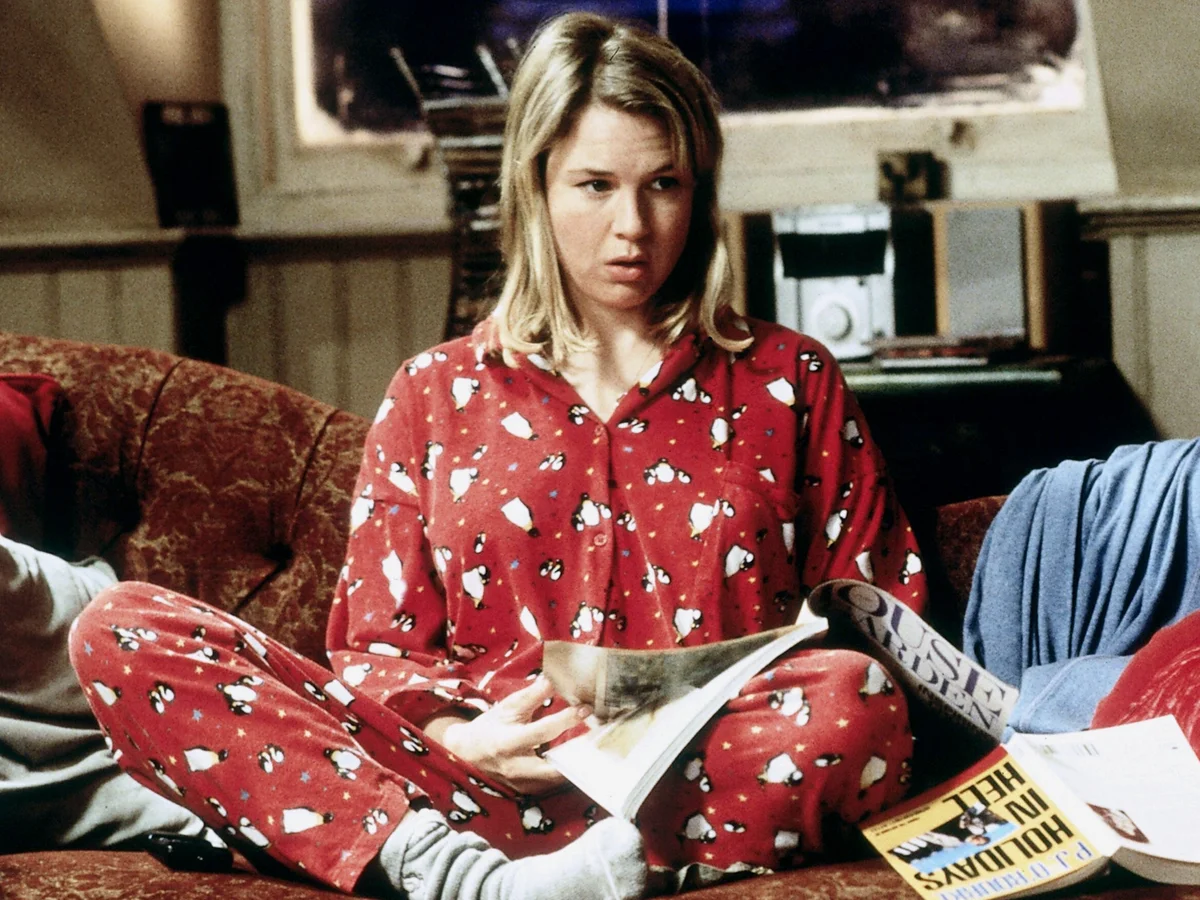
Few cultural icons have stood the test of time quite like Bridget Jones. With the recent release of the fourth Bridget instalment, ‘Bridget Jones: Mad About the Boy’, we are once again reminded of the unique charm of Helen Fielding’s hapless yet endearing heroine. Bridget remains one of the most beloved fictional characters in contemporary literature and film. It’s a truth universally acknowledged that a single woman in possession of a diary has the power to become a global phenomenon.
Bridget first introduced herself to the world as a column in The Independent in 1995. Helen Fielding’s fictional (but then again, not that fictional) portrayal of a single thirty-something Londoner navigating love, life, and self-image struck a chord. The column was transformed into a bestselling novel a year later and the first film premiered in 2001. Since then, Bridget has become a cultural touchstone, with quotes drifting into the vernacular: ‘Hello mummy’, ‘I choose vodka and Chaka Khan’, ‘It’s a real fight’, ‘Back to the studio’, ‘I like you very much just as you are’. The list goes on.
For many, Bridget Jones has become more than just a fictional character. The first generation of Bridget fans, now in their sixties and beyond, have grown up alongside her. For others, who first met Bridget when they were too young to know the significance of being 9.5 stone, have grown to understand her anxieties over body image, emotionally unavailable men, or ‘the other woman’. Bridget transcends generations. She is an old friend; someone to laugh with, cry with, and most importantly, grow with.
Bridget Jones owes significant debt to Jane Austen’s ‘Pride and Prejudice’, which serves as the inspiration for Bridget’s own love triangle. Bridget, like Elizabeth Bennet, must choose between the aloof but honourable Mark Darcy/ Mr Darcy and the charming but morally dubious Daniel Cleaver/ Mr Wickham. This plotline, transported from Regency era England to 1990s London with less corsets and much more chardonnay, retains the core themes of self-discovery, love, and societal expectations. Fielding, like Austen before her, offers shrewd understanding of human nature and subtle social commentary, capturing both with humour and insight.

In many ways, Bridget Jones has become a foundational text of modern ‘chick-lit’; Fielding has even been dubbed the ‘godmother’ of the genre. The term, however, has often been derided for its perceived triviality, and novels like Bridget Jones have been criticised as lightweight or frivolous. Fielding’s portrayal of Bridget, too, has been dismissed as shallow and anti-feminist, but there is something deeper at play here. As author Caroline O’Donoghue pointed out in the official ‘Bridget Jones: Mad About the Boy’ podcast, ‘Every time women get together to discuss the realities of their life in an impassioned way, people get very nervous.’ The genre, and the discussions around it, are evolving.
An article in Glamour last year branded Bridget as ‘toxic’, ‘regressive’, and ‘problematic’, pointing to the romanticised portrayal of workplace harassment, the diet culture of the noughties, and retrograde sexual politics. This criticism is not new; for years, Bridget has been called out as pathetic, desperate, infantile, and a terrible figurehead for modern womanhood.
Is Bridget the nadir of feminism? Viewers of the first film will remember her working relationship with her boss, Daniel Cleaver (Hugh Grant). An article for The Times describes one of their interactions: ‘Her boss covertly sexually assaults her from behind. And because she’s a man-eating semi-alcoholic nitwit who’s terrible at her job, her eyes open wide and she half smiles in triumph.’ This seems reductive. Deeming this a romantic aspiration of early noughties career girls is more likely a product of male hegemony. Though Bridget comes from a pre #metoo world, her experience and polite acceptance remain relevant to the challenges that women continue to face in the workplace. Young women today still find themselves politely laughing at inappropriate jokes, worried that speaking out will hinder their professional progress. There is much more at play here.
Bridget’s relationship with her image, too, is complex and relevant, yet is often seen as an out-of-date and damaging portrayal of beauty standards and weight loss obsession. Her appearance becomes central to her sense of self-worth as she makes the New Year’s resolution to ‘lose 20 pounds’ or bemoans the fact that her ‘legs only come up to here’. We are made aware from the start that Bridget’s weight is an obstacle to overcome, and this is why the narratives have received criticism in light of the body positivity movement; critics have voiced concern that Bridget’s attitudes provide a dangerously glamourised version of diet culture and the belief that physical appearance is intrinsically tied to value.

Whilst Bridget’s obsession with weight loss was emblematic of a certain era, however, it remains an issue that hasn’t disappeared, merely shifted. Kate Moss’s infamous ‘Nothing tastes as good as skinny feels’ mantra is now met with scepticism, but anxieties around appearance persist. Despite the push for body diversity, we still see pressure to conform to idealised standards, and platforms like Instagram and TikTok often perpetuate the problem as creators, in an effort to promote body acceptance, inadvertently reinforce aesthetic ideals. Bridget meticulously tracked her calories in a diary; creators nowadays share highly edited ‘what I eat in a day’ vertical videos. The conversation may have evolved, but the fundamental insecurities Bridget highlights remain just as pervasive as she navigates a chaotic, non-linear, and sometimes contradictory path towards self-acceptance. Though some critics worry that Bridget’s obsession with self-image may negatively influence younger generations, there is also something refreshing about a heroine who deals with her insecurities in a messy, open, and vulnerable way. For those still learning to embrace themselves – warts and all – Bridget provides a sense of solidarity.
Indeed, one of Bridget’s most endearing qualities is her self-deprecating humour. In an era that encourages women to present themselves as confident and self-assured, Bridget’s acknowledgement of her imperfections feels authentic and relatable. Self-deprecation, however, seems to have fallen out of fashion in modern literature, as readers and critics alike demand stronger, more confident female characters. If an author today were to write a character as obsessed with self-improvement and as prone to self-doubt as Bridget, they would likely be vilified for presenting a weak, anti-feminist portrayal. The assumption that voicing one’s insecurities is regressive, however, overlooking the fact that vulnerability is a powerful form of strength.

Helen Fielding has spoken about the success of Bridget Jones, noting that it taps into the gap between how we feel we are expected to be and how we really are. Bridget’s diary is a prescription for many – an acknowledgment that it’s okay to be messy, to struggle, and to make mistakes. She gives us permission to love the imperfect.
Bridget is more than just a character in a diary. She is a cultural touchstone that continues to resonate with readers and viewers alike. Two decades after her debut, we still find solace and wisdom in her imperfect and chaotic search for love and acceptance as she remains feelgood against an ever-shifting cultural context. Perhaps it’s okay to love her just the way she is.
About The Author


