
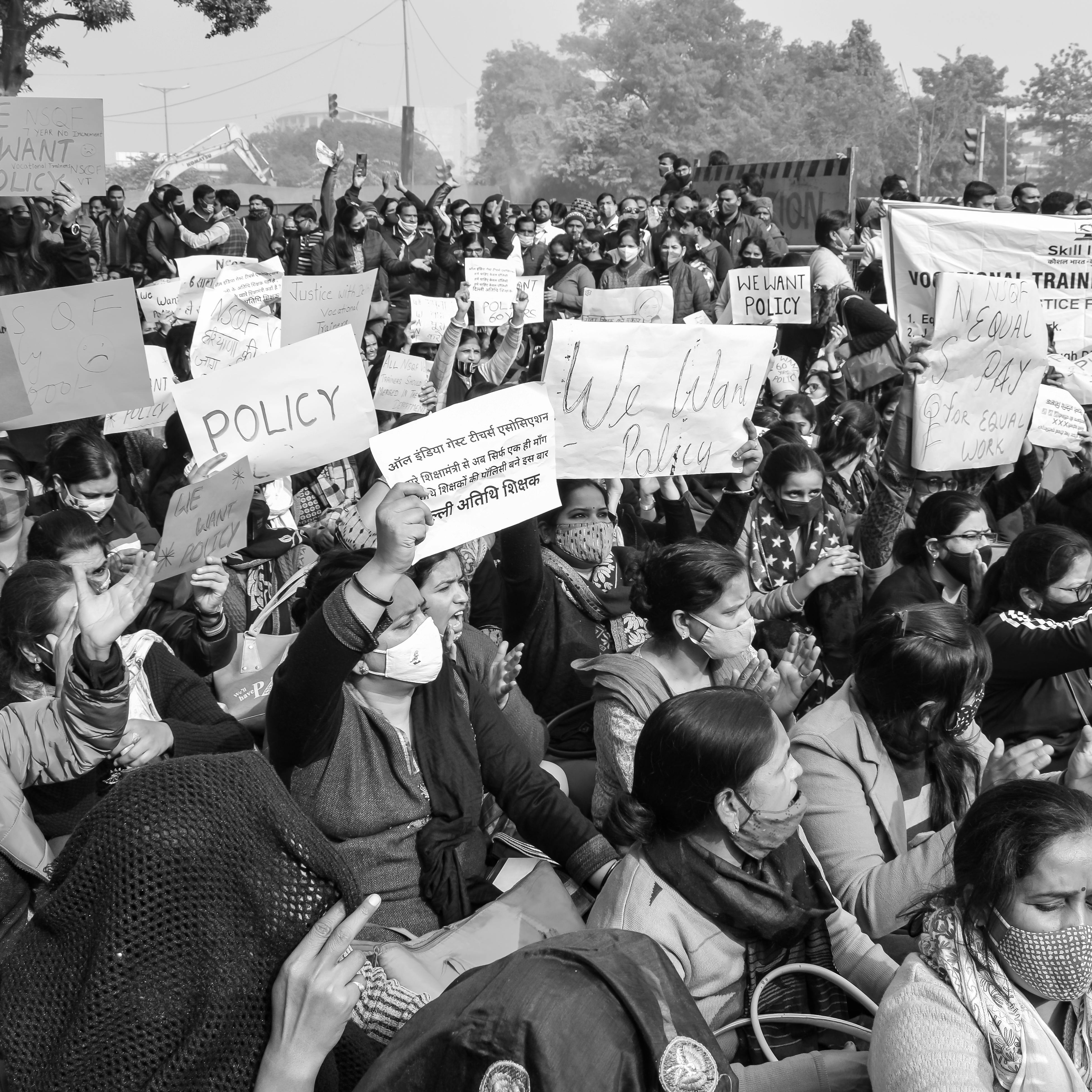
You hear constant claims that Indian politics runs on ideology. The numbers tell you a different story. Power today flows through welfare delivery, institutional leverage, and narrative control rather than speeches or manifestos. If you want to understand where Indian politics stands right now, you need to look at how the state manages voters between elections, not during them.
The ruling establishment has turned governance itself into a permanent campaign. That shift defines every major political trend you see today.
Welfare as the Primary Political Currency
Indian politics has entered a phase where policy announcements matter less than execution visibility. Governments no longer win credit for launching schemes. They win by ensuring you feel personally included.
You see this clearly in the expansion of direct benefit transfers. Cash reaches bank accounts with minimal intermediaries. Beneficiaries receive SMS confirmations. Leaders reference exact beneficiary counts in speeches. This creates a psychological contract between the state and the voter.
Key developments shaping this trend include:
- Expansion of DBT-linked welfare programs across food security, housing, healthcare, and pensions
- Increased use of Aadhaar-linked verification to limit leakages and assert administrative control
- State governments competing to outdo the Centre on scheme coverage rather than ideological distinction
This approach narrows the opposition’s room to maneuver. When voters associate stability and continuity with tangible benefits, ideological critiques lose urgency. You may disagree with a party’s politics, but you hesitate when your household income depends on its programs.
This explains why recent electoral contests show weaker anti-incumbency at both state and national levels.
Centralisation of Political Authority
Another unmistakable trend involves the steady concentration of power. Decision-making has moved upward, away from state units, coalition partners, and internal party democracy.
- You can observe this across three layers:
- Within parties, where leadership circles have shrunk
- Between Centre and states, where fiscal and administrative leverage has increased
- Across institutions, where executive influence has grown stronger
This centralisation reshapes how politics functions on the ground. State leaders increasingly act as implementers rather than agenda-setters. Bureaucratic transfers align closely with political priorities. Independent institutions face public scrutiny when they challenge executive intent.
Supporters frame this as decisive governance. Critics describe it as democratic erosion. The more relevant insight for you lies elsewhere. Centralisation accelerates outcomes. It reduces negotiation costs. It also raises the stakes of national elections since fewer counterweights remain.
Indian politics now resembles a high-risk, high-reward system where control delivers speed but leaves little margin for error.
The Decline of Coalition Politics in Practice
Coalitions still exist. Their nature has changed.
Earlier coalition governments depended on consensus. Today’s coalitions operate under asymmetry. One dominant party sets the agenda. Smaller partners negotiate survival rather than influence.
This shift affects policy debates in subtle ways:
- Regional interests struggle to shape national legislation
- Parliamentary dissent weakens even when numbers allow resistance
- Opposition unity collapses under leadership and credibility gaps
You see frequent attempts at opposition alliances. You also see repeated failures. Personal ambition, ideological mismatch, and organisational weakness undermine coordination. Voters notice this fragmentation. Many respond by choosing stability over experimentation.
The result creates a feedback loop. Dominance discourages opposition investment. Weak opposition reinforces dominance.
Politics Driven by Identity, Managed Through Technology
Identity politics has not disappeared. It has become more targeted.
Digital infrastructure allows parties to segment voters with precision. Messaging adjusts by caste, religion, income group, and region. Political outreach now blends data analytics with traditional mobilisation.
This produces two consequences you should pay attention to:
- Campaigns grow quieter in public while becoming sharper at the micro level
- Polarisation intensifies within communities even when national rhetoric sounds restrained
Social media amplifies grievance narratives quickly. At the same time, the state uses regulation, takedowns, and platform engagement to shape information flow. Politics no longer depends on mass rallies alone. It thrives inside phones.
Why This Moment Matters
Indian politics today rewards efficiency, message discipline, and institutional control. It penalises improvisation and ideological ambiguity. If this trajectory continues, future contests will hinge less on promises and more on administrative credibility.
You are not watching a temporary phase. You are witnessing a structural transition.
In the next part, you will see how elections, opposition strategy, and voter behaviour adapt to this new political reality, and why traditional campaign models struggle to survive under it.
Elections in India no longer begin with campaign announcements. They begin years earlier through administrative signals, welfare rollout timing, and narrative discipline. If you still measure electoral strength by rally size or manifesto novelty, you miss how power actually consolidates today.
The rules of winning have changed. Parties that adapted early now dominate the field.
How Elections Are Being Won Before Voting Day
You see a clear pattern across recent state and national elections. Governments invest heavily in pre-election governance optics rather than last-minute persuasion.
This strategy relies on three pillars:
- Saturation welfare delivery that reaches households well before election schedules
- Continuous branding of schemes through local officials, signage, and beneficiary communication
- Strategic policy timing that avoids disruption close to polling
This approach reduces volatility. Voters enter election periods with fixed perceptions rather than open questions. By the time campaigning peaks, many choices feel settled.
Opposition parties struggle here because they lack administrative levers. Criticism competes poorly against lived benefits. You can argue policy flaws. You cannot easily counter money in a bank account or a subsidised cylinder at home.
Voter Behaviour Is Becoming More Transactional
Indian voters still care about identity, leadership, and ideology. They increasingly weigh these factors against material outcomes.
- You see this shift in voter surveys and post-poll studies:
- Reduced ticket-splitting between state and national elections
- Higher tolerance for strong leadership styles if governance delivery remains steady
- Declining patience for symbolic opposition politics without alternative plans
This does not mean voters have abandoned democratic expectations. It means expectations have narrowed. You judge governments on execution first. Everything else follows.
This trend weakens protest-based politics. Street mobilisation loses effectiveness when economic dependency rises. Even dissatisfied voters hesitate to disrupt systems that deliver predictability.
The Opposition’s Structural Crisis
Opposition weakness does not stem from a single election loss. It reflects long-term organisational decay.
Several issues define this crisis:
- Leadership vacuums with no clear national challenger
- Cadre erosion at district and booth levels
- Messaging inconsistency across regions
- Overreliance on coalition arithmetic instead of voter connection
Attempts at opposition unity face immediate friction. Regional parties guard turf. National parties struggle to inspire confidence. Voters perceive alliances as reactive rather than purposeful.
You see repeated cycles. Grand announcements. Fragile coordination. Electoral disappointment. Each failure deepens public scepticism
The absence of a credible alternative reinforces the ruling narrative of inevitability. Politics becomes less competitive. Governance gains speed but accountability thins.
The Changing Role of Campaigns
Campaigns still matter. Their function has shifted.
Earlier campaigns focused on persuasion. Today they focus on reinforcement. Parties spend more energy mobilising supporters than converting skeptics.
This produces several visible changes:
- Heavier investment in booth-level management
- Micro-targeted messaging instead of broad ideological appeals
- Reduced dependence on traditional media debates
Digital outreach dominates, yet physical presence retains importance. Door-to-door contact validates digital promises. Local influencers carry more weight than national spokespersons in many regions.
You also see increased professionalisation. Data teams guide candidate selection. Voter segmentation shapes speech content. Campaigns resemble operations more than movements.
Money, Regulation, and Electoral Advantage
Electoral finance continues to shape outcomes, even as transparency debates persist. Parties with access to sustained funding dominate advertising, logistics, and volunteer mobilisation.
At the same time, regulatory scrutiny influences opposition capacity. Investigations, compliance pressure, and legal uncertainty absorb time and resources. Supporters call this accountability. Critics describe selective enforcement
For voters, intent matters less than effect. The effect limits opposition bandwidth during crucial periods.
This dynamic reinforces asymmetry. One side campaigns aggressively. The other defends itself.
What This Means for Democracy
Indian elections remain competitive on paper. In practice, competition narrows.
You still vote. You still choose. Yet the range of viable options shrinks when organisation, money, and narrative alignment concentrate.
This raises a critical question you cannot avoid. Can democratic vitality survive without a strong opposition that governs-ready voters trust?
The next part will examine institutions, media, and civil society, and how their evolving roles shape political accountability in this new environment.
Institutions do not collapse overnight. They adjust, bend, and recalibrate long before anyone declares a crisis. Indian politics right now runs through this quieter phase. Courts still function. The media still publishes. Civil society still exists. The question you should ask is not whether these pillars survive, but how they operate under sustained political pressure.
The answer explains much of India’s current democratic climate.
Institutions Under Executive Weight
India’s institutional framework rests on independence by design and restraint by convention. The balance shifts when conventions weaken.
You can track this through observable trends:
- Greater executive influence over appointments and transfers
- Longer timelines for adjudication in politically sensitive cases
- Increased public scrutiny of institutions that contradict government priorities
This does not signal uniform compliance. Courts issue critical rulings. Regulators push back at times. The broader pattern still shows caution replacing assertiveness. Institutions calculate outcomes with political context in mind.
For governance, this produces speed. For accountability, it produces uncertainty. When enforcement appears uneven, public trust depends less on legal clarity and more on political alignment.
You feel this most when institutions act decisively against some actors while appearing restrained toward others. Perception matters as much as fact in democratic systems.
Parliament’s Shrinking Deliberative Role
Parliament remains the formal center of democratic debate. Its functional role has narrowed.
Legislation increasingly passes with limited discussion. Committee scrutiny has declined. Opposition disruptions dominate headlines while substantive debate fades from public memory.
Several factors drive this shift:
- Strong party discipline limiting dissent
- Reduced reliance on coalition negotiation
- Strategic use of procedural tools to manage floor time
You might ask whether efficiency justifies this change. Laws pass faster. Policy rollouts accelerate. The trade-off lies in reduced scrutiny and weaker consensus-building.
Parliament becomes a ratifying body rather than a negotiating arena. That changes how policy errors surface. Problems emerge after implementation rather than during debate.
Media: Polarisation Over Persuasion
Indian media no longer operates as a single ecosystem. It has fractured into parallel realities.
You consume news that confirms your assumptions. Algorithms reinforce this behavior. Channels and platforms cater to defined audiences rather than national consensus.
This shift produces clear outcomes:
- Political coverage prioritises confrontation over investigation
- Prime-time debates reward loyalty and outrage
- Long-form policy analysis struggles for reach
Independent journalism still exists. Its reach has narrowed. Financial pressure, legal risk, and audience fragmentation constrain editorial freedom.
Digital platforms amplify both dissent and disinformation. The state responds through regulation, takedowns, and legal action. Supporters frame this as order. Critics view it as control.
The net effect leaves you navigating information defensively. Trust becomes selective. Truth competes with volume.
Civil Society in a Tighter Space
Civil society organisations face closer oversight than at any point in recent decades. Funding rules, compliance requirements, and registration norms shape operational freedom.
You see this play out through:
- Restrictions on foreign funding for advocacy groups
- Increased audits and regulatory checks
- Reduced public visibility of activist organisations
Some groups adapt by shifting focus to service delivery. Others scale back advocacy. A few challenge restrictions through legal routes.
This environment alters civic engagement. Activism moves online or becomes issue-specific rather than sustained. Mass movements grow harder to organise without political backing.
Civil society does not disappear. It fragments and recalibrates.
The Rise of Legal and Procedural Politics
Politics increasingly plays out through courts, commissions, and regulatory bodies. Parties file petitions. Governments respond through procedure rather than debate.
This legalisation of politics changes timelines and incentives. Outcomes delay. Momentum stalls. Public attention fades.
For you as a voter, this creates fatigue. You follow headlines without resolution. Accountability feels abstract.
Yet this trend also reflects adaptation. When street politics weakens, institutional routes gain importance. Law replaces protest. Paper replaces mobilisation.
Why This Stage Matters
India’s democracy now depends less on confrontation and more on endurance. Institutions continue functioning under pressure rather than collapse. Media survives through alignment rather than independence. Civil society adapts through caution rather than confrontation.
This does not end democratic contestation. It reshapes it.
The final part will look ahead. You will see what these trends mean for future elections, political competition, and whether the current model sustains itself without correction.
Indian politics now operates inside a narrow corridor. Stability delivers growth and administrative speed. Concentration raises systemic risk. The direction you see today continues because it works electorally. The question is whether it holds under pressure.
History suggests it never does forever.
What the Next Election Cycle Is Likely to Look Like?
Future elections will test endurance rather than popularity. Parties in power will defend governance records. Challengers will search for cracks rather than alternatives.
You should expect several patterns:
- Campaigns framed around continuity versus disruption
- Heavy emphasis on leadership credibility over policy innovation
- Intensified booth-level mobilisation rather than mass ideological outreach
Large-scale narrative shifts remain unlikely without economic shock, governance failure, or elite defection. Electoral change now depends on structural triggers rather than sentiment alone.
This does not make outcomes predictable. It makes them conditional.
The Economic Variable That Politics Cannot Control
Indian politics remains tightly coupled with economic perception. Inflation, employment, and income growth quietly shape voter tolerance.
You can track this sensitivity through:
- Rapid political response to food price volatility
- Increased fiscal spending ahead of elections
- Policy caution around labour and farm reforms
Governments that deliver stability gain time. Governments that lose economic control lose narrative authority fast.
This explains why welfare expansion continues despite fiscal pressure. Political cost outweighs economic caution. Voters punish uncertainty more than debt.
Federal Tensions Will Intensify
Centre-state relations remain a fault line.
You will see increasing friction over:
- Fiscal transfers and revenue sharing
- Control over investigative agencies
- Language, education, and cultural policy
States with strong regional leadership push back through courts and political messaging. The Centre leverages funding and compliance mechanisms. Negotiation gives way to assertion.
This tension shapes future coalitions and electoral alignments. Regional parties will matter most where governance records outperform national narratives.
Can the Opposition Rebuild Credibility?
Opposition recovery depends on organisational reconstruction, not slogans.
Any credible revival requires:
- Leadership clarity that inspires voter confidence
- Policy alternatives that address delivery, not symbolism
- Ground-level presence sustained between elections
Without these shifts, alliances remain arithmetic exercises. Voters do not rally around survival strategies. They respond to governance-ready alternatives.
This task demands time. Indian politics currently rewards immediacy. That mismatch limits opposition momentum.
Democratic Correction or Managed Continuity?
Every dominant political phase faces correction. The mechanism varies.
Correction may arrive through:
- Electoral realignment driven by economic stress
- Judicial or institutional assertion restoring balance
- Internal fragmentation within dominant coalitions
Managed continuity remains the more probable path in the near term. Institutions adapt. Voters adjust. Politics absorbs pressure rather than releases it.
Your role as a voter becomes more demanding. You must evaluate performance without relying on strong opposition cues. Accountability shifts inward.
What This Means for You
Indian politics today asks for fewer emotional investments and more analytical judgment. Loyalty competes with lived experience. Stability competes with institutional health.
The system rewards discipline and delivery. It penalises complacency.
Whether this model strengthens democracy or hollows it out depends on how power responds when tested. The answer will not arrive through rhetoric. It will arrive through governance under strain.
That moment will define the next phase of Indian politics.
Author Profile
Astha Agrawal is a writer covering trends in India across politics, public policy, psychology, media, and culture. Her work focuses on clarity, relevance, and data-backed analysis of evolving narratives.
Connect with her on LinkedIn: http://www.linkedin.com/in/astha-agrawal-105255331
About The Author


