
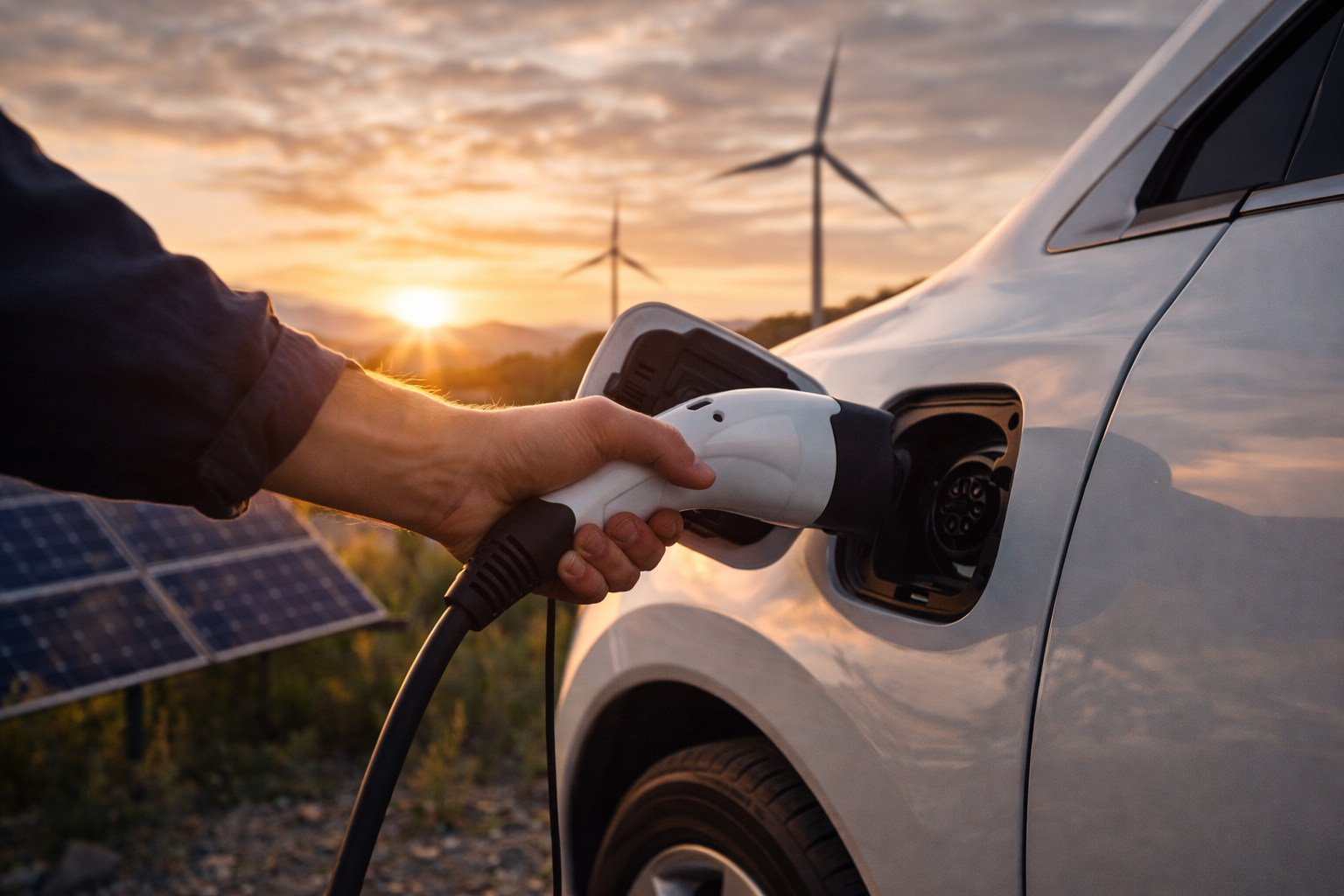
Stop framing environmentalism as a moral crusade if you want to see actual results. The global obsession with eco-guilt has failed. Data from the last decade proves that shaming consumers into submission does not lower carbon footprints. It simply creates resentment and psychological paralysis. If we are to reach net-zero goals by 2050, the strategy must shift from emotional manipulation to structural convenience and financial logic. The clock is ticking toward a 1.5-degree Celsius rise in global temperatures. You do not have the luxury of spending another decade feeling bad about your plastic straw while the systemic architecture of consumption remains unchanged.
You are likely tired of hearing that your individual lifestyle choices caused the climate crisis. They did not. While individual actions carry weight, the current narrative ignores the fact that 100 companies are responsible for 71 percent of global emissions since 1988. Why then are you the one carrying the psychological burden of the world? It is time to dismantle the guilt-based model and replace it with high-efficiency, low-friction habits that move the needle. This is an industry-level shift. It requires a hard-nosed look at behavioral economics and the reality of human nature. We must move beyond the “green niche” and into the mainstream economic engine.
The Failure of Negative Reinforcement
Behavioral science reveals an uncomfortable truth. Guilt is a short-term motivator with a rapidly approaching expiration date. When you make people feel bad about their lifestyle, they eventually tune out the message to protect their mental well-being. This phenomenon, known as message fatigue, currently stalls climate progress in developed nations. You see it in the data. Despite decades of awareness campaigns, global carbon emissions reached a record high of 37.4 billion tonnes in 2023. If guilt worked, these numbers would be plummeting.
The European Commission Joint Research Centre found that positive incentives outperform punitive measures by a margin of three to one in long-term habit formation. When people feel empowered rather than indicted, they stick to green behaviors. Are you ready to stop apologizing for your existence and start optimizing your impact? The transition to a sustainable economy is the greatest investment opportunity of the 21st century. It is not a penance. It is a modernization project.
Economic Incentives Over Ethical Pleas
Money talks louder than morality. The most successful green transitions occur when the eco-friendly choice is also the cheapest or most convenient choice. Look at the rapid adoption of LED lighting. Consumers did not switch because they suddenly cared more about the power grid. They switched because LEDs last 25 times longer and use 75 percent less energy. This saves households hundreds of dollars annually. The moral argument followed the economic reality.
You must apply this same logic to your home energy consumption. Tax credits under the Inflation Reduction Act in the United States offer up to 30 percent back on heat pump installations and weatherization. This is not about being a “good person.” This is about being a smart homeowner. By framing sustainability as a fiscal strategy, you remove the emotional burden and replace it with a tangible Return on Investment. When the “green” option saves five percent on a monthly utility bill, adoption becomes inevitable. When it costs ten percent more and requires a moral lecture, it remains a luxury for the elite.
Frictionless Sustainability and Choice Architecture
If a green habit requires ten extra steps, you will eventually quit. The key to sustainable living is choice architecture. This means designing your environment so that the better choice is the default choice. Human beings are biologically wired to take the path of least resistance. Expecting eight billion people to override their biology daily is a losing strategy.
Municipalities that implemented “opt-out” composting programs saw a 400 percent increase in participation compared to “opt-in” programs. Apply this to your life. Set your thermostat to a smart schedule. Enroll in a green power program through your utility provider where the energy is sourced from wind or solar by default. You do not need to wake up every morning and decide to be green. You need to set the system once and let it run. Why are we still asking people to make thousands of micro-decisions when we could simply fix the defaults?
The Myth of the Perfect Environmentalist
The pursuit of “zero waste” is a trap. It creates an impossible standard that scares away the average person. If 1,000 people reduce their waste by 50 percent, the impact is infinitely greater than one person living a perfectly waste-free life. Perfectionism is the enemy of the planet. It creates a hierarchy of “goodness” that alienates the very people we need to recruit.
Stop obsessing over minor inconsistencies in your habits. Did you use a plastic bag today? It happens. Focus instead on the high-impact zones of personal impact. These are the “Big Three” of personal carbon footprints: how you eat, how you move, and how you heat your home. These areas account for the vast majority of a household carbon footprint.
Switching to a plant-forward diet even three days a week reduces your food-related emissions by 40 percent. Replacing one short car trip per day with a bike ride or walk saves roughly 0.5 tons of CO2 per year. Properly insulating your attic can reduce heating and cooling costs by 15 percent immediately. Focusing on these high-impact zones provides a sense of accomplishment that fuels further action. Guilt focuses on the two percent you got wrong. Results focus on the 98 percent you can change.
Transparency and the Supply Chain Trust Deficit
You deserve better data. One of the greatest barriers to guilt-free green living is greenwashing. When every product claims to be “natural” or “eco-friendly,” the words lose meaning. This creates a trust deficit that makes you want to give up entirely. A 2023 study by the European Commission found that 42 percent of green claims were exaggerated, false, or deceptive. This is not your fault. It is a regulatory failure.
Demand radical transparency. Look for third-party certifications like B Corp, Cradle to Cradle, or the Global Organic Textile Standard. These organizations do the vetting so you do not have to. When you support companies that build repairability into their products, you are voting for a circular economy. The Right to Repair movement is gaining legal ground in the US and EU. Support it. Buying a laptop you can fix yourself is more “green” than buying a new “eco-friendly” model every three years. The most sustainable product is the one you already own.
Community Impact vs. Individual Isolation
Eco-guilt is a lonely emotion. It suggests that you alone are responsible for the melting ice caps. This is a fallacy. Real change happens through collective action and community infrastructure. The “carbon footprint” concept itself was popularized by a 250 million dollar BP advertising campaign in 2005. The goal was to shift the burden of responsibility from the producer to the consumer. It worked too well.
Instead of agonizing over your personal recycling bin, use your energy to advocate for better local transit or community solar projects. When you join a community garden or a tool-sharing library, you reduce consumption while building social capital. Research shows that people in high-trust communities have lower carbon footprints because they share resources naturally. Does your neighborhood have a Library of Things? If not, why not start one? Sharing a lawnmower among five neighbors is more effective than five people buying five “green” lawnmowers.
Technology as the Great Equalizer
We are entering an era where technology makes sustainability invisible. AI-driven grid management, lab-grown proteins, and next-generation battery storage are decoupling economic growth from environmental degradation. You can leverage these tools. Use apps that track the real-time carbon intensity of your local power grid to run your dishwasher when the sun is shining or the wind is blowing. Use platforms that rescue “ugly” produce from landfills. This is not a sacrifice. It is an upgrade to a more efficient way of living.
The timeline for climate action is tight. We have until 2030 to halve global emissions to stay on track for the Paris Agreement targets. We cannot waste those years on self-flagellation. Guilt is a luxury we can no longer afford. Action, driven by logic, convenience, and community, is the only path forward.
The Psychology of Social Proof
Why do you care what your neighbors think? Humans are social animals. We look to others to determine what is normal. This is called social proof. If everyone in your neighborhood installs solar panels, you are ten times more likely to do the same. This has nothing to do with environmentalism and everything to do with social mimicry.
To encourage eco-friendly behavior without guilt, we must make green living the status symbol. We must move it from the “crunchy” fringe to the aspirational center. When the electric vehicle is faster, quieter, and more prestigious than the internal combustion engine, the market shifts. When the sustainable home is more comfortable and modern, the market shifts. Stop preaching and start showing. Visible green investments are infectious. Your heat pump or your electric bike is a billboard for the future.
Redefining the Concept of Value
Our current economic model values throughput over utility. It rewards the sale of a new item regardless of how quickly it ends up in a landfill. This is fundamentally inefficient. To move forward without guilt, you must redefine what you value. Value is not the price of a garment. It is the cost per wear. Value is not the cost of a car. It is the cost per mile of mobility.
When you shift to a value-based mindset, sustainability becomes the natural byproduct. You stop buying “disposable” items because they are a bad investment. You start buying high-quality, durable goods because they provide a better user experience over time. This transition requires no guilt. It only requires a better understanding of economics. Are you buying trash in slow motion, or are you investing in long-term utility?
The Role of Corporate Responsibility
We must stop letting corporations off the hook by pretending the consumer is the only driver of change. You cannot “buy” your way out of a climate crisis if the options on the shelf are all fundamentally broken. Policy change is the only lever big enough to move the global economy in time.
Support policies that internalize the cost of carbon. A carbon tax at the source is the most efficient way to change corporate behavior. When it becomes expensive to pollute, companies will find ways to stop polluting to protect their margins. This removes the “green premium” from the consumer and places the burden of innovation on the producer. Your role as a citizen is more important than your role as a consumer. Are you voting for leaders who understand that the environment is the economy?
Practical Action Items for Immediate Impact
If you want to act today without the weight of guilt, follow this prioritized list. These actions are ranked by their ability to reduce carbon while improving your quality of life.
- Audit your HVAC. Space heating and cooling are the largest energy draws in most homes. Switch to a heat pump. It is three times more efficient than a gas furnace or electric baseboard.
- Change your transport mix. Can you replace one car trip a week with a bike or a walk? The health benefits are immediate. The carbon savings are significant.
- Reduce food waste. The average household throws away 30 percent of the food it buys. This is literally throwing money in the trash. Use a meal plan. Store produce correctly.
- Switch your bank. Many major banks use consumer deposits to fund fossil fuel expansion. Move your money to a credit union or a bank with a fossil-free pledge. This is a one-time action with massive ripple effects.
- Support local repair. Find your local tailor, cobbler, and electronics repair shop. Keeping items in use is the ultimate green strategy.
Decoupling Growth from Carbon
For decades, the assumption was that economic growth required more carbon emissions. We now know this is false. Between 2005 and 2020, the United Kingdom grew its GDP by 22 percent while cutting carbon emissions by 40 percent. This was achieved through a mix of renewable energy, efficiency standards, and a transition to a service-based economy.
This macro-level data should give you hope. The systems are changing. Your job is to accelerate that change by participating in the new economy. Buying an EV is not an act of charity. It is a purchase of a superior technology. Eating less meat is not a sacrifice. It is a discovery of a more diverse and healthy diet. We must stop framing the future as a series of “lessers” and start framing it as a series of “betters.”
The Ethics of Convenience
Is it wrong to want a convenient life? No. The pursuit of convenience has driven almost every major human innovation. The problem is that we have optimized for “cheap convenience” instead of “durable convenience.” We have built a world where it is easier to throw something away than to fix it. This is a design flaw, not a moral failing of the user.
We must demand products that are designed for the long haul. This means modular electronics. This means clothes with reinforced seams. This means appliances with parts that are easy to swap out. When convenience aligns with sustainability, the environmental movement will finally win the mass market. Until then, we are just yelling at people for using the systems we built for them.
Addressing the Global South
The conversation about eco-guilt is largely a Western luxury. For billions of people in the Global South, the priority is development and energy access. We cannot ask the developing world to stay in poverty to save the planet. Instead, we must provide the technology and financing to help them “leapfrog” the fossil fuel era entirely.
Just as many African nations skipped landline telephones and went straight to mobile, they can skip coal plants and go straight to decentralized solar and wind. This is the ultimate “guilt-free” behavior encouragement. It provides clean, reliable energy to those who need it most without the environmental baggage of the 20th century. Are you supporting international climate finance that makes this possible?
The Power of the “Nudge”
Richard Thaler and Cass Sunstein popularized the concept of Nudge Theory. It suggests that small changes in how choices are presented can have huge impacts on behavior. We see this in green building standards. When a building is designed with a prominent, beautiful staircase and a hidden, slow elevator, people take the stairs. They get exercise and save energy without ever feeling like they were forced.
We need to “nudge” our entire society. We need grocery stores where the plant-based options are at eye level. We need cities where the bike lanes are wider and safer than the car lanes. We need a world where doing the right thing is the easiest thing to do. Guilt is the “shove.” We need the “nudge.”
Redefining Prosperity
What does a prosperous life look like? Is it a mountain of possessions that you rarely use, or is it a life of time, health, and connection? The “minimalism” movement is often mocked as a trend for the wealthy, but its core tenet is sound. Owning less stuff reduces your “mental load” and your environmental footprint simultaneously.
When you stop buying things to impress people you don’t like, you free up capital for experiences and investments that actually matter. This is the ultimate freedom from guilt. You are not “giving up” consumption. You are choosing a different, more fulfilling kind of prosperity. You are trading clutter for clarity.
The Role of Education and Awareness
Knowledge is not enough. If knowledge were enough, nobody would smoke. We must bridge the gap between “knowing” and “doing.” This happens through storytelling that focuses on solutions rather than doomsday. We have enough movies about the apocalypse. We need more movies about the successful transition.
Show people the vibrant, clean, quiet cities of the future. Show them the high-paying jobs in the wind and solar sectors. Show them the restored ecosystems where biodiversity is thriving. Hope is a far better fuel than fear. If you want people to change, give them a vision of a future they actually want to live in.
A Call for Systemic Agnosticism
We spend too much time arguing about “capitalism vs. socialism” in the climate debate. The climate does not care about your political ideology. It cares about the parts per million of CO2 in the atmosphere. We need solutions that work across the political spectrum.
Carbon pricing is a market-based tool that conservatives can support. Green infrastructure projects are a public-works tool that progressives can support. We must be pragmatic. If a policy reduces emissions and creates jobs, it is a good policy. We must stop using the environment as a proxy for our cultural grievances. Are you willing to work with people you disagree with to solve the only problem that matters?
The Timeline of the Transition
We are in the “S-Curve” of the energy transition. The first few percent of adoption take decades. Then, suddenly, the technology hits a tipping point and the entire market flips in a few years. We saw this with smartphones. We saw it with color television. We are seeing it now with solar energy and electric vehicles.
In 2023, the world added 50 percent more renewable capacity than it did in 2022. The transition is accelerating. You do not need to feel guilty about the past. You need to be prepared for the future. The “fossil fuel age” is ending not because we ran out of oil, but because we found something better. Just as the Stone Age did not end because we ran out of stones.
Final Thoughts on a Guilt-Free Future
The era of the “unhappy environmentalist” must end. Saving the planet should be a source of joy, innovation, and community. It should be the greatest creative challenge of our generation. When you remove the guilt, you unlock human ingenuity. You allow people to experiment, to fail, and to try again.
Focus on the systems. Fix the defaults. Incentivize the smart choice. Build the community. This is how we win. The planet does not need your shame. It needs your intelligence, your labor, and your vote. Are you ready to get to work?
References
State of the Global Climate 2023 – World Meteorological Organization
https://wmo.int/publication-series/state-of-global-climate-2023
Net Zero by 2050 – International Energy Agency
https://www.iea.org/reports/net-zero-by-2050
The Carbon Majors Database – CDP
European Commission Joint Research Centre – Behavioral Insights for Environmental Policy
https://joint-research-centre.ec.europa.eu/scientific-activities/behavioural-insights_en
Yale Program on Climate Change Communication – Global Warming’s Six Americas
https://climatecommunication.yale.edu/about/projects/global-warmings-six-americas/
The Inflation Reduction Act – U.S. Department of Energy
https://www.energy.gov/save/clean-energy-tax-credits
Nudge: Improving Decisions About Health, Wealth, and Happiness – Yale University Press
https://yalebooks.yale.edu/book/9780300254174/nudge/
Global Carbon Budget 2023 – Global Carbon Project
https://www.globalcarbonproject.org/carbonbudget/23/publications.htm
The Right to Repair – European Parliament
B Lab Global – B Corp Certification
https://www.bcorporation.net/en-us/certification/
Cradle to Cradle Products Innovation Institute
Global Organic Textile Standard (GOTS)
U.K. Department for Business, Energy & Industrial Strategy – 2020 Greenhouse Gas Emissions
The Economics of the Energy Transition – BloombergNEF
https://about.bnef.com/new-energy-outlook/
EPA Greenhouse Gas Equivalencies Calculator
https://www.epa.gov/energy/greenhouse-gas-equivalencies-calculator
World Resources Institute – 10 Breakthroughs of 2023
https://www.wri.org/insights/10-breakthroughs-2023-climate-action
Project Drawdown – Solutions
https://drawdown.org/solutions
Author bio
Julian is a graduate of both mechanical engineering and the humanities. Passionate about frugality and minimalism, he believes that the written word empowers people to tackle major challenges by facilitating systematic collaborative progress in science, art, and technology. In his free time, he enjoys ornamental fish keeping, reading, writing, sports, and music. Connect with him here https://www.linkedin.com/in/juliannevillecorrea/
About The Author


