
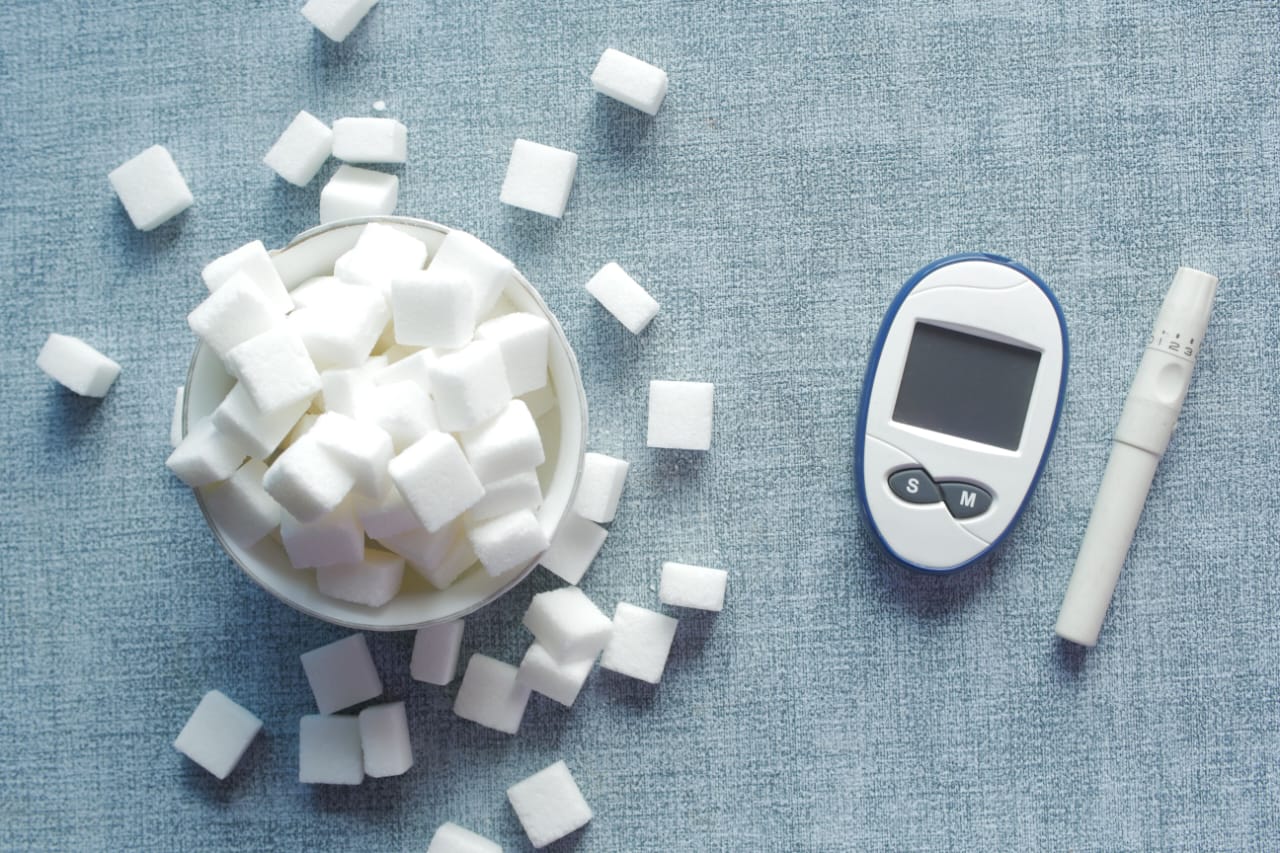
Blood sugar spike after a high carb meal? Learn how a short walk and smart food order bring it down, backed by real studies and CGM data.
Table of Contents
- Key Takeaways
- What a Normal Blood Sugar Curve Looks Like
- Why the Same Meal Hits People Differently
- The Spike Recovery Plan
- When to Talk to a Doctor
- The Gap Nobody Has Filled Yet
- Frequently Asked Questions
- References and Sources.
Key Takeaways
- A blood sugar rise after eating is normal. The goal is a smaller rise that settles quickly, not a flat line.
- In healthy people, blood sugar stays between 70 and 140 mg/dL about 96 percent of the day, according to a 2019 study.
- A short, easy walk after a meal lowered blood sugar by 12 percent in one trial, and by 22 percent after dinner.
- Eating vegetables and protein before carbs lowered blood sugar by up to 37 percent in a small pilot study.
- The same meal can affect two people very differently, so test each change on your own sensor.
- If you take insulin or certain diabetes pills, talk to your doctor before changing how you eat or move.
Why You Should Aim for a Smaller Spike, Not a Flat Line
You cannot flatline your blood sugar, and you should not try. After you eat carbohydrates, your blood sugar rises and then comes back down. A blood sugar spike after a meal is normal. The real goal is a smaller spike that settles quickly.
In 2019, researchers tracked healthy people with continuous glucose monitors, or CGMs. A CGM is a small sensor worn on the skin that reads your blood sugar all day. These people spent a median of 96 percent of the day between 70 and 140 mg/dL, which is the standard unit for blood sugar. They spent only about 30 minutes a day above 140. If your sensor shows much more than that after a big meal, there is room to improve. Three simple habits have real research behind them, and this guide walks you through them in order of how strong the evidence is.
What a Normal Blood Sugar Curve Looks Like.
The 2019 study was led by Viral Shah and published in the Journal of Clinical Endocrinology and Metabolism. It gives you the closest thing to a healthy benchmark. Average sensor glucose was 98 to 99 mg/dL in every age group except people over 60, who averaged 104 mg/dL. Healthy people spent a median of 2.1 percent of the day above 140 mg/dL, and 1.1 percent below 70 mg/dL, which is about 15 minutes.
Treat 140 as a guideline for tracking, not a pass or fail mark. One reading above 140 after a big plate of rice is not a diagnosis. The pattern across many meals matters far more.
How to Track Your Recovery
Most CGM apps show your peak but not how long you take to recover. For each test meal, write down three numbers:
- Your blood sugar when you take the first bite
- Your highest reading in the next two to three hours
- The minutes it takes to come back to within about 20 mg/dL of your starting number
The 20 mg/dL band is a simple tracking rule, not a medical standard. Pick a rule and keep it the same so your meals stay comparable.
One more thing to know. Your sensor does not read your blood directly. It reads the fluid between your cells, which runs a few minutes behind your blood. So the peak on your graph shows up slightly late. Compare your meals against each other on the same sensor, not against a finger prick test taken at a different moment.
Why the Same Meal Hits People Differently
In 2015, a team led by David Zeevi at the Weizmann Institute of Science in Israel published a large study in the journal Cell. They tracked the blood sugar of 800 people for a week and measured the response to 46,898 meals. They found that identical meals caused very different spikes in different people. Their conclusion was that one diet plan for everyone may have limited use.
The team built a computer model that used blood tests, eating habits, body measurements, activity, and gut bacteria to predict each person’s response. It worked well in a second group of 100 people. In a blinded trial, diets built from the model lowered post meal blood sugar significantly.
For you, the lesson is simple. A food chart tells you what happens to the average person. Your own sensor tells you what happens to you. Before you change anything, eat the same test meal three times, at the same hour and in the same portion, and write down your three numbers each time. Sleep, stress, and how active you were the day before can all shift your response, so one test is a story and three tests are a baseline.
The Spike Recovery Plan
Step 1: Take a Short Walk Soon After Eating
Movement has the strongest evidence of the three habits. When your leg muscles work, they pull sugar out of your blood even without extra insulin. Insulin is the hormone that moves sugar from your blood into your cells. A short walk gives the sugar an extra way out while your meal is being absorbed. Three sets of research support this:
- In a 2016 trial from the University of Otago in New Zealand, published in Diabetologia, 41 adults with type 2 diabetes tried different walking advice in two week blocks. Walking 10 minutes after each meal lowered blood sugar after meals by an average of 12 percent, compared with one 30 minute walk at any time of day. Most of the gain came after dinner, where the drop was 22 percent. Dinner was the biggest carb meal and was followed by the most sitting time.
- In a 2013 study in Diabetes Care, inactive adults aged 60 and older who were at risk of high blood sugar did three 15 minute walks after meals on one day and a single 45 minute walk on others. Both plans lowered average blood sugar over 24 hours. The after meal walks did better at lowering blood sugar three hours after dinner.
- In a 2022 review in Sports Medicine, Aidan Buffey and colleagues pooled seven studies. Short standing breaks lowered blood sugar by an average of 9.51 percent compared with sitting for long periods. Light walking breaks lowered it by 17.01 percent. The breaks lasted just two to five minutes.
There are limits. Most of these people had type 2 diabetes or were at risk of it, and the pooled studies were short lab tests. In a healthy person the drop is likely smaller, because there is less extra sugar to remove. The direction of the effect still holds, and the cost is a few minutes at an easy pace.
Step 2: Eat Vegetables and Protein Before Carbs
Food order is the cheapest habit on this list, but the evidence is thinner. In a 2015 pilot study in Diabetes Care, Anne Shukla and colleagues at Weill Cornell Medicine fed 11 people with obesity and type 2 diabetes the same meal on two days, one week apart. All of them took the diabetes drug metformin. On one day they ate the carbs first (bread and orange juice), then chicken, salad, and broccoli 15 minutes later. On the other day they reversed the order.
When protein and vegetables came first, blood sugar was about 29, 37, and 17 percent lower at 30, 60, and 120 minutes. Insulin levels were also lower. The authors said the size of the effect was similar to that of drugs aimed at after meal blood sugar.
Eleven people and one meal is a small sample. Treat this as a strong clue worth testing on your own sensor, not a settled rule. The test is easy. Keep the meal the same, change only the order, and compare your three numbers with your baseline.
Step 3: Use Both Habits on Your Biggest Spike Meal
Your baseline tests will show one meal that spikes you the most. For many people that meal is dinner, because it is often the heaviest meal and is followed by the least movement. Use the food order change and the walk together on that meal first. Using both together is a reasonable guess based on the separate studies. No trial here tested the pair, so confirm it on your own graph.
Step 4: Test Again and Compare
Repeat your test meal three times with the new routine. Compare your average peak and recovery time with your baseline. If both numbers drop, keep the routine. If neither one moves, drop the step that costs you the most effort and test the other one alone. Personal differences are the main finding of the Zeevi study, so your own data counts for more than any general rule, including the ones in this article.
When to Talk to a Doctor
Take your CGM data to a doctor if your readings stay above 140 mg/dL for long stretches, if your fasting readings are often high, or if you notice signs such as strong thirst or unusual tiredness. If you take insulin or a sulfonylurea (a type of diabetes pill), do not change your meal pattern or activity on the strength of an article. Walking and changes in meals can lower blood sugar, and on those drugs that can push it too low.
The Gap Nobody Has Filled Yet
The 2019 data tell you how much time a healthy person spends above 140 mg/dL. They do not tell you how fast a healthy person recovers after a meal with 90 grams of carbs, and that is the number most CGM users want. The next useful dataset in this field is a benchmark for recovery time by meal type and age. Until someone publishes it, your own repeated tests are the best reference you have.
Frequently Asked Questions
Can you really flatten a blood sugar spike?
Not fully, and you do not need to. A rise after a meal is normal. What you can do is make it smaller and shorter with a short walk and a smart food order.
Does a spike to 160 mg/dL mean I have prediabetes?
No. A CGM reading is not a diagnosis. Prediabetes and diabetes are diagnosed with lab tests, such as a fasting blood sugar test, an A1c test (which shows your average blood sugar over about three months), or a glucose tolerance test, and a doctor needs to read the results. Your CGM can show patterns worth taking to that visit.
How soon after eating should I walk?
Sooner is better. The Otago team advised walking in the hour after meals, and the trials used walks that started soon after eating. Keep the pace easy enough to hold a conversation.
Does hard exercise after a meal work even better?
Not reliably. The research above is about light to moderate movement. Intense exercise can raise blood sugar through stress hormones, which is a separate topic with its own cause.
Do these tips work if I do not have diabetes?
Most of the trials involved people with type 2 diabetes or at risk of it, so the effect in a healthy person is probably smaller. The habits are low cost and low risk, so they are still worth testing on your own sensor.
Can I trust my sensor’s peak number?
Trust it for comparing your own meals, not as an exact value. Sensor error, a lag of several minutes, and where you wear it can all affect a single reading. Look at the trend across repeated meals.
References and Sources
- Shah VN, DuBose SN, Li Z, et al. Continuous Glucose Monitoring Profiles in Healthy Nondiabetic Participants: A Multicenter Prospective Study. Journal of Clinical Endocrinology and Metabolism, 2019. https://pmc.ncbi.nlm.nih.gov/articles/PMC7296129
- Zeevi D, Korem T, Zmora N, et al. Personalized Nutrition by Prediction of Glycemic Responses. Cell, 2015, volume 163, pages 1079 to 1094. https://doi.org/10.1016/j.cell.2015.11.001
- Reynolds AN, Mann JI, Williams S. Walking after meals and blood sugar in type 2 diabetes. Diabetologia, 2016. University of Otago summary: https://www.otago.ac.nz/cvd/news/archive/short-walks-after-meals-may-prove-important-tool-in-managing-diabetes
- DiPietro L, et al. Three 15 minute bouts of moderate postmeal walking and 24 hour glucose control in older people at risk for impaired glucose tolerance. Diabetes Care, 2013. Summary: https://www.diabetesselfmanagement.com/blog/walking-reduces-after-meal-glucose-spikes/
- Buffey AJ, Herring MP, Langley CK. The acute effects of interrupting prolonged sitting time in adults with standing and light intensity walking on biomarkers of cardiometabolic health in adults: a systematic review and meta analysis. Sports Medicine, 2022, volume 52, pages 1765 to 1787. Commentary: https://naturalmedicinejournal.com/journal/walking-is-better-than-standing
- Shukla AP, Iliescu RG, Thomas CE, Aronne LJ. Food Order Has a Significant Impact on Postprandial Glucose and Insulin Levels. Diabetes Care, 2015, volume 38, issue 7, pages e98 to e99. https://pmc.ncbi.nlm.nih.gov/articles/PMC4876745
ABOUT THE AUTHOR
ABIODUN EMMANUEL IS A SEO content writer focused on creating clear, persuasive, and engaging content that educates and drive results.
About The Author


