
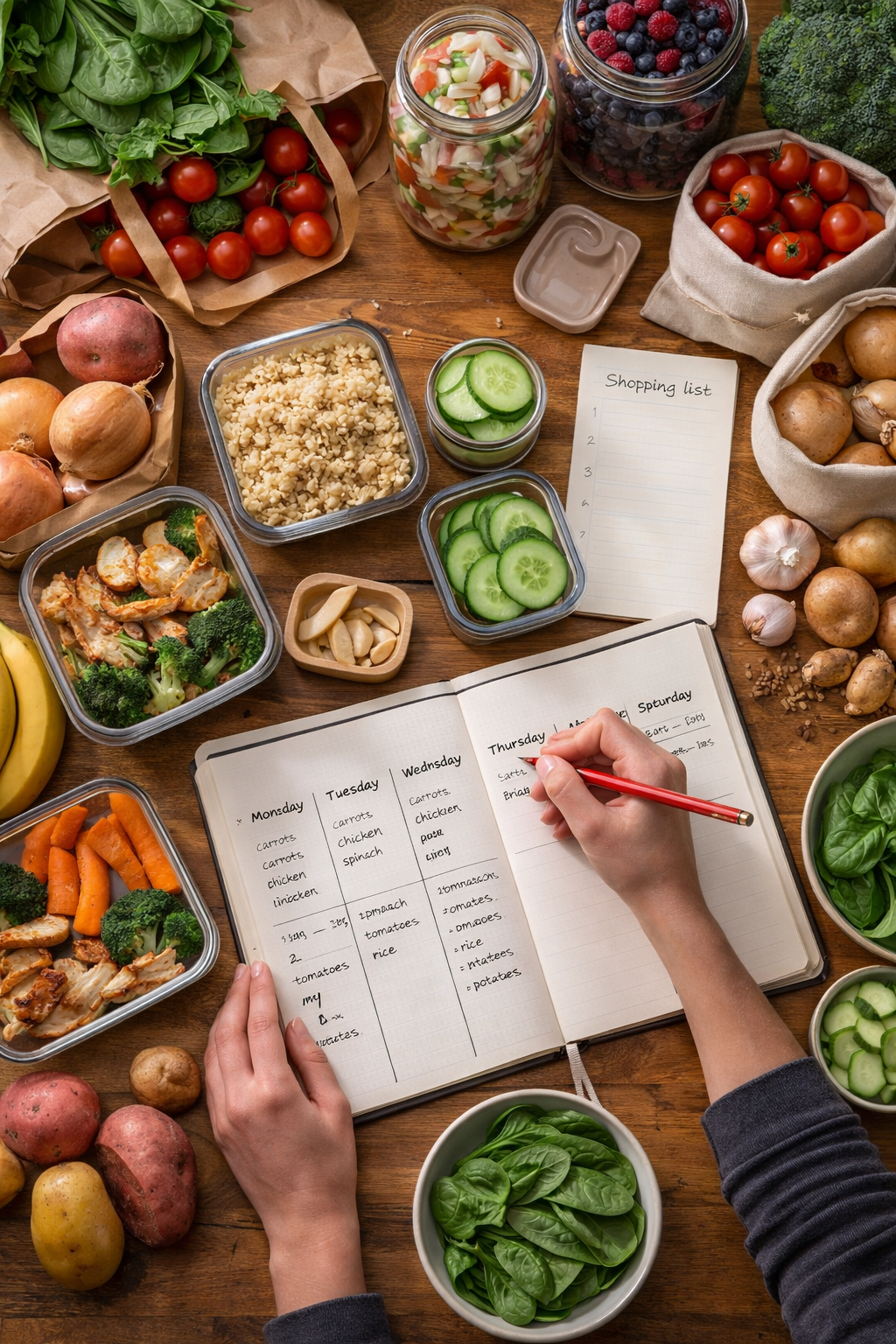
The global food supply chain produces enough calories to feed every human twice over. Yet, nearly 40 percent of that volume disappears between the farm gate and your garbage bin. This systemic failure represents more than just a logistical error. It is a financial hemorrhage. In the United States alone, the average family of four discards 1,500 dollars worth of food annually. You are essentially throwing a stack of twenty-dollar bills into the incinerator every week. This is an urgent crisis of discipline that requires immediate intervention.
Why do you continue this cycle of acquisition and disposal? The answer lies in the “Efficiency Myth” of modern grocery shopping. Supermarkets design their layouts to trigger a biological hoarding instinct. They want you to buy in bulk under the guise of saving money. This strategy shifts the burden of inventory management from the retailer to your refrigerator. When you buy a massive bag of spinach because it costs less per ounce, you take on the risk of spoilage. If you discard half of it, you paid double the intended price. You have been manipulated into becoming a temporary storage facility for a retailer’s excess stock.
The Economic Reality of the Waste Crisis
Food waste is an urgent economic crisis disguised as a household chore. Data from the Food and Agriculture Organization (FAO) suggests that if food waste were a country, it would be the third-largest emitter of greenhouse gases globally. This observation shifts the focus from simple “green living” to a rigorous requirement for personal and fiscal discipline. You are not just wasting organic matter. You are wasting the embedded energy of the sun, the labor of the farmer, and the precious water of the earth.
You must view your kitchen as a high-stakes logistics center. Professional chefs maintain narrow margins by tracking every gram of protein and every vegetable scrap. They do not do this out of environmental altruism alone. They do it to survive. You can apply these same professional protocols to your home to achieve a 50 percent reduction in waste within thirty days.
Does your current shopping habit reflect your actual consumption needs, or does it reflect an idealized version of who you want to be? Most people shop for a “fantasy self” who eats salad every night and cooks complex meals from scratch. When reality hits—late work hours, exhaustion, or social commitments—that produce rots. Your refrigerator becomes a museum of good intentions that eventually turns into a biohazard.
A Timeline of the Great Decoupling
To understand how to fix the problem, you must understand how we arrived at this level of inefficiency. The history of food consumption is a history of increasing distance between the producer and the consumer.
1940 to 1955: The Era of Thrift. Post-war rations and Victory Gardens dictated kitchen logic. Families wasted almost nothing because resources were scarce. Efficiency was a survival trait. Preservation was a necessary skill, not a hobby.
1960 to 1980: The Rise of the Supermarket. The consolidation of food retail introduced the concept of the “Weekly Shop.” Refrigeration technology improved, allowing for longer storage, which paradoxically led to less frequent, higher-volume purchasing. The grocery store became a one-stop-shop, eroding the specialized knowledge of the butcher and the greengrocer.
1990 to 2010: The Bulk Era. Warehouse clubs changed the psychology of value. Buying “more” became synonymous with “saving.” During this period, per-capita food waste in developed nations increased by nearly 50 percent. The “unit price” became the only metric that mattered, regardless of the consumer’s ability to actually utilize the volume.
2015 to Present: The Digital Disruption. Food delivery apps and instant gratification have further decoupled consumers from the reality of their inventory. You buy groceries on Sunday and order takeout on Tuesday, leaving the Sunday groceries to languish. Your phone makes it easier to buy food than to check what you already have.
This timeline demonstrates that your waste is not a personal moral failing but a result of an environment optimized for over-consumption. Breaking this cycle requires a radical shift toward minimalist procurement.
The Procurement Protocol: Reversing the Flow
Most meal planning advice tells you to find recipes first and shop second. This is a fundamental error in logistics. It assumes you are starting from a blank slate, which is almost never true. Instead, you must reverse the flow.
Start by auditing what you already own. Your freezer and pantry are likely filled with “invisible inventory”—items pushed to the back that you forgot existed. A professional kitchen operates on a First In, First Out (FIFO) basis. You must organize your storage so that older items occupy the front row. This is not a suggestion. It is a mandatory operational requirement for efficiency.
Ask yourself: When was the last time you reached for that jar of tahini or the bag of frozen peas at the bottom of the chest? If you cannot name the contents of your freezer right now, you have already lost control of your supply chain. You are effectively paying rent on a storage unit for garbage.
The most effective tip to cut waste is to adopt a “Micro-Shopping” model. Instead of one massive, overwhelming trip to a warehouse store, shop for two or three days at a time. This allows you to adjust for changes in your schedule. If a friend invites you to dinner on Wednesday, you have not already committed to a perishable meal that will now go to waste. Micro-shopping ensures that your produce is always at peak freshness and your inventory remains lean.
The Psychology of the “Empty Fridge”
You likely feel a sense of anxiety when your refrigerator looks empty. This is a vestigial survival instinct that serves no purpose in an age of 24-hour convenience. A full fridge is a dangerous fridge. It obscures items, prevents proper airflow (which speeds up spoilage), and encourages you to cook more than you can eat.
Aim for a “Visible Fridge.” You should be able to see the back wall of every shelf. If you can see it, you will use it. This minimalist approach to food storage forces you to be intentional with every purchase. It turns the refrigerator into a transit point rather than a destination.
Why do you feel the need to have five different types of fruit available at all times? Professional efficiency requires narrowing your focus. Buy two types of fruit. Finish them. Buy two more. This rotating inventory ensures freshness and eliminates the “fruit bowl graveyard” effect. Variety is the enemy of efficiency. Mastery of a few high-quality ingredients is superior to the mismanagement of many.
Storage Science: Extending the Lifecycle
Ignorance of food science is a primary driver of household waste. Most people treat the refrigerator as a monolithic cold box. In reality, it has distinct microclimates. The door is the warmest part. The back of the bottom shelf is the coldest.
Ethylene gas is your primary enemy. Certain fruits like apples, bananas, and tomatoes produce high levels of ethylene, which signals other produce to ripen and eventually rot. If you store your onions next to your potatoes, the onions will cause the potatoes to sprout within days. You are participating in a chemical war in your crisper drawer, and you are losing.
You must learn the “Resuscitation Method” for wilted produce. Most vegetables do not rot immediately. They dehydrate. A limp carrot or a wilted head of kale can often be revived by submerging it in an ice-water bath for thirty minutes. The cells rehydrate through osmosis, restoring the crunch. This single technique can save dozens of pounds of produce every year. It is the difference between a crisp salad and a soggy mess in the bin.
Consider the “Clear Container Mandate.” Humans are visual hunters. If you store leftovers in opaque plastic or foil, you will forget them. Use clear glass containers. This creates a visual “To-Do List” every time you open the fridge. If you cannot see the lasagna, the lasagna does not exist.
Component Prepping vs. Meal Prepping
The standard “Meal Prep Sunday” involves cooking five identical chicken and broccoli bowls. By Wednesday, your palate is bored, and the food has lost its texture. You end up ordering a pizza, and the remaining two bowls go in the trash. This is the failure of the “Batch” mindset.
Switch to “Component Prepping.” Instead of finished meals, prepare building blocks. Roast a tray of versatile vegetables. Boil a pot of grains. Sear a versatile protein.
On Tuesday, these components become a Mediterranean bowl. On Wednesday, they become a stir-fry. On Thursday, they become a wrap. This strategy provides the variety of a restaurant menu with the efficiency of a factory. It allows you to respond to your daily cravings while ensuring your inventory moves through the system. You are not a robot. You cannot predict what you will want to eat four days from now. Component prepping acknowledges your humanity while maintaining your discipline.
The Power of the “Must-Go” Meal
Designate one night a week as the “Kitchen Sink” night. In professional terms, this is “Staff Meal” logic. You take the various scraps—the half-onion, the three remaining stalks of asparagus, the leftover bit of steak—and combine them into a single dish.
Frittatas, fried rice, and hearty soups are the three pillars of waste reduction. They are “forgiving” formats that can absorb almost any ingredient. If you commit to a Must-Go meal every Thursday, you effectively clear your inventory before your next procurement cycle. This prevents the accumulation of “orphan ingredients” that eventually turn into a fuzzy mess in the crisper drawer. It is a weekly reset for your kitchen’s logistics.
Quantifying the Altruism of Frugality
Beyond the financial savings, your discipline has a ripple effect. Every calorie you save reduces the demand for intensive farming, water usage, and transport fuel. In a world of finite resources, waste is a form of theft from the future.
Altruism and frugality are two sides of the same coin. By consuming only what you need, you reduce the pressure on a global food system that is currently buckling under the weight of inefficiency. This is not about deprivation. It is about precision. It is about honoring the life and energy that went into your meal.
When you throw away a piece of meat, you are not just wasting the money you paid. You are wasting the thousands of gallons of water required to raise that animal, the grain used for feed, and the labor of the people who processed it. Viewing waste through this lens of “Embedded Resources” makes the act of discarding food feel like a significant ethical breach. You are discarding the sacrifice of a living being because you were too disorganized to check your schedule.
Technology and the Data-Driven Kitchen
You have a supercomputer in your pocket. Use it to manage your inventory. Simple apps that track expiration dates can send you notifications when an item is nearing its end. But do not rely on automation to replace awareness.
Technology is only as good as the data you provide. You must develop the habit of “Logging the Loss.” For one week, keep a list of everything you throw away and the estimated cost. Seeing the total at the end of the week is a powerful psychological deterrent. It turns an abstract concept into a concrete loss. It is the kitchen equivalent of a bank statement showing a series of fraudulent charges.
Can you justify spending 40 dollars on a meal out when you just threw 40 dollars of groceries in the trash? Probably not. This data-driven approach removes the emotion from meal planning and replaces it with cold, hard logic. It forces you to confront your own inefficiency with undeniable proof.
Industry Case Study: The Zero-Waste Restaurant Model
Look at the operations of high-end restaurants like Silo in London or Freedom Pizza in Dubai. These businesses operate with a near-zero waste footprint. They do not have garbage bins in their kitchens. They achieve this by:
- Nose-to-Tail/Root-to-Stem Cooking: Using parts of the plant and animal that most households discard. Broccoli stems can be shaved into a slaw. Herb stems can be blended into a pesto. The “trash” of an amateur is the “secret ingredient” of a professional.
- Short Menus: Limiting the number of ingredients on hand reduces the chance of any single item spoiling. A restaurant with a 50-page menu is a restaurant with a massive waste problem. Apply this to your home. You do not need twenty different condiments to make a good meal.
- Direct Sourcing: Buying closer to the source increases the “Shelf Life” of the product. The supermarket produce you buy has already spent days or weeks in transit. It is already on its deathbed by the time it reaches your fridge.
You can replicate this at home. Stop peeling your carrots and potatoes. The skin contains the most nutrients and provides better texture when roasted. Stop buying pre-cut fruit. The increased surface area speeds up oxidation and rot. Buy the whole pineapple. It stays fresh longer and costs less. Your laziness is costing you money and quality.
The Ethics of Expiration Dates
You must stop treating “Best By” dates as law. These dates are often arbitrary markers set by manufacturers to encourage faster turnover or to indicate peak quality, not safety. They are not scientific data points.
Learn to trust your senses. The “Sniff Test” and the “Visual Inspection” are more reliable than a printed date on a carton. Except for infant formula, these dates are not federally regulated for safety in many regions. Your nose has evolved over millions of years to detect spoilage. Use it.
The fear of food poisoning often leads to “Preemptive Disposal.” This is a waste of resources born of a lack of education. Understanding the difference between “spoiled” and “past its peak” is the hallmark of an experienced and disciplined cook. Sour milk is excellent for pancakes. Overripe bananas are the only way to make a proper banana bread. Stale bread is the foundation of a world-class Panzanella salad or bread pudding. In a professional kitchen, an ingredient is never “old”—it is just in a different stage of its culinary utility.
The True Cost of “Convenience”
Convenience is a luxury that you pay for twice: once in the price premium and once in the reduced lifespan of the product. Bagged salads are the perfect example. They are washed in chlorine and sealed in gas-filled bags. Once opened, they rot within 48 hours. A whole head of lettuce, properly stored, can last two weeks.
Are you really so busy that you cannot wash a head of lettuce? That ten minutes of “saved” time costs you five dollars in wasted produce. When you calculate the hourly rate of your “saved time,” you will find you are working for pennies. True convenience is having a kitchen that functions like a well-oiled machine, where every ingredient has a purpose and a timeline.
Reimagining the Pantry: The Minimalist Approach
A cluttered pantry is a graveyard of half-used specialty items. You buy a specific spice for one recipe, use a teaspoon, and let the rest lose its potency over three years. This is a waste of space and capital.
Adopt a “Core Pantry” philosophy. Maintain a high-quality selection of versatile staples: olive oil, sea salt, black pepper, a few key spices, one or two types of grain, and a high-quality vinegar. Master the use of these basics before expanding. A minimalist pantry allows you to see everything at a glance, preventing duplicate purchases and ensuring that your dry goods stay fresh. If you haven’t used an item in six months, you shouldn’t buy it again.
The Social Responsibility of the Table
Eating is a social act, but it is also a political and ecological one. When you invite people to your home, you set the standard for consumption. Do you over-prepare to “look generous,” knowing half the food will be tossed? Or do you prepare precisely, honoring the ingredients and the appetites of your guests?
Generosity is not measured by the volume of leftovers. It is measured by the quality of the experience. A perfectly portioned meal shows more respect for your guests and the food than a wasteful buffet. We must change the social narrative that equates “excess” with “hospitality.”
The Path Forward: A Culture of Respect
The ultimate goal of meal planning is to foster a culture of respect for the food you consume. When you value the labor and life behind your meals, waste becomes unthinkable. It is a shift from being a consumer to being a participant in a vital life cycle.
You must lead by example. Teach your children the value of a single grain of rice. Show them that a refrigerator is a tool for preservation, not a storage unit for future trash. Involve them in the audit process. Let them see the “Logging of the Loss.” Education is the only way to break the generational cycle of waste.
This journey toward a 50 percent waste reduction requires no special equipment or expensive subscriptions. It requires only a change in perspective. It requires you to stop being a passive consumer and start being an active steward of your resources. You have the power to stop the financial and ecological hemorrhage in your own home today.
Will you continue to let your hard-earned money rot in the back of your fridge? Or will you take the first step toward a minimalist, efficient, and ethical kitchen today? The urgency of the situation cannot be overstated. Every meal you plan is a vote for a more sustainable and disciplined future. The time for excuses has passed. The time for efficiency is now.
Detailed Strategies for Specific Food Groups
To achieve a 50 percent reduction, you must apply specific tactics to the most commonly wasted categories.
Leafy Greens and Herbs These are the most perishable items in your kitchen. Treat them like cut flowers. Store cilantro and parsley in a glass of water in the fridge. For bagged greens, place a paper towel inside the bag to absorb excess moisture. This single step can double their lifespan. If they begin to wilt, blend them into a pesto or a green smoothie immediately. Do not wait for them to turn into slime.
Proteins Meat and fish are the most expensive items and carry the highest “Embedded Resource” cost. If you are not cooking them within 24 hours of purchase, they must go in the freezer. Use the “Inverse Thaw” method: move the item from the freezer to the fridge 24 hours before you need it. This maintains the cell structure and prevents the “Drip Loss” associated with microwave thawing.
Dairy Milk and cream should never be stored in the refrigerator door. The constant temperature fluctuations every time you open the door will cause them to sour prematurely. Store them on the middle shelf toward the back. If your milk is nearing its date, use it to make a batch of yogurt or a béchamel sauce that can be frozen.
Bread Never store bread in the refrigerator. The cold temperature causes a process called starch retrogradation, which makes it go stale faster. Store it in a cool, dry place or freeze it in slices. Stale bread is not trash. It is croutons, breadcrumbs, or French toast.
The Role of the Freezer as a Tactical Reserve
Your freezer should not be a “black hole” where food goes to be forgotten. It is a tactical reserve.
Freeze “Scrap Bags.” Keep one bag for vegetable scraps (onion skins, carrot ends, celery leaves) to make stock. Keep another for fruit scraps (apple peels, berry ends) for infusions or syrups. This captures value from items that are traditionally viewed as waste.
Freeze “Flavor Bombs.” If you have a half-can of tomato paste or a bit of leftover wine, freeze them in ice cube trays. These small portions can be dropped into future sauces to add depth without opening new containers.
Final Implementation: The 30-Day Efficiency Challenge
To cement these habits, commit to a 30-day challenge.
Days 1-7: The Total Audit. Empty every shelf. Catalog everything. Eat only from your existing inventory. Buy nothing but fresh produce and milk.
Days 8-14: The Micro-Shopping Transition. Shop for only two days at a time. No bulk purchases. No “just in case” items.
Days 15-21: The Resuscitation and Preservation Phase. Practice reviving wilted vegetables. Learn to ferment or pickle the “ends” of your produce.
Days 22-30: The Protocol Integration. Establish your permanent “Must-Go” night. Finalize your “Visible Fridge” layout.
At the end of these 30 days, compare your grocery spending to the previous month. You will likely find a surplus of several hundred dollars. This is your “Efficiency Dividend.” Use it to buy higher-quality, ethically sourced ingredients. The goal is to eat better, not just less.
Summary of Actionable Protocols
- Audit your inventory before every shopping trip. No exceptions.
- Use the “Visible Fridge” layout to prevent forgotten items.
- Switch to “Micro-Shopping” to match your actual schedule.
- Apply the “Resuscitation Method” to wilted produce.
- Practice “Component Prepping” for maximum versatility.
- Commit to a weekly “Must-Go” meal.
- Trust your senses over arbitrary expiration dates.
- Log your losses to understand the financial impact.
- Treat your pantry as a minimalist tool, not a storage unit.
- View every discarded item as a failure of logistics and ethics.
The transition to a zero-waste household is not a destination. It is a continuous process of refinement. By applying these professional standards to your daily life, you reclaim your time, your money, and your integrity. You move from being a victim of the supermarket’s design to being the master of your own domain. The path to a better world starts on your plate and ends in your bin. Make it count.
References
Food Waste and the Circular Economy: A Global Perspective
https://www.fao.org/food-loss-and-food-waste/flw-data
The Economic Impact of Household Food Waste in the United States
https://www.usda.gov/foodwaste/faqs
The Psychology of Consumer Over-Purchasing in Supermarkets
https://www.google.com/search?q=https://www.sciencedirect.com/science/article/pii/S095032931830155X
Professional Kitchen Management and Waste Reduction Protocols
A History of Food Preservation and the Rise of the Cold Chain
https://www.google.com/search?q=https://www.smithsonianmag.com/history/history-of-the-refrigerator
Ethylene Gas and Produce Spoilage: A Scientific Analysis
https://www.google.com/search?q=https://www.canr.msu.edu/news/ethylene-the-ripening-hormone
The Impact of Food Waste on Global Greenhouse Gas Emissions
Consumer Perception of Date Labels and Food Waste Behavior
https://www.google.com/search?q=https://www.fda.gov/food/consumers/confused-date-labels-on-foods
Author bio
Julian is a graduate of both mechanical engineering and the humanities. Passionate about frugality and minimalism, he believes that the written word empowers people to tackle major challenges by facilitating systematic collaborative progress in science, art, and technology. In his free time, he enjoys ornamental fish keeping, reading, writing, sports, and music. Connect with him here https://www.linkedin.com/in/juliannevillecorrea/
About The Author


