
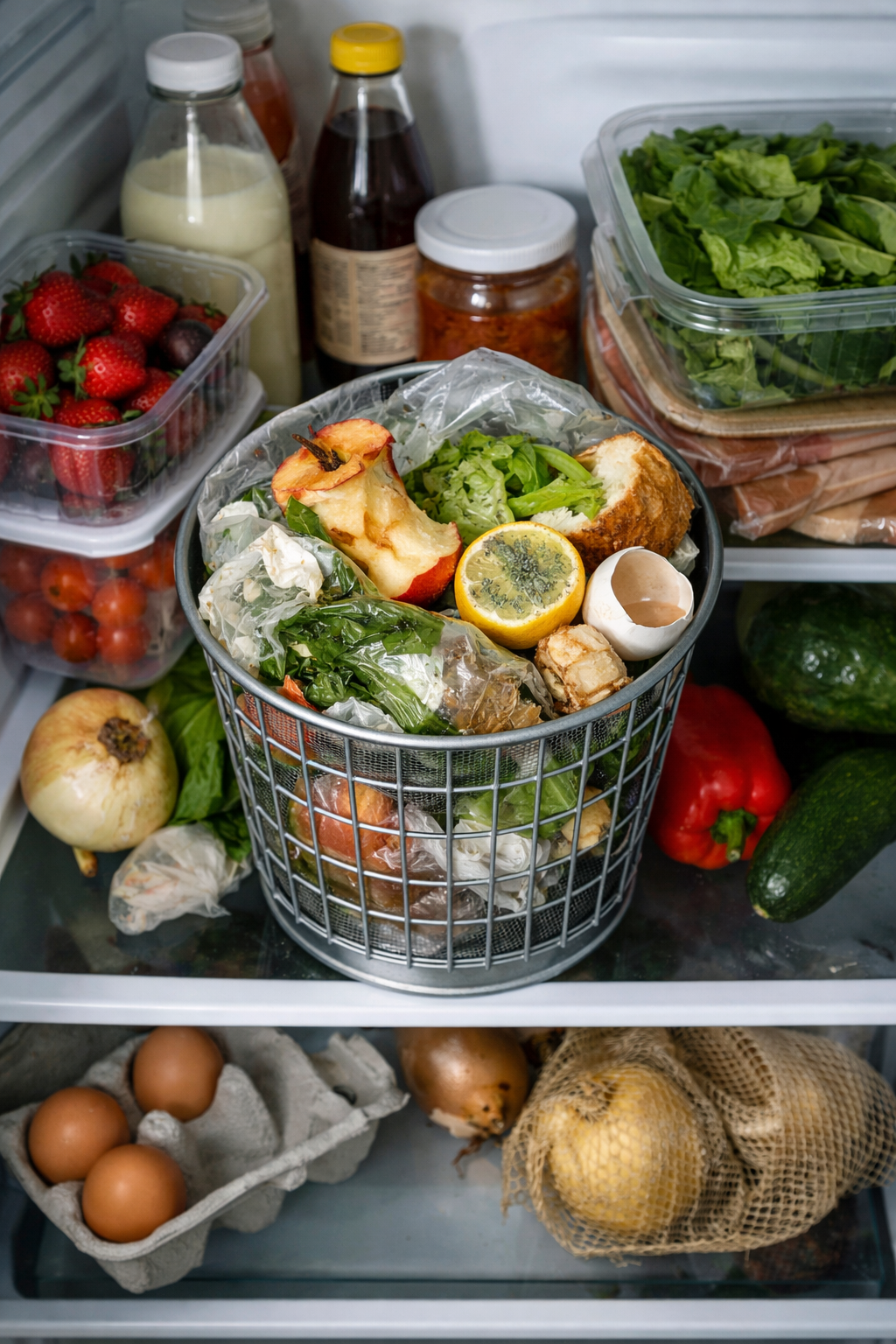
Every time you scrape a half-eaten meal into the bin or toss a bag of liquefied spinach into the trash, you are effectively burning cash. This is not a metaphor. The average American household of four loses roughly 1,500 to 2,000 dollars annually on food that never reaches a human stomach. Globally, we discard 1.3 billion tons of food every year. While industrial supply chains bear some blame, the most significant point of failure exists within your own kitchen. You are likely treating your refrigerator as a waiting room for the landfill. This financial and resource hemorrhage occurs because of specific, preventable habits that prioritize convenience and aesthetic over utility and science. Stop viewing food waste as an environmental abstraction and start seeing it as a personal fiscal crisis and a profound disrespect to the natural world that worked so hard to produce that nourishment.
The scale of this inefficiency is staggering. In the United States alone, 40 percent of the food supply is never eaten. This represents not only a loss of nutrition but a massive waste of the water, energy, and human labor required to grow, harvest, and transport those goods. When you throw away a single apple, you are throwing away the 25 gallons of water used to grow it and the fuel used to ship it. You are also wasting the life-giving effort of the soil and the sun. We must act with a sense of extreme urgency because our current consumption patterns are unsustainable. Your kitchen is the front line in this battle for resource preservation and financial sanity. Reclaiming control over your food management is the ultimate act of frugality and respect for life.
- BLIND FAITH IN ARBITRARY DATE LABELS
You likely treat the date stamped on a carton of milk as a hard deadline for safety. This is a fundamental misunderstanding of food labeling systems. In the United States and many other regions, date labels do not indicate safety. They represent a manufacturer guess at peak quality. These Sell By, Best If Used By, and Enjoy By dates are marketing tools designed to protect brand reputation and accelerate stock rotation. The only product with a federally mandated safety date is infant formula. For everything else, the date is a suggestion, not a law.
The confusion surrounding these labels accounts for approximately 20 percent of all household food waste. When you discard a yogurt because it is one day past its Best If Used By date, you are often throwing away perfectly edible food. The food industry operates on a system of open dating that lacks federal regulation. As a result, consumers default to an ultra-conservative approach that leads to massive premature disposal. You must learn to trust your senses over a printed stamp. Is the seal intact? Does the product smell sour? Is the texture compromised? If the answer is no, the food is likely safe. By adhering strictly to these arbitrary timelines, you are essentially letting a marketing department dictate your grocery budget and your waste habits.
The history of these labels dates back to the 1970s when consumers demanded more transparency. The unintended result was a culture of fear. We have traded basic culinary intuition for a false sense of security provided by ink on plastic. Reclaim your authority as a consumer. Research the specific shelf lives of different food categories. Most shelf-stable goods remain safe for months or even years beyond their labels if stored in a cool, dry place. Hard cheeses can last weeks past their date. Even eggs remain viable for three to five weeks after purchase, regardless of the date on the carton. This is where your commitment to frugality meets common sense. Every gallon of milk poured down the drain because of a date on the jug is a direct hit to your bank account and a waste of the animal life that provided it.
- THE STRATEGIC FAILURE OF BULK GROCERY PURCHASING
The allure of the unit price is a powerful psychological trap. Big-box retailers and warehouse clubs thrive on the logic that buying more saves you more. This is a fallacy if you do not consume 100 percent of what you buy. If you purchase a five-pound bag of oranges because the price per pound is lower than a single orange, but you throw away two pounds of moldy fruit ten days later, you did not save money. You paid a premium for the privilege of hauling trash to the curb. You paid the retailer for the right to waste their products.
Bulk buying requires a level of inventory management that most households simply do not possess. It assumes your consumption rates will remain constant and your schedule will not change. Life is rarely that predictable. When you buy in bulk, you increase the volume of food in your home, which often leads to portion distortion. You eat more because more is available, or you ignore the items at the bottom of the bin until they rot. This is the opposite of a minimalist approach. A minimalist kitchen holds only what is necessary and ensures that every item has a designated purpose.
To correct this, you must calculate the real cost of your groceries. If a bulk item has a 30 percent waste rate, your effective price per unit increases by nearly 43 percent. Stop shopping for the person you wish you were and shop for the person you actually are. Unless you are running a commercial kitchen or a large, highly disciplined family, buying fresh produce in bulk is a recipe for waste. Stick to bulk purchases for non-perishable items like laundry detergent or canned goods. Perishables should be bought in quantities that reflect your immediate, three-day reality. This disciplined approach to purchasing is the hallmark of a frugalist who understands that true savings come from zero waste, not from a lower unit price on a volume you cannot use.
- ASPIRATIONAL PRODUCE SHOPPING AND THE HEALTHY ME FALLACY
Most people go to the grocery store with the intent of being their best selves. This leads to aspirational shopping. You buy ingredients for meals you have no actual intention of cooking. You buy a head of kale, three bundles of radishes, and a bag of quinoa because you want to be a person who eats vibrant salads every night. By Wednesday, you are tired, overworked, and ordering pizza. The kale remains in the crisper drawer until it turns into a yellowing sludge. You are buying for a fantasy version of your life, not your real life.
This cycle of guilt-driven purchasing is a primary driver of fresh produce waste. Produce accounts for the largest share of food discarded at the household level. You are buying for an identity, not a nutritional need. Instead, apply a ruthless honesty to your shopping list. If you did not cook from scratch last week, do not buy a dozen raw ingredients this week. If you have a history of letting salad greens rot, stop buying them in large bags. Buy exactly what you need for one meal. This is where eating discipline begins. It starts at the store, not at the table.
Practicality must trump ambition. If you know your schedule is chaotic, buy frozen vegetables. They are frozen at peak ripeness and offer the same nutritional value as fresh produce without the ticking clock of decay. Stop letting your refrigerator become a graveyard for your failed health goals. Acknowledge your habits. If you rarely peel and chop carrots, do not buy whole carrots. Buy the pre-cut versions if that is what it takes to actually eat them. The slightly higher upfront cost of processed produce is still lower than the 100 percent loss of throwing away a whole bunch of rotting vegetables. Respect nature that grew that vegetable by ensuring it actually provides you with sustenance.
- POOR REFRIGERATION MANAGEMENT AND THE COLD GRAVE
Your refrigerator is likely organized for aesthetics rather than science. This is a mistake that accelerates spoilage. Refrigerators have micro-climates. The door is the warmest part of the unit and should never hold milk or eggs. Most people put them there because the molded plastic inserts suggest it. This exposes your most perishable items to constant temperature fluctuations every time you open the door. This mistake alone can cut the shelf life of your milk by several days.
The crisper drawers are another area of massive failure. These drawers are designed to manage humidity. High humidity is for things that wilt, like leafy greens. Low humidity is for things that rot, like fruits that emit ethylene gas. When you mix these items, you create a chemical environment that forces everything to decay faster. You are essentially suffocating your vegetables with fruit gas. This is a technical failure that costs you money every single month.
Furthermore, most households overstuff their refrigerators. Proper cooling requires airflow. When you pack every shelf tight, you create warm spots where bacteria can flourish. You also lose visibility. If you cannot see the leftovers sitting behind the giant jar of pickles, you will not eat them. Professional kitchens use a system called FIFO, which stands for First In, First Out. You must adopt this. Move the older items to the front every time you put away new groceries. Make it impossible to ignore the food that needs to be eaten first. A minimalist refrigerator is an organized one. If you can see everything you own, you are far less likely to let it rot in a dark corner.
- THE STEM TO ROOT KNOWLEDGE GAP
The modern consumer is disconnected from the anatomy of food. You likely throw away the most nutritious and flavorful parts of your vegetables because you think they are trash. Broccoli stalks, beet greens, carrot tops, and potato peels are all edible and versatile. When you discard these, you are throwing away up to 30 percent of the product you paid for. You are literally throwing money into the bin because you do not know how to cook the whole plant.
Broccoli stalks, once peeled, have a sweetness and crunch that rivals the florets. Beet greens are nearly identical to Swiss chard. Carrot tops make excellent pesto. Even the rinds of hard cheeses like Parmesan can be tossed into soups to add depth and umami. Your inability to use the whole plant is a form of culinary illiteracy that costs you money and wastes the energy of the earth. Nature does not produce waste. Only humans do. In a natural forest, every fallen leaf is used. Your kitchen should aim for the same efficiency.
This waste stems from a lack of preparation skills. We have been conditioned to buy perfectly manicured, plastic-wrapped portions of food. This makes us view the natural irregularities of produce as waste. Change your perspective. See the scraps as ingredients. Collect vegetable ends in a bag in the freezer. Once the bag is full, boil them with water to create a rich vegetable stock. This eliminates the need to buy boxed broth and extracts every cent of value from your grocery bill. This is the essence of frugality. It is about maximizing the utility of every resource you possess.
- OVERESTIMATING PORTION SIZES AND PLATE WASTE
Plate waste is the food left behind after a meal is finished. In many households, this occurs because the person cooking overestimates how much everyone will eat. We suffer from a cultural compulsion to provide abundance. We fear the idea of someone leaving the table hungry, so we cook 20 percent more than necessary. This is not generosity. It is waste. It is a failure of discipline.
As a result, that extra food either sits on plates and goes into the trash or sits in the fridge as a leftover that no one wants. To solve this, you must change how you serve food. Stop plating meals in the kitchen. Use family-style service where people take what they actually intend to eat. This keeps the remaining food in the serving dish, where it stays clean and can be stored properly as a future meal. It also encourages eating discipline, as people are more mindful of their hunger levels when they have to serve themselves.
Research indicates that smaller plates lead to smaller portions and less waste. The Delboeuf illusion proves that the same amount of food looks like more on a smaller dish. This tricks the brain into feeling satisfied with less. Monitor what comes back to the kitchen. If you consistently find half a cup of rice left in the pot, cook half a cup less next time. Precision is the enemy of waste. Practice the minimalist art of cooking exactly what is needed. This respects the food and your body. Overeating is just another form of food waste where the surplus is stored as fat rather than discarded in the trash. Neither outcome is desirable.
- FAILURE TO CONDUCT PRE-SHOPPING INVENTORY
How many jars of mustard do you currently have in your pantry? Most people do not know. This lack of situational awareness leads to duplicate purchasing. You go to the store, think you might be out of eggs, buy a dozen, and return home to find eight eggs already in the fridge. Now you have twenty eggs and a race against time to eat them. You have cluttered your pantry and stressed your schedule because you failed to spend five minutes looking in your cupboards.
The most effective tool against food waste is not a high-tech gadget but a simple list based on a five-minute inventory. Before you leave for the store, you must look in your cupboards, your freezer, and your refrigerator. Take a photo of the inside of your fridge if you have to. This gives you a visual reference while you are in the store aisle.
Shopping without a list is an invitation for impulsive, redundant, and wasteful behavior. Retailers spend millions of dollars on store layouts designed to make you buy things you do not need. A list is your shield. If it is not on the list, do not buy it. This discipline ensures that every item entering your home has a specific purpose and a planned time for consumption. Stop treating grocery shopping as a leisure activity and start treating it as a logistics operation. A frugal minimalist knows exactly what they have and exactly what they need. There is no room for guesswork in a well-managed household.
- CROSS-CONTAMINATION OF ETHYLENE-PRODUCING PRODUCE
Food science is rarely taught in schools, yet it governs everything in your kitchen. Many fruits—apples, bananas, avocados, and tomatoes—emit ethylene gas as they ripen. This gas is a ripening agent. If you store ethylene-producers next to ethylene-sensitive items like onions, leafy greens, or broccoli, the sensitive items will spoil at an accelerated rate. You are essentially sabotaging your own groceries through chemical warfare in your pantry.
Potatoes and onions are a classic example of this mistake. Most people store them together in a dark bin. Yet, onions emit gases that cause potatoes to sprout and rot much faster. They should be kept far apart in well-ventilated areas. This is a simple fix that requires no money, only knowledge. When you ignore the biology of your food, you pay the price in rotted produce.
Understanding these chemical interactions is vital for extending the life of your food. Keep your bananas away from everything else unless you are trying to ripen a hard avocado. Remove the rubber bands from your greens to allow for airflow. Wrap the stems of your bananas in plastic wrap to slow the release of ethylene. These small, science-based adjustments can add days or even weeks to the lifespan of your produce. Ignoring the chemistry of your kitchen is a direct path to waste. We must respect the biological processes of nature if we want to benefit from its bounty.
- THE EMOTIONAL STIGMA OF USING LEFTOVERS
We live in a culture that prizes novelty. Many people view leftovers as a sign of failure or a boring chore. This psychological barrier is a major contributor to household waste. You put the remains of Tuesday dinner in a container, shove it to the back of the fridge, and then ignore it until it becomes a science project. You are treating your future self with contempt by leaving them a mystery box of old food.
You must rebrand leftovers as planned-overs. Professional chefs call this component cooking. You do not just eat the same meal twice. You use the leftover roasted chicken to make tacos. You turn the extra rice into fried rice. You take the roasted vegetables and blend them into a soup. This is how you eat with discipline and frugality. You are not just saving money. You are saving time, which is your most valuable non-renewable resource.
If you are unwilling to eat a meal again, stop making such large quantities. The more efficient route is to embrace the second life of ingredients. This saves you time as well as money. The energy required to reheat a meal is a fraction of the energy required to cook from scratch. If you find that you truly cannot face the same food two days later, use your freezer immediately. Do not wait for the food to linger in the fridge for three days before freezing it. Freeze it the night you cook it. This preserves the quality and gives you a ready-made meal for a night when you are too busy to cook. Freezing is an act of preservation that honors the work that went into the meal.
- MISUNDERSTANDING THE REAL COST OF COMPOSTING
Composting is often viewed as a get out of jail free card for food waste. You feel less guilty about throwing away a wilted salad if you know it is going into a compost bin instead of a landfill. This is a dangerous mindset. While composting is infinitely better than sending organic matter to a landfill—where it produces methane gas—it is still a failure of the system. It is a sign that you failed to manage your resources properly.
Composting is the last resort, not a primary solution. When you compost edible food, you are still wasting all the energy, water, fuel, and labor that went into producing, transporting, and selling that food. You are essentially paying full price for high-quality organic matter to feed your dirt. A frugal minimalist would rather feed themselves than their compost pile. The goal is to maximize the utility of the food before it returns to the earth.
The goal should be source reduction. You want to minimize the amount of material that ever reaches the compost bin. Use every part of the plant first. Eat your leftovers. Shop with a plan. Composting should only be for the truly inedible parts, like eggshells, pits, and coffee grounds. If your compost bin is constantly full of whole fruits and vegetables, your system is broken. You are not being an environmentalist. You are being a wasteful consumer with a green conscience. True environmentalism is about reducing consumption, not just managing waste.
THE IMPERATIVE FOR A NEW KITCHEN DOCTRINE
The path to a zero-waste household does not require expensive technology or radical lifestyle shifts. It requires a return to basic domestic management and a rejection of the disposable culture encouraged by modern retail. You must become the lead auditor of your own kitchen. You must view every piece of food as a precious gift from the natural world that deserves to be used to its fullest potential.
Start by tracking your waste for one week. Write down every single item you throw away and the reason why. Was it expired? Did you forget it was there? Did you cook too much? This data will reveal your specific patterns of failure. Most people find that they repeat the same three or four mistakes every single week. This awareness is the first step toward change. Once you see the patterns, the solutions become obvious.
Once you identify the leaks in your budget, plug them with discipline. Shop with a list. Trust your nose over a date label. Learn the basics of food chemistry. Stop buying for the person you want to be and start feeding the person you are. The financial reward is immediate. The environmental impact is profound. Food waste is not an inevitable byproduct of modern life. It is a choice you make every time you open your refrigerator. We are running out of resources and time. The efficiency of your kitchen is a reflection of your values. Choose to be a person who respects the earth, values their money, and practices true discipline. Choose to end the waste.
The transition to a minimalist, frugal kitchen is an act of liberation. It frees you from the cycle of overspending and the guilt of waste. It aligns your daily actions with a deeper appreciation for nature and the complex systems that sustain us. When you treat your food with respect, you treat yourself and the world with respect. This is the only way forward in an age of scarcity. Start today. Audit your fridge, make your list, and stop the bleed. Your future self and the planet will thank you.
REFERENCES
Food and Agriculture Organization of the United Nations: Food Loss and Waste Database
https://www.fao.org/platform-food-loss-waste/flw-data/en/
ReFED: A Roadmap to Reduce U.S. Food Waste by 50 Percent
https://refed.org/food-waste/the-problem/
NRDC Report: Wasted: How America Is Losing Up to 40 Percent of Its Food from Farm to Fork to Landfill
https://www.nrdc.org/resources/wasted-how-america-losing-40-percent-its-food-farm-fork-landfill
USDA Food Safety and Inspection Service: Food Product Dating
The Journal of Consumer Research: The Psychology of Bulk Buying and Consumption
Harvard T.H. Chan School of Public Health: Food Waste and Environment
https://www.hsph.harvard.edu/nutritionsource/sustainability/food-waste/
United Nations Environment Programme: Food Waste Index Report https://www.unep.org/resources/report/unep-food-waste-index-report-2021
Environmental Protection Agency: From Farm to Kitchen: The Environmental Impacts of U.S. Food Waste https://www.epa.gov/land-research/farm-kitchen-environmental-impacts-us-food-waste
Author bio
Julian is a graduate of both mechanical engineering and the humanities. Passionate about frugality and minimalism, he believes that the written word empowers people to tackle major challenges by facilitating systematic collaborative progress in science, art, and technology. In his free time, he enjoys ornamental fish keeping, reading, writing, sports, and music. Connect with him here https://www.linkedin.com/in/juliannevillecorrea/
About The Author


