
Landfills are the third largest source of human related methane emissions in the United States. This is a data point that most urban dwellers ignore as they toss coffee grounds and banana peels into a plastic liner. You likely believe that organic waste simply disappears once the garbage truck rounds the corner. Instead, that waste becomes trapped in an anaerobic environment, producing methane, a greenhouse gas twenty-eight times more potent than carbon dioxide. This represents a catastrophic failure of resource management. You are currently paying municipal taxes to transport a valuable raw material to a site where it becomes a liability. Composting is not a rural hobby or a luxury for those with vast backyards. It is a technical necessity for any modern household.
The challenge of composting in a small apartment is not a lack of space. It is a lack of understanding regarding the chemistry of decomposition. You do not need an acre of land to recycle your nutrients. You need a controlled environment that manages oxygen, moisture, and microbial ratios. When you master these variables, you transform your kitchen into a highly efficient processing facility. This editorial outlines the authoritative methods for urban nutrient cycling, focusing on systems that eliminate the traditional barriers of odor, pests, and spatial requirements.
THE TRIPLE BIN MYTH AND THE RISE OF MICRO COMPOSTING
The traditional imagery of composting involves large wooden slats and pitchforks. This imagery is obsolete for the urban professional. In a high density environment, you must prioritize the footprint to output ratio. The three primary technologies available to you are vermicomposting, bokashi fermentation, and small scale aerobic decomposition. Each of these systems has specific biochemical requirements and operational costs.
Why are you still throwing away thirty percent of your household waste? If you live in a five hundred square foot apartment, a five gallon bucket system can process up to one hundred pounds of food waste annually. This is not a theory. It is a matter of calculating your input. By selecting the right system for your specific lifestyle, you remove the friction of environmental stewardship. The shift from a centralized waste model to a decentralized micro-composting model reduces the carbon footprint of waste logistics by nearly ninety percent. You are essentially eliminating the need for a three ton truck to move ten pounds of peels across the city.
THE BIOLOGICAL ENGINE: VERMICOMPOSTING IN TIGHT SPACES
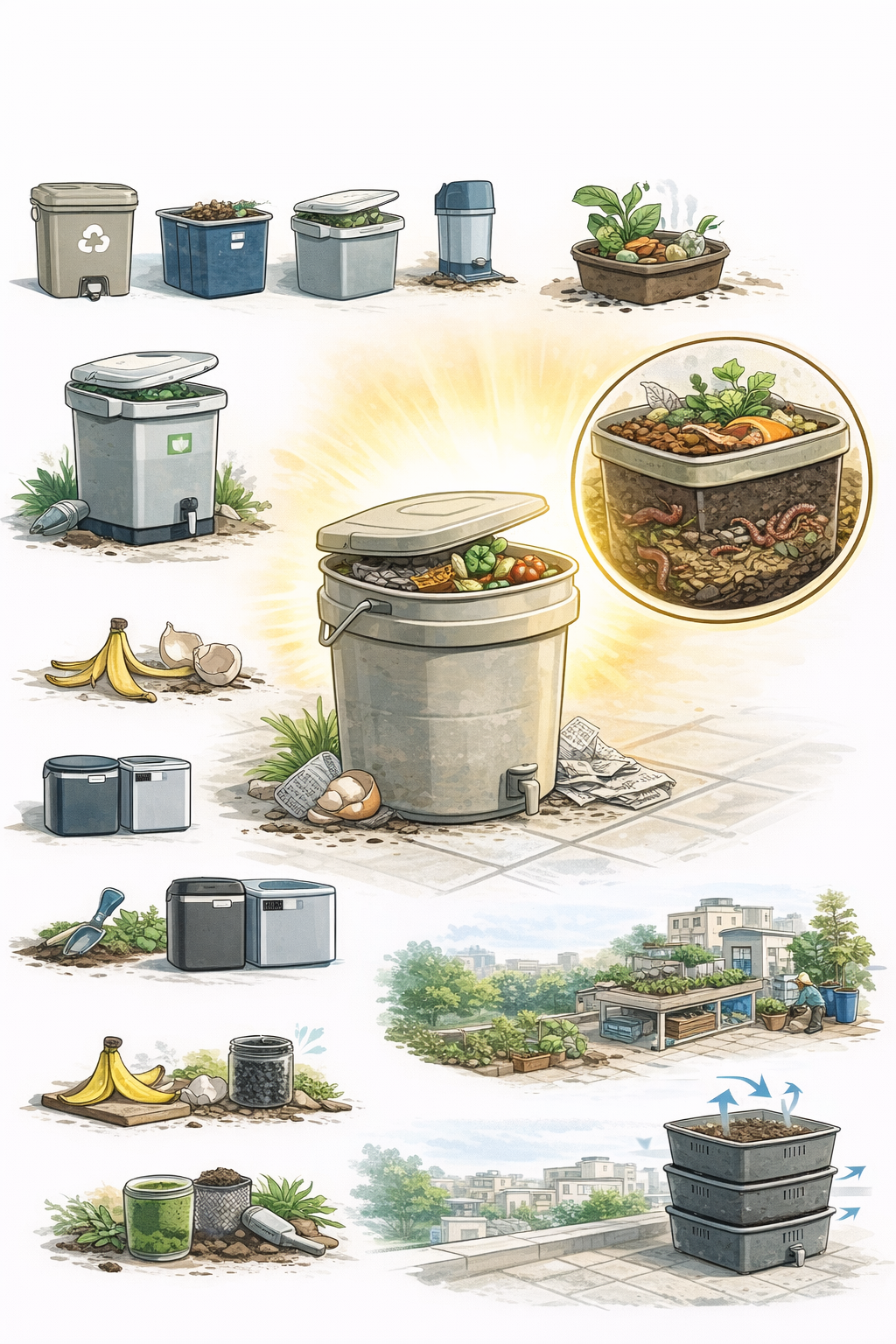
Vermicomposting utilizes Eisenia fetida, commonly known as red wiggler worms, to process organic matter. This is arguably the most efficient way to convert food scraps into high quality fertilizer within an apartment. The worms are not pests. They are specialized biological machines that thrive in dark, confined spaces. They possess a unique digestive tract that neutralizes pathogens and enriches the material with beneficial bacteria and enzymes.
You must view a worm bin as a living reactor. The bedding, typically shredded cardboard or coconut coir, acts as the carbon source and the habitat. The food scraps provide the nitrogen. A healthy worm bin operates at a carbon to nitrogen ratio of roughly thirty to one. If you deviate from this ratio, the system fails. Too much nitrogen leads to ammonia gas and a foul smell. Too much carbon slows the process to a crawl. You must manage the moisture levels with precision. The bedding should feel like a wrung out sponge. If it is too dry, the worms cannot breathe through their skin. If it is too wet, they drown.
A significant benefit of this system is the production of vermicast. This substance contains a diverse microbial population and highly concentrated nutrients that outperform standard commercial fertilizers. Are you willing to manage a livestock population in your utility closet to achieve superior soil health? For many, the answer is yes, provided they maintain the temperature between fifty-five and seventy-seven degrees Fahrenheit. Outside this range, the biological engine stalls. Red wigglers can process half their body weight in waste every single day. Starting with one pound of worms allows you to process roughly three point five pounds of scraps per week. As the population expands, so does your capacity for waste diversion.
BOKASHI FERMENTATION: THE ANAEROBIC ALTERNATIVE
If you find the idea of worms unappealing or if your diet includes meat and dairy, bokashi is your solution. Traditional composting avoids animal products because they attract rodents and rot slowly in aerobic conditions. Bokashi is different. It is a fermentation process that occurs in an airtight bucket. The term originates from Japanese, meaning fermented organic matter.
This system uses a specialized bran inoculated with effective microorganisms, or EM. These microbes include lactic acid bacteria, yeasts, and photosynthetic bacteria. When you add your scraps to a bokashi bin, you press them down to remove air and sprinkle a layer of bran. The result is a pickling process rather than a rotting process. The acidic environment prevents the growth of putrefying bacteria that cause traditional odors.
This technology is the gold standard for the small apartment. The bin is completely sealed, meaning there is zero chance of fruit flies or unpleasant odors. The only output is a leachate, often called bokashi tea, which you must drain every few days. This liquid is a potent drain cleaner and plant fertilizer when diluted. After two weeks of fermentation, the solid waste is pre-composted and ready to be buried in a planter box or a community garden plot. Why are you limiting yourself to vegetable scraps when you could be recycling your entire plate? Bokashi even handles small bones and citrus peels, items that would stall a worm bin or an aerobic pile.
THE BIOCHEMISTRY OF THE URBAN BROWN TO GREEN RATIO
The most common cause of compost failure is a lack of brown material. In a suburban setting, you have access to dry leaves and wood chips. In a city, you must be more creative. Browns are your carbon source. They provide the structure for oxygen to move through the pile and they absorb excess moisture. Without sufficient carbon, the nitrogen in your food scraps transforms into stinky ammonia.
You have a surplus of carbon in your home that you currently send to the recycling center. Brown paper bags, non-glossy cardboard delivery boxes, and even the lint from your clothes dryer serve as excellent carbon sources. You must shred these materials to increase their surface area. A hand powered paper shredder is a vital tool for the urban composter. If you find your bin is too wet, add a thick layer of shredded newsprint. If it is too dry, add more fruit scraps or a splash of water.
If your bin smells like rotten eggs, you are experiencing anaerobic decay. This means your moisture levels are too high or your oxygen levels are too low. You solve this by adding more shredded cardboard and physically aerating the material. If the pile is dry and nothing is happening, you add more greens, such as coffee grounds or fresh vegetable trimmings. You are the manager of this chemical balance. Your goal is a pile that remains aerobic, meaning it has a constant supply of oxygen for the bacteria to thrive.
THE MYTH OF THE SMELLY COMPOST BIN
Fear of odor is the primary reason people avoid home composting. This fear is rooted in a lack of understanding of aerobic versus anaerobic processes. Aerobic decomposition, which uses oxygen, smells like a forest floor or damp earth. This is the scent of success. Anaerobic decomposition, which happens in the absence of oxygen, produces hydrogen sulfide and methane. This is the scent of failure. You must proactively manage the airflow in your system to avoid the latter.
If your compost smells, you are doing it wrong. It is that simple. In an apartment, you can maintain aerobic conditions by turning your bin regularly or by using a system with built-in ventilation. Some modern electric composters use heat and mechanical grinding to dehydrate and break down food waste in hours. While these devices are convenient, they are energy intensive and technically produce a dried organic amendment rather than a finished compost. Are you looking for a quick fix or a true biological cycle? True compost requires the action of life, not just the application of heat.
Temperature control is also a factor. In a small bin, you will not reach the high temperatures seen in industrial piles which can hit one hundred and sixty degrees Fahrenheit. This means your home system will not kill weed seeds or certain pathogens. For an apartment dweller, this is rarely an issue because you are likely not composting garden weeds. You are processing kitchen waste that is generally free of these contaminants. If you are concerned about pathogens, stick to plant-based scraps and utilize a long curing period for the finished product.
PRACTICAL LOGISTICS: THE KITCHEN WORKFLOW
You need a clear workflow to make composting a permanent habit. Most people fail because the process is too cumbersome. Start with a dedicated countertop container. This should be a small, stainless steel or ceramic vessel with a charcoal filter in the lid. This filter traps any gases while allowing the scraps to breathe. This prevents the initial buildup of odors before the scraps reach your main bin.
Empty this container into your main bin every two days. If you find that you cannot keep up with the volume, use your freezer. Freezing your scraps stops decomposition entirely and breaks down the cell walls of the vegetables. This makes them easier for microbes or worms to digest once they thaw. This is a strategic move for those with irregular schedules or for those living in particularly warm climates where countertop decomposition happens too quickly.
What do you do with the finished product? This is where many apartment dwellers stall. If you do not have indoor plants, you can donate your compost to a local community garden, a school garden, or even a neighbor with a yard. Many cities now have pick-up services or drop-off kiosks for finished compost. You are participating in a local resource network. Your waste becomes the base for local food production. Think of it as a nutrient banking system where you are the primary depositor.
THE ACTUARIAL SHIFT: THE ECONOMICS OF DIVERSION
There is a direct financial benefit to home composting that is often overlooked. High quality potting soil and organic fertilizers are expensive. A forty quart bag of premium soil can cost twenty dollars or more. By producing your own soil amendment, you eliminate this cost for your indoor garden. You are essentially manufacturing your own topsoil from waste products.
Furthermore, you reduce your reliance on plastic trash bags. Organic waste is heavy and wet. It is the primary reason trash bags leak and smell. By removing the organics from your main waste stream, you can switch to smaller, cheaper bags or even eliminate them for dry trash. You also reduce the frequency of your trash trips. This is an improvement in your personal efficiency and your home hygiene. You are no longer living with a ticking time bomb of rotting food in your kitchen.
On a larger scale, you are reducing the load on municipal systems. It costs cities millions of dollars to process wet, heavy organic waste. When you compost at home, you are performing a service that benefits the entire tax base. This reduces the wear and tear on garbage trucks and lowers the tipping fees at the landfill. Why wait for a municipal program when you can implement a more efficient solution in your own kitchen today? Your individual action, multiplied by thousands of households, can significantly alter a city’s waste management budget.
THE TRUTH ABOUT COMPOSTABLE PLASTICS AND GREENWASHING
You must be cautious with products labeled compostable. Most of these items, including bioplastic forks and cups, are designed for industrial composting facilities. These facilities use high heat and specific moisture levels that you cannot replicate in a five gallon bucket or a worm bin. In a home system, these bioplastics will remain unchanged for years, acting as a contaminant in your soil.
If you put an industrial compostable cup into your home bin, it will remain unchanged for years. This is a form of greenwashing that complicates the composting process. Stick to true organic matter: fruit and vegetable scraps, coffee grounds, eggshells, and untreated paper. Avoid anything that requires a factory to break down. This clarity of input ensures a high quality output that is safe for your plants.
Do not compost pet waste, oils, or heavy fats in a small home system. These materials require specialized pathogens or high heat to break down safely. In an apartment, your goal is a clean, fast, and safe cycle. Keep the inputs simple to keep the outputs healthy. If you have significant amounts of fat or meat waste, the bokashi system is your only viable path. For everything else, stick to the basics of plant-based nutrient cycling.
TIMELINE OF A HEALTHY HOME BIN: WHAT TO EXPECT
In the first week of a new bin, nothing much seems to happen. The microbes are colonizing the material. By week three, you should see a visible reduction in the volume of your scraps. The material will begin to darken and take on an earthy smell. This is the stabilization phase where the most easily digestible sugars and proteins are broken down.
If you are using a worm bin, the population will double every sixty to ninety days if conditions are ideal. You will start with a pound of worms and eventually have a self-sustaining population that matches your food output. By month three, you can harvest your first batch of castings from the bottom of the bin. The middle layer will be in the process of breaking down, while the top layer consists of fresh scraps.
For a bokashi system, the timeline is faster but requires a second step. The fermentation takes two weeks. After this, you must bury the waste in soil where it will fully break down in another two to four weeks. This staggered timeline allows for a continuous flow of waste processing even in a small space. The final stage of the bokashi process is known as the soil factory, where the fermented matter is mixed with spent potting soil to rejuvenate it.
THE DEBATE OVER ELECTRIC COMPOSTERS AND DEHYDRATORS
A new category of kitchen appliance has entered the market: the electric composter. These machines, such as the Lomi or the Breville FoodCycler, promise to turn food waste into soil overnight. You must understand that these machines do not actually produce compost. They dehydrate and grind food. They use electricity to do what bacteria and worms do for free.
Compost is the result of biological transformation by bacteria, fungi, and other organisms. Dehydrated food is simply dry organic matter. If you add this dry matter to a potted plant, it will begin to rehydrate and decompose, which can steal nitrogen from the plant or cause mold. However, these machines are excellent for volume reduction. They can turn a bucket of scraps into a handful of dust. This makes them a useful pre-processing step for those who want to transport their waste to a community garden without the mess.
Are these machines worth the three hundred to five hundred dollar price tag? If your primary goal is avoiding the look and feel of a traditional bin, perhaps they offer value. If your goal is true nutrient cycling and soil health, a biological system is superior. The electric option is a high-tech solution to a biological problem. For the purist, the worm bin remains the champion of efficiency and quality because it creates a living product that is immediately beneficial to the soil.
THE ROLE OF BIOCHAR AND ADVANCED SOIL SCIENCE
If you want to take your urban composting to a professional level, introduce biochar. Biochar is a highly porous form of charcoal produced through pyrolysis. It acts as a permanent habitat for beneficial microbes. It is effectively a luxury condominium for the bacteria in your bin.
Adding a small amount of biochar to your compost bin absorbs odors and prevents the leaching of nutrients. It also speeds up the composting process by providing a stable structure for microbial colonies. When you finally add your compost to a plant, the biochar stays in the soil for centuries, continuously holding onto water and nutrients. This is an advanced technique that maximizes the value of every scrap you process. You are building a long-term carbon sink in your own apartment.
Biochar is readily available in small bags for home gardeners. It is a one-time investment in the long term health of your soil. Why settle for basic compost when you can produce a carbon-negative, nutrient-dense super soil in your utility closet? This integration of ancient soil science with modern urban living is the hallmark of a sophisticated environmental strategy.
THE GEOPOLITICS OF PHOSPHORUS AND PEELINGS
We are facing a global crisis in phosphorus supply. Phosphorus is a finite resource essential for all plant life, and our current agricultural systems are depleting it at an unsustainable rate. Most of our phosphorus ends up in the ocean or in landfills. When you compost at home, you are performing a radical act of nutrient sovereignty. You are keeping essential elements like phosphorus and potassium in your local food shed.
Your kitchen scraps are not garbage. They are a strategic reserve of minerals. By recycling them, you reduce the demand for mined fertilizers that often come from geopolitically unstable regions. This is the macro-level impact of your micro-composting. You are helping to build a more resilient food system from the ground up. Does it not make sense to view your waste as a national security asset?
The transition to a circular nutrient economy requires a shift in the legal and regulatory landscape of cities. Many apartment buildings have outdated rules regarding composting. You must advocate for the right to recycle your nutrients. This includes pushing for community composting spaces and clear guidelines for home systems. The technology exists. The only remaining hurdle is the social and regulatory inertia of the twentieth-century waste model.
RECLAIMING THE NUTRIENT CYCLE AS A CIVIC DUTY
Modern life has disconnected us from the reality of our biology. We treat food as a commodity and waste as an annoyance. This disconnect has created a linear system that is stripping our soils of nutrients and filling our atmosphere with methane. Home composting is the most direct way to break this cycle. It is a daily practice that reconnects you to the fundamental rhythms of life and decay.
You have the tools and the technology to turn your apartment into a center for environmental restoration. It does not require a large budget or a massive amount of time. It requires a shift in perspective. You must stop seeing yourself as a consumer of food and start seeing yourself as a manager of nutrients. Every coffee ground and every apple core is a building block for the next generation of soil.
The benefits of this shift are clear. You reduce your carbon footprint, you save money on garden supplies, you improve the hygiene of your home, and you contribute to the health of your local community. The question is no longer whether you can compost in a small apartment. The question is why you would ever choose to throw your resources away. Take control of your waste stream today. The microbes are ready to work. Are you prepared to lead them?
THE PHYSICS OF AERATION IN SMALL SPACES
Successful composting in a tight enclosure relies on the principles of fluid dynamics. Oxygen must reach the center of the pile to prevent the onset of anaerobic conditions. In a standard five-gallon bucket, you can achieve this by drilling a series of small holes around the perimeter and covering them with a fine mesh to prevent insect entry. This creates a passive airflow system that keeps the microbes alive without the need for mechanical turning.
You must also consider the height to width ratio of your bin. A taller, narrower bin can compress the material at the bottom, squeezing out oxygen and creating a wet, stinky layer. A wider, shallower bin provides more surface area for gas exchange. This is why many commercial worm bins are designed in a tiered tray system. The worms move up through the trays, following the fresh food, while the bottom trays are left to finish and aerate.
If you are building your own bin, use the laws of physics to your advantage. Elevate the bin on blocks to allow air to enter from the bottom. This chimney effect creates a natural updraft that keeps the core of the compost aerobic. Small adjustments to the physical design of your system can mean the difference between a successful soil factory and a bucket of rot. Understanding these principles allows you to engineer a system that is robust, silent, and entirely compatible with high-density living.
COMMUNITY SCALE INTEGRATION AND THE FUTURE OF THE CITY
While home composting is an essential first step, the ultimate goal is the integration of these micro-systems into a community-wide network. Imagine a neighborhood where every apartment building has a dedicated composting floor or a rooftop garden where residents bring their fermented bokashi waste. This is the vision of the future city.
There are already apps and platforms designed to facilitate this exchange. ShareWaste, for instance, connects people who have kitchen scraps with neighbors who have compost bins or chickens. This digital matching service creates a local loop that bypasses the municipal waste system entirely. You are building social capital while you build soil. This connectivity is what will make our cities resilient to the supply chain disruptions of the future.
We must move beyond the idea of waste as a private problem and start seeing it as a community resource. When you share your compost, you are sharing life. You are helping your neighbor grow a better tomato or a healthier houseplant. This is the social glue of the sustainable city. It turns anonymous apartment dwellers into a functional ecosystem of stewards. This is how we rebuild our relationship with the earth and with each other. One bucket at a time.
THE ULTIMATE AUTHORITY IN WASTE MANAGEMENT
In the end, you are the highest authority in your home’s waste management system. No city council or waste contractor understands your specific consumption patterns better than you do. You have the power to stop the flow of resources to the landfill. You have the knowledge to manage the complex biochemistry of decomposition in your own kitchen.
The transition to a home composting system is an act of intellectual and environmental maturity. It is the acknowledgement that our actions have consequences and that we have the capability to mitigate our impact. The data supports it. The economics demand it. The biology requires it. There is no longer any excuse for the linear waste model.
Are you ready to join the ranks of the urban nutrient managers? The journey begins with a single countertop container and a willingness to observe the transformation of waste into wealth. The forest floor is moving into your apartment, and the results will be magnificent. Your plants will grow stronger, your trash will be lighter, and your conscience will be clearer. This is the best practice for the modern world. This is the future of the apartment.
REFERENCES
Methane Emissions from Landfills and the Environmental Impact https://www.google.com/search?q=https://www.epa.gov/lmop/basic-information-about-landfill-gas
The Biochemistry of Vermicomposting and Nutrient Ratios
Bokashi Fermentation and Effective Microorganisms in Urban Systems
Comparing Aerobic and Anaerobic Decomposition Processes
Home Composting Management and Odor Control Strategies
https://www.google.com/search?q=https://extension.psu.edu/home-composting-a-guide-for-homeowners
The Role of Biochar in Enhancing Compost Quality
https://www.google.com/search?q=https://www.nature.com/articles/s41598-017-13277-x
Municipal Waste Costs and the Economics of Diversion https://www.google.com/search?q=https://www.worldbank.org/en/topic/urbandevelopment/brief/solid-waste-management
Microplastics and the Failure of Compostable Plastics in Home Bins https://www.google.com/search?q=https://www.frontiersin.org/articles/10.3389/fenvs.2020.00064/full
Energy Consumption and Output Analysis of Electric Kitchen Composters
Urban Nutrient Cycling and the Future of Food Sovereignty
Author bio
Julian is a graduate of both mechanical engineering and the humanities. Passionate about frugality and minimalism, he believes that the written word empowers people to tackle major challenges by facilitating systematic progress in science, art, and technology. In his free time, he enjoys ornamental fish keeping, reading, writing, sports, and music. Connect with him here https://www.linkedin.com/in/juliannevillecorrea/
About The Author


