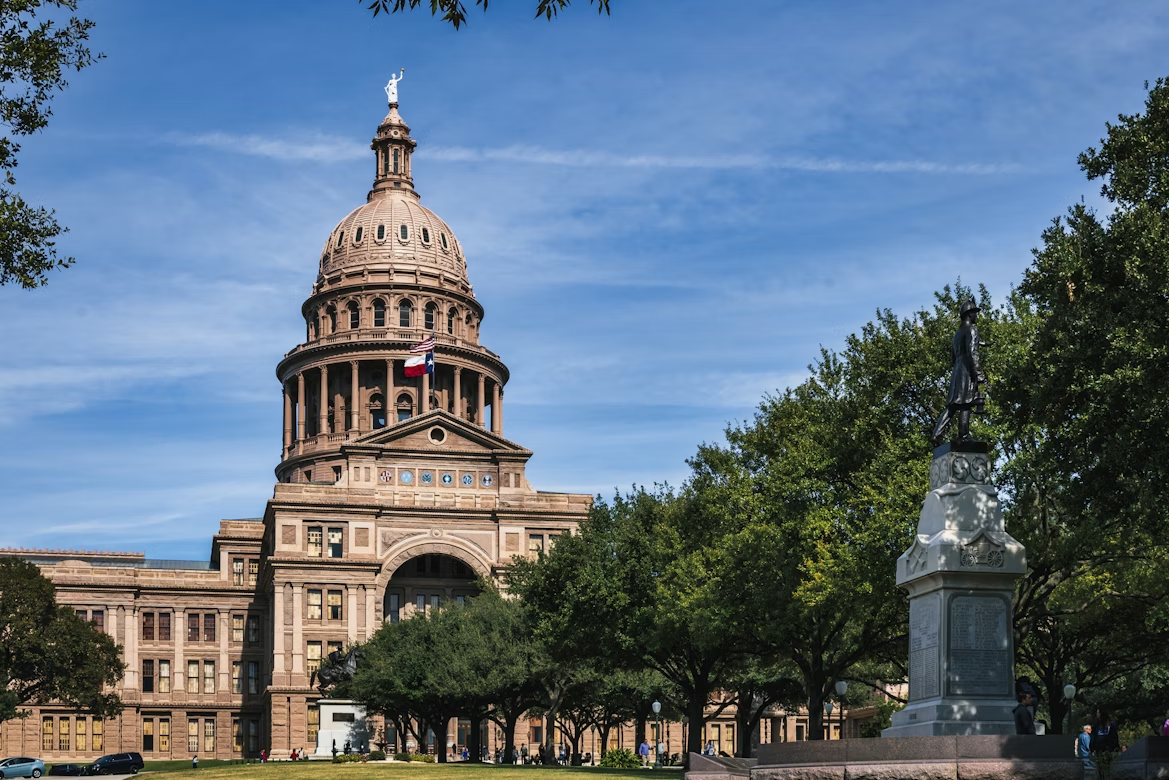
Texas does not drift politically by accident. When voter turnout spikes in a primary, it signals mobilization, not noise. The 2026 Texas primary results show a state that remains Republican at scale but fractured within its own ranks, while Democrats continue to test whether demographic change can outpace structural advantage. If you only look at headline winners, you miss the deeper story. The real movement lies in turnout patterns, ideological splits, and where money flowed in the final 30 days.
You need to read these results less as a scoreboard and more as a stress test of both parties’ future in America’s second-largest state.
Texas has added more than 4 million residents since 2010. It now holds 40 electoral votes and 38 congressional districts. That growth alone makes its primaries nationally consequential. This cycle’s primary results did not flip the state’s partisan alignment, but they exposed vulnerabilities that will shape the general election.
Republican Turnout: High Energy, Clear Factional Lines
Republicans entered the 2026 primaries with institutional dominance. The party controls the governorship, both chambers of the state legislature, and a majority of the congressional delegation. Yet high turnout in several contested GOP primaries tells you something important: internal ideological battles are not settling quietly.
In Harris County, Dallas County, and Collin County, Republican turnout rose sharply compared to the previous midterm cycle. Competitive congressional primaries and well-funded state legislative races drove participation. Several incumbents faced challengers backed by hardline conservative groups that criticized them for insufficient loyalty to border enforcement proposals and state-level education reforms.
Where you saw the sharpest contests:
- Congressional districts in suburban Houston
- State House districts around Dallas-Fort Worth
- South Texas border districts shifting right in recent cycles
The margins in these races were not landslides. In at least three competitive congressional primaries, incumbents cleared challengers by single-digit percentages. That margin matters. It shows incumbents retain institutional support but cannot ignore grassroots pressure.
Border security dominated Republican messaging. Candidates competed over who would push for stronger state-led enforcement measures. Education policy followed closely behind, especially debates around curriculum oversight and parental control legislation. Energy independence messaging remained consistent, especially in West Texas districts tied to oil and gas employment.
If you analyze fundraising disclosures, you see an additional layer. Outside PAC spending increased significantly in contested Republican primaries. That spending reflects national conservative organizations treating Texas as a proving ground for messaging before the general election.
Democratic Turnout: Steady, Strategic, and Urban-Centered
Democratic turnout did not match Republican raw numbers statewide, but it showed resilience in urban cores. Travis County, Harris County, and parts of Bexar County saw strong participation in competitive congressional and judicial races.
Democrats focused heavily on suburban districts that narrowed in previous cycles. You can trace their strategy clearly:
- Invest in education and property tax messaging
- Target women voters in suburban counties
- Expand turnout among younger voters
Several Democratic primaries featured competitive races between progressive candidates and more moderate contenders aligned with national party leadership. In Houston-area districts, progressive challengers pushed for expanded healthcare access and stricter gun regulation. Moderates emphasized economic stability and pragmatic governance.
The margins in Democratic primaries suggest the party continues balancing ideological energy with electability concerns. In two closely watched congressional races, moderate candidates prevailed by narrow margins. That outcome signals a strategic calculation: Democrats appear focused on swing viability rather than ideological expansion in Texas for 2026.
South Texas: The Bellwether Everyone Is Watching
South Texas continues to command national attention. Once considered reliably Democratic, several border counties shifted right in recent general elections. The 2026 primaries tested whether that shift represented a permanent realignment or temporary dissatisfaction.
Republican turnout in some Rio Grande Valley counties remained elevated. At the same time, Democratic organizers reported strong early voting operations in heavily Hispanic districts. The results show competitive primaries on both sides, but Republicans maintained momentum in certain border congressional districts.
If you look at precinct-level data, you notice something revealing. Rural border precincts leaned Republican at higher rates than in previous cycles. Urbanized border precincts still leaned Democratic but with narrower margins than a decade ago.
Immigration policy, energy jobs, and economic development dominated campaign messaging in the region. Candidates who framed economic opportunity alongside border security tended to outperform those who focused exclusively on one issue.
For national observers, South Texas now functions as a laboratory for Latino voter realignment debates.
Suburban Texas: The True Battlefield
You cannot understand Texas politics without studying its suburbs. Collin County, Fort Bend County, Williamson County, and Denton County have grown rapidly. These counties determine whether statewide Democratic campaigns remain competitive.
Primary turnout in these counties rose on both sides. Republicans maintained structural advantages, but Democrats narrowed gaps in certain precinct clusters, particularly those with high concentrations of college-educated voters.
Education funding and property taxes dominated suburban conversations. Voters expressed concern about rising costs, school board controversies, and infrastructure strain tied to population growth.
The primary results reveal:
- Republican dominance persists statewide
- Suburban margins remain competitive
- Democratic growth concentrates in metropolitan rings
If you are forecasting November, you focus on these suburban margins. They will decide whether statewide Republican candidates win comfortably or face tight contests.
Money, Messaging, and Media Influence
Texas primaries now operate with national attention. Outside groups spent heavily in contested congressional races. Digital advertising targeted voters with precision around property taxes, crime statistics, and border policy.
Campaign finance reports show millions in late-cycle spending across competitive districts. Television ad buys spiked in Houston and Dallas media markets. Social media ad placements increased significantly compared to prior cycles.
Messaging themes that dominated:
- Border enforcement
- Inflation and cost of living
- Energy independence
- Public education control
- Crime rates in urban centers
Candidates who combined economic messaging with localized issue framing performed stronger than those who relied solely on national party rhetoric.
Voter Turnout Trends: What the Numbers Suggest
Early voting numbers showed strong engagement. Texas has historically struggled with turnout compared to its population size. In this cycle, primary participation ticked upward relative to previous midterm cycles.
Several factors drove turnout:
- Competitive intraparty challenges
- High national political polarization
- Aggressive early voting mobilization
- Population growth expanding the eligible voter pool
You should pay attention to generational turnout. Younger voters participated at slightly higher rates than in the last comparable cycle, particularly in urban counties. That does not shift statewide outcomes immediately, but it signals long-term demographic evolution.
At the same time, older voters remain the most consistent participants in primaries. Candidates calibrated messaging toward retirees concerned about taxes, public safety, and healthcare access.
The Congressional Map and National Implications
Texas sends one of the largest delegations to the U.S. House. Even minor shifts in competitive districts affect national balance of power. Several Republican-held districts faced credible Democratic challengers emerging from primaries with strong fundraising bases.
The state’s congressional map continues to favor Republicans structurally. Yet competitive suburban districts force national party committees to allocate resources defensively.
If Democrats narrow margins in just two to three suburban districts, national strategists must divert funds to protect seats. That ripple effect matters in a tightly divided Congress.
The Senate landscape in Texas remains challenging for Democrats statewide, but primary results show they continue investing heavily in voter registration and turnout infrastructure.
What These Primary Results Actually Mean
You should avoid reading primaries as definitive forecasts. They measure enthusiasm and internal party alignment more than general election outcomes. Still, patterns are clear:
- Republican dominance persists but faces ideological tension
- Democrats show suburban resilience but struggle statewide
- South Texas remains fluid
- Suburbs will determine margins
- Border policy will dominate general election messaging
Texas does not flip easily. It shifts gradually through demographic change and turnout evolution. The 2026 primary results suggest the state remains red structurally but competitive in specific battleground zones.
For November, the decisive variables will be:
- Suburban turnout gaps
- Latino voter alignment in border counties
- Independent voter participation
- Economic sentiment tied to inflation and housing
If you want to predict the general election, stop focusing on statewide totals. Focus on county-level shifts of two to five percentage points. That is where Texas politics quietly evolves.
The primaries closed with predictable winners in many races. They also revealed pressure points that both parties must confront. Republicans must manage internal ideological fractures. Democrats must convert demographic potential into actual turnout.
The numbers do not tell a story of upheaval. They tell a story of strategic recalibration in a state that remains central to national politics.
The Texas primary results set the stage. The general election will determine whether structural dominance holds or whether narrow cracks widen into measurable shifts. If you study the counties that tightened margins, the fundraising disparities that narrowed, and the messaging adjustments already underway, you begin to see a clearer November roadmap.
The immediate takeaway from the primaries: both parties now understand exactly where they are vulnerable.
The Statewide Picture: Stability With Pressure Points
Statewide Republican candidates emerged from the primaries with decisive wins, but the margins reveal something important. In several top-of-ticket races, challengers captured between 25 and 40 percent of the vote despite facing incumbents with strong institutional backing. That kind of internal dissent does not disappear after March. It either consolidates behind the nominee or depresses turnout among disappointed factions.
For Democrats, the primaries revealed a unified front behind statewide nominees. Competitive races occurred, but once results finalized, consolidation messaging began immediately. Democratic leadership framed the primary as proof of energy, especially in urban counties where turnout grew.
Still, you should separate enthusiasm from math. Texas Republicans continue to hold a statewide advantage built on rural dominance and suburban strength. Democrats must outperform in major metro counties by large margins just to offset rural vote totals.
The math remains steep.
Congressional Districts: Where November Gets Real
The most consequential battles sit in suburban congressional districts. These districts decide whether Texas contributes to a stable Republican House majority or a narrow, contested map.
Three district types matter most:
- Suburban swing districts near Houston and Dallas
- Rapid-growth exurban districts
- Border districts trending right but not fully realigned
In suburban Houston districts, Republican incumbents won primaries but did not dominate every precinct. Democratic nominees exited primaries with strong small-dollar fundraising totals, particularly from online platforms. That cash allows them to compete in media markets that demand heavy spending.
Dallas-Fort Worth suburban districts tell a similar story. Republican candidates leaned heavily into crime and border messaging. Democrats emphasized property taxes, abortion rights, and healthcare access.
You can already see ad strategies forming. Republican campaigns test messaging focused on inflation and federal spending. Democrats frame suburban quality-of-life issues and public school funding.
Margins in these districts often fall within five percentage points. That means turnout operations, not ideology alone, will decide outcomes.
Border Politics and Latino Voter Realignment
South Texas remains the most analyzed region heading into November. In recent cycles, Republicans made gains among Latino voters, especially in working-class border communities tied to energy employment and law enforcement.
The primary results suggest that Republican campaigns have institutionalized that outreach. Local Republican candidates now campaign in Spanish-language media at higher rates than in previous cycles. That shift signals long-term investment.
Democrats, meanwhile, continue focusing on healthcare access and economic mobility in border counties. They highlight hospital funding, Medicaid expansion debates, and infrastructure investment.
What determines November here?
- Turnout among younger Latino voters
- Economic sentiment tied to oil and gas employment
- Perceptions of federal border policy
- Trust in local Democratic leadership
Even a two- to three-point swing in heavily populated border counties can reshape statewide margins.
Fundraising Disparities: The Hidden Story
Campaign finance reports show Republicans still hold significant fundraising advantages in many statewide races. Major donors and industry PACs continue investing heavily in Texas.
Yet Democratic candidates in competitive districts have closed the small-dollar gap. Digital fundraising operations have matured. In some suburban districts, Democratic nominees reported millions raised in the weeks following primary victories.
That matters because Texas media markets are expensive. Houston and Dallas rank among the costliest advertising markets in the country. Candidates need sustained funding to remain visible through November.
The general election will test whether national party committees invest heavily in Texas or prioritize other battleground states.
Voter Demographics: Generational and Geographic Divide
Primary data reveals generational contrasts. Older voters remain dominant participants, particularly in Republican primaries. Younger voters showed incremental growth, primarily in Democratic urban precincts.
Urban counties:
- Strong Democratic margins
- Higher youth turnout growth
- Heavy emphasis on reproductive rights and climate messaging
Rural counties:
- Overwhelming Republican margins
- High consistency among older voters
- Focus on border security and energy policy
Suburban counties:
- Mixed margins
- Key battleground demographics
- High sensitivity to cost-of-living issues
If Democrats want statewide competitiveness, they must increase youth turnout without losing moderate suburban voters. That balancing act defines their strategy.
Republicans, in contrast, must maintain rural dominance while preventing suburban erosion.
Property Taxes and Education: Underestimated Drivers
Property taxes remain a central issue across Texas. Home values have climbed sharply in metro regions, raising tax burdens. Candidates across parties acknowledge voter frustration.
Republicans campaign on tax compression and state-level reform. Democrats argue for funding mechanisms that protect public school budgets while easing homeowner strain.
Education policy continues to divide suburban voters. Debates around curriculum standards, school choice proposals, and funding models drive intense engagement.
In several suburban primary races, education-related messaging appeared more frequently in advertising than immigration policy. That detail signals how campaigns interpret local voter priorities.
The Senate Landscape
Texas Senate races, both state and federal, attract national scrutiny. Republicans maintain an advantage statewide, but Democratic fundraising and mobilization continue expanding.
Primary results revealed no major surprises in Senate nominations. What matters now is whether Democrats can narrow margins in suburban counties enough to make the race competitive.
Historically, statewide Democratic candidates must win massive margins in Harris County and Travis County while cutting deficits in suburban rings. That equation remains unchanged.
Independent Voters: The Silent Variable
Primaries do not fully capture independent voter behavior. Texas has a significant number of unaffiliated or loosely aligned voters who decide late.
Polling after the primaries shows independents prioritizing:
- Inflation and housing costs
- Border security
- Public safety
- Healthcare affordability
Candidates who remain rigidly partisan risk losing this bloc. Messaging flexibility, not ideological purity, often determines November outcomes.
Early Polling Signals
Initial post-primary polling suggests Republicans maintain statewide leads. In competitive congressional districts, margins fall within single digits.
You should interpret early polls cautiously. Name recognition remains uneven. Advertising has not yet saturated the electorate. Still, trends suggest:
- Suburban districts will tighten
- Border districts remain competitive
- Rural districts stay solidly Republican
The general election narrative now centers on whether Democrats can convert demographic growth into turnout, and whether Republican internal primary fractures reduce enthusiasm among specific factions.
National Implications
Texas does not operate in isolation. Control of the U.S. House may hinge on a handful of suburban districts nationwide. Texas contributes several of those seats.
If Republicans hold their suburban districts comfortably, they solidify national advantage. If Democrats flip even two seats, the national balance narrows significantly.
Texas also influences presidential electoral vote calculations. Even if it remains Republican in presidential contests, shrinking margins force campaigns to allocate resources differently.
What You Should Watch Before November
Focus on these indicators:
- Monthly fundraising totals in suburban districts
- Spanish-language ad spending in border counties
- Early voting registration trends
- Independent voter polling shifts
- Suburban turnout projections
Do not rely solely on statewide averages. Texas politics evolves precinct by precinct.
The primary results confirmed Republican structural dominance. They also exposed competitive seams. Democrats demonstrated organizational persistence but still face a steep statewide climb.
November will not hinge on dramatic ideological shifts. It will hinge on turnout mechanics, suburban persuasion, and whether economic sentiment overrides partisan loyalty.
Texas remains a red state by numbers. It remains a battleground by margins.
Texas remains structurally Republican, yet the long-term trajectory depends on whether demographic growth translates into durable turnout change. The 2026 primary results did not signal a partisan realignment. They revealed where margins may tighten and where each party must defend ground more aggressively.
Texas added millions of residents over the past decade, with most growth concentrated in metropolitan and suburban counties. Harris, Dallas, Tarrant, Bexar, and Collin counties continue expanding. These areas shape statewide margins. Democrats dominate urban cores, but Republicans offset those gains with consistent rural turnout and competitive suburban performance.
Growth does not guarantee political change. Voter registration and participation determine outcomes. Younger voters lean more Democratic, yet older Texans remain the most reliable voters in both primaries and general elections. If youth participation increases steadily over multiple cycles, statewide math could narrow. If turnout patterns revert, Republican structural advantage holds.
Suburban counties remain the most decisive terrain. Property taxes, housing affordability, public education, and public safety drive voter priorities in these regions. Campaigns that focus narrowly on national talking points risk losing suburban persuadables who prioritize local cost-of-living concerns.
South Texas continues to draw national attention. Latino voter behavior no longer fits a single narrative. Republican gains in border regions have reshaped assumptions about party alignment. Democrats must rebuild trust through economic messaging that resonates locally, not nationally. Even small shifts in border county margins influence statewide outcomes.
Independent voters remain pivotal. Many Texas voters do not identify rigidly with either party. Polling consistently shows economic stability, inflation, and healthcare affordability ranking above partisan conflict. Campaigns that address practical concerns with policy clarity, rather than ideological rhetoric, stand to gain incremental support.
Institutional factors also matter. District boundaries, early voting access, and turnout infrastructure shape the playing field. Republicans benefit from structural advantages in rural concentration and district design. Democrats continue investing in voter registration and turnout programs in fast-growing metro areas. Execution, not enthusiasm alone, will determine effectiveness.
Texas does not flip suddenly. Change happens in small percentage shifts that accumulate across cycles. The 2026 primaries show a state that remains red statewide but competitive in strategic corridors. Suburbs will decide margins. Border counties will test party outreach models. Urban centers will attempt to expand turnout.
November will not redefine Texas politics. It will measure whether demographic and economic pressures begin altering margins in measurable ways. Watch county-level shifts of two to five points. That is where political evolution takes shape.
References
U.S. Census Bureau – Texas Population Growth Data
https://www.census.gov
Texas Secretary of State – Election and Primary Results
https://www.sos.texas.gov
Federal Election Commission – Campaign Finance Data
https://www.fec.gov
Texas Tribune – Primary Election Coverage and Analysis
https://www.texastribune.org
Pew Research Center – Voter Demographics and Turnout Trends
https://www.pewresearch.org
Author Profile
Astha Agrawal is a writer covering trends in India across politics, public policy, psychology, media, literature and culture. Her work focuses on clarity, relevance, and data-backed analysis of evolving narratives.
Connect with her on LinkedIn: http://www.linkedin.com/in/astha-agrawal-105255331
About The Author