
In today’s fast-paced fashion economy, sustainability is often treated as a marketing buzzword. Brands promise eco-friendly fabrics and carbon offsets, but rarely do they reexamine the core assumptions driving waste, overproduction, and cultural erasure. As the industry races to innovate, it may be overlooking one of its richest, most time-tested sources of sustainable wisdom: Indigenous clothing practices.
From land-based dyeing techniques to community-centered garment creation, Indigenous communities around the world have long practiced what the fashion world now calls “slow fashion.” But for them, these traditions aren’t trends; they’re systems of respect, responsibility, and relationality. They offer a radical rethinking of fashion ethics that the mainstream industry urgently needs.
This isn’t about appropriating Indigenous designs for another runway show. It’s about learning, genuinely and respectfully, from Indigenous worldviews that prioritize harmony with nature, longevity over excess, and collective identity over ego.
Here’s what the fashion industry can learn.
1. Clothing as Relationship, Not Commodity
In many Indigenous cultures, clothing is not a product; it’s a process, and more importantly, a relationship. It reflects connections to land, family, and spiritual traditions.
Take, for example, the Tlingit people of the Pacific Northwest, who create button blankets to tell family histories. These garments aren’t just decorative; they’re sacred, carrying intergenerational knowledge and cultural identity.
In the fast fashion model, clothing is disposable. In Indigenous frameworks, clothing is sacred.
Lesson for fashion: Treat garments as vessels of meaning, not just merchandise. Prioritize storytelling, traceability, and respect for origin, both cultural and ecological.
2. Local Materials, Low Impact

Before globalization and synthetic fabrics, Indigenous communities relied on what the land offered. They harvested materials sustainably, processed them using natural methods, and ensured that waste was minimal or biodegradable.
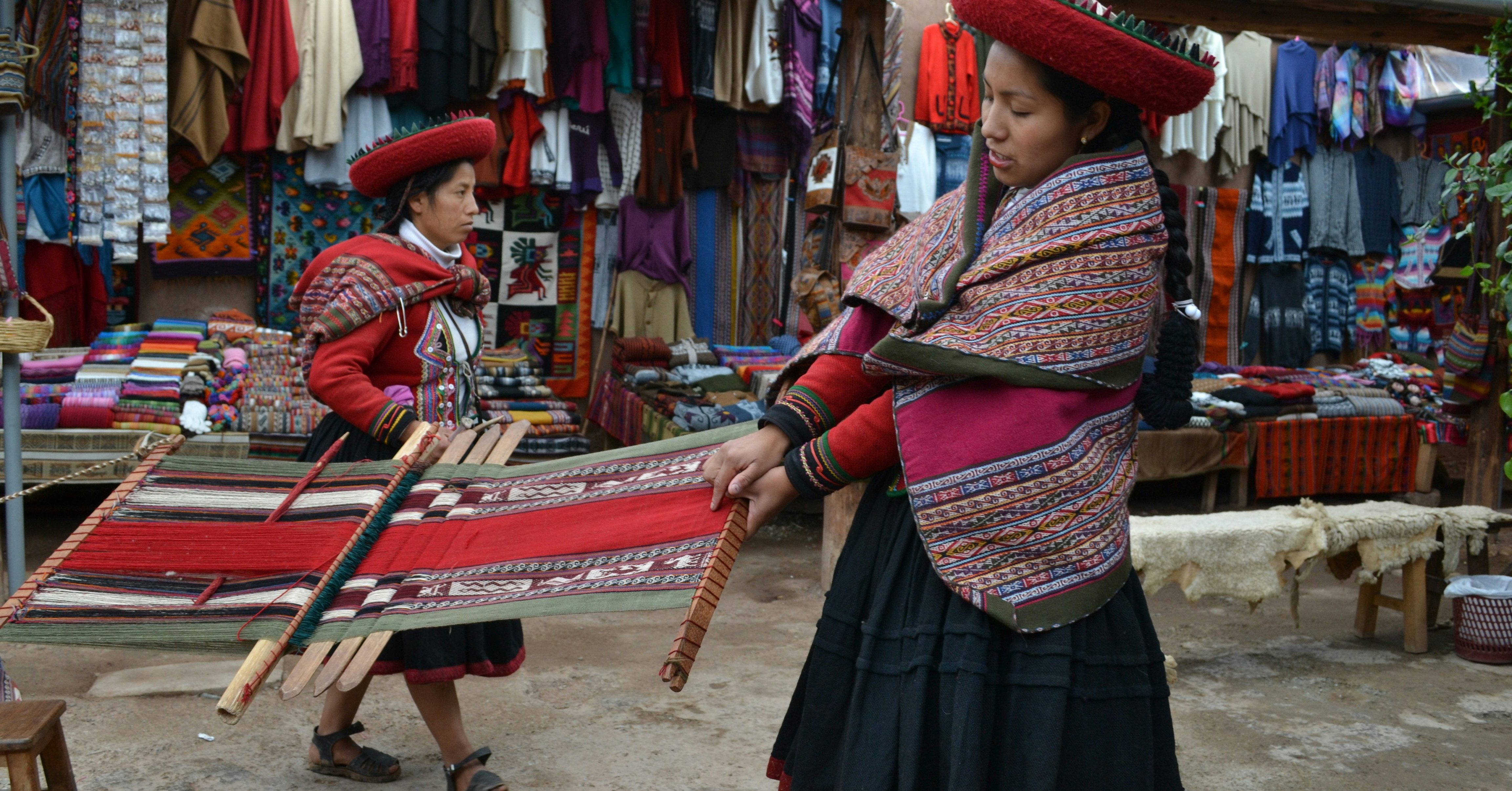
For instance, Andean weavers in Peru still use alpaca and llama fibers sourced from their own herds, dyed with native plants like cochineal, indigo, and molle. These dyes are non-toxic and region-specific, preserving biodiversity and cultural heritage.
Lesson for fashion: Decentralize production. Invest in local supply chains and revive natural material knowledge—especially from communities that have preserved it for centuries.
3. Slow, Seasonal, and Purposeful
Indigenous clothing production has always been in sync with nature’s pace. Whether it’s harvesting bark to weave textiles in the Philippines or tanning hides during a specific moon cycle in Northern Canada, production is seasonal and intentional.
Contrast that with fashion’s relentless calendar: dozens of micro-seasons, flash sales, and overnight drops that lead to overproduction and burnout.
Lesson for fashion: Slow down. Design with purpose and honor natural rhythms. Fewer, more intentional collections aligned with environmental cycles can reduce both waste and harm.
4. Clothing as Cultural Continuity
Indigenous garments are often imbued with symbolism, tradition, and ritual. For the Māori people of Aotearoa (New Zealand), the korowai (feathered cloak) is a powerful garment reserved for ceremony and leadership. Similarly, the Navajo Diné use weaving as a spiritual act, linking the weaver to the spider woman of creation myths.
These garments are not just clothes; they are time capsules of resistance, survival, and identity.
Lesson for fashion: Respect and protect cultural IP. Instead of co-opting patterns and styles for profit, fashion must create space for Indigenous-led brands and support initiatives that return agency and credit to Native makers.
5. Repair Over Replace
In many Indigenous communities, clothing is not discarded when it breaks. It’s mended, reworked, or transformed into something else.
The Sámi people of Northern Europe, for example, traditionally pass down gákti (traditional dress) for generations, patching and altering garments rather than replacing them. Each repair is an act of care, and a continuation of lineage.
Compare that to a Western fashion cycle where clothes are tossed after a season, or after a single wear.
Lesson for fashion: Normalize repair. Create products that are mendable, build repair guides into product packaging, and celebrate visible mending as a badge of honor, not a flaw.
6. Community Over Individualism
In Indigenous fashion systems, clothing creation is often communal. Knowledge is shared, techniques are passed down, and garments are made in collaboration. This stands in stark contrast to the fashion industry’s obsession with singular genius, individual expression, and competition.
Projects like Revitalizing Ancestral Andean Textiles (RAAT) bring women from different Peruvian villages together to co-create textile pieces rooted in shared heritage. The outcome is not just clothing, but collective empowerment.
Lesson for fashion: Shift from ego to ecosystem. Support design collectives, fair worker cooperatives, and transparent value-sharing across the entire fashion chain.
7. Non-Extractive Innovation
Western fashion often mistakes resource use for resource extraction. But many Indigenous cultures have long practiced non-extractive innovation, methods of making that regenerate rather than deplete.
Take barkcloth production in Uganda and the Pacific Islands. This process uses the inner bark of fig trees without killing them, allowing for continuous harvest. The result is a fabric that’s renewable, biodegradable, and culturally significant.
Lesson for fashion: Redefine innovation. The next frontier isn’t about inventing more synthetic tech; it’s about reviving ancient, regenerative techniques that already exist.

8. Holistic Sustainability
Mainstream fashion tends to silo environmental and social sustainability: reducing emissions or paying fair wages. Indigenous fashion, by contrast, integrates the two, because in traditional worldviews, people and planet are inseparable.
This is echoed in the work of Indigenous designers like Korina Emmerich (Puyallup) and Bethany Yellowtail (Northern Cheyenne/Crow), who create with both cultural heritage and climate consciousness in mind. Their designs aren’t just beautiful; they carry a philosophy of interconnection.
Lesson for fashion: Think holistically. Sustainability isn’t just a fabric choice; it’s how a garment is conceived, produced, sold, worn, and remembered.
9. Decolonizing Fashion Narratives
Fashion often frames Indigenous styles as “inspiration” without acknowledging histories of colonization, erasure, or cultural theft. Many traditional garments were once banned, ridiculed, or misrepresented—only to be commodified centuries later.
To truly learn from Indigenous clothing practices, the industry must engage in decolonization: honoring origin stories, giving credit, supporting Native ownership, and addressing historical harm.
Lesson for fashion: Move from inspiration to collaboration. Uplift Indigenous voices not as tokens but as leaders, educators, and innovators within fashion spaces.
10. Value Beyond the Visible
Indigenous clothing teaches us that the value of a garment isn’t always in its price tag or popularity, it’s in the care, memory, and intention it carries.
The mainstream fashion economy tends to prioritize the visible: flashy trends, influencer drops, viral aesthetics. But Indigenous fashion reminds us that beauty and value often lie in what’s unseen: the stories, the labor, the soul.
Lesson for fashion: Expand your definition of value. Consider the ethics embedded in the making, not just the look of the final product.
Indigenous Fashion Is Not a Trend—It’s the Future
The irony of our time is that the fashion industry is seeking answers in algorithms and “innovation labs” while overlooking communities that have quietly modeled sustainable systems for millennia.
But Indigenous designers and collectives are reclaiming their space and reshaping the conversation. Brands like:
- 4KINSHIP (Navajo-owned, upcycled, and handcrafted)
- B.YELLOWTAIL (Native fashion with full cultural integrity)
- Mobilize (Métis-run streetwear with activist roots)
- ThunderVoice Hat Co. (upcycled leather goods with heritage storytelling)
…are proving that Indigenous fashion is not just traditional, it’s powerfully contemporary.
How the Fashion Industry Can Move Forward (Without Appropriation)
To learn from Indigenous clothing practices without co-opting them, the fashion world must:
- Prioritize Indigenous-led partnerships
- Hire and platform Native designers, educators, and weavers
- Support Indigenous-owned brands financially and publicly
- Acknowledge and address historical harms
- Avoid replicating sacred symbols or designs without permission
- Fund land and material sovereignty projects led by Native communities
Conclusion: The Most Sustainable Fashion Is Already Here
Indigenous knowledge doesn’t need to be “discovered.” It needs to be respected, funded, and protected.
The path to a more ethical and sustainable fashion system doesn’t start with tech, but with humility. Recognizing that the future of fashion may depend on returning to values long held by Indigenous communities: balance, care, reciprocity, and respect.
In a world obsessed with the new, these ancient practices offer something rare: wisdom.
References
Emmerich, Korina.
Puyallup designer integrating Indigenous worldviews and sustainability.
Website: https://korinaemmerich.com
B.YELLOWTAIL – Bethany Yellowtail
Native fashion brand rooted in Northern Cheyenne and Crow traditions.
Website: https://byellowtail.com
4KINSHIP
Navajo-owned brand focused on upcycling and land stewardship.
Website: https://www.4kinship.com
ThunderVoice Hat Co.
Indigenous-owned brand using upcycled leathers and sustainable materials.
Website: https://www.thundervoicehatco.com
Mobilize (Métis-led fashion collective)
Streetwear rooted in Indigenous activism and community voice.
Instagram: https://www.instagram.com/mobilize_waskawewin
RAAT – Revitalizing Ancestral Andean Textiles
Peruvian project empowering Indigenous weavers to preserve textile heritage.
Article: https://www.fondation.chanel.com/en/raat
Sámi Duodji (Traditional Sámi clothing and crafts)
Sámi Council and Duodji Institute promote cultural textile practices.
Website: https://www.sametinget.se/duodji
Māori Korowai (Feather Cloaks)
New Zealand Ministry for Culture and Heritage on korowai and Māori weaving.
Resource: https://teara.govt.nz/en/korowai
Barkcloth Production (Uganda, Pacific Islands)
UNESCO: Barkcloth as Intangible Cultural Heritage
https://ich.unesco.org/en/RL/barkcloth-making-in-uganda-00139
Olivia Santoro is a writer and communications creative focused on media, digital culture, and social impact, particularly where communication intersects with society. She’s passionate about exploring how technology, storytelling, and social platforms shape public perception and drive meaningful change. Olivia also writes on sustainability in fashion, emerging trends in entertainment, and stories that reflect Gen Z voices in today’s fast-changing world.
Connect with her here:https://www.linkedin.com/in/olivia-santoro-1b1b02255/
About The Author


